Ralf Schumacher took his first Grand Prix win from third on the grid, while Coulthard's pole position was not enough and Michael Schumacher's race ended in the pits.
Ralf Schumacher of Williams claimed his first Grand Prix victory at Imola on 15 April 2001, the fourth round of the season. David Coulthard took second for McLaren, 4.3 seconds back, and Rubens Barrichello finished third for Ferrari. As many as 100,000 spectators watched.
Ralf Schumacher won the 2001 San Marino Grand Prix at Imola on 15 April 2001, starting from third on the grid to give Williams its first win since 1997. David Coulthard finished second for McLaren, and Rubens Barrichello was third for Ferrari. It was the fourth round of the season, and only 12 of the 22 starters reached the flag.
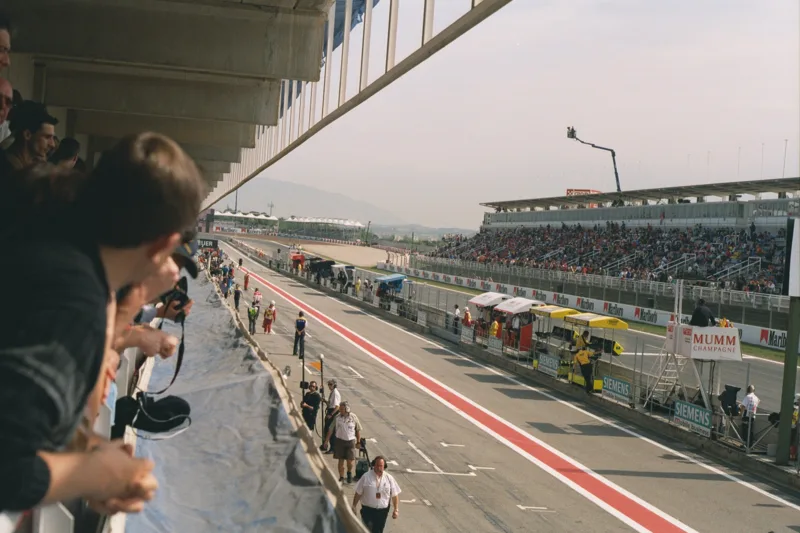
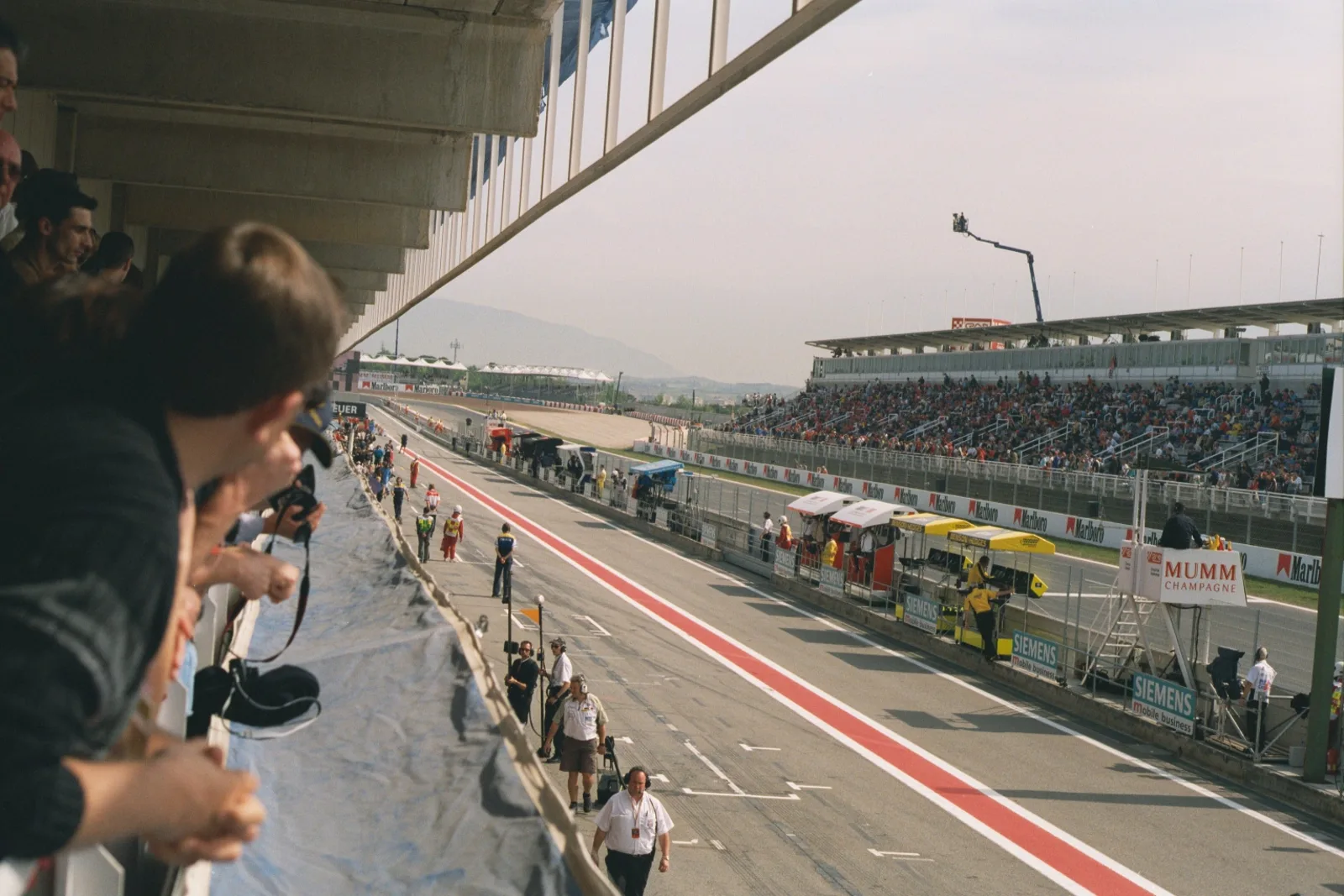
The race was the 21st San Marino Grand Prix, although it was held in Italy because San Marino lacks the facilities to host Formula One. The 4.933 km (3.065 mi) Autodromo Enzo e Dino Ferrari runs anti-clockwise over 17 turns, and between 80,000 and 100,000 spectators watched. It was the last race before electronic driver aids were legalised again at the Spanish Grand Prix.
Michael Schumacher was the pre-race bookmakers' favourite, and he said it was normal not to win every race in a season, adding that his team could return to form at Imola. Williams had won six races at the circuit during the 1990s, and Montoya had raced there in International Formula 3000 in 1998, so he expected his car to suit the track.
The championship picture and the new parts
Michael Schumacher led the drivers' table with 26 points, Coulthard had 20 and Barrichello 10. Ferrari led the constructors on 36 points, 15 ahead of McLaren. Schumacher had won the first two races, in Australia and Malaysia, while Coulthard had won in Brazil by passing him during the race and cutting his lead to six points.
Teams tested after the Brazilian Grand Prix on 1 April. BAR, Jordan and McLaren worked for three days at Silverstone in inclement weather, with Ricardo Zonta fastest for Jordan on the first day. Arrows, Prost, Sauber and Williams tested for three days at Magny-Cours, while Ferrari spent five days at its private Fiorano track, where Luca Badoer worked on traction control.
Several teams changed their cars for the race. Ferrari raised the rev limit of its Type 050 V10 to make the engine more powerful, while McLaren revised the MP4-16 so that it handled kerbs better and fitted a redesigned rear wing. Sauber made no changes to its car, and Minardi's updated package had been held up on the way from Brazil.
Ralf Schumacher's first win came from third on the grid, and Williams had its first victory since 1997.
Practice and qualifying
The first practice session began on a damp track, and drivers ran wet-weather tyres until the surface dried. Barrichello set the best time of 1:31.998, ahead of his team-mate Michael Schumacher. Once the track had dried, Michael Schumacher was fastest in the second session at 1:25.095, with Barrichello second. Coulthard ended up stuck in the gravel at Acque Minerali with 13 minutes left, after a gear selection problem.
Other problems came up during the Friday sessions. Verstappen was unable to set a time after his car stopped with a drop in fuel pressure on his first lap out of the pit lane. Alonso's Minardi stopped on track with a hydraulic fault that caused a gearbox malfunction. Three drivers lost control at the wet turn 17 during the same session, and Montoya's engine had already failed after gauze dropped into it.
Saturday morning was cold and wet, and lap times were around 11 seconds slower than the 2000 pole. Michael Schumacher was quickest at 1:35.633. In the final session he improved to 1:30.737, with Barrichello again second, and Burti's Saturday morning was also eventful: he crashed at Tosa on his second lap and missed the final practice session while his team repaired the car.
Qualifying ran for one hour, with twelve laps per driver and the 107% rule in force. Coulthard took pole with 1:23.054, his 11th of his career. He broke Villeneuve's outright track lap record from 1997, and he also stopped Michael Schumacher from matching Ayrton Senna's run of eight straight poles. Coulthard was 0.228 seconds quicker than his team-mate Hakkinen in the final runs.
Ralf Schumacher was third, while the Ferraris of Michael Schumacher and Barrichello took fourth and sixth. Both had chosen the harder Bridgestone compound, because they expected the softer tyre to wear too quickly and believed the weather would turn. Trulli was fifth, Montoya seventh, Panis eighth and Frentzen ninth. Alonso took 18th after his team changed his car settings, and Marques started 22nd after a front-left puncture ended his final run.
Further down the order, Trulli sat between the two Ferraris in fifth after a late lap. Montoya's final run went wrong when he ran wide onto the grass at the Variante Alta chicane, costing seven-tenths of a second. Villeneuve was 11th and the fastest driver outside the top ten, held back by slower cars on his final run. Heidfeld took 12th, Irvine 13th and Alesi 14th in a car that was sensitive to set-up changes. Burti was 15th, and Bernoldi and Verstappen qualified 16th and 17th for Arrows. Verstappen's last run was in the spare Arrows, after an engine-related electrical fault.
Coulthard had surgery on an abscess the evening before the race, which was causing vibrations in his ear. He still set the fastest time in the morning warm-up, 1:26.440, ahead of Ralf Schumacher and Hakkinen.
What happened in the first laps?
Ralf Schumacher slipped past both McLarens for the lead on the drive to the Tamburello chicane, after Coulthard's wheelspin gave him room on the inside. Trulli, who was battling Hakkinen for third, followed, and Montoya passed Panis on the outside at the final chicane. By the end of lap one Ralf led Coulthard, Trulli, Hakkinen, Michael Schumacher and Montoya.
Further back, Heidfeld passed Irvine for 12th on lap two, and Verstappen overtook Burti for 16th. Panis faced an investigation over a suspected jump start, but no penalty followed. Trulli, who was battling Hakkinen for third, was 20 seconds down by lap 16, which showed how far the leading group had pulled clear of the rest.
Michael Schumacher's race began to unravel on lap three. After mounting the kerbs he selected the wrong gear, and the electronic gearbox refused to upshift, leaving him in second. He fell to seventh on the straight and was passed on the inside at Tosa by his team-mate Barrichello. On lap six, Alonso's brakes failed because of a leaking caliper, and his car launched over the high kerb at the Variante Alta chicane, ending his race.
Verstappen stopped two laps later with a broken exhaust pipe. Barrichello passed Panis for sixth at Rivazza on lap eight, and Michael Schumacher got past Panis for seventh on lap nine after being challenged by Raikkonen. Ralf Schumacher extended his lead over Coulthard to four seconds, because Michelin's tyres were generating heat faster on the warm track than the Bridgestones.
Why did Michael Schumacher fall out?
Michael Schumacher suffered a puncture on his left front wheel rim, caused by a brake caliper that became too hot and then failed on the following lap. He drove cautiously to the pit lane and rejoined a lap down in 19th place. Ferrari then summoned him into the pit lane to retire for safety.
Raikkonen was ninth when his steering wheel disconnected from its spline on the rise between Tosa and Piratella. His car veered left and crashed into the retaining barrier at low speed on lap 18. He was unhurt, but he was forced to retire.
Button made the first scheduled fuel and tyre stop on lap 20, and he had to stop again the next lap when a refuelling rig malfunction left his car without fuel. Trulli made his first stop on lap 24 and rejoined eighth. Montoya stopped from fourth on lap 28 and rejoined seventh, behind Trulli.
Trulli was the first of the leading drivers to pit, on lap 24, and Hakkinen was promoted to third as a result. That gave him clear air, free of the turbulence from cars ahead, while Trulli rejoined eighth.
On lap 29 Ralf pitted from the front, and he still had an eight-second cushion over Coulthard afterwards. Hakkinen then stopped, rejoining ahead of Montoya and Trulli but behind Barrichello. Ferrari moved Barrichello from a two-stop to a one-stop plan, which saved fuel and allowed him to pass Hakkinen. He stopped on lap 33 and rejoined third.
Fisichella retired on the same lap with a misfiring engine, because Benetton did not want to risk an engine failure. Mazzacane retired on lap 31 when an oil leak caused his engine to fail and burn at the rear. Villeneuve stopped on the next lap with oil smoke coming from his rear exhaust, and Irvine's engine failed a little later.
With seven laps remaining, Ralf Schumacher's pit board displayed 'Oil Pump' as he slowed, and Coulthard closed in on him. Ralf still held on to win, which made him the first driver whose brother had already won a Grand Prix to take a victory alone.
Results at a glance
| Position | Driver | Team | Note |
|---|---|---|---|
| 1 | Ralf Schumacher | Williams | First win; started third on the grid |
| 2 | David Coulthard | McLaren | 4.3 seconds behind; had taken pole |
| 3 | Rubens Barrichello | Ferrari | 30 seconds behind Coulthard; one-stop strategy |
| 4 | Mika Hakkinen | McLaren | Nose cone damage from a first-lap collision with Trulli |
| 5 | Jarno Trulli | Jordan | Last driver on the lead lap |
| 6 | Heinz-Harald Frentzen | Jordan | Scored the final championship point |
Heidfeld finished seventh after car balance problems, and Panis eighth after a replacement steering wheel fixed his electrical problem. Alesi was ninth after a two-stop strategy, and Bernoldi tenth for his first Grand Prix finish. Burti was classified eleventh after losing first, second and third gear, and Button was the final classified finisher, two laps behind the winner.
What did the win mean for the championship?
Coulthard and Michael Schumacher were joint first on 26 points each, but Schumacher stayed ahead on wins, having won two races to Coulthard's one. Barrichello kept third with 14 points. Ralf Schumacher's win moved him from seventh to fourth, while Heidfeld's failure to score dropped him from fourth to fifth.
Ferrari kept its lead in the constructors' table on 40 points, but McLaren cut its gap to ten. With 13 races remaining, Williams climbed from sixth to third, and Sauber dropped from third to fifth behind Jordan.
How did the paddock react?
Ralf Schumacher said he had waited a long time for the win and hoped it would be the first of many. Niki Lauda called it the perfect race and said the first win is always the hardest. Patrick Head of Williams described Ralf's form as perfect, and Gerhard Berger praised his strong, convincing performance.
Hakkinen was disappointed that his chance ended at the start, but he was happy to score points. Coulthard said the tyre balance had been the hardest part of the race. Montoya said a clutch warning light had affected him, and he believed he could have finished on the podium.
Trulli called his fifth place a good result and said he had shown that, with a good car and everything working, he could be right in the fight. Frentzen blamed a slow start, saying that a point for sixth was some consolation but the team needed to step up. Michael Schumacher described the event as disappointing because of his poor start and a gear selection problem. Barrichello was pleased with the balance of his Ferrari, but admitted he had slowed in the final laps while trailing Coulthard, and he felt Ferrari may have been slow in qualifying with its tyre choice.