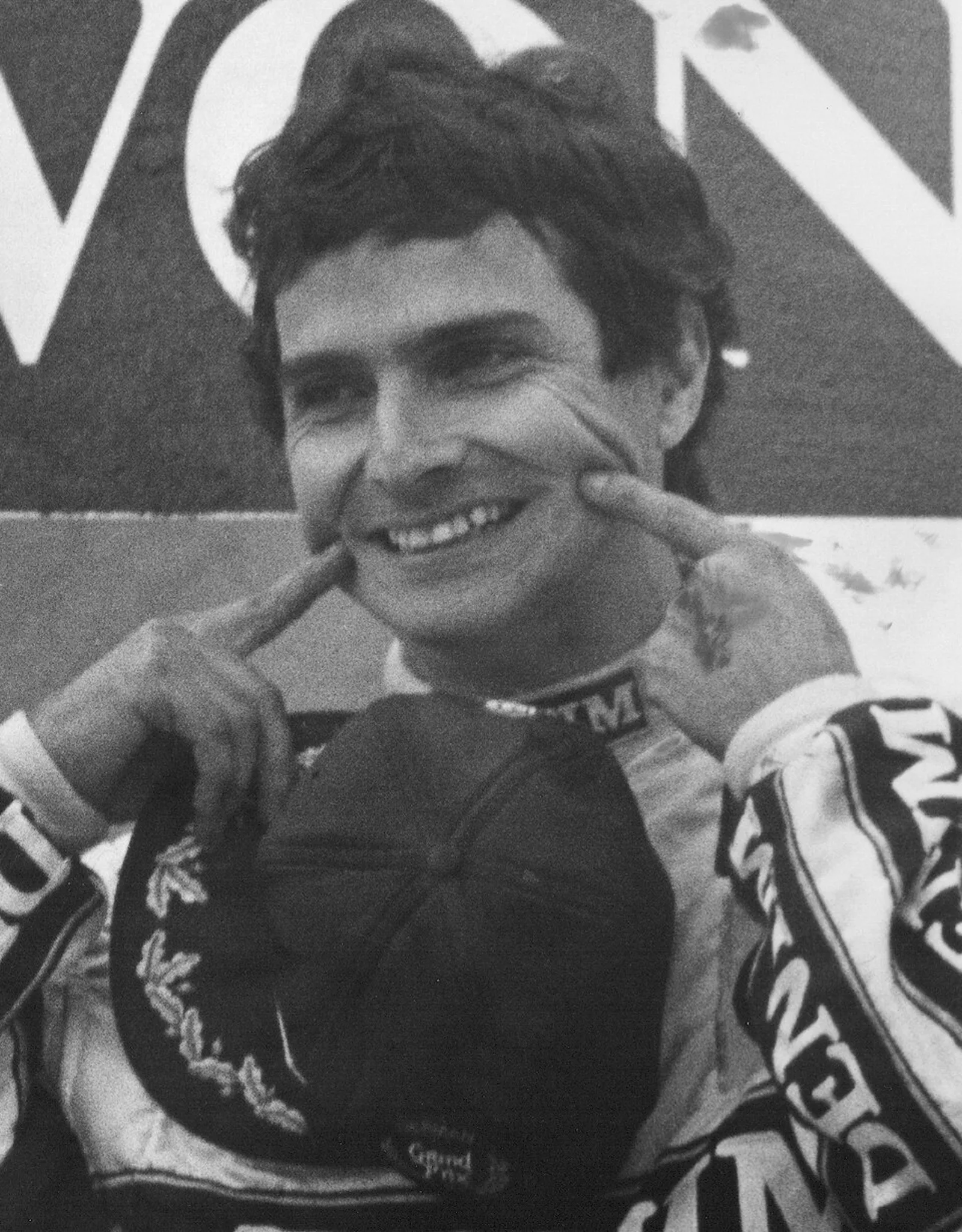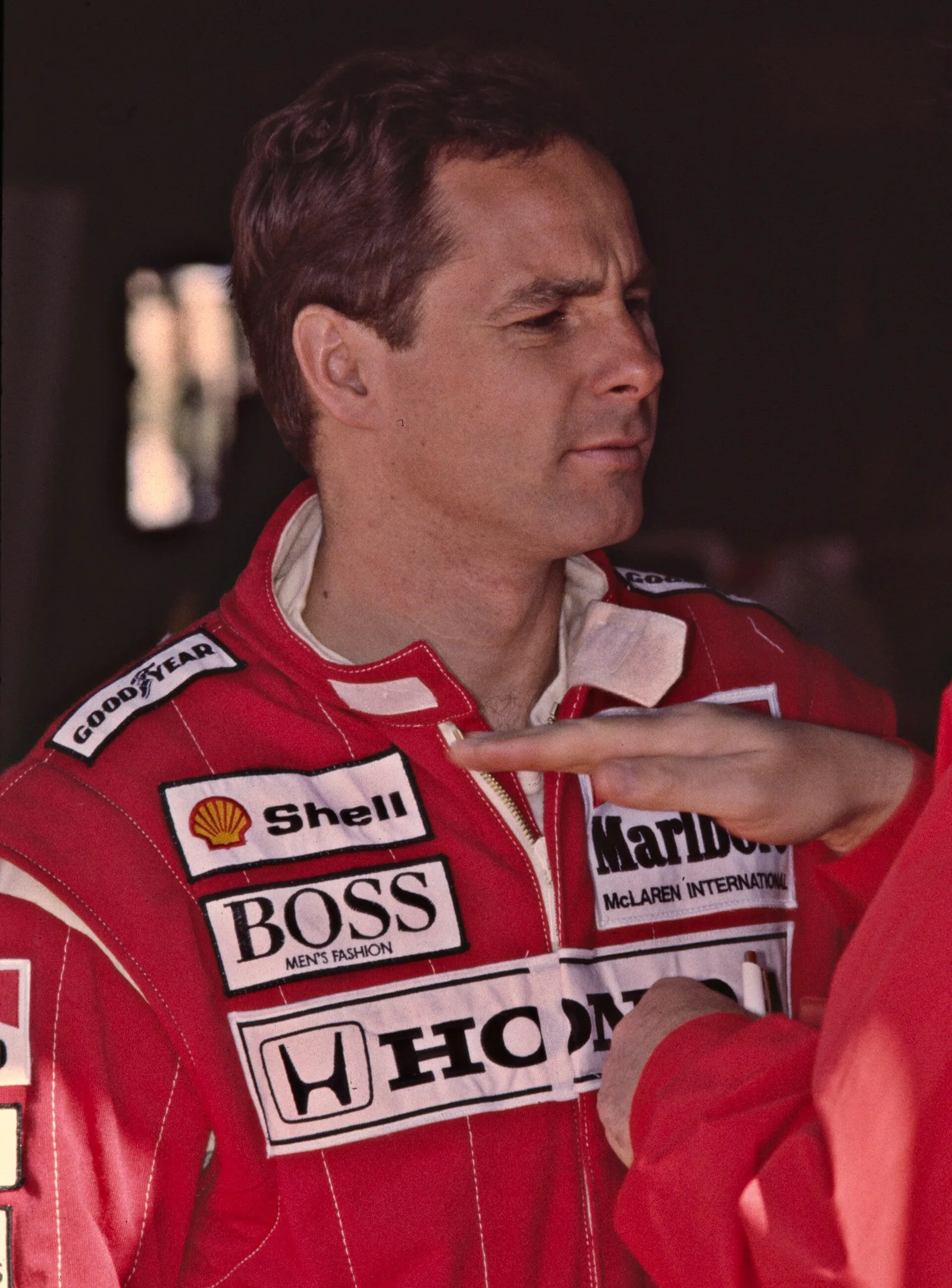
A Worgl-born racer who won ten Grands Prix in 210 starts, finished third in the championship twice with Ferrari and later worked for BMW and Toro Rosso.
Gerhard Berger raced in 210 Formula One Grands Prix between 1984 and 1997, winning ten of them for Benetton, Ferrari and McLaren. He later worked for BMW and Toro Rosso and chaired the FIA Single Seat Commission.
Gerhard Berger, from Austria, was a racer who later became a motorsport executive, active in Formula One between 1984 and 1997. He won ten Grands Prix, and he finished third in the drivers' championship twice, in 1988 and 1994, both with Ferrari.
Who was Gerhard Berger?
Gerhard Berger was born in Worgl, Austria, on 27 August 1959. Across 210 starts he won races for Benetton, Ferrari and McLaren. His first and last victories both came for Benetton, which made the team's first and final wins his own.
His father, Johann, ran a truck company, and Gerhard worked there before being promoted to the driving seat. Before reaching the top level he had won several races in European Formula Three, and in 1984 he joined ATS.
Shortly after that first season, a crash nearly ended his life. Soon after the 1984 campaign closed, he was at the wheel of a BMW 323i on the roads above Salzburg when another car rammed him from behind. The car cartwheeled off a cliff, and he was thrown through the rear window because he was not wearing a seatbelt. Two surgeons who came upon the scene stopped anyone from moving him, and after emergency surgery he made a full recovery.
Berger was the only driver to break that run, winning the Italian Grand Prix a few weeks after the death of Enzo Ferrari.
What were his early Formula One seasons like?
Berger's first full season came with Arrows in 1985. The Arrows A8 did not suit the power of the BMW M12 engine, and he finished 20th in the championship. He scored his three points in the last two races, in South Africa and Australia.
His Formula One career took off with Benetton in 1986. The team's B186 let him exploit the BMW turbo engine, which produced about 1,400 bhp (1,044 kW; 1,419 PS) in qualifying that year. With a shrewd Pirelli tyre strategy, he won his first Grand Prix in Mexico.
The Austrian Grand Prix, his home race, found him comfortably placed that season until a flat battery forced a pit stop. That year he out-qualified his team-mate Teo Fabi 12-4, and at the Italian Grand Prix at Monza he recorded the fastest speed trap of the season, 351.22 km/h (218.23 mph). By that measure it is still the quickest straight-line speed recorded by a turbo car from the early turbo period.
How did he combine touring cars with Grands Prix?
Group A touring cars were another string to his bow: he drove for the Schnitzer BMW squad in the European Touring Car Championship, piloting a 635 CSi. He won the 1985 Spa 24 Hours with Roberto Ravaglia and Marc Surer.
Formula One drivers were not permitted to race in other categories within 24 hours of a Grand Prix by 1985. At the Australian Grand Prix that year, Berger obtained permission from the governing bodies and Arrows to race an ex-Schnitzer BMW for Bob Jane. He qualified second on the grid, but the race lasted only three laps before he was knocked into the gravel by a Holden Commodore.
How did his time at Ferrari begin?
Berger joined Ferrari for 1987 alongside Michele Alboreto, replacing Stefan Johansson. Mechanical failures held him back early on, but he came on strongly in the second half of the year and won the final two rounds, at Suzuka and Adelaide. Those results made him one of the favourites for the 1988 title.
The Ferrari F1/87 was designed by Gustav Brunner, with input from the former McLaren designer John Barnard. Ferrari were challenging for race wins again from the Hungarian Grand Prix onwards. At Estoril Berger dominated from pole before spinning late on and finishing second behind Alain Prost. In Mexico he led again before mechanical problems forced him out.
In 1988 McLaren, with Prost and Ayrton Senna, won 15 of the 16 rounds. Berger was the only driver to break that run, winning the Italian Grand Prix a few weeks after the death of Enzo Ferrari. He also took pole for the British Grand Prix, the only non-McLaren pole that year.
Why did fuel and boost limits hurt Ferrari in 1988?
The 1988 rules cut the fuel allowance to 150 litres and limited turbo boost to 2.5 bar. Ferrari did not build a new engine for the change and ran an updated version of its 1987 unit instead. Berger often had to run the lowest boost setting, about 2.0 bar, to see out a race.
By his own reckoning, a finishing race meant running on 550 bhp (410 kW; 558 PS), out of 650 bhp (485 kW; 659 PS) available. At the British Grand Prix he led early from Senna and built a large lead, but he ran out of fuel after the Woodcote chicane on the last lap and finished ninth.
At Adelaide that year he led the Australian Grand Prix ahead of Prost and Senna. Before the race he told the McLaren drivers he would go flat out without worrying about fuel, to give the fans a show. He set several fastest laps, passed Prost on lap 14, and was then taken out by Rene Arnoux's Ligier while lapping him on lap 28.
What happened at Imola in 1989?
At Imola's Tamburello corner during the 1989 San Marino Grand Prix, Berger ran straight into the barrier at close to 180 mph (290 km/h). The car spun along the barrier and caught fire. Rescuers needed 16 seconds to reach the Ferrari and extinguish the blaze.
His injuries were limited to burns on the hands and a few broken ribs, a light toll for such an impact. He missed only the Monaco Grand Prix and was back in the car by Mexico. Berger credited the semi-automatic paddle-shift gearbox, designed by John Barnard, for allowing him to return sooner than a conventional gearbox would have.
The 640 car was fast but fragile, and its semi-automatic system had an electrical problem that was fixed mid-season with help from the team's electrical sponsor, Magneti Marelli. Berger scored second at the Italian Grand Prix, won in Portugal and finished second in Spain, which gave him seventh in the championship.
What were his years at McLaren like?
The McLaren years began in 1990, when Berger was teamed with Ayrton Senna, and the Honda power plant seemed to offer a genuine title chance. He often qualified second behind Senna, but he rarely matched his team-mate's pace in races. He did win three races during those seasons, including the 1991 Japanese Grand Prix, which Senna handed him, and victories in Canada and Australia in 1992.
At the 1990 United States Grand Prix he outqualified Senna to take pole. He complained that the McLaren MP4/5B left him short of space, because it had been designed around the smaller frames of Senna and Alain Prost. Over his three years at McLaren he took four poles and out-qualified Senna eight times.
According to Neil Trundle, who ran McLaren's gearbox shop from 1990 to 2006, the mechanics nicknamed Berger Gearhard because he broke more gearboxes than Senna did.
Why did he return to Ferrari in 1993?
Berger returned to Ferrari in 1993 after Senna and Niki Lauda persuaded him. Senna told him Honda would withdraw at the end of 1992, which would leave McLaren without a works engine. Lauda believed that Berger's experience of partnering Senna would be valuable at Maranello.
The 1993 Ferrari F93A was unpredictable, because its active ride suspension made the car difficult to drive. It failed to win a race, and its best result was Berger's third place at the Hungarian Grand Prix. There were incidents too: a tangle with Michael Andretti at the start in Brazil, and a heavy hit on the armco at Portugal shortly after leaving the pit lane.
At Monaco that year he set the second-fastest lap and then tried to pass Damon Hill's Williams at the Loews hairpin for second place, but he was forced to retire.
How did 1994 and 1995 go at Ferrari?
In 1994 Berger came through the deaths of Senna and his countryman Roland Ratzenberger at Imola. He scored an emotional win at Hockenheim in the Ferrari 412T, the first Ferrari victory since the 1990 Spanish Grand Prix. He also took pole at Hockenheim and at Estoril, where he retired while leading. The result that season was his third place in the championship.
At the final round in Australia he was leading when he made a mistake and let Nigel Mansell pass for Williams. In 1995 he was in a race-winning position at Imola, having qualified second, but he stalled in the pits. At Monza a loose on-board camera from Jean Alesi's car fell into Berger's path and smashed his front suspension.
Why did he go back to Benetton in 1996?
Berger moved back to Benetton for 1996, when Michael Schumacher had joined Ferrari, and he remained at Benetton until he retired. He nearly won the German Grand Prix that year before his Renault engine failed, handing victory to Damon Hill.
The Benetton B196 did not suit him, and his driving position restricted the airflow into the airbox, which left him noticeably slower on the straights than team-mate Jean Alesi. In 1997 the B197 had a poor start, but he finished second in Brazil after passing Mika Hakkinen and Michael Schumacher.
That summer Berger took Benetton's last Grand Prix victory at Hockenheim, at the age of 37. He had sat out three races following sinus surgery, and his father had died when a small plane crashed. He also took pole and fastest lap that weekend, and he announced his decision to leave the team at the same time. His final race was a close fourth at Jerez, just seconds behind the winner Hakkinen.
Gerhard Berger's career at a glance
| Years | Team | Highlights |
|---|---|---|
| 1984 | ATS | Formula One debut season |
| 1985 | Arrows | 20th overall with three points |
| 1986 | Benetton | First Grand Prix win in Mexico |
| 1987 to 1989 | Ferrari | Two wins in 1987; third overall in 1988 |
| 1990 to 1992 | McLaren | Three wins, four poles, including Canada and Australia in 1992 |
| 1993 to 1995 | Ferrari | Best 1993 result third in Hungary; Hockenheim win in 1994 |
| 1996 to 1997 | Benetton | Final Benetton win at Hockenheim in 1997 |
Pranks, jokes and off-track life
During his McLaren years Berger built a reputation for practical jokes, many of them aimed at Senna. At Monza he threw Senna's new carbon-fibre briefcase out of a helicopter to test its supposed indestructibility, to Senna's disbelief.
Other pranks followed. On a fast train to a dinner in Japan, Senna and Mauricio Gugelmin filled Berger's shoes with shaving foam, so he had to attend in a tuxedo with running shoes. In return, Senna once superglued all of Berger's credit cards together after a passport prank that caused officials to hold him for a day.
At Fiorano in 1993, Berger and Alesi took a nearby road car for a spin. It was team director Jean Todt's specially made Lancia Y10, and Berger's handbrake turn on the return flipped it upside down, and Alesi was taken to hospital.
What roles did he take after retiring from driving?
After retiring Berger became BMW's competitions director, a role he held until 2003. He oversaw the company's return to Formula One in 2000. In 2006 he bought 50% of Scuderia Toro Rosso, and he sold that share back in November 2008. From 2012 until December 2014 he was president of the FIA Single Seat Commission, and in March 2017 he took over as chairman of ITR, which promotes the DTM touring car series.
He was also the first to drive a Formula One car on the new Shanghai circuit, demonstrating a 2003 Ferrari F2003-GA. In 2004, ten years after Senna's death, he drove the JPS Lotus Renault 97T that Senna had used in the 1985 championship, covering three laps at Imola before the San Marino Grand Prix.