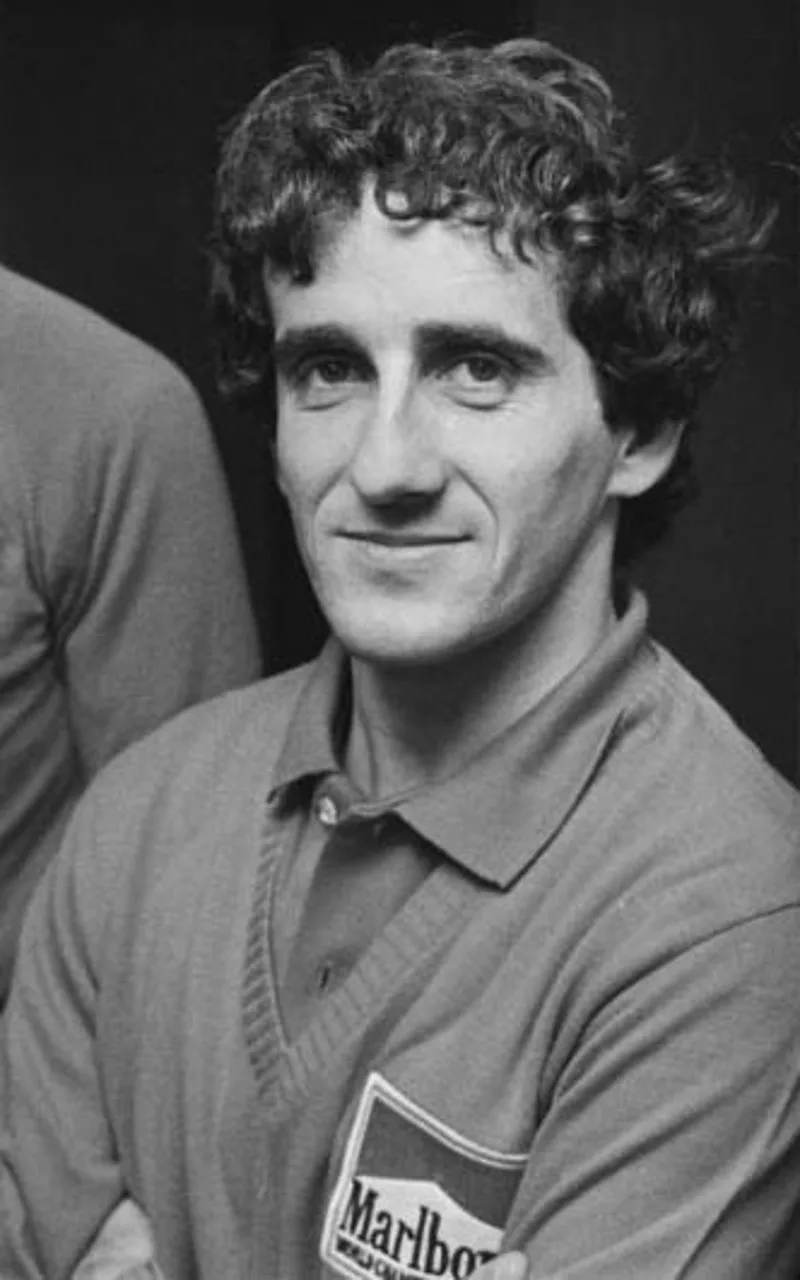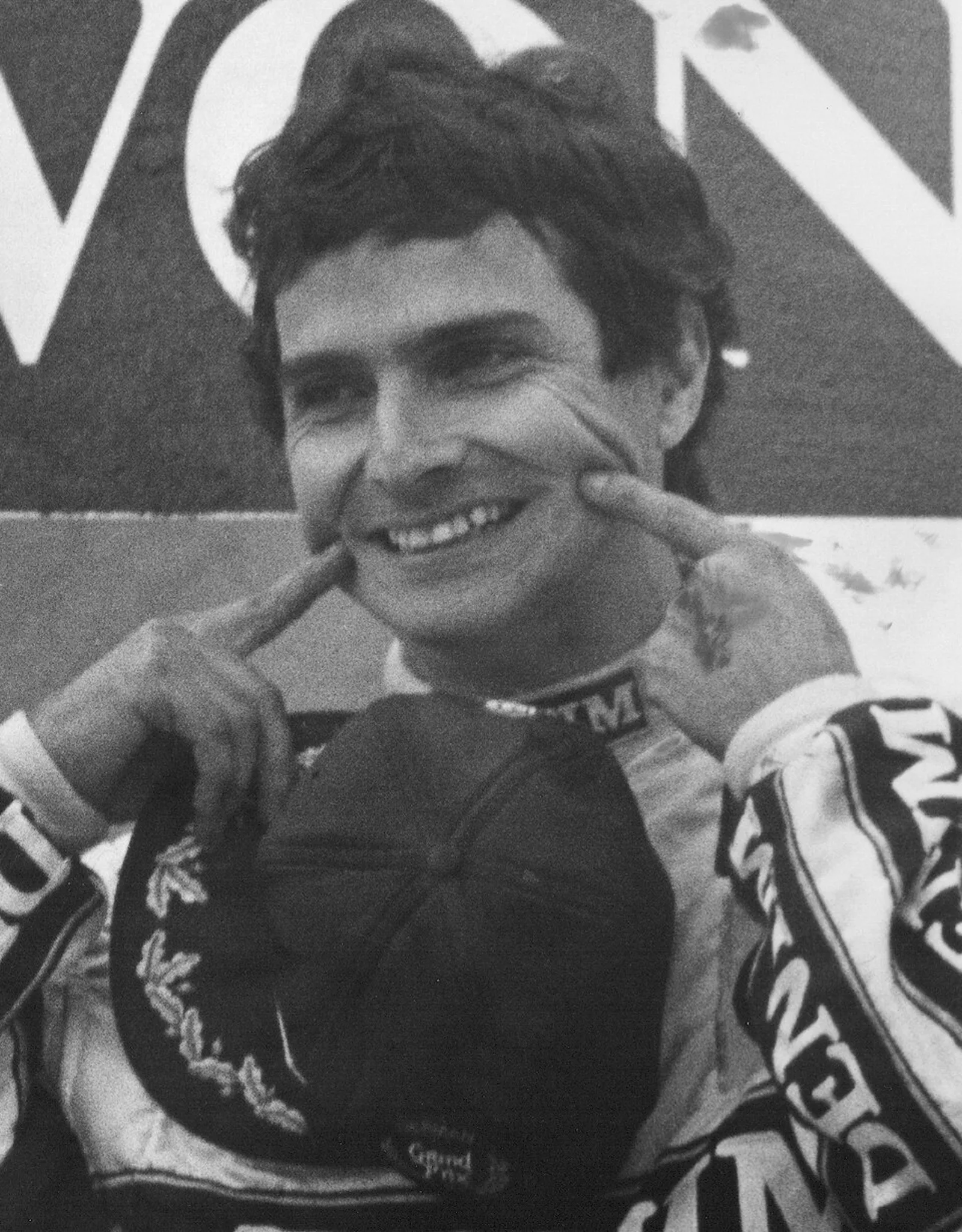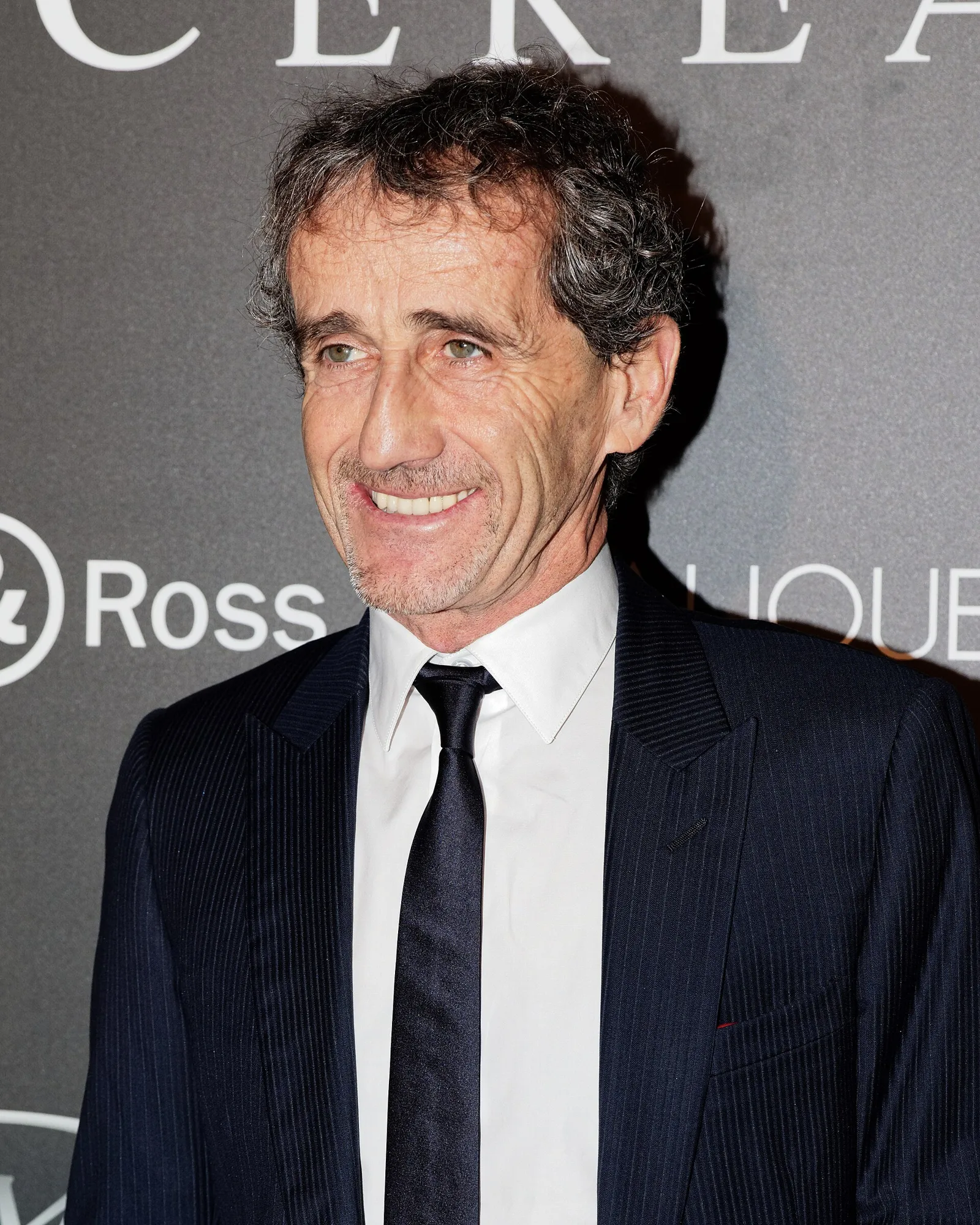
Four world championships, a bitter rivalry with Ayrton Senna at McLaren and a precise, economical style that set records for wins and podiums.
Alain Prost was a French driver who won four Formula One world championships between 1985 and 1993, driving for McLaren, Ferrari and Williams. He retired with 51 Grand Prix wins, a record at the time, and later ran his own team, Prost Grand Prix.
Alain Prost is a former French driver and team owner whose Grand Prix career ran from 1980 to 1993. Known as the Professor, he won four world championships for McLaren, Ferrari and Williams and retired with records for wins, fastest laps and podium finishes.
His career combined junior titles, a famously fierce rivalry with Ayrton Senna at McLaren and a late-career title with Williams. Later he ran his own team and took on roles in motorsport management, commentary and Formula E.
How did Alain Prost reach Formula One?
Prost was born in Lorette in the Loire region of France and took up karting at 14 after discovering the sport on a family holiday. He quickly became a full-time racer, and in 1976 he moved into open-wheel racing, winning the French Formula Renault title and all but one of the races. A European Formula Renault title followed in 1977, and he won the French and European Formula Three titles in 1979.
Those results attracted McLaren, which offered him a Formula One seat for 1980. Prost signed and made his debut at Buenos Aires, where he scored one point for sixth place. He finished 15th in the championship that year with five points, but he left McLaren with two years of his contract remaining because the car often broke down.
His decision to leave came down to the car's reliability and his feeling that the team had blamed him for accidents that were not his fault. He moved to Renault, where his early results began to show what he could do.
The Professor won four titles with three teams, and his rivalry with Senna still defines how McLaren's years are remembered.
What did Prost achieve at Renault?
Prost won his first Grand Prix at Dijon in 1981, his home race, and went on to win in the Netherlands and Italy that year. He finished fifth in the championship, seven points behind champion Nelson Piquet. In 1982 he won in South Africa and in Brazil, where he was awarded the win after Piquet and Keke Rosberg were disqualified.
The Renault years also brought friction. His relationship with teammate Rene Arnoux soured, and he came to feel that the French press favoured losers. In 1983 he finished second to Piquet by two points, retiring from the title decider with a turbo failure. Renault dismissed him two days after the season ended, and he returned to McLaren for 1984 within days.
In November 1982 he also raced in a non-championship Australian Grand Prix at Calder Park, where he took pole and led every lap, finishing 15 seconds clear of Jacques Laffite. That win is recorded as the first of three Australian Grand Prix victories.
How did Prost win his first title in 1985?
In 1984 Prost joined double champion Niki Lauda at McLaren, driving the MP4/2 with a TAG-Porsche turbo engine. He lost the championship to Lauda by half a point at the end of the season. He had won seven races to Lauda's five, but the Monaco race was stopped at half distance in heavy rain, and the half points that resulted decided the margin.
In 1985 he made history as France's first world champion. Five of the 16 Grands Prix that year were his and finished 20 points ahead of Michele Alboreto. He had also crossed the line first at San Marino, a result later struck off when his car was 2 kg underweight at scrutineering. Lauda retired at the end of that season, a decision he later linked to Prost's arrival.
The title earned Prost the Legion d'honneur, one of France's highest honours.
Why was the 1986 title so close?
Prost retained his title in 1986, despite a car that struggled against the Honda-powered Williams cars of Piquet and Nigel Mansell. He entered the last race at Adelaide second in the points, needing a strong finish. Mansell suffered a rear tyre failure at around 290 km/h (180 mph) while running third, and Prost held the lead to take the title.
He was the first driver since Jack Brabham in 1960 to hold the crown for a second year. Two other incidents that season underlined his determination: he ran out of fuel near the chequered flag at San Marino, and at the German Grand Prix he got out and pushed his car, though he could not reach the finish line.
How did the Senna rivalry shape McLaren?
For 1987 McLaren's new car lagged on power, and Prost won three races, breaking Jackie Stewart's record with his 28th victory at the Portuguese Grand Prix. He finished fourth in the championship that year, 30 points behind Piquet.
In 1988 Honda's engines went to McLaren, and the team won 15 of the 16 races. Prost had recommended Ayrton Senna as the second driver, but the team's promise of equal treatment soon proved strained. Senna took the title by three points, winning eight races to Prost's seven. Over 32 races together, Senna took 26 pole positions to Prost's four, but Prost scored 12 fastest laps to Senna's six.
The 1989 season turned on a bitter argument over engines and team support. Prost accused Senna of dangerous driving, and after Imola the two men were no longer on speaking terms. Prost announced he would join Ferrari for 1990, and at Monza McLaren's resources appeared to favour Senna. Prost won the race, and McLaren later asked him for a written apology before allowing him to finish the season.
At Suzuka, Prost clinched his third title after a collision with Senna at the chicane. Senna was disqualified, and a US$100,000 fine for dangerous driving came with a suspended six-month ban. Prost later said he had not intended the collision and that Senna had come past him at the chicane.
What happened at Ferrari in 1990 and 1991?
Prost was the first driver to sign for Ferrari after the death of Enzo Ferrari in 1988. The 1990 Ferrari 641 became the first serious challenger to Honda's grip, and Ferrari came within 11 points of the constructors' title. Five of his wins that year came in Brazil, Mexico, France, Britain and Spain, and he drove one of his finest races in Mexico, winning after starting 13th.
The championship again came down to Suzuka, where Prost trailed Senna by nine points. At the first corner Senna's car ran into Prost's, removing both from the race and securing the title for Senna. Senna later admitted he had deliberately crashed into Prost, partly in retaliation for 1989. Prost finished seven points behind Senna, and Ferrari finished second behind McLaren in the constructors' table.
The 1991 Ferrari 642 was less reliable than its rivals, and Prost won no races, though he scored five podiums. Prost openly criticised the handling of the car, and Ferrari dismissed him with one race left in the season.
How did Prost win his fourth title at Williams?
Prost spent 1992 on sabbatical, paid by Ferrari to stay away. He quickly recognised the potential of the Williams-Renault car and negotiated a deal for 1993 and 1994. His contract included a clause that blocked Senna from joining the team, a point that caused a bitter public exchange.
In 1993 Prost won seven of the first ten races and finished 26 points ahead of Senna. He secured the crown in Portugal with two rounds left, and Damon Hill was his teammate. All four of his titles had come with British-built cars, which led to an OBE in 1994.
He announced his retirement shortly before the title. He later revealed that Renault had pressed Williams to waive his clause, and he retired after the 1993 season in return for his 1994 salary. His final race in Adelaide ended on the podium.
What records did Prost set?
When he stepped away he topped the lists with 51 Grand Prix wins, 41 fastest laps and 106 podiums. He held the wins record until Michael Schumacher broke it in 2001, and he kept the fastest laps record until the same season.
Prost also took 16 front-row starts from 16 races in 1993, a record for the highest share of front-row grids in a single season, which he shares with Senna and Damon Hill. He is also the last Frenchman to win his home Grand Prix.
| Season | Team | Result |
|---|---|---|
| 1980 | McLaren | 15th with five points; debut point at Buenos Aires |
| 1981 | Renault | Fifth, seven points behind Piquet; first win at Dijon |
| 1982 | Renault | Fourth; wins in South Africa and Brazil |
| 1983 | Renault | Second, two points behind Piquet |
| 1984 | McLaren | Second, half a point behind Lauda; seven wins |
| 1985 | McLaren | Champion; five wins; 20 points ahead of Alboreto |
| 1986 | McLaren | Champion; first retained title since 1960 |
| 1987 | McLaren | Fourth, 30 points behind Piquet; 28th win |
| 1988 | McLaren | Second, three points behind Senna; seven wins |
| 1989 | McLaren | Champion after the Suzuka collision |
| 1990 | Ferrari | Second, seven points behind Senna; five wins |
| 1991 | Ferrari | No wins; five podiums; dismissed with one race left |
| 1993 | Williams | Champion; seven wins from the first ten races |
What did Prost do after retiring from racing?
After retiring, Prost worked as a television pundit and a technical adviser at McLaren, and he took part in public relations for Renault. He also set up his own team, buying the Ligier squad in February 1997 and renaming it Prost Grand Prix. The team scored points in its first season, finishing sixth in the constructors' table with 21 points.
The team later struggled. Peugeot engines proved heavy and unreliable, and the project ended in 2002 with debts of around $30 million. Prost then turned to other motorsport roles, including a three-time title as Andros Trophy champion on the ice from 2003 to 2012.
He co-owned the e.dams team in Formula E, which took three straight teams' titles across 2014-15 to 2016-17, and he was a special adviser to Renault Formula One from 2017.
How do historians assess Prost?
Prost is widely seen as one of the sport's greatest drivers. His four titles place him level with Sebastian Vettel and Max Verstappen for fourth on the all-time list. Colleagues praised his all-round ability, and Keke Rosberg described him as the best he had known. Bernie Ecclestone called him the greatest driver of all time, partly because he rarely received number one treatment.
His style was smooth and economical. He preferred to conserve brakes and tyres early in races, and he liked to win as slowly as possible. Jackie Stewart praised his artistry behind the wheel, and Adrian Newey noted that he could turn on his pace when he wanted to.