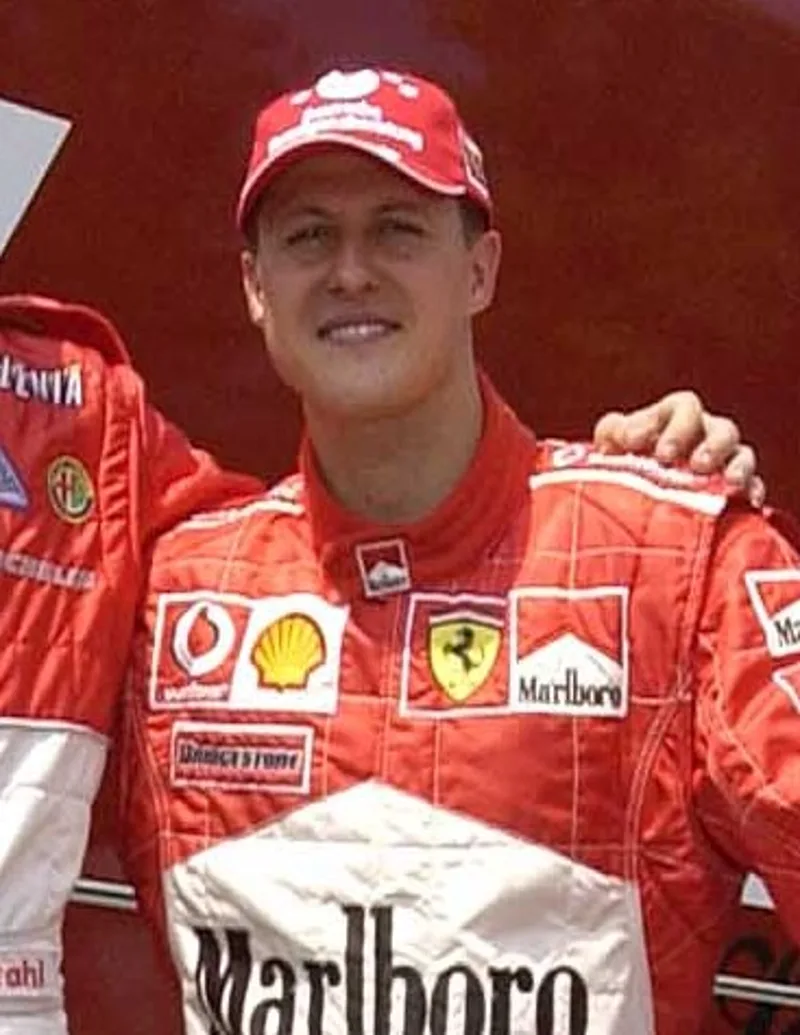
Michael Schumacher took a ninth win of the year from pole, Montoya chased him home and a season-record points total closed the championship.
Michael Schumacher won the 2001 Japanese Grand Prix for Ferrari at Suzuka on 14 October 2001. Juan Pablo Montoya finished second for Williams, and David Coulthard took third for McLaren. It was the 17th and final round of the championship.
Suzuka closed the 2001 season with a Ferrari victory, as Michael Schumacher turned pole position into his ninth win of the year. Juan Pablo Montoya and David Coulthard completed the podium for Williams and McLaren. The result closed a season in which the title battle had already been settled.
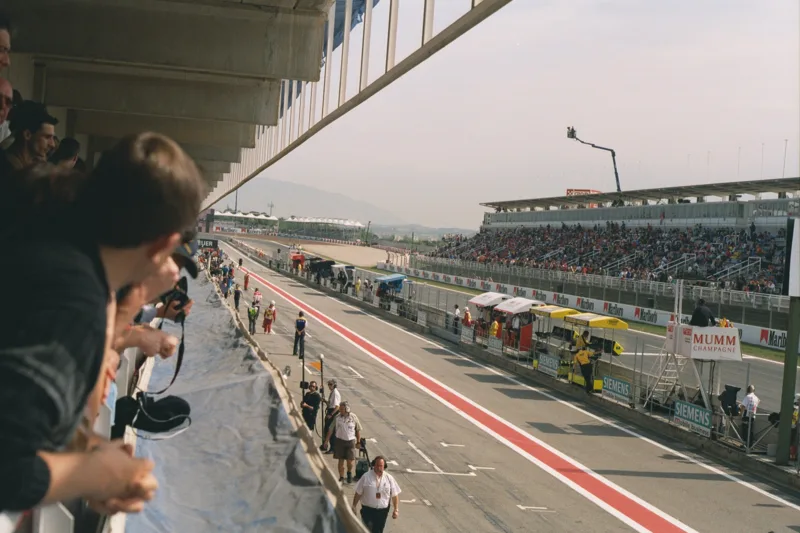
The race was held at the 5.859 km (3.641 mi) Suzuka Circuit in Mie, Japan, before 150,000 spectators. Some news websites had wrongly reported that the event would be postponed because of military action in Afghanistan after the September 11 attacks. The sport's governing body, the FIA, issued a statement denying the reports.
A season already settled
By the time the teams reached Japan, Schumacher had clinched the drivers' title at the Hungarian Grand Prix, where Ferrari had also taken the constructors' championship. The real contest was for second place. Coulthard led Rubens Barrichello by seven points, so Barrichello needed to win the race while Coulthard finished fifth or lower. Barrichello wanted to take second without help from his team-mate, and he said that he had to win the race himself.
Further down the standings, Sauber held a five-point lead over Jordan in the battle for fourth in the constructors' table. An appeal against the disqualification of Jarno Trulli from the United States Grand Prix, if it succeeded, would have trimmed that advantage by two points.
Teams used the weeks before Suzuka to prepare. BAR, Sauber and Jordan each tested for three days at Mugello between 2 and 6 October, while Benetton, Jaguar, McLaren and Williams worked at the Catalunya circuit. Ferrari spent six days at its Fiorano track, where Luca Badoer and Michael Schumacher worked on the car. Schumacher said he was only interested in winning, but he admitted there was a small chance Ferrari could help Barrichello finish second.
A ninth win of the year and a record points total closed the 2001 season at Suzuka, with Montoya chasing hard for second.
Entries, new parts and farewells
Eleven teams with a pair of drivers each lined up, every one representing a separate constructor, and the entry list was unchanged from the round before. Japan was the final Grand Prix for Jordan's Jean Alesi and for McLaren's two-time world champion Mika Hakkinen. It also marked the end for the Prost squad, which went bankrupt and closed during the off-season, and for Benetton, which was renamed Renault for 2002 in deference to its French owners.
Several teams used the race to test ideas for 2002. Ferrari brought a lighter and more rigid F2001 chassis, Williams ran a top-exit exhaust, and Honda supplied BAR and Jordan with a new V10 specification. Cosworth did the same for Jaguar, while Renault gave Benetton a new qualifying engine for the team's final race. Arrows fitted the aerodynamic package used in Hungary, and Minardi installed new titanium gearboxes in both cars.
Practice and qualifying
Four practice sessions came before Sunday's race. In the opening session on Friday, Schumacher set 1:37.443, 0.355 seconds ahead of Hakkinen. Tomas Enge crashed his Prost at the 130R corner and lost both right-hand wheels, which brought out a red flag. Enge complained of neck pain, but he left the car unaided.
Later on Friday, Alesi set the fastest lap of the second session at 1:35.454, 0.523 seconds ahead of Montoya. Heidfeld crashed at the S-curve at 150 mph (240 km/h) and was taken to the medical centre. Coulthard's right-front brake caught fire in the pit lane after a piece of trap tape became entangled in a brake cooling duct.
On Saturday morning Schumacher became the first driver to lap under 1:35 all weekend, with 1:34.711, which was 0.332 seconds quicker than Hakkinen. Ralf Schumacher then became the first driver to dip under 1:34 at Suzuka, with 1:33.969 in the closing minutes.
Qualifying ran for one hour, with twelve laps per driver and the 107% rule in force. Michael Schumacher took pole with 1:32.484, his 11th of the season and 43rd of his career. The lap also broke the circuit record set by Gerhard Berger in 1991. Montoya was seven-tenths of a second behind in second, and Ralf Schumacher was 0.111 seconds slower than his brother in third.
Barrichello qualified fourth, Hakkinen fifth and Fisichella sixth, with a new Renault engine in his Benetton. Coulthard was seventh, Trulli eighth and Button ninth, his best qualifying result of the season. Heidfeld took tenth, and Alesi was 11th in his final qualifying session. Raikkonen was 12th after learning his car was 12 kg (26 lb) overweight, and Irvine took 13th. Villeneuve was 14th, Frentzen 15th, De la Rosa 16th, Panis 17th, Alonso 18th, Enge 19th, Bernoldi 20th, Verstappen 21st and Yoong 22nd.
What happened at the start?
Schumacher moved to the inside line to stop Montoya from getting ahead into the first corner, and he kept the lead. Ralf Schumacher briefly challenged his brother but stayed third. Barrichello, running a light fuel load on a three-stop plan, passed Ralf on the inside into the left-hand 130R, while Fisichella's quick getaway took him past Hakkinen for fifth.
After the first lap Michael Schumacher led Montoya by 3.6 seconds. On lap two Barrichello went alongside Montoya on the inside, placing two wheels off the circuit to avoid contact. Montoya had more speed out of the chicane, however, and he retook second on the following lap. Fisichella spun 180 degrees as he left a corner, and he dropped from fifth to 12th.
Frentzen pitted unexpectedly on lap four to fit a new nose cone, having swerved to dodge De la Rosa at the chicane. On lap six, Raikkonen's left-rear suspension failed after a bump at the exit of Dunlop. His car spun at high speed, and Alesi steered right into it at 125 mph (201 km/h). Both cars hit the barriers, and debris and wheels were scattered across the track. Officials did not deploy the safety car, because the debris had not encroached on the racing line.
Schumacher ran wide onto the grass on lap nine, having misjudged his braking for the last chicane, but he kept the lead. From lap ten Montoya began to reduce the gap, as his Michelin tyres appeared to work better as they wore. Fisichella overtook his Benetton team-mate Button for eighth on lap 12.
Did the pit stops decide the race?
Yes, the stops were decisive. Schumacher ran on new tyres, while Montoya's scrubbed tyres took five or six laps to come in, which cost the Williams driver time. Hakkinen led for part of the middle stint, but the sequence of stops put Schumacher back in front, and the final stops set the order.
Michael Schumacher made his first stop on lap 17, an 8.8-second stop after which he rejoined fourth behind Hakkinen. Barrichello's first stop on lap 16 took 7.2 seconds and dropped him from third to eighth. Montoya led for three laps before his first stop on lap 21, which dropped him to fifth, just ahead of Barrichello and behind Coulthard.
Ralf Schumacher took over the lead and made his own stop two laps later. Hakkinen moved ahead on lap 24, yet after his stop Michael Schumacher was back in front. Irvine retired in the pit lane on lap 25 when the power supply to the fuel rig failed, leaving Jaguar unable to put fuel into his car.
Barrichello made his second stop on lap 28. As both drivers left the pit lane, Barrichello's engine either died or his speed limiter engaged, and Ralf Schumacher ran past him. The stewards decided not to penalise Ralf, because they concluded he could not have anticipated Barrichello slowing so suddenly.
On lap 32 Barrichello took fifth from Ralf Schumacher on the inside at the final chicane. Ralf cut the chicane for the third time to get back in front, and Barrichello then slipstreamed past on the straight. Ralf was not penalised on that occasion.
Michael Schumacher made his second stop on lap 36, which cost nine seconds and dropped him to third behind Hakkinen. That handed Montoya the lead, but slower traffic stopped him pulling clear. Hakkinen and Montoya both stopped on lap 38, Schumacher returned to first, and Coulthard made his final stop on the 40th lap. Barrichello, the last of the leading drivers to stop again, did so two laps later and rejoined fifth.
Who was penalised and who retired?
Ralf Schumacher picked up a ten-second stop-and-go penalty for cutting the final chicane repeatedly. Irvine retired on lap 25 when his fuel rig failed, Enge retired on lap 46 with a brake problem, and Fisichella lost fourth gear on lap 48. Bernoldi and Verstappen each served ten-second penalties later in the race and finished 14th and 15th.
On lap 49 Hakkinen pulled over on the start-finish straight and let Coulthard through into third. It was a way of returning earlier favours from Coulthard, who had helped him in the 1997 and 1998 races. Villeneuve, meanwhile, lost ninth to Heidfeld at the final chicane on lap 50.
De la Rosa had parked his car after 45 laps, because it had lost downforce and developed an oil leak, and the retirement of Fisichella on lap 48 was the final one of the race. Yoong took 16th, which was his first Formula One finish, and despite retiring Fisichella was the final classified finisher.
Results at a glance
| Position | Driver | Team | Note |
|---|---|---|---|
| 1 | Michael Schumacher | Ferrari | Ninth win of the season and 53rd of his career |
| 2 | Juan Pablo Montoya | Williams | 3.1 seconds behind; closed on the leader late on |
| 3 | David Coulthard | McLaren | Let through by Hakkinen on lap 49 |
| 4 | Mika Hakkinen | McLaren | Final Grand Prix of his career |
| 5 | Rubens Barrichello | Ferrari | Three-stop strategy; fifth after late stops |
| 6 | Ralf Schumacher | Williams | Ten-second penalty served for cutting the chicane |
Button finished seventh, Trulli eighth, Heidfeld ninth and Villeneuve tenth. Alonso was 11th after cars ahead of him retired, while Frentzen was 12th and Panis 13th after chassis adjustments slowed him. Bernoldi and Verstappen followed as described above, and Yoong's sixteenth place was a first finish for him in the sport.
What did the finish mean for the championship?
Schumacher finished the season with a record 123 points, a total that broke Alain Prost's all-time career mark. Coulthard was runner-up on 65 points, and Barrichello third on 56. Ferrari won the constructors' title by 77 points over McLaren, while Sauber secured fourth place, their best-ever finish, with BAR and Jordan scoring nothing.
How did the drivers react?
Schumacher called the win a fitting end to the season, conceding that Monza and Indianapolis had been difficult races for the team. Montoya criticised the Michelin tyres, which he said took too long to come in. Coulthard said finishing second in the championship was the best result he could have hoped for.
Alesi was relieved he had not hurt Raikkonen after the collision, and he described his career ending in that way as sad but part of racing. Raikkonen said he had a sore head and neck but was otherwise fine. Hakkinen thanked the people he had worked with during his nine years at McLaren, and he said he had let Coulthard past as a thank-you for earlier help.
Ferrari held a celebration at Monza on 21 October to honour its 2001 season. Barrichello called Ralf Schumacher a bad loser after their battle, and Ross Brawn admitted that the three-stop plan had been a big risk. Jean Todt praised Barrichello's contribution to the team, noting that he had finished third in the drivers' table at the end of a faultless year.