From French Formula 3 to Tyrrell, Ferrari, Benetton, Sauber, Prost and Jordan: a career built on wet-weather pace and one famous 1995 win.
Jean Alesi is a former French racing driver who competed in Formula One from 1989 to 2001. He won the 1995 Canadian Grand Prix with Ferrari and raced for Tyrrell, Benetton, Sauber, Prost and Jordan along the way. He also raced full-time in DTM from 2002 to 2006.
Jean Alesi began his career in karting and rallying before a late start in single-seaters brought him to Formula One. He was known for wet-weather pace and a passionate, sometimes volatile style, and he shares the record for most podium finishes before a first win, with fifteen. His one Grand Prix victory came with Ferrari in Canada in 1995.
His career ran through Tyrrell, Ferrari, Benetton, Sauber, Prost and Jordan, with a full DTM spell after Formula One. The story is one of talent that often outran the cars he drove.
How did Alesi reach Formula One?
Alesi started karting at 16 and raced in the French Renault 5 Turbo championship for two seasons from 1983. He won the 1987 French Formula 3 title, moved up to International Formula 3000 in 1988 and then won the 1989 title with Jordan, beating Erik Comas on countback after three wins to Comas' two.
That 1989 season also brought a one-off sports car appearance. In October he debuted a Ferrari F40 LM at the IMSA GT round at Laguna Seca, qualifying second, leading for six laps and finishing third overall behind two Audis. He also raced at Le Mans that year, but a fire forced him to retire in the fourth hour.
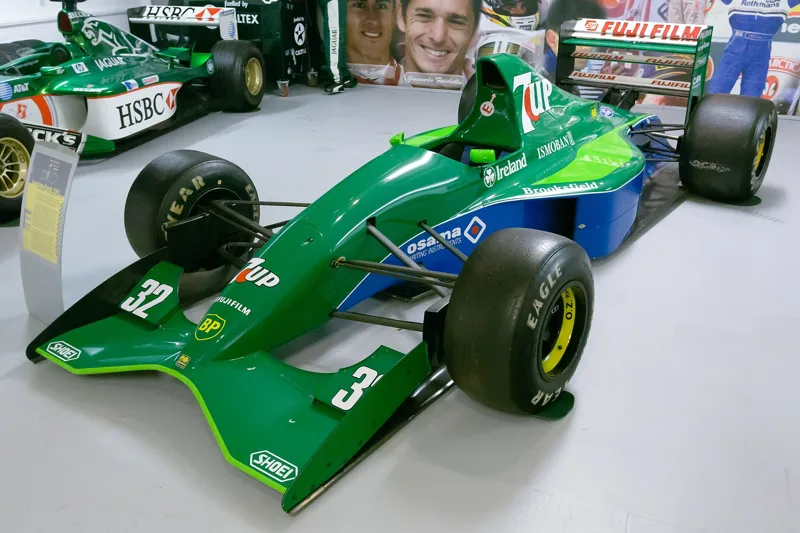
His Grand Prix chance came from a sponsorship clash. Ken Tyrrell's Camel deal conflicted with Michele Alboreto's Marlboro backing, and the team released Alboreto and signed Alesi for the 1989 French Grand Prix at Paul Ricard. He finished fourth in a Tyrrell-Ford after running as high as second.
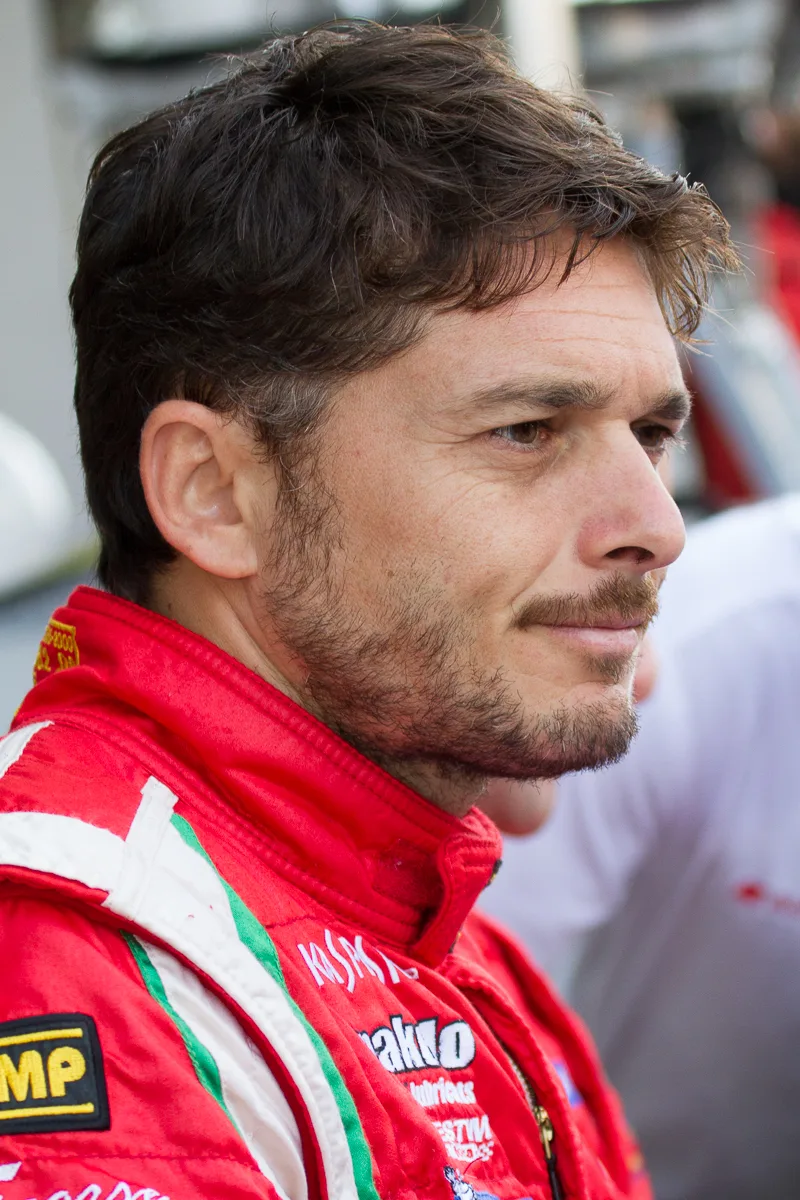
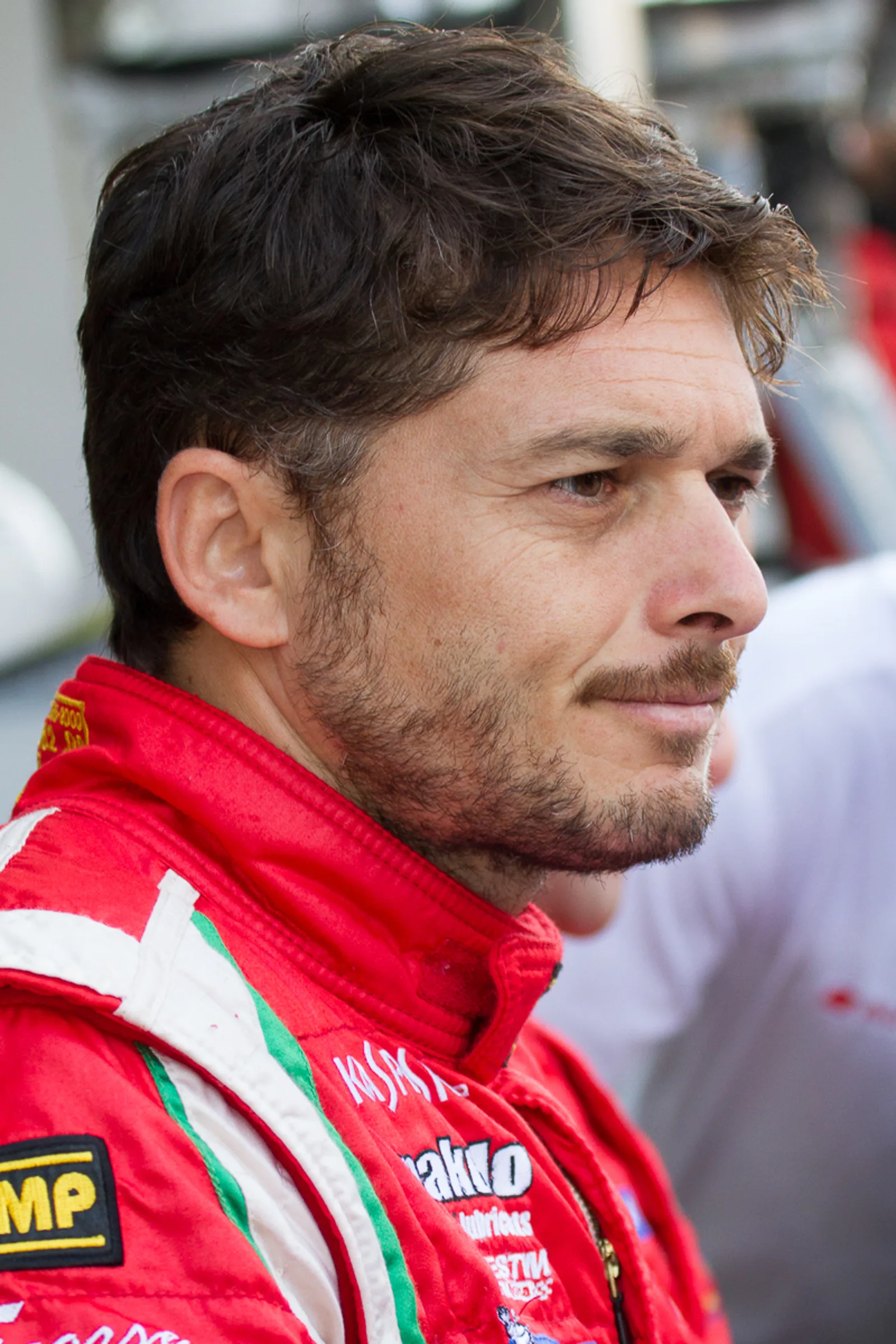
Ferrari's 1995 Canadian Grand Prix winner, whose wet-weather talent kept him in the points through a long, uneven career.
How did his Tyrrell years go?
Alesi became Tyrrell's lead driver in 1990 and finished second at Phoenix, the United States Grand Prix, after leading for 25 laps in a customer Ford V8 car. He re-passed Ayrton Senna after the Brazilian had first overtaken him for the lead. A second place at Monaco followed that year.
At Monza in 1990 he qualified fifth, less than a second slower than Senna's pole time. He passed Prost for third and was closing on Berger for second before he spun at the Rettifilo chicane. He finished ninth in the championship with 13 points, and the top teams were already keen to sign him.
What happened at Ferrari between 1991 and 1995?
Alesi joined Ferrari for 1991 to partner Alain Prost, after Williams delayed announcing his signature while it pursued Ayrton Senna. Ferrari had to pay Williams a fine of four million dollars. He scored third places at Monaco, Germany and Portugal that season, but the car was unreliable.
The 1991 Ferrari had nine retirements, including a mechanical failure while Alesi led the Belgian Grand Prix. Prost was sacked after the Japanese Grand Prix when he publicly called the car a truck, and Alesi became the team's number one for 1992. His 1991 total had been 21 points and seventh place.
Ivan Capelli partnered him in 1992, when the Ferrari F92A was further off the pace. Alesi retired in the first two races, then finished fourth in the third. He took third in a strong wet-weather drive at Spain, third in Canada and a strong third on the grid at Monza, ending seventh in the championship with 18 points.
Gerhard Berger arrived in 1993. Alesi finished third at Monaco, second at Monza and fourth after leading early at Portugal, and he took sixth in the championship with 16 points. In 1994 Berger became the team leader, and Alesi injured his back in a testing accident at Mugello, missing the Pacific and San Marino rounds.
He returned with fifth at Monaco and third at Canada, then finished second at the British Grand Prix after Michael Schumacher was disqualified. At Monza he took his first pole position, but his gearbox failed in the pit lane. He ended the season fifth with 24 points.
How did Alesi win the 1995 Canadian Grand Prix?
Alesi won the 1995 Canadian Grand Prix on his 31st birthday, after Michael Schumacher suffered mechanical problems with ten laps to go. The win ended a long Ferrari drought, since it broke the record for consecutive races without a win for a Ferrari driver, which stood at 67.
He was unaware that he had been leading for some time, because the mechanics had not had enough time to show his new position. He realised it when spectators got up in the stands, and Ferrari confirmed it with a P1 panel as he passed through the pit lane. Overwhelmed, he had tears in his eyes approaching Turn 1, and his car ran out of fuel after the finish line. Schumacher gave him a lift back to the pits.
The rest of 1995 was harder. He retired from several races after a second place at the British Grand Prix, and before the Hungarian Grand Prix he heard that he had lost his Ferrari drive to Schumacher. He had a heated argument with Jean Todt after Portugal, after refusing to defer to Berger under team orders, and he finished fifth in the championship with 42 points.
What were his Benetton and Sauber years like?
In 1996 Alesi joined Benetton when Schumacher left for Ferrari, and he swapped seats with Gerhard Berger in the process. He finished fourth in the championship with 47 points, the best result of his career. In 1997 the team's form was erratic, and he finished fourth again with 36 points.
The 1996 season began with a collision with Eddie Irvine's Ferrari, and Alesi later clashed with Mika Salo in the fourth race. After sixth at Imola he led at Monaco before a broken suspension ended his race. He then took five podiums, with a retirement at the British Grand Prix in between, and at Monza he led until the pit stops, when Schumacher's better strategy took the lead.
1997 was harder. Flavio Briatore warned him that it was his last real chance. He ignored several radio messages to pit at the Australian Grand Prix and ran out of fuel, pushed David Coulthard off the track at France, and was investigated for dangerous driving after the Austrian Grand Prix. He took pole at Monza, but led early before losing out to Coulthard after a slow stop.
Benetton did not renew his contract, and he joined Sauber on a two-year deal. Paired with Johnny Herbert in 1998, he used a team that ran Ferrari engines badged as Petronas. He achieved his last podium at the Belgian Grand Prix, behind the Jordans of Damon Hill and Ralf Schumacher, and finished 11th in the championship with nine points.
How did the Prost and Jordan years end his Formula One career?
Alesi moved to Prost Grand Prix in 1999 and 2000, a team owned by his former Ferrari teammate Alain Prost. The car was slow and unreliable, and he failed to score a single point in 2000, the first season without points in his career. Prost's technicians even went on strike for five minutes at the French Grand Prix over the car's problems.
In 2001 the car was more reliable, and he finished every race he started for Prost. He scored with sixth at Monaco and fifth at Canada, where he celebrated with donuts and threw his helmet into the crowd. A dispute followed the British Grand Prix, and he walked out after the German Grand Prix, where he scored a point. Jordan then needed a driver after sacking Heinz-Harald Frentzen, and Alesi joined from the Hungarian Grand Prix onwards.
He scored his last Formula One points with sixth in Belgium. At the 2001 United States Grand Prix he made his 200th start, and he finished his Formula One career at the Japanese Grand Prix, where he retired after colliding with Kimi Raikkonen on lap five. An Arrows offer for 2002 did not appeal, because he did not want another season in an uncompetitive car.
What did he do in DTM and other series?
After Formula One Alesi raced full-time in the German Touring Car Championship from 2002 to 2006 with Mercedes. He was fifth in 2002 with one win and fifth again in 2003 with two wins. In 2004 he was seventh with no wins, and in 2005 he won the opening race and finished seventh again. He was ninth in 2006 and then retired from DTM.
He then competed in the Speedcar Series in its two seasons. He finished fourth in 2008 with two wins and fifth in 2009 after taking two more wins. In 2010 he drove an AF Corse Ferrari F430 GT2 in the Le Mans Series, finishing second in the championship with Giancarlo Fisichella and Toni Vilander, and the trio took fourth in class at Le Mans that year.
In 2012 he attempted the Indianapolis 500 with a Lotus-badged engine and qualified 33rd for Fan Force United. The Lotus-powered cars were too underpowered to keep up, and both were parked after fewer than a dozen laps. Late that year he conceded he had given up on finding the sponsorship for a second attempt, and he unofficially announced his retirement from racing.
What made his driving style stand out?
Alesi was noted for his ability in wet weather and for being a mercurial, passionate racer. During his Ferrari spell his aggressive style and the number 27 on his car invited comparisons with Gilles Villeneuve.
His helmet was white with black and red lines and a deep blue top, an homage to Elio de Angelis. In 1999 it changed from white to silver because Red Bull was a sponsor at Sauber.
Honours and other ventures
Alesi appeared as himself in the 2001 film Driven, which is based around CART racing. He was a spokesman for the Direxiv team's 2008 bid for a Formula One place, which was ultimately beaten to the grid by Prodrive. In January 2011 Lotus Renault GP hired him as an ambassador and test driver for its T125 single-seater project, and on Top Gear he helped Jeremy Clarkson test one of those cars.
In 2013 he became a Pirelli ambassador. He was appointed a Knight of the Legion of Honour in 2006, and he legally changed his name to Jean Robert Alesi in 2005.
Career summary
| Years | Series | Team | Highlights |
|---|---|---|---|
| 1989-1990 | Formula One | Tyrrell | Second at Phoenix and Monaco in 1990 |
| 1991-1995 | Formula One | Ferrari | Canadian Grand Prix win in 1995 |
| 1996-1997 | Formula One | Benetton | Fourth in 1996 with 47 points |
| 1998-1999 | Formula One | Sauber | Last podium at the 1998 Belgian Grand Prix |
| 2000-2001 | Formula One | Prost, Jordan | Last points at Belgium in 2001 |
| 2002-2006 | DTM | Mercedes | Fifth in 2002 and 2003 |
| 2008-2009 | Speedcar Series | Various | Fourth in 2008, fifth in 2009 |
| 2012 | Indianapolis 500 | Fan Force United | Qualified 33rd |