Honda's Mie prefecture test track became one of Formula One's most loved venues, with a figure-of-eight layout and a history of title deciders.
The Suzuka Circuit is a 5.807 km (3.608 mi) Honda-operated track in Mie Prefecture, Japan, known for its figure-of-eight layout with an overpass. It has hosted the Japanese Grand Prix since 1987, and it has decided several world championships. Its official lap record stands at 1:30.965, set in 2025.
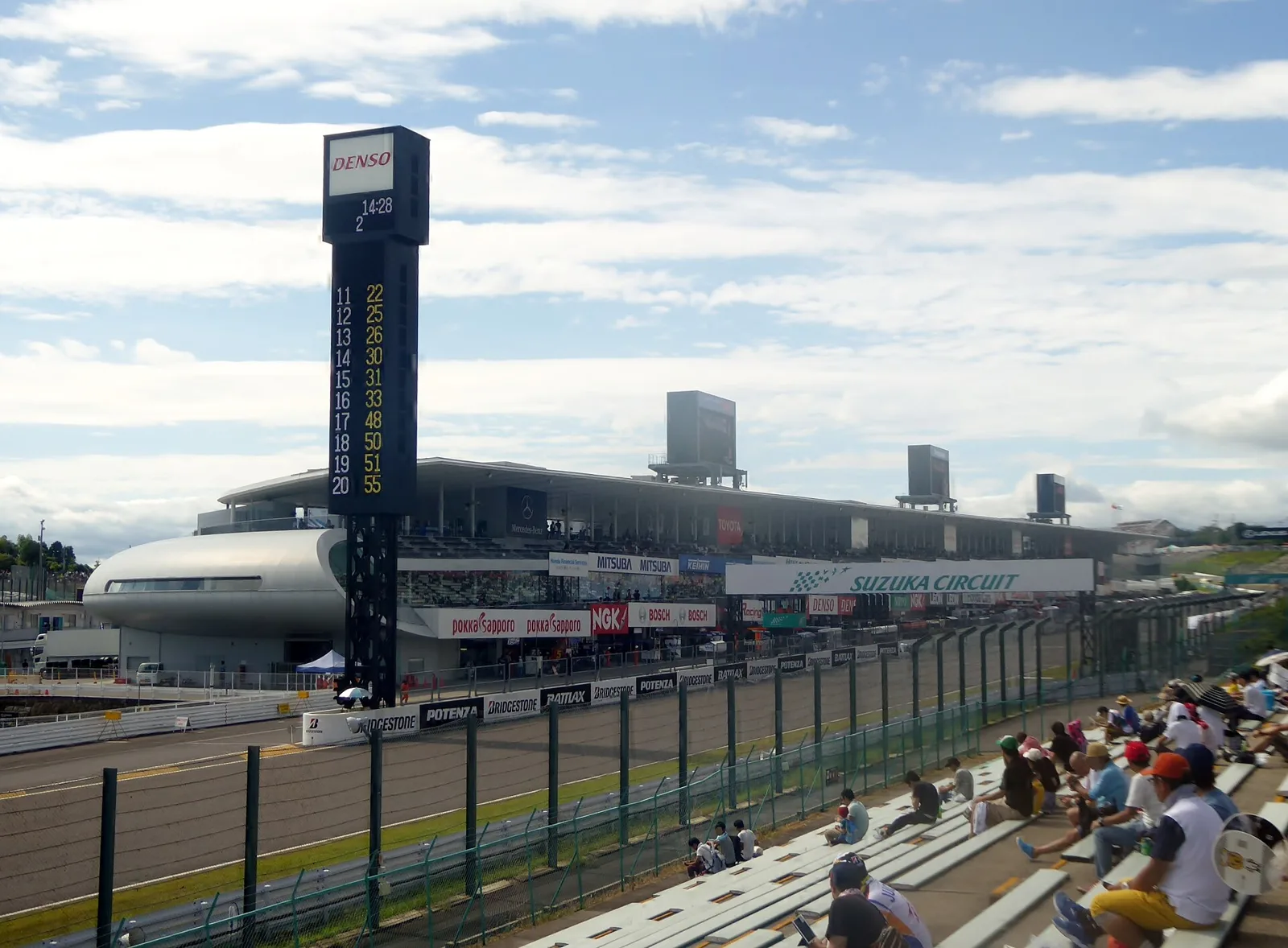
The Suzuka International Racing Course, usually called the Suzuka Circuit, is a 5.807 km (3.608 mi) motorsport track in Ino, Suzuka City, Mie Prefecture, Japan. It is operated by Honda Mobilityland, a subsidiary of Honda Motor Co, and it is best known for hosting the Japanese Grand Prix and the Japanese Super Formula Championship.
Its figure-of-eight layout, with an overpass carrying one section of the lap over another, sets it apart from almost every other circuit on the calendar. Drivers and fans often count it among the most enjoyed tracks in the world, and it has been the scene of many of the sport's most important title races.
Where did the Suzuka Circuit come from?
The Suzuka Circuit was conceived when Soichiro Honda decided in the late 1950s to develop a new permanent circuit in Mie prefecture. It was designed as a Honda test track in 1962 by the Dutchman John Hugenholtz, and it has a capacity of 155,000.
The track has a distinctive figure-of-eight layout. Its 1.2 km (0.75 mi) back straight passes over the front section by means of an overpass. Because the Fiorano circuit was downgraded to FIA Grade 2 in 2024, Suzuka is now the only FIA Grade 1 track with this layout.
The circuit is one of two Honda-owned tracks in Japan. Mobility Resort Motegi, which hosts the MotoGP Japanese Grand Prix, is the other.
A Honda test track with a figure-of-eight layout, where the title races and the most daring corners have written Japanese motor sport history.
How has the circuit changed since it opened?
The original layout was an extremely fast track with only one slow corner. Without the chicane added in 1983, some cars would go through the final long right-hander flat out and then pass the pits at more than 320 km/h (200 mph). The circuit has since been modified at least eight times.
| Year | Change | Purpose |
|---|---|---|
| 1983 | Chicane added at the last curve | Slow cars into the pit straight |
| 1984 | First part of Spoon made slower | Corner moved closer to the track to expand run-off |
| 1985 | First corner made slightly slower | Reduce speeds |
| 1987 | Upgraded to F1 and motorcycle standards | Degner split into two corners; more barriers and run-off |
| 2002 | Chicane and 130R modified | Dunlop runoff doubled to 25 m (82 ft) |
| 2003 | Chicane made slightly faster | Closer to the 130R |
| 2025 | Resurfacing from Turn 1 to Turn 8 | Refresh the surface ahead of the Japanese Grand Prix |
The 1987 upgrade was a major step. It made the circuit suitable for both Japanese Grands Prix of their respective championships, and the Formula One race there that year was the first held at Suzuka. More crash barriers, larger run-off areas and the removal of straw bales followed, although straw bales remained for the motorcycle race.
What are the circuit's configurations?
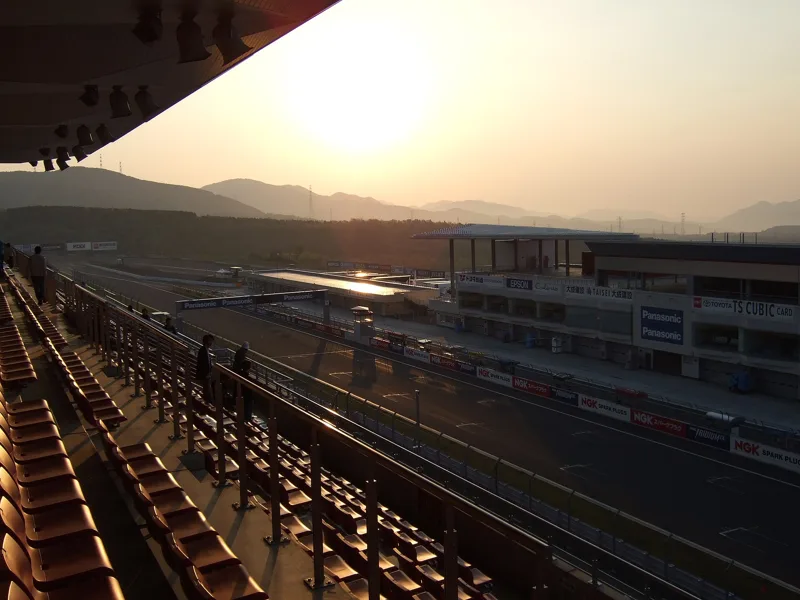
The circuit can be used in five configurations: the full car circuit, the full motorcycle circuit, the east course, the west car course and the west motorcycle course. The east course runs from the pit straight to the first half of the Dunlop curve, before returning to the pit straight through a tight right-hander.
The west course includes the rest of the full circuit and the crossover bridge. The start and finish line and the grid sit on the straight that approaches the overpass. A chicane between the hairpin and the 200R separates the west and full course sections for cars and motorcycles.
Why is the 130R such an important corner?
The 130R has been the focus of safety work for two decades. In 2002 Allan McNish, driving for Toyota, suffered a high-speed crash through the bump and into a metal fence, but he was not seriously injured.
The corner was redesigned as a double-apex section, leading to a much closer Casio triangle, which is a chicane. The problem persisted, and in 2003 MotoGP rider Daijiro Kato was killed when he crashed in the new section during the Japanese Grand Prix. MotoGP has not returned to Suzuka since that accident.
Which accidents changed the track?
Serious incidents have shaped the circuit at several points. On 3 November 1962 Ernst Degner crashed his factory Suzuki 50 during the inaugural All Japan Championship Road Race meeting, and the Degner curve is named in his honour. The Dunlop curve received larger run-off in 2002, and its corner was tightened slightly.
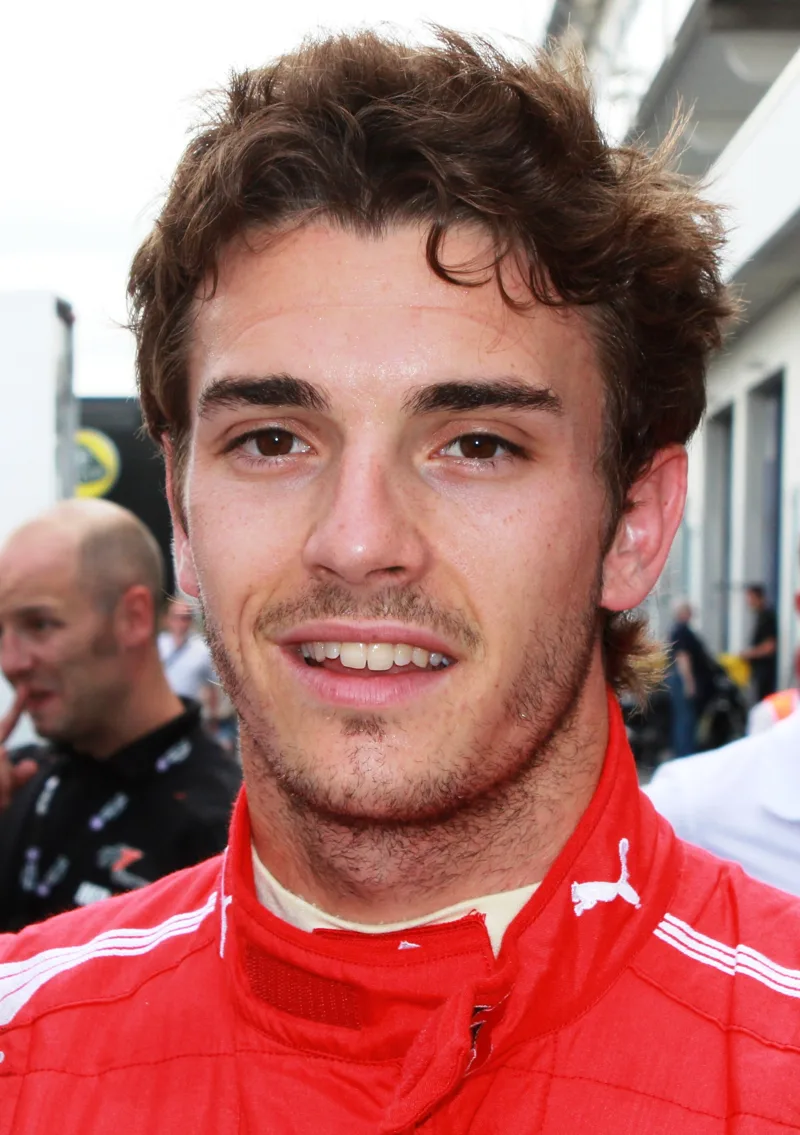
At the 2014 Japanese Grand Prix Jules Bianchi collided with a recovery vehicle and suffered serious injuries. He died in hospital nine months later. After that accident the organisers replaced the tractor involved with a large crane, and the Dunlop corner was changed again to meet revised safety standards.
Motorcycle racing also brought changes. After the 2003 Kato accident, Suzuka added a second chicane between the hairpin and the 200R. The motorcycle variant of the Hitachi Automotive Systems Chicane before the final turn was reconfigured at the same time.
Which championships were decided at Suzuka?
Suzuka has a long history as the setting for world championship deciders. The Japanese Grand Prix has been held there since 1987, and it has often been one of the last races of the season. Four consecutive seasons ended with a title decided at the track early in its history.
Those championships included 1988, which went to Ayrton Senna, and 1989, which went to Alain Prost in a controversial finish. Senna then won again in 1990 and 1991.
Formula One dropped the venue for the 2007 and 2008 seasons in favour of Toyota's Fuji Speedway. Suzuka closed for a year of renovations to make it compliant for 2009, and the Japanese Grand Prix returned there in 2009, 2010 and 2011.
What other racing takes place at Suzuka?
The Suzuka 8 Hours, a motorcycle endurance race, has been run since 1978 and usually attracts leading riders. The FIM ensures that no other motorcycle race clashes with it, because the major manufacturers take part in the event.
The Suzuka 1000 km counts as a Super GT points round and is the only race of that length in the series. In 2010 the GT500 pole time was 1:55.237, and in 2007 the GT300 pole time was 2:06.838.
NASCAR staged two exhibition races, the Thunder 100, on the east circuit in 1996 and 1997. The 1996 event was marred when pace car driver Elmo Langley died of a heart attack in practice. The World Touring Car Championship used the east section from 2011, and its 2012 pole time was 0:52.885.
What are the lap records at Suzuka?
Antonelli's official race mark for the current layout is 1:30.965, from the 2025 Japanese Grand Prix. Verstappen's qualifying effort at 1:26.983 that weekend is the unofficial benchmark, and it is quicker.
The gap between the two figures shows the difference between an official race lap and a qualifying effort. Official records are kept for races, so fans should read the two numbers as separate benchmarks.
How has Suzuka appeared in video games?
Suzuka was one of four tracks featured in the Namco game Pole Position II, and the Namco Museum versions called it the Wonder Circuit. It also appears in the Final Lap series from 1987 and in the 1992 arcade game Suzuka 8 Hours.
The track has been recreated in many racing titles, including Forza, Gran Turismo and iRacing. Project CARS uses a Japanese circuit inspired by Suzuka called Sakitto, and Suzuka has been modded into Mario Kart Wii.