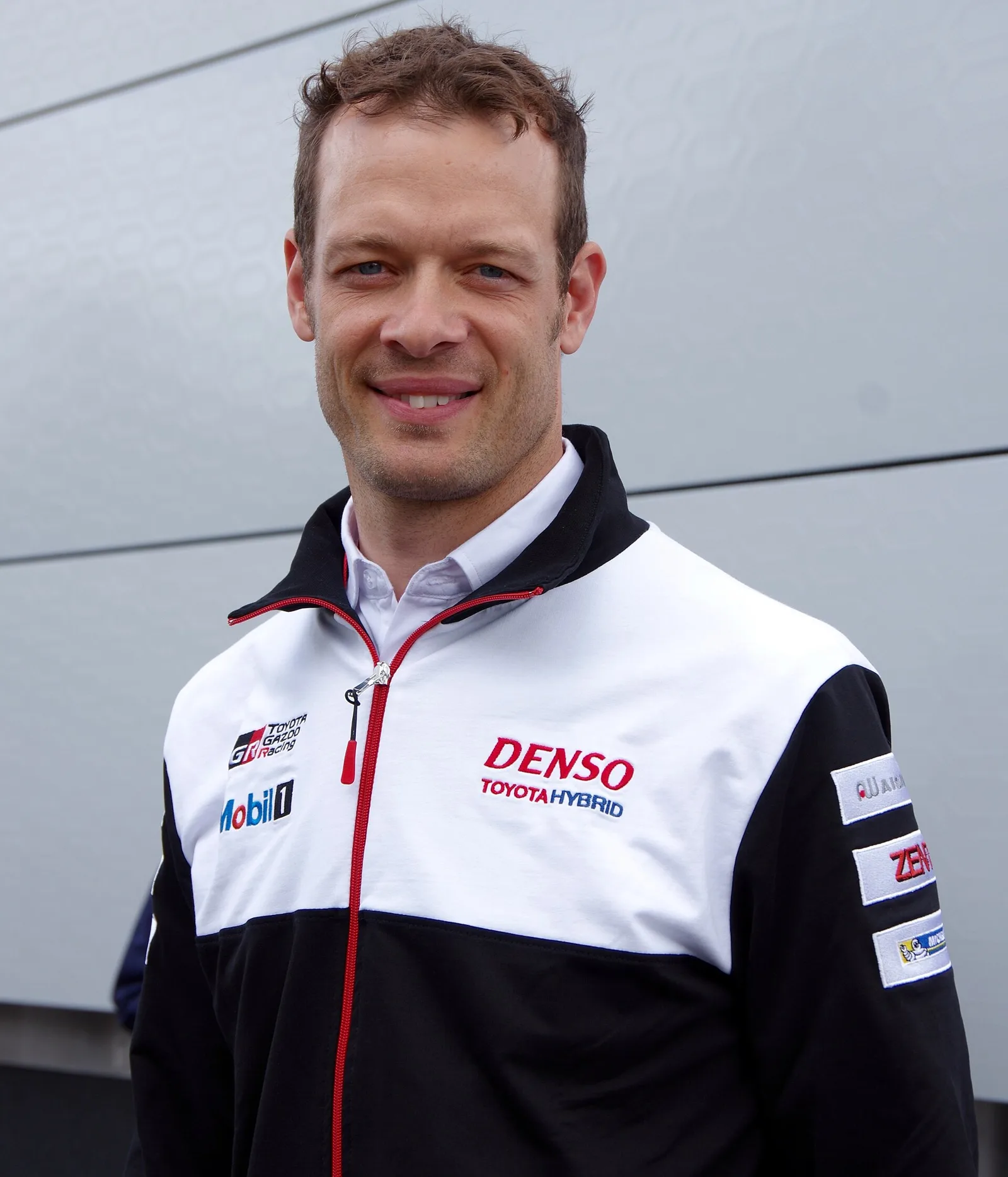
An Austrian driver who won Le Mans twice, raced 69 Grands Prix and later chaired the Grand Prix Drivers' Association.
Alexander Wurz raced in 69 Grands Prix between 1997 and 2007 for Benetton, McLaren and Williams, taking three podiums along the way. The Austrian later chaired the Grand Prix Drivers' Association and built a road-safety business with his father.
This Austrian had a Formula One stint between 1997 and 2007 and later became a motorsport executive and businessman. He won the 24 Hours of Le Mans in 1996 and again in 2009, the second time with Peugeot.
Who is Alexander Wurz?
Alexander Wurz is an Austrian former Formula One driver who competed from 1997 to 2007. He is remembered for two Le Mans wins and for 69 starts in Formula One spread over six seasons, which brought three podiums with Benetton, McLaren and Williams. Later he moved into broadcasting and driver representation.
He came into the world on 15 February 1974 in Waidhofen an der Thaya, a town in Lower Austria. Franz Wurz, a former rallycross driver whose European titles came in 1974, 1976 and 1982. As a youngster he also rode in cycling events, and at the age of 12 he won the BMX World Championship in 1986.
Like most Formula One drivers, Wurz began in karting. He moved into Formula Ford in 1991 and switched to the German Formula Three Championship in 1993. In 1995 a collision with the safety car at the AVUS circuit ended a race he had been leading.
Wurz won the 24 Hours of Le Mans in 1996 with Joest, alongside Davy Jones and Manuel Reuter, and he remains the youngest winner in the race's history.
How did his Formula One career begin?
Wurz made his Formula One debut on 15 June 1997 at Montreal, driving for Benetton as a stand-in for Gerhard Berger, who was ill. He finished on the podium at the 1997 British Grand Prix in only his third race, before returning to a test role when Berger came back into the car.
A regular Benetton race seat followed for 1998, and he stayed at the team for three more years alongside Giancarlo Fisichella. That season he edged his team-mate by one point and shared seventh place in the drivers' championship with Heinz-Harald Frentzen.
At the 1998 Monaco Grand Prix he ran second for a period behind Michael Schumacher. Schumacher then tried to pass him at the Loews hairpin and their cars touched. The contact broke Wurz's suspension, sent him into a spin and left him to crash at the Nouvelle Chicane after leaving the tunnel, ending a race that had looked promising.
Benetton's B199 was not competitive in 1999, which hurt both drivers, although Fisichella climbed onto the podium in Canada. The 2000 campaign was similar: Wurz's only points came at the Italian Grand Prix, whereas Fisichella finished on the podium three times. Benetton's last season before it became Renault came in 2001, and by then Jenson Button had taken his place in the car.
What was his role at McLaren?
Wurz was a McLaren test driver from 2001 to 2005, a role that kept him close to race seats he often hoped for. In 2005 he stepped in for the injured Juan Pablo Montoya at the San Marino Grand Prix, finishing fourth on track before being promoted to third when two BAR-Honda drivers were disqualified.
That result gave him the longest interval between podium finishes on record, at eight years. Wurz had been eager to return to a full race seat since joining McLaren. Rumours linked him to a Jaguar drive in 2003, but McLaren were struggling with a troubled new car and blocked the move to keep him as a development driver.
In 2002 he had also been close to a race promotion to replace Mika Hakkinen. When Kimi Raikkonen took over the seat, Wurz remained in the testing role, which meant his race career stayed on hold for several more years.
How did he finish his Formula One career?
Wurz joined Williams as its official test and reserve driver in 2006 and took a race seat for 2007 in place of Mark Webber. He scored his last points at the European Grand Prix that season, and on 8 October 2007 he announced his immediate retirement, pointing to his own uncertain commitment as the chief factor.
At the Monaco Grand Prix on 27 May 2007 he finished seventh after qualifying 11th, scoring his first points for Williams. At the Canadian Grand Prix on 10 June 2007 he came third again after starting 19th on the grid, the third podium of his Formula One career. He nearly repeated the result at the European Grand Prix but could not get past Webber at the final chicane.
His last start came at the 2007 Chinese Grand Prix. For the closing round in Brazil, the Williams test driver Kazuki Nakajima took over the car. Wurz's later Formula One roles were mostly behind the scenes, starting with the Honda test driver post for 2008, which continued when the team became Brawn GP in 2009.
At the 2008 Singapore Grand Prix he drove the medical car after the regular driver, Jacques Tropenat, fell ill. He did not return to racing in Formula One after 2009, but he rejoined Williams in 2012 as a mentor to its less experienced drivers, Bruno Senna and Pastor Maldonado.
Why did his Le Mans wins matter?
Wurz won the 24 Hours of Le Mans in 1996 with Joest, alongside Davy Jones and Manuel Reuter, and he remains the youngest winner in the race's history. He won again in 2009 for Peugeot, sharing the car with Marc Gene and David Brabham, and the 13-year gap between his two wins is the longest in the race's history.
In 2008 he joined Peugeot's driving squad for Le Mans and also raced in the 1000 km of Spa, part of the Le Mans Series. The 2009 win came in a works Peugeot 908. Peugeot Sport Total kept him on its books until 2011, yet no further Le Mans win came. Endurance racing kept him busy throughout that period, and the programme gave him a second strand of success alongside his earlier single-seater career.
In 2010 he also won the 12 Hours of Sebring with Gene and Anthony Davidson, and the 1000 Miles of Road Atlanta with Stephane Sarrazin and Franck Montagny. Together with Le Mans, those victories made him a winner of the three major sportscar classic races in a Peugeot 908.
In November 2011 Toyota announced that Wurz would be among its factory drivers for a 2012 return to Le Mans. He was to drive the company's LMP1 hybrid car with Nicolas Lapierre and Kazuki Nakajima.
What has he done since retiring from racing?
Since 2008 Wurz has worked as a Formula One expert for Austria's state broadcaster ORF, and he has chaired the Grand Prix Drivers' Association since October 2014. He also serves on safety bodies linked to the FIA, shaping circuit standards and safety initiatives.
Wurz commented on Formula One sessions for ORF alongside Ernst Hausleitner. In October 2014 he became chairman of the GPDA, the longest-serving head the association has had. Under his leadership the body pressed for the Halo cockpit protection, and he argued that its protective purpose should come first despite objections about how it looked.
As GPDA chairman and an FIA expert representative, Wurz takes part in safety commissions that shape how circuits are approved and how run-off areas are configured. He also contributes to initiatives such as the FIA Safety Week seminars, and he has pressed FIA president Mohammed Ben Sulayem for action following worrying roll-hoop failures.
He has also served occasionally as a driver steward, which puts him among the officials who judge incidents on track.
What is his road-safety and circuit design work?
In 2006 Wurz and his father founded Test and Training International, a road-safety and driver training company. Wurz also designs circuits through Wurz Design, which has masterplanned the Qiddiya Speed Park in Saudi Arabia. The company works closely with the FIA, which he has supported since 2011 as an operating partner of its Young Driver Excellence Academy.
Test and Training International, known as TTI, operates from sites in Vienna, Teesdorf and Monaco. In 2015 it won the Prince Michael International Road Safety Award, recognising its evidence-based training programmes. Its training methods influenced rules in Luxembourg, Switzerland, Finland and Poland, and underpinned an Austrian road-safety law passed in 2002. The company works with leading motorsport series, including Formula One, the World Endurance Championship, MotoGP and rallying, as well as car makers and public authorities.
Wurz, as founder and creative lead, runs Wurz Design, which focuses on single-seater circuits, motorcycle layouts, rallycross, off-road venues, drag strips, karting and test facilities. Notable projects include the masterplan for Qiddiya Speed Park, which is due to host the 2027 Saudi Arabian Grand Prix, and a feasibility study for a circuit in Rwanda that would host a Grand Prix.
Team Superfund and his other ventures
On 31 May 2009 Wurz announced an entry for his own team, Team Superfund, into Formula One. The application was unsuccessful. The team was one of several newcomers hoping to race from the 2010 season, and it was funded by Christian Baha, owner of the Superfund Group, with Cosworth engines in mind.
Wurz reportedly favoured linking the team with an existing UK constructor, sharing that firm's premises and workforce while Superfund set up its own base, possibly in Austria.
Wurz also followed his father into rallycross. In May 2018 he announced a competitive debut at the World RX of Norway at Lankebanen, in a Ford Fiesta Supercar entered by MJP Racing Team Austria. The entry added rallycross to a varied career.
Family and personal life
Wurz lives in Monaco with his wife, Julia Horden. The couple have three sons, Charlie, Felix and Oscar. Charlie, the eldest, has raced in FIA Formula 3 with Jenzer and Trident, while Oscar, the youngest, claimed the 2024 Formula 4 CEZ title.
Wurz once raced with different coloured boots on each foot. Following his comeback in 2007 he switched to a matching pair.
Career summary at a glance
| Period | Team | Role |
|---|---|---|
| 1997 | Benetton | Race driver, debut at Montreal |
| 1998 to 2000 | Benetton | Race driver with Giancarlo Fisichella |
| 2001 to 2005 | McLaren | Test driver, one race start in 2005 |
| 2006 | Williams | Official test and reserve driver |
| 2007 | Williams | Race driver, retired 8 October 2007 |
| 2008 to 2009 | Honda and Brawn GP | Test driver |
| 2012 | Williams | Mentor to Bruno Senna and Pastor Maldonado |
| Totals | Formula One | 69 Grands Prix, three podiums |