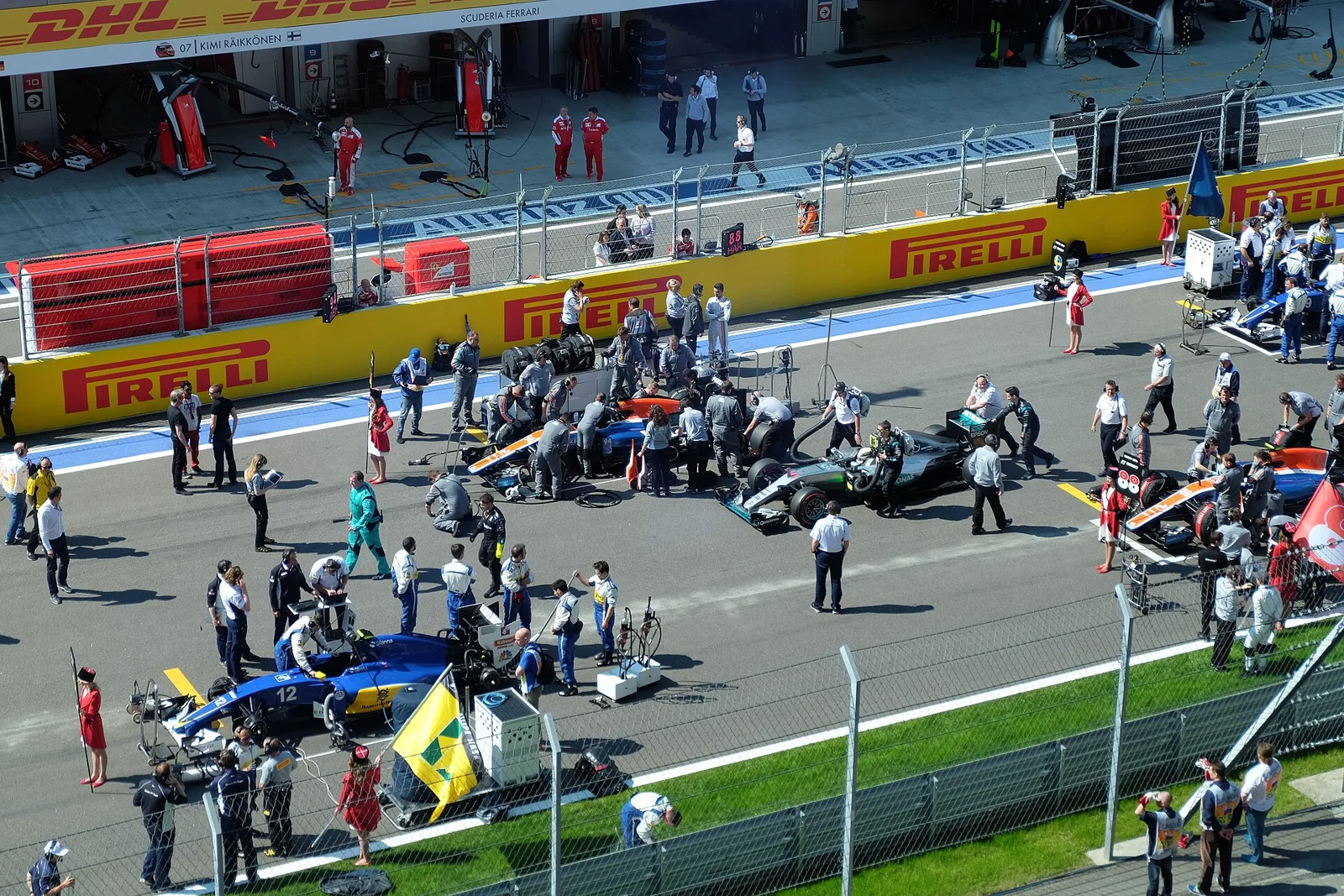
Nico Rosberg took pole, the lead, the fastest lap and the win in Sochi, while a first-corner clash ended Sebastian Vettel's race and set off a row inside Red Bull.
Nico Rosberg won the 2016 Russian Grand Prix on 1 May 2016 in Sochi, starting from pole and completing a grand slam of pole, victory, fastest lap and every lap led. The result pushed his championship lead over Lewis Hamilton to 43 points after the fourth round of the season.
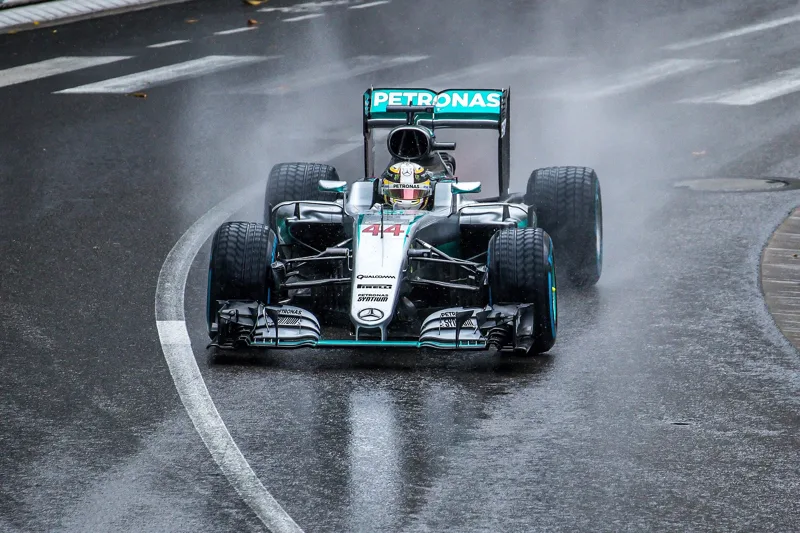
The 2016 Russian Grand Prix was held on 1 May 2016 at the Sochi Autodrom, the fourth round of the Formula One season. Nico Rosberg dominated the weekend, took pole and held the lead for all 53 laps, while Lewis Hamilton and Kimi Raikkonen completed the podium. The result gave Rosberg a 43-point lead in the drivers' championship, but the most talked-about moment came on the opening lap, when a collision ended Sebastian Vettel's race.
Why did Sochi matter for the title race?
Rosberg arrived with a 36-point advantage over his Mercedes team-mate, having taken the maximum 75 points from each of the first three rounds. Daniel Ricciardo was third in the standings, three points behind Hamilton. Mercedes led the constructors with 114 points, 53 ahead of Ferrari and 57 clear of Red Bull, which made Sochi an important chance for the chasing teams to make up ground.
The race was the fifth running of the Russian Grand Prix, and the third time it had counted towards the World Championship since the series began in 1950. Two earlier editions, in 1913 and 1914, had been held before the event returned to the calendar in 2014.
One weekend, one pole, one fastest lap and one collision that changed a Red Bull line-up.
What new safety idea did Red Bull test in Russia?
Red Bull used the first practice session to test the aeroscreen, a cockpit protection device developed after serious head injuries in past accidents. Drivers including Ayrton Senna, Jules Bianchi, Justin Wilson and Henry Surtees were struck by flying debris, and the aeroscreen was a rival to the halo that Ferrari had tried in pre-season testing.
Daniel Ricciardo completed one installation lap with the device fitted, and it was then removed for the rest of the session. He said the screen did not restrict his view, because it sat roughly where the mirrors are, and that his peripheral vision was fine.
How did tyres and the rules shape the weekend?
Pirelli, the sole tyre supplier, brought its medium, soft and supersoft compounds, as it had in the previous three rounds. Each driver had to set aside one set each of the two hardest compounds for the race, plus one set of supersofts for Q3 if they progressed. The other ten of the thirteen sets were the driver's choice. Russia also marked the 100th race for Pirelli since the company returned to the sport in 2011.
How did the practice sessions go?
Two ninety-minute sessions were held on Friday, followed by a one-hour session on Saturday before qualifying. In the opening session Rosberg was fastest for Mercedes at 1:38.127, more than seven-tenths ahead of Hamilton. Both chose the supersoft tyre, while the two Ferraris of Sebastian Vettel and Kimi Raikkonen ran the softer compound and were third and fourth. Several drivers ran wide or spun, including Hamilton and Vettel.
Two reserve drivers stepped in on Friday. Sergey Sirotkin drove for Renault in place of Kevin Magnussen, while Alfonso Celis Jr. took over from Nico Hulkenberg at Force India. Celis finished last, more than three seconds behind his team-mate Sergio Perez. Later in the weekend Magnussen returned to his garage to work on his car rather than stopping for a weigh-in, and he was sent to the back of the grid from the pit lane.
Hamilton led the second session at 1:37.583, but he spun at turn four and flat-spotted his tyres. Vettel split the Mercedes drivers, though electrical trouble had cost him time, and Rosberg's super-soft run was compromised by yellow flags after Romain Grosjean spun. Saturday's session saw Hamilton beat Rosberg by 0.068 seconds, and Vettel completed the most laps of the weekend in preparation for a heavier fuel load.
How did qualifying settle the grid?
Qualifying had three segments of 18, 15 and 12 minutes, with six drivers eliminated after each of the first two. Hamilton set the fastest time in the first segment, a new track record of 1:36.006, but the stewards investigated him for rejoining the track early after running wide at turn two. He received a reprimand and kept the time.
In the second segment Rosberg was half a second quicker than his team-mate, and his time was 1.7 seconds quicker than the previous year's pole. Both McLarens were knocked out in 12th and 14th. Daniil Kvyat took the last place in Q3 and pushed Carlos Sainz Jr. into 11th. Daniel Ricciardo's wing mirror hung off the car on his final timed lap, and both Haas cars and Nico Hulkenberg were eliminated.
Q3 began with Hamilton unable to take part after a failure in the turbo hybrid system, the same problem that had hit him in China. Rosberg then took pole, even though his final lap was spoiled by a lockup into turn 13. Vettel was second fastest but had a five-place grid penalty and would start seventh, which moved Valtteri Bottas onto the front row. After qualifying Mercedes swapped Hamilton to his spare, rebuilt power unit, avoiding a penalty for a new one.
| Q3 order | Driver | Grid note |
|---|---|---|
| First | Nico Rosberg | Pole, despite a lockup into turn 13 |
| Second | Sebastian Vettel | Started seventh after a five-place penalty |
| Third | Valtteri Bottas | Moved onto the front row |
| Fourth | Kimi Raikkonen | Ahead of Massa, Ricciardo and Perez |
| Fifth | Felipe Massa | Williams, ahead of Ricciardo |
| Sixth | Daniel Ricciardo | Red Bull, mirror damage in qualifying |
| Seventh | Sergio Perez | Force India, ahead of Kvyat |
| Eighth | Daniil Kvyat | Red Bull, took the last Q3 place |
| Ninth | Max Verstappen | Red Bull, ninth in Q3 |
What happened at the start?
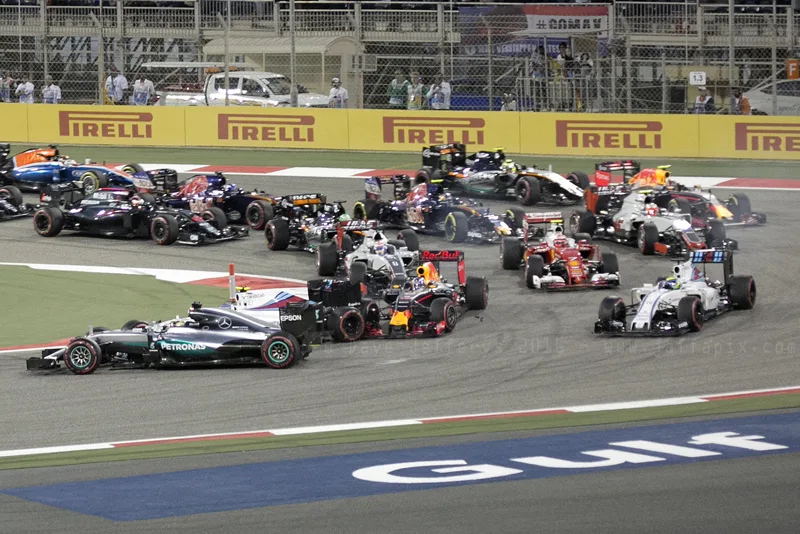
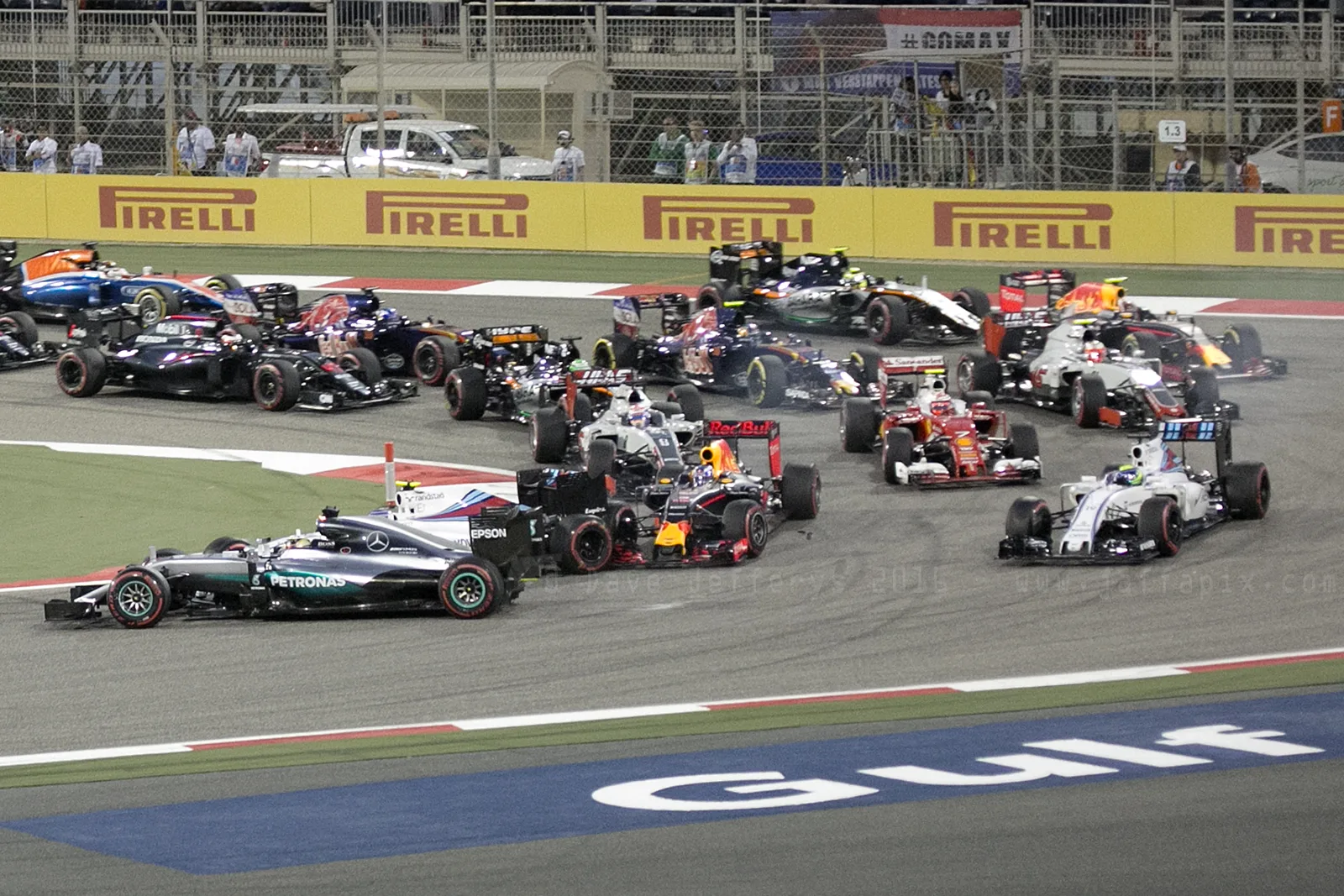
Several cars made contact at turn two on the opening lap. Kvyat hit Vettel from behind, and then Vettel went into the barrier at turn three and retired. Further back, Esteban Gutierrez struck Hulkenberg, who collected Rio Haryanto, and both drivers were out of the race almost immediately.
The safety car was called out while the debris was cleared. Several cars including Ricciardo, Kvyat and Perez used the period to repair damage in the pits. The order at the restart on lap four was Rosberg, Raikkonen, Bottas, Massa and then Hamilton, who had kept out of trouble and moved up to fifth.
How did the middle of the race unfold?
Bottas, the first front runner to pit, changed tyres on lap 17, and Hamilton followed one lap later. Hamilton then moved ahead of Raikkonen and reached third on lap seven, before Raikkonen pitted on lap 20 and rejoined behind Hamilton. Rosberg kept leading comfortably, with Verstappen, who had made his first stop on lap 23, dropping back.
Race control handed out a range of penalties through the middle of the race. Sainz forced Jolyon Palmer off the track at turn two on lap 23 and received a ten-second time penalty. Kvyat, who had dropped to last after an early stop and a ten-second stop-and-go for his contact with Vettel, moved back up through the field as others made mistakes.
Verstappen's race ended on lap 34, when a power unit failure forced him out while he was sixth. Rosberg began to lap backmarkers on lap 31, and the gap to Hamilton dropped from more than eleven seconds to about seven. Hamilton later reported a water pressure problem, and his gap to Rosberg grew back to 13 seconds by lap 41.
Pascal Wehrlein's stop on lap 41 went badly wrong and left him stationary for almost a minute, which dropped him to last on the road. Massa pitted from fifth on lap 47 and kept his place ahead of Alonso, while Raikkonen cut the gap to Hamilton to eight seconds on lap 49.
How did Rosberg complete the grand slam?
Rosberg claimed pole, the race win, the fastest lap and every lap in the lead, which made it a grand slam, the first of his career. He was the 24th driver in Formula One history to achieve that feat, and his seventh consecutive victory matched the sequence of Alberto Ascari, Michael Schumacher and Vettel.
Hamilton and Raikkonen finished on the podium, ahead of the two Williams drivers, Bottas and Massa. Button then passed Sainz for tenth, and Ricciardo moved ahead of Palmer for 12th a lap later.
What was the fallout from the first-lap collision?
The first-lap clash between Kvyat and Vettel became the main talking point after the race. Vettel's radio outburst was described as one of the most explosive heard from a team radio for years. He later demanded an apology from Kvyat, and Ricciardo, whose race had also been damaged by the crash, asked for one too.
Red Bull called its weekend a disaster, and Helmut Marko, the team's young driver coordinator, described Kvyat as over-motivated. Kvyat received three penalty points on his licence and apologised, saying he would learn from it. Two points each went to Sainz and Esteban Gutierrez for their own incidents.
On 5 May Red Bull announced that Kvyat would return to Toro Rosso, the team that had given him his debut in 2014, for the rest of the season. Max Verstappen, who was just 18, took his place at Red Bull. Team principal Christian Horner said the switch reflected Verstappen's talent and would tie him to the team for the future.
What did the result do to the championship?
Rosberg finished the race with 100 points from the first four rounds, a maximum that put him clear at the top of the drivers' standings. Hamilton was second on 57 points, and Raikkonen moved up to third on 43. Vettel's retirement dropped him to fifth behind Ricciardo.
In the constructors' table Mercedes rose to 157 points, which was 81 clear of Ferrari. Red Bull's poor result cut its advantage over fourth-placed Williams to just six points. Jenson Button also pressed for changes at turn two, where the bollard had caused problems in the early scrap.
How did the midfield fights shape the middle laps?
The midfield produced a string of position changes that mattered as much as the leaders' pit stops. Ricciardo briefly passed Kevin Magnussen for eighth on lap 29, lost the place again straight after, and was then passed by Grosjean. Behind them, Wehrlein tried to take 16th from Felipe Nasr four laps after the Sainz incident, failed, and lost another place to Kvyat.
Those fights had little effect on the top three, where Rosberg kept opening his lead. Still, the battles gave the midfield drivers their own story and showed how difficult overtaking was when cars were running close together.
How did Williams and the rest of the field rate their pace?
Williams came away from Sochi encouraged. Their drivers were satisfied with the pace they showed in qualifying, and the team praised the progress it had made in slow-corner speed.
Mercedes, for its part, was able to keep Hamilton in the fight after his qualifying problem by using the rebuilt spare power unit. That choice avoided the penalty a new unit would have brought, and it meant the team could focus on the race rather than damage limitation.