From karting at eight to Formula One, Champ Car and IndyCar, the career of a British driver killed at Pocono in 2015.
Justin Wilson was a British driver who raced in Formula One, Champ Car and IndyCar. He won the 2001 International Formula 3000 title and the 2012 Daytona 24 Hours. He died after a crash during the 2015 ABC Supply 500 at Pocono.
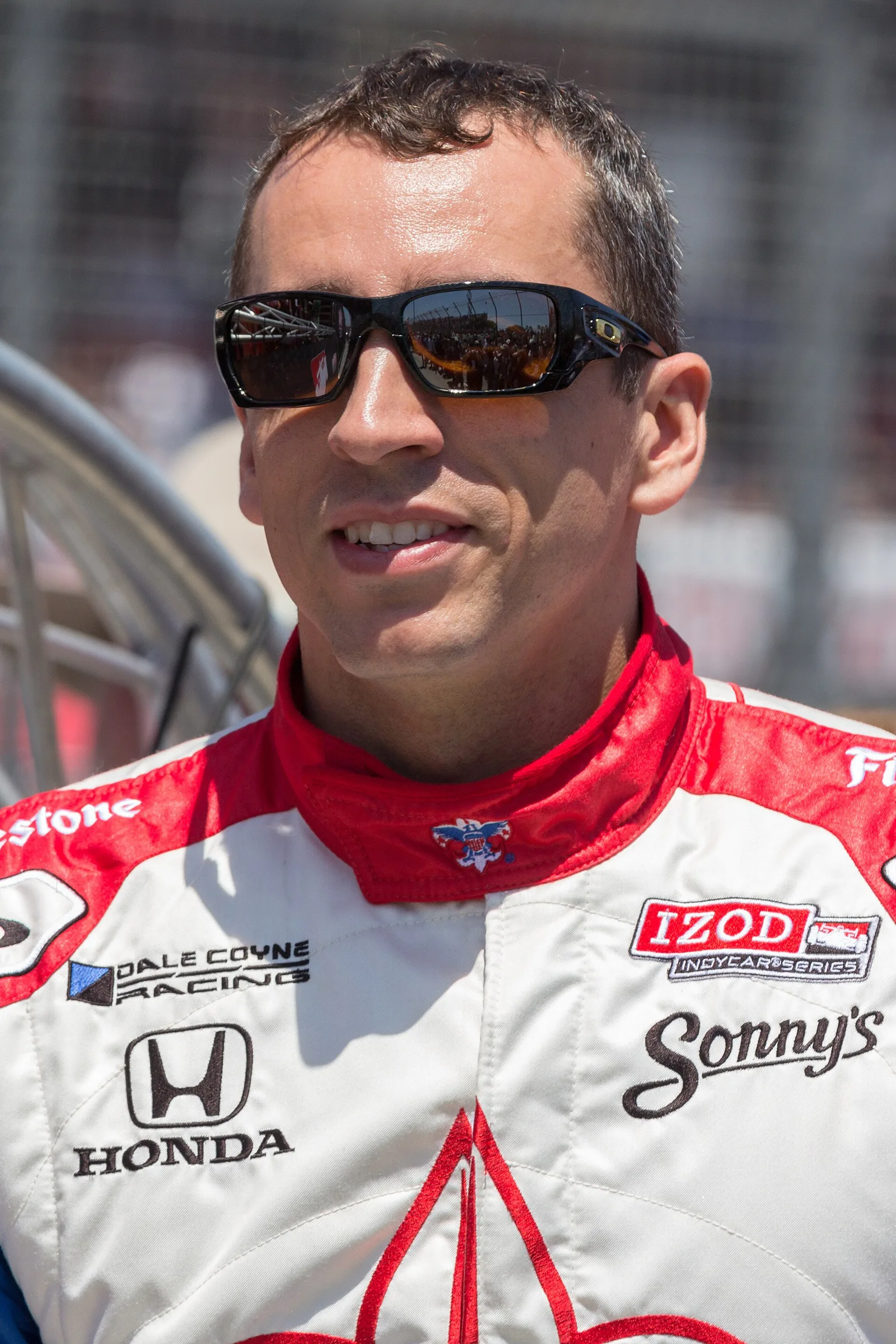
Justin Wilson was a British open-wheel driver who raced in Formula One in 2003, in the Champ Car World Series from 2004 to 2007 and in the IndyCar Series from 2008 to 2015. He won the first Formula Palmer Audi title in 1998 and the 2001 International Formula 3000 championship. He was killed by debris from another car during the 2015 ABC Supply 500 at Pocono Raceway.
Where did Justin Wilson's racing begin?
Wilson was born on 31 July 1978 in Moorgate, a district of Rotherham in South Yorkshire. His father had raced Formula Ford until a serious accident at Oulton Park in 1975 ended that career, and his father later ran a solvents business and a petrol station. The family's interest in motor sport gave the young Wilson an easy path into karting at the age of eight.
In 1987 he began racing karts at the South Yorkshire Kart Club in Wombwell, with his father acting as chief mechanic, courier and mentor. He finished fifth in the 1994 Formula A British Championship, the highest level of kart racing in the United Kingdom, and he then moved up to cars at the age of sixteen.
His schooling was harder than his racing. He was tested for dyslexia at eleven and the result was negative, but a second test two years later led to a formal diagnosis at thirteen. He received extra tutoring and struggled with the way classmates viewed him. Later he became an ambassador for the International Dyslexia Association and for Teen Cancer America.
From a karting start in Rotherham to two championships and a career across three series, cut short at Pocono in 2015.
How did Wilson reach the top of single-seater racing?
Wilson moved into Formula Vauxhall with Team JLR in 1995 and on his debut at Pembrey, aged sixteen, he won an official race, the first by a driver of that age in Britain. A brake failure on a racing school car later broke both his legs at Brands Hatch, so he missed the first round of the season, but he still claimed four victories that year and won the BRDC Chris Bristow Trophy.
Paul Stewart Racing signed him for 1996, and he finished runner-up in the championship with two pole positions. Jackie Stewart felt his height would be a problem in single-seaters and suggested that he move to sports car or touring car racing. Funding was the bigger obstacle, because Formula Three entry fees were too high for the family to meet. Jonathan Palmer's one-make Formula Palmer Audi series offered a cheaper route, and Wilson won its inaugural title in 1998 with nine victories and four poles.
What did Wilson achieve in Formula 3000 and Formula One?
His title earned him a funded seat in International Formula 3000 with Team Astromega in 1999, followed by Nordic Racing for 2000 and 2001. In 2001 he won three races and scored 71 points, taking the championship by a series-record 32 points over Mark Webber. He was the first British driver to win the title. Formula One teams showed little interest at first, but he tested for Jordan at Silverstone in September 2001.
Formula One came in 2003. He first drove for Minardi in the opening rounds, where he was funded by an investment scheme that let the public buy shares in him, and then joined Jaguar from the German Grand Prix. He finished eighth at the United States Grand Prix and ended the season twentieth in the standings with one point. Jaguar did not keep him for 2004, and he turned to the United States instead.
At Jaguar he had to adapt to a car that handled very differently from the Minardi. His team-mate Mark Webber outperformed him by about half a second a lap in his first four races. The Jaguar managing director and team principal had been impressed with his feedback, and Wilson was granted the final five races of 2003 to prove he should stay alongside Webber for 2004.
How did Wilson's Champ Car career develop?
Wilson joined Conquest Racing for the 2004 Champ Car season and finished eleventh in the standings with 188 points. He then moved to RuSPORT, where he won at Molson Indy Toronto in 2005 and finished third in the championship. The team was his base for three seasons, and he was runner-up in both 2006 and 2007, earning the Greg Moore Legacy Award in each year.
Across those years he won four races. He generally qualified higher than he finished, which suggested pace that his results did not always reflect. His best finish in his debut Champ Car season was a fourth place at the season-ending Gran Premio Telmex/Tecate.
Why was Wilson's IndyCar career important?
Wilson joined Newman/Haas Racing for 2008 and won the Detroit Indy Grand Prix, his first series victory. He moved to Dale Coyne Racing in 2009, and at the Glen he took the team's first open-wheel win. He then drove for Dreyer and Reinbold Racing before returning to Dale Coyne Racing for 2012 to 2014, when he became a consistent top-ten finisher.
He won the 2012 Firestone 550 on an oval, overtaking Graham Rahal in the closing laps. In 2013 he finished sixth overall with 472 points and was fifth at the Indianapolis 500, his best result in that race. In 2015 he drove for Andretti Autosport, finishing second in the Honda Indy 200 at Mid-Ohio.
His 2010 season with Dreyer and Reinbold Racing included a first IndyCar pole at Toronto, and he mentored his teammate Mike Conway on oval racing while advising the team on road courses. In 2011 a practice accident left him with a stable burst fracture of a T5 vertebra. He was ruled unfit for three months and wore a back brace, and a series of substitutes drove his car for the rest of the season.
What other racing did Wilson do?
Wilson entered several sports car events alongside his open-wheel career. He made his debut in 2001 at the FIA GT race at Magny-Cours and entered the 24 Hours of Le Mans in 2003, retiring with an ignition failure. His biggest sports car win came at the 2012 24 Hours of Daytona, where he shared a Riley-Ford for Michael Shank Racing with A. J. Allmendinger, Oswaldo Negri Jr and John Pew.
He also took part in one Formula E round, in Moscow in 2015, where he finished tenth and scored a single championship point. That race came while he was waiting for a new IndyCar contract.
He returned to the Daytona endurance races for several more years. In 2010 he drove a Riley for Chip Ganassi Racing and finished second, and in 2013 he shared a Michael Shank Racing car to third place at the same event. He also raced a Holden Commodore in the V8 Supercars at the Gold Coast 600 in 2012, although the round did not bring him a top-ten finish.
What was Wilson like away from the track?
Colleagues at the PalmerSport driving school nicknamed him Bad Ass in 1999, because they found him a fearsome competitor. Those who knew him describe a friendly, shy and soft-spoken man who was highly analytical, and whose technical knowledge helped teams make large changes to their cars. He was also quick-witted and used humour readily in conversation.
Racer's Mark Glendenning wrote that Wilson commanded universal respect from fellow competitors. For DailySportsCar's editor, he was a rare figure who had competed at the highest level in several disciplines of motor sport and still had the cutting edge at the end of his career.
What happened at Pocono in 2015?
Wilson was killed during the ABC Supply 500 at Pocono Raceway on 23 August 2015. On the 179th lap, race leader Sage Karam lost control after a bump in the first turn and crashed heavily into the wall, and a nose cone from Karam's car skidded across the track and hit Wilson's helmet as he drove past. Wilson lost consciousness, and his car then hit a wall.
He was taken to hospital by helicopter in a coma with a severe head injury, and he was declared dead the following day, 24 August 2015. The last IndyCar race death before his was Dan Wheldon's, at Las Vegas in 2011. His organs were donated, and they helped save the lives of five people.
How was Wilson's death investigated?
An inquest at Northampton General Hospital in March 2016 concluded that his death was accidental. His father described the crash as a freak accident, saying that debris thrown up by the leading car struck Justin on the head as he approached the scene. Justin was unconscious when he was pulled from the car, and he was kept on a life support machine until the following day, when the decision was taken to switch it off.
How did the motor racing world remember Wilson?
Wilson was remembered for his humility and analytical approach to car set-up. Teams valued his technical knowledge, and fellow drivers respected him. He had been a leading voice for IndyCar safety alongside Dario Franchitti and Tony Kanaan after Dan Wheldon's death, and he argued for better barriers and for grandstands to be moved inside circuits.
On 27 August 2015 several IndyCar drivers drove their cars across the Golden Gate Bridge in San Francisco as a tribute before the Sonoma race. Marco Andretti drove Wilson's No. 25 car. His funeral in September 2015 was attended by about 500 mourners, and his younger brother Stefan drove the No. 25 car at the 2016 Indianapolis 500.
What is Wilson's career at a glance?
| Period | Series | Team | Standout result |
|---|---|---|---|
| 1998 | Formula Palmer Audi | Inaugural series | Champion with nine victories |
| 2001 | International Formula 3000 | Nordic Racing | Champion with 71 points |
| 2003 | Formula One | Minardi, Jaguar | Eighth at the United States Grand Prix |
| 2004 to 2007 | Champ Car | Conquest, RuSPORT | Runner-up in 2006 and 2007 |
| 2008 to 2015 | IndyCar | Newman/Haas, Dale Coyne, Dreyer and Reinbold, Andretti | Detroit Indy Grand Prix win; Firestone 550 win |
| 2012 | 24 Hours of Daytona | Michael Shank Racing | Overall win |