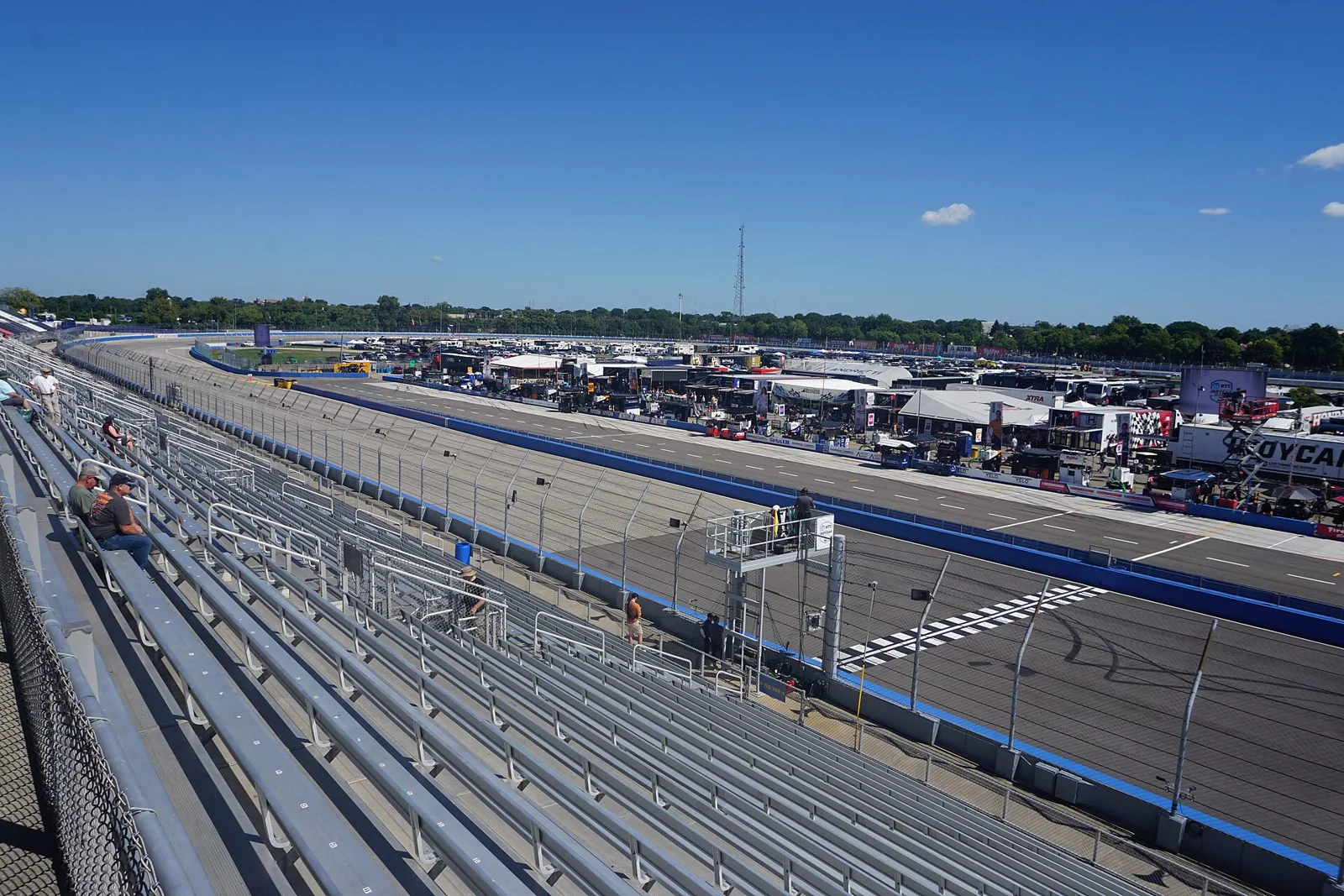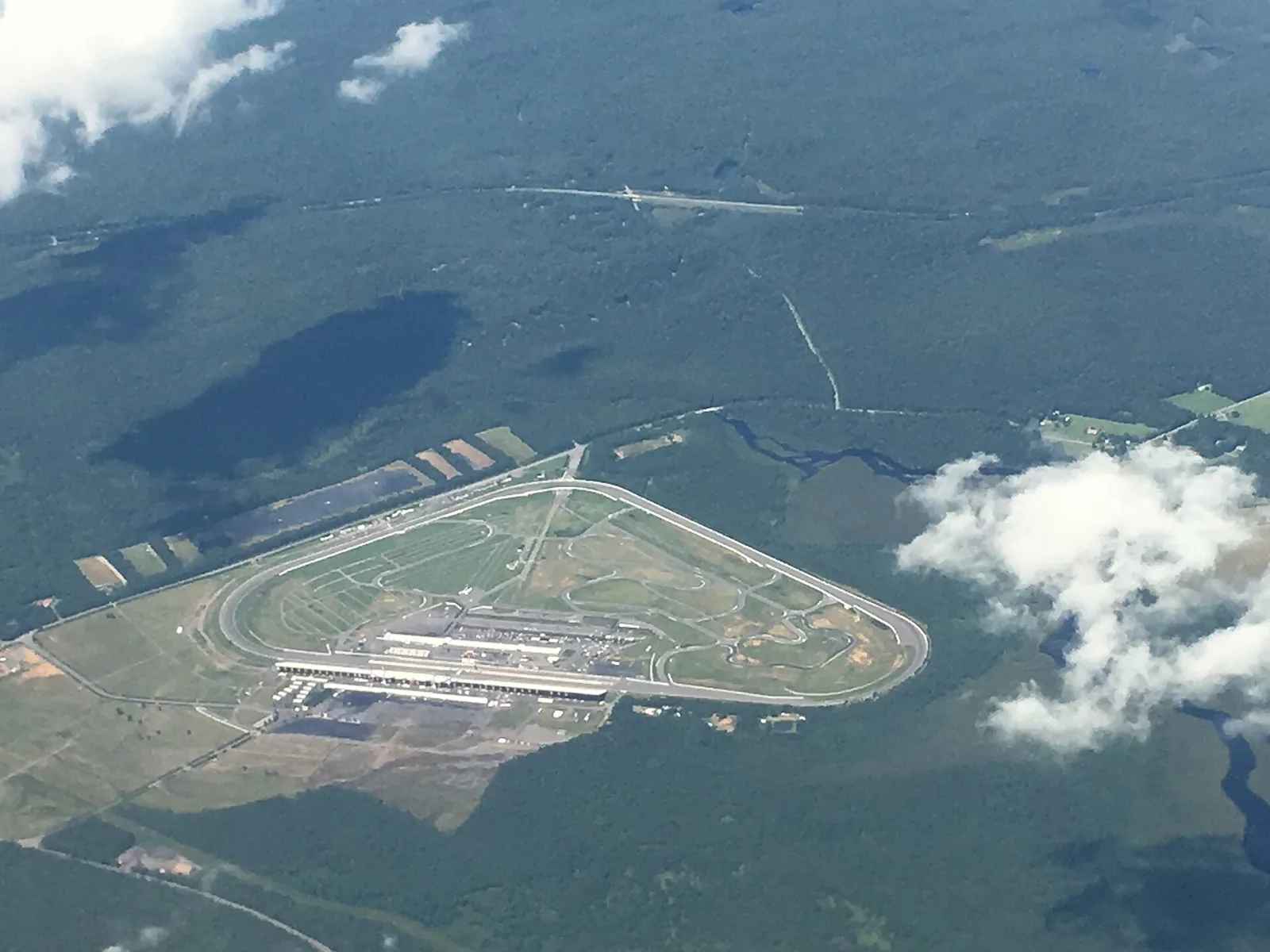
A 2.5 mi Pennsylvania track built by fans who wanted better racing facilities, with three turns modelled on three famous tracks.
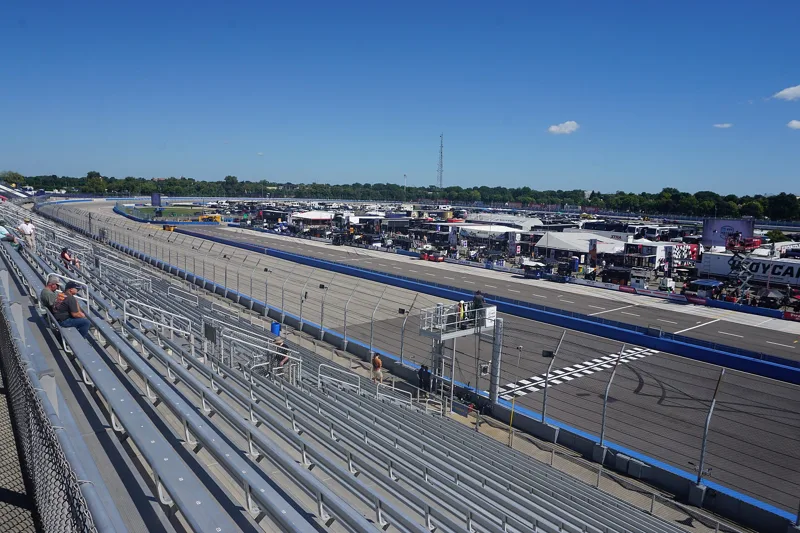
Opened in May 1969 near Blakeslee, Pennsylvania, Pocono runs a 2.500 mi (4.023 km) three-turn tri-oval. The track has hosted NASCAR, USAC, CART and IndyCar racing, and it remains a fixture of the NASCAR calendar. Its three turns were modelled on Trenton, Indianapolis and Milwaukee.
Pocono Raceway is a 2.500 mi (4.023 km) tri-oval in Blakeslee, Pennsylvania, and the only track on the NASCAR schedule with three turns. Built by a group of fans who had grown tired of poor racing facilities, it opened in 1969 and went on to host NASCAR, IndyCar and IMSA events. Its unusual shape and long ownership story make it one of the more distinctive venues in American motorsport.
Where is Pocono Raceway and how is the tri-oval shaped?
Pocono Raceway lies near Blakeslee, Pennsylvania, with access from Interstate 80 and Pennsylvania Route 115. The main track's first turn is banked 14 degrees, the second turn 8 degrees and the third turn 6 degrees. Infield road course layouts sit alongside the tri-oval.
A tri-oval with three turns borrowed from three famous tracks, built by fans who wanted better racing.
How did Racing, Inc. start the project?
Racing, Inc. was formed in 1957 by fans in Pennsylvania who were unhappy with the state's racing facilities. The group looked at more than 30 possible sites, and in April 1962 it began buying land near Blakeslee, spending more than $114,000 on over 1,025 acres (415 ha).
The plan was first called the Pocono Mountains International Raceway, with proposals for 110,000 grandstand seats. The track was revealed as a 2.500 mi (4.023 km) oval the following month, and groundbreaking eventually took place on July 8, 1965, after years of delay.
When did Pocono Raceway open?
The facility officially opened on May 4, 1969, for a supermodified programme that Jim Shampine took on the earlier 0.750 mi (1.207 km) oval. The first fatality came during that opening programme, when Troy Ruttman Jr suffered a fractured skull in a crash.
The tri-oval followed later. Its ribbon-cutting took place on June 19, 1971, and the first race on it was held on July 3, 1971, with Mark Donohue winning a 500-mile USAC event. The short road course of 1.800 mi (2.897 km) had opened about four months after the first event.
How were the three turns designed?
Track designer and two-time Indianapolis 500 winner Rodger Ward designed each turn after a different track. The first turn follows Trenton Speedway, the second turn follows Indianapolis Motor Speedway, and the third turn follows the Milwaukee Mile. Each corner therefore carries a different character from a different track.
The three turns give the tri-oval its distinct character. The banking is 14 degrees in the first turn, 8 degrees in the second and 6 degrees in the third, so each corner asks something different of the driver.
What was the early financial story?
The early years were difficult. Joseph Mattioli, a former Philadelphia dentist who had helped pay off the facility's construction debts, replaced David Montgomery as chief executive by 1971. Seating rose from 10,000 to more than 69,000 as the tri-oval opened, and a 1971 estimate put the total cost of the complex at $6 million.
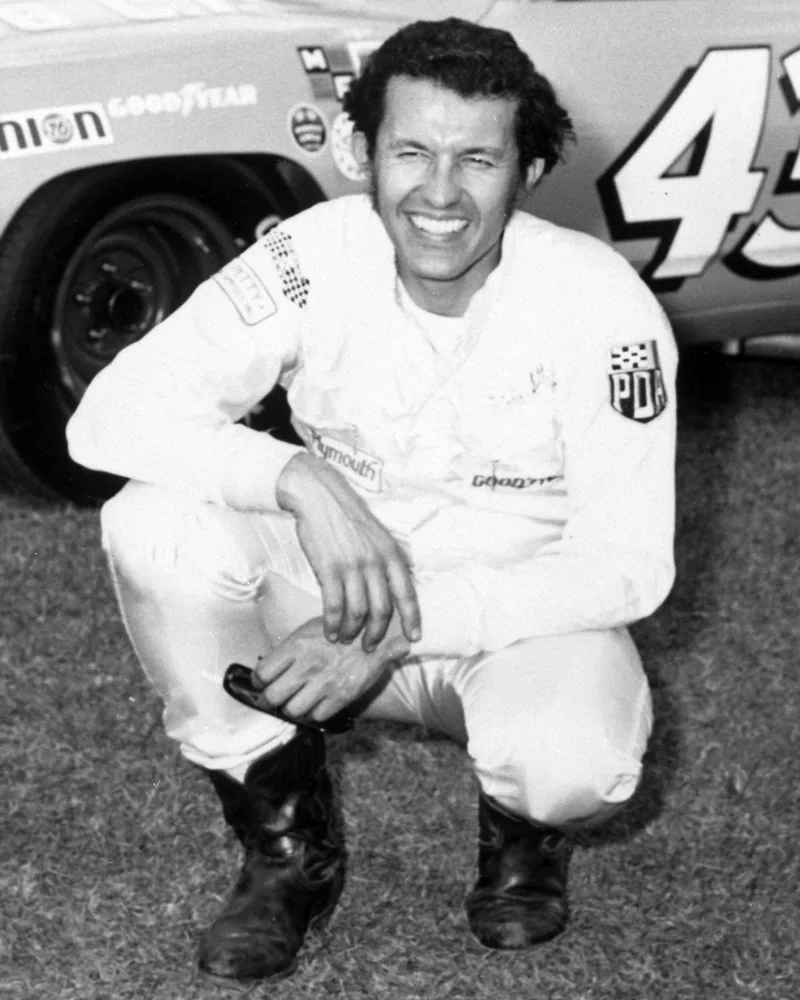
The track struggled after USAC's stock car contract expired in 1973. Mattioli considered selling, but NASCAR founder Bill France Sr. persuaded him to stay, and the first NASCAR Cup Series event was held on August 4, with Richard Petty winning.
How did the 1970s and 1980s financial fights unfold?
In 1979 the USAC-sanctioned Pocono 500 faced numerous problems. Schaefer Beer ended its title sponsorship after eight years, CART-affiliated drivers boycotted the race and the energy crisis slowed the local economy. The track sued CART for $6.3 million that August.
A second lawsuit sought $9 million after another boycott in 1981. The following year, the Indianapolis Motor Speedway leased the track for a year to help its finances. In 1982 CART settled out of court, agreeing a five-year contract, and a second annual Cup weekend was added that year.
When did Pocono Raceway renovate its grandstands?
The track underwent heavy renovation through the 1990s. In 1990 a beautification project added concrete walls in the first and second turns and planted 500 trees, and new grandstands of 5,000 and 5,100 seats were added in 1991 and 1992. The complete repave of the main track in 1996 was the first since the venue opened.
Seating additions of 15,000 in 1997 and 17,000 in 1999 followed, with a $7 million garage renovation in the latter year. Mattioli said he spent an average of $3 million a year on amenities between 1990 and 2000.
Why was the casino plan dropped?
In 2004 the track explored applying for a slots licence, and in January 2005 it unveiled plans for a $300 million complex with 200,000 square feet of floor space. The idea was dropped in December 2005, after Mattioli realised that Pennsylvania law would give his family no control over running the facility.
In 2006 officials announced a $50 million, 250-unit gated community resort instead. Construction began the following year, and the first 56 units opened in September 2009.
How did safety upgrades change the track?
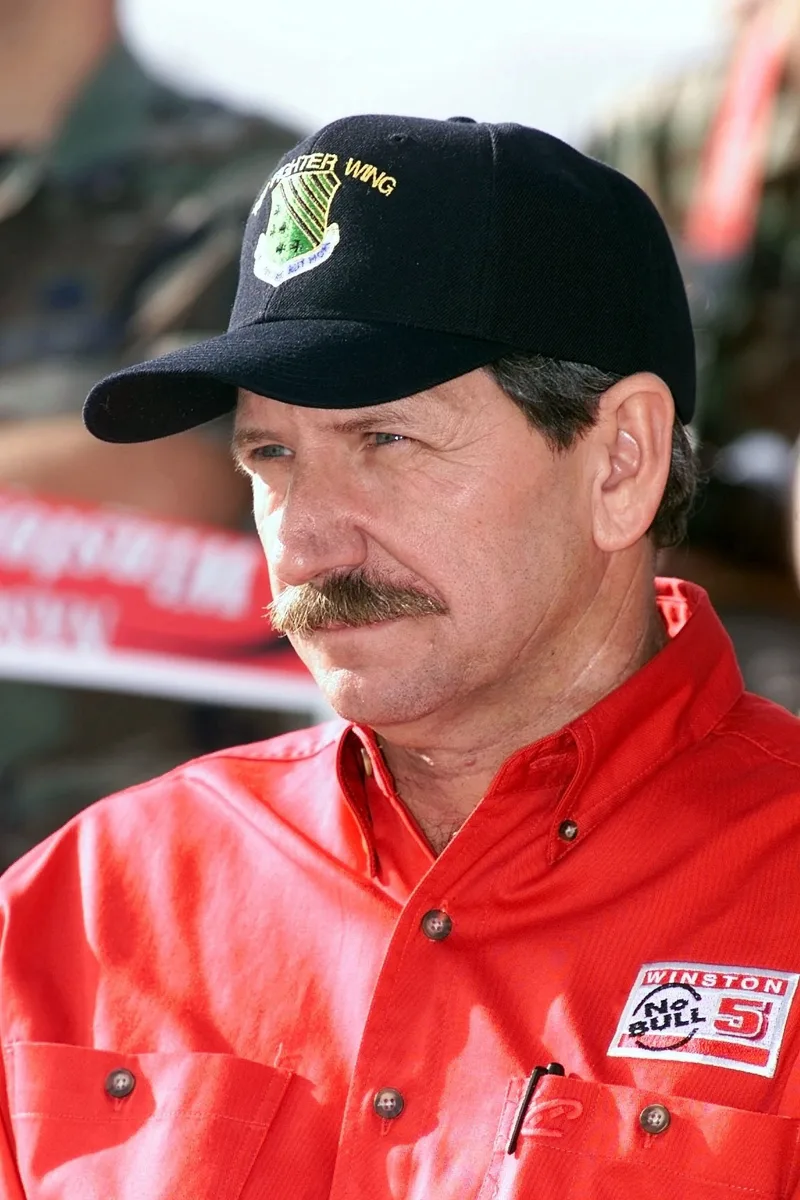
SAFER barriers were installed around the outside of the tri-oval in 2004, following Dale Earnhardt's death at the 2001 Daytona 500. After a crash in which Kasey Kahne's car nearly left the track in 2010, more than 5,500 feet of SAFER barriers and 6,100 feet of catchfence were installed from turn one to turn three.
Cracking in turn three led to that corner being repaved in 2008, ready for that year's Pennsylvania 500. The venue also cut its environmental footprint. A 25-acre solar panel farm, begun in 2009, was built to power the track with alternative energy.
Who runs Pocono Raceway today?
Mattioli announced his retirement as chief executive on August 5, 2011, and his grandson Brandon replaced him. Brandon resigned in August 2017 to join NASCAR, and his younger brother Nick became chief executive. The facility is owned by Mattco, Inc.
Under the Igdalsky family, the track completed its first full repave since 1996 in time for the 2012 Pocono 400, and it added infield road course upgrades in 2013 and curbing removal on turn two in 2014.
Which series have raced at Pocono?
The track has held stock car, open-wheel and sports car racing over the decades. Some series left after a single decade, while open-wheel racing returned several times. The table below lists the main series and the periods they raced there.
| Series | Period | Notes |
|---|---|---|
| USAC | From 1971 | Mark Donohue won the first tri-oval race |
| NASCAR Cup Series | Since the mid-1970s | Richard Petty won the first event |
| CART | 1982 to 1989 | Open-wheel race dropped from the schedule for 1990 |
| IndyCar Series | 2013 to 2019 | Dropped from the schedule starting in 2020 |
| IMSA GT Championship | 1981 to 1985 | Annual sports car race |
Which sports car and touring races ran at Pocono?
Pocono hosted more than the main open-wheel and stock car programmes. From 1975 to 1976 the track held an annual Trans-Am Series race, and from 1981 to 1985 it held an annual IMSA GT Championship race, which gave the venue a run of sports car weekends in the early 1980s.
The track has also staged large non-racing events. In 1972 it held Concert 10, a two-day rock music festival with an estimated attendance of 200,000. Since 2022 the Elements Music Festival, an EDM music and arts festival, has used the grounds.
How did the 2010s bring new safety concerns?
Safety remained a concern through the decade. In August 2012, a lightning strike during a thunderstorm at the Pennsylvania 400 killed one fan and injured nine more. A month later the track confirmed that IndyCar would race there in 2013.
In 2015 a flying nose cone struck IndyCar driver Justin Wilson on the head, and the venue recorded its second fatality. Additional SAFER barriers were installed in the following two years, completely surrounding the outside of the track. In 2019 IndyCar dropped the track from its schedule starting in 2020, following safety concerns after Wilson's death and a 2018 crash that paralysed driver Robert Wickens. NASCAR later dropped one of its two races from 2022.
How did the NASCAR weekend change in 2020?
In 2020 NASCAR ran its first multi-series tripleheader at Pocono, with all three national-series races held on the same day after a Truck race was delayed by rain. Support races include the MillerTech Battery 250 for the O'Reilly Auto Parts Series and an ARCA Menards Series event.
The track formally held the Truck Series' MillerTech Battery 200 as a support race in earlier years, so the weekend has always mixed national and regional series.
How did Mattioli plan the track's future?
In 1994 Mattioli moved to buy out the minority shareholders, hoping to raise money for expansion as a last resort. A bid to form a separate borough from Tunkhannock Township had been turned down that year, which left the company to fund its own growth.
His plans were ambitious. He hoped to build a dual hotel and convention centre, a water park, and 20,000 more seats. He also denied rumours in 1996 that he would sell the facility to racetrack owner Bruton Smith, and he kept the track in family hands for years afterwards.
What delayed Pocono's opening?
Money and weather pushed back the opening for years. The track was due to open on September 5, 1965, but constant rain moved it to the spring of 1966. A 300 mi USAC race announced for August 1966 was postponed as well, and the opening slipped to the spring of 1967 amid what Montgomery called a tight money situation.
A $176,219 lien filed by construction contractor Schartz and Baker in December 1966 added to the doubts. Racing, Inc. disputed the claim and sued the contractor over it. The lien was dismissed on August 23, 1967, and the lawsuit was settled on May 25, 1968, but the legal fight had halted all construction for nearly two years.
Work resumed in early July after the delays. A 200-lap preview race on the 0.750 mi oval was planned for October, but three postponements for weather pushed the opening into the spring of 1969.