Hamilton won from pole at the Red Bull Ring, but Rosberg's contact with him on the final lap brought a penalty and a new Mercedes conduct policy.
The 2016 Austrian Grand Prix was the ninth round of the Formula One season, held on 3 July 2016 at the Red Bull Ring in Spielberg. Lewis Hamilton won for Mercedes, with Max Verstappen second and Kimi Raikkonen third, while Nico Rosberg was left fourth after the last-lap collision.
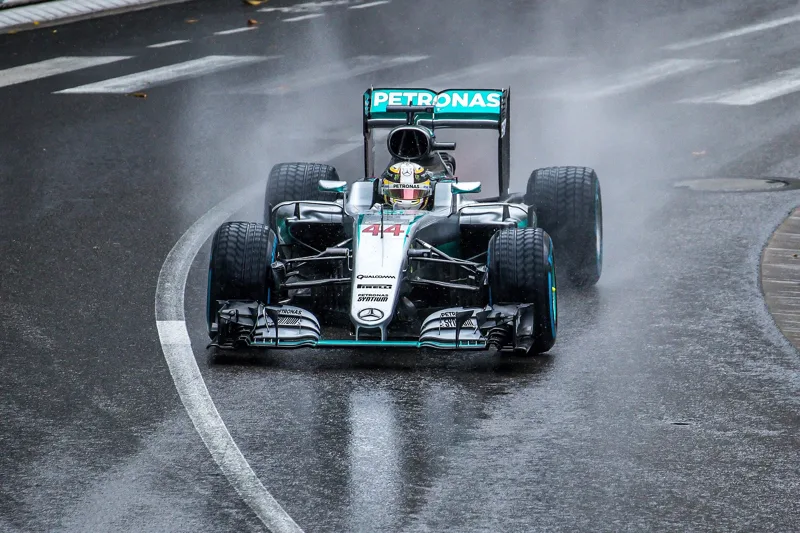
Lewis Hamilton won the 2016 Austrian Grand Prix from pole at the Red Bull Ring in Spielberg, the 30th running of the race and a landmark 250th win for a British driver in the sport. The race was contested over 71 laps. His win came after a last-lap collision with his teammate Nico Rosberg, who was left fourth.
Why did the championship matter so much going in?
Rosberg was the defending race winner, and he led the drivers' table with a 24-point advantage over Hamilton. Sebastian Vettel was a further 21 points back in third, so the title picture was built around the two Mercedes drivers.
Mercedes led the constructors' table on 258 points, ahead of Ferrari on 177 and Red Bull Racing on 140. Those figures made each race in the second half of the season a battle for points inside the team as much as against rivals.
Hamilton won from pole in Austria, and Rosberg's last-lap contact with him cost Mercedes a clean one-two.
What changed at the circuit?
The track had been resurfaced to smooth out many of its bumps and imperfections. The new surface, laid so the circuit could host a MotoGP round, meant that sub-1:06.000 laps were now expected for the first time.
The event also introduced baguette kerbs, a series of low ridges set a car's width in from the outside of corners. They were meant to stop drivers using the track edge to gain an advantage, or slowing down to avoid damage. Verstappen labelled the new kerbs dangerous, having damaged his car on them twice in practice, and Mercedes urged the FIA to change them.
Why did Vettel and Rosberg start further back?
Vettel had received a five-place grid penalty after a gearbox swap made before the weekend began. Although he set fourth-fastest time in qualifying, the penalty pushed him further down the grid.
Rosberg was also penalised on Saturday. After his crash in practice, Mercedes had to change the gearbox on his car, which handed him a five-place grid penalty of his own.
How did the tyre rules shape the weekend?
Pirelli was the sole supplier, and it brought the ultra-soft, supersoft and soft compounds. Those three were the softest tyres in its range, so every strategy call took place on the softer end of the scale.
Under the 2016 rules, two sets apiece of the softest pair had to be held back for the race, plus a set of ultrasofts for Q3 if a driver got there. The rest of the allocation, ten sets out of thirteen, was left to each team's own choice.
How did practice unfold?
On Friday Rosberg set the fastest time in the first session, 1:07.373, which was quicker than the previous track record set by Michael Schumacher in 2003. Hamilton was more than three-tenths of a second behind him. Vettel and Raikkonen were third and fourth, and Ricciardo posted the fifth-fastest time, while Ericsson nearly lost control on the entry to the pit lane.
Several drivers were caught out by the revised kerbs. Verstappen lost parts of his front wing when he left the track at turn 8, and later hit the kerbs at turn 6, which damaged his suspension and ended his session early. Hamilton also spun at turn 3, and Grosjean spun behind him while trying to avoid a collision.
The second session was disrupted by heavy rain eight minutes in, which sent drivers into the pit lane for half an hour. Rosberg's 1:07.967 stood as the benchmark for most of the session, and Ricciardo was the first back out on intermediate tyres. Hulkenberg set the third-fastest time behind the Mercedes pair, while Vettel spun into the gravel at turn 2 late in the session.
Saturday's session ended with Rosberg crashing at turn 2 after his suspension broke over the kerbs, which brought a ten-minute red flag. Vettel was quickest at 1:07.098, just over a tenth of a second up on Raikkonen. Alonso, who had lost bodywork over the kerbs, was tenth, 1.2 seconds behind Vettel.
How did qualifying shape the top ten?
Rosberg's car needed repairs after his practice crash, so he returned to the circuit with nine minutes left in the first part. He still set the fastest time, while Perez nursed his car to the pit lane and Kvyat crashed heavily at turn 7 after a suspension break. The session was red-flagged, and Hulkenberg was the only driver to improve once it resumed, because Sainz was stranded off the track and caused yellow flags. The two Saubers finished near the bottom, behind Kvyat and Haryanto, and the Renaults were the last to be eliminated.
Hamilton's 1:06.228 in the second part was the fastest time set at the Red Bull Ring. Ferrari and Red Bull set their final second-part times on supersofts so they could start on the harder compound, whereas Mercedes had used ultrasofts, the softest and quickest compound but also the shortest-lived, and tried to counter by going out again on supersofts, though rain ended any further improvement.
The final part, Q3, decides the front of the grid, and it was run in mixed conditions. The cars started on intermediates after the rain, Hamilton set the fastest time, and the drivers then switched back to slicks. Hulkenberg was quickest twice, only to lose pole to Hamilton. Rosberg's penalty promoted Hulkenberg to second on the grid.
Vettel went fourth fastest but was relegated behind Button, who had set only the fifth quickest time. Wehrlein's 12th place equalled the best qualifying result in Manor's history, and Vettel's grid penalty meant he would start 11th.
How did the race start?
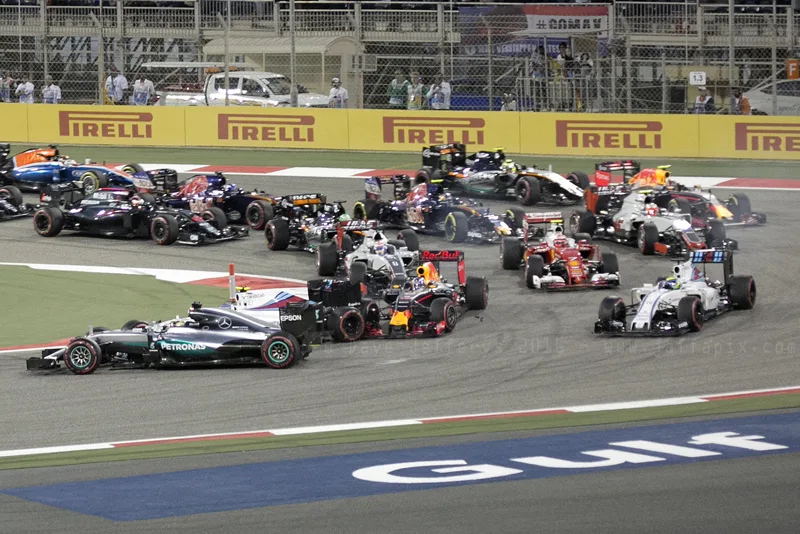
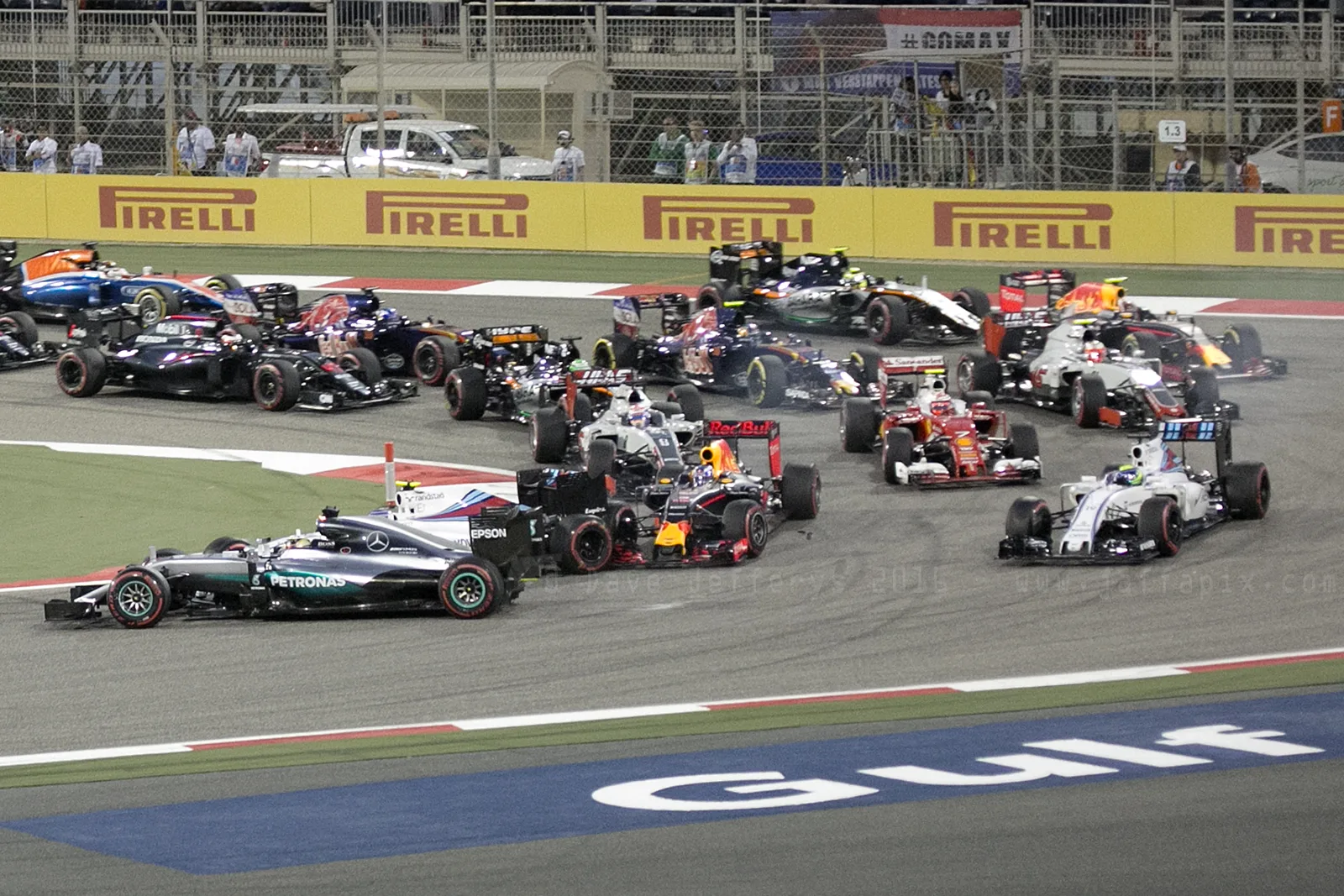
Hamilton got away well from pole, while Hulkenberg lost ground at the start. Button ran second for a spell, while Rosberg got by Ricciardo and Verstappen, and Verstappen then took Hulkenberg on lap six. Kvyat's race ended at the end of lap two, having started from the pit lane in a car built overnight.
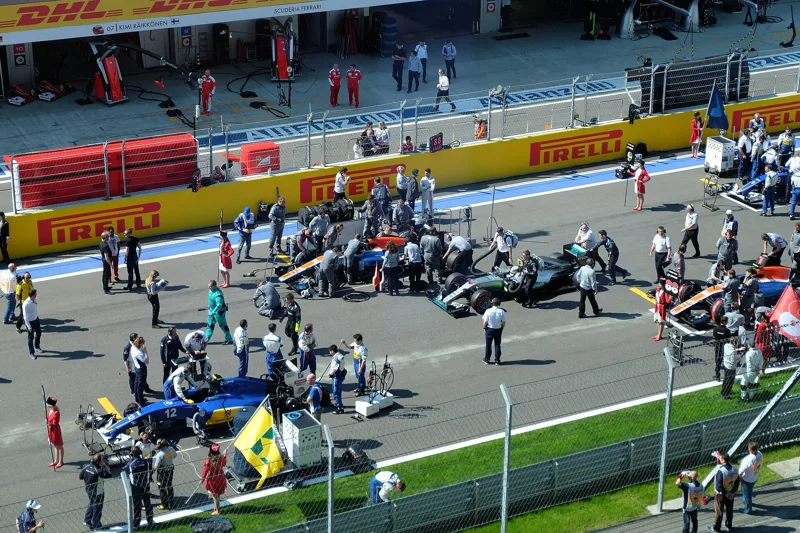
Wehrlein stopped in the wrong grid box, having inherited the place left by Massa's pit-lane start, and he backed into his own box just before the lights, avoiding a penalty.
Hulkenberg and Alonso were the first to stop on lap nine, and Button followed a lap later. Raikkonen had already moved past Button into second by lap seven, and Vettel took over the chasing role after his own stop.
What happened when Vettel crashed?
On lap 27 Vettel, leading at that stage, retired when his rear right tyre exploded and he slid into the barriers. The incident brought out the safety car, which gathered the field back together.
Hamilton pitted on lap 22, but a fault during the stop let Rosberg past. Raikkonen had briefly led the race, but he stopped a lap later and came out behind both Red Bull drivers. Rosberg took the lead from Hamilton behind the safety car and led the field at the flying restart on lap 32, when the cars are already moving as the safety car peels away, quickly building a two-second advantage over Hamilton.
Perez won the restart battle and gained three places into eleventh. Several drivers changed tyres again around lap 50, and Hulkenberg took his third stop a lap earlier, serving a five-second penalty for speeding in the pit lane.
Who led the closing laps?
Rosberg and Hamilton fought for the lead in the closing laps, with Verstappen running with the Mercedes pair. Rosberg took the lead on lap 61 after Verstappen had lost it, and Hamilton soon passed Verstappen too.
Raikkonen overtook Ricciardo for fourth on lap 58 and had been closing on Verstappen for third, while Hulkenberg and Massa retired in the closing stages. Perez also retired, which lifted Wehrlein into the final point-scoring place in tenth, after he had edged closer to Bottas.
On the last lap Hamilton tried to overtake Rosberg into turn two. Rosberg turned in late and damaged his front wing, and he nursed his car to the finish while Hamilton got ahead at turn three.
How did the stewards respond?
A penalty of ten seconds added to his race time was applied for the collision. He was 14 seconds ahead of Ricciardo, so the penalty did not change his fourth place. A reprimand and two penalty points followed for finishing with a damaged car.
The FIA's view was that this fell foul of article 12.1.1h of its sporting code, the clause covering unsafe acts and the failure to take sensible steps against an unsafe situation.
What was the reaction to the finish?
Hamilton was booed by the crowd on the podium, and he shrugged it off by saying the reaction was the crowd's problem. Verstappen and Hamilton both expressed delight with their results, while Raikkonen said it had not been an easy day, and that Ferrari had not achieved everything it could. For Hamilton it was also his first win at Spielberg.
Niki Lauda described Rosberg's move as brainless. Toto Wolff admitted he had had enough of studying contact between his drivers, and he insisted such incidents had to end. He admitted that the team would consider settling the order of its drivers if the situation repeated.
Pirelli said that Vettel's blowout came from debris on the track rather than from a wrong strategy call by Ferrari, and it cost him any points for the day.
A ten-second time penalty is added to a driver's race time, while a grid penalty moves a driver back from his qualifying position. Penalty points on a driver's FIA Super Licence accumulate over time, and enough of them can lead to a suspension.
Had the two Mercedes drivers crashed before?
It was the second time in five races that Hamilton and Rosberg had collided. The first had come at the Spanish Grand Prix, and there had also been minor contact at the Canadian Grand Prix earlier in the season.
According to reports the day after the race, the team had even considered fines and temporary suspensions for its drivers if another crash occurred between them.
What did the result change in the standings?
Rosberg kept the lead of the drivers' table, but Hamilton closed the gap to eleven points, keeping himself as the closest challenger. Raikkonen and Vettel were third and fourth on 96 points apiece, with Ricciardo fifth on 88. Mercedes had led Ferrari by 81 points in the constructors' table at the start of the round, a margin that grew to 103 after Vettel retired.
Mercedes increased its constructors' lead over Ferrari to 295 points to 192. Red Bull Racing was third on 168 points, 76 ahead of Williams.
Top finishers and retirements
| Position | Driver | Note |
|---|---|---|
| 1 | Lewis Hamilton | Mercedes, from pole, his first win at Spielberg |
| 2 | Max Verstappen | Red Bull Racing |
| 3 | Kimi Raikkonen | Ferrari |
| 4 | Nico Rosberg | Mercedes, 10-second penalty did not change his place |
| Retired | Sebastian Vettel | Ferrari, tyre blowout and crash on lap 27 |
| Retired | Sergio Perez | Force India, retired late in the race |