From Heppenheim karting to the youngest world champion crown at 23, four straight Red Bull titles and a final chapter at Aston Martin.
Vettel is a German former driver who won four consecutive Formula One titles with Red Bull, from 2010 to 2013. He retired in 2022 with 53 Grands Prix wins, and he set records for youngest champion and the most wins in a season during his time at Red Bull.
Sebastian Vettel is a German former driver who competed in Formula One from 2007 to 2022. He won four world titles in a row with Red Bull, from 2010 to 2013, and he remains the youngest World Drivers' Champion in the sport's history. He retired with 53 Grands Prix wins across 16 seasons.
His career spanned a dominant championship period at Red Bull, a difficult spell at Ferrari and a final chapter at Aston Martin. Each stage shaped how he is remembered, from his early nickname to his record-setting title years.
Who is Sebastian Vettel and where did he start?
Vettel was born on 3 July 1987 in Heppenheim, West Germany. He began karting at the age of eight, and by 2001 he had won the junior European Championship. He joined the Red Bull Junior Team in 1998, and he won the Junior Monaco Kart Cup in 2001 on the way up.
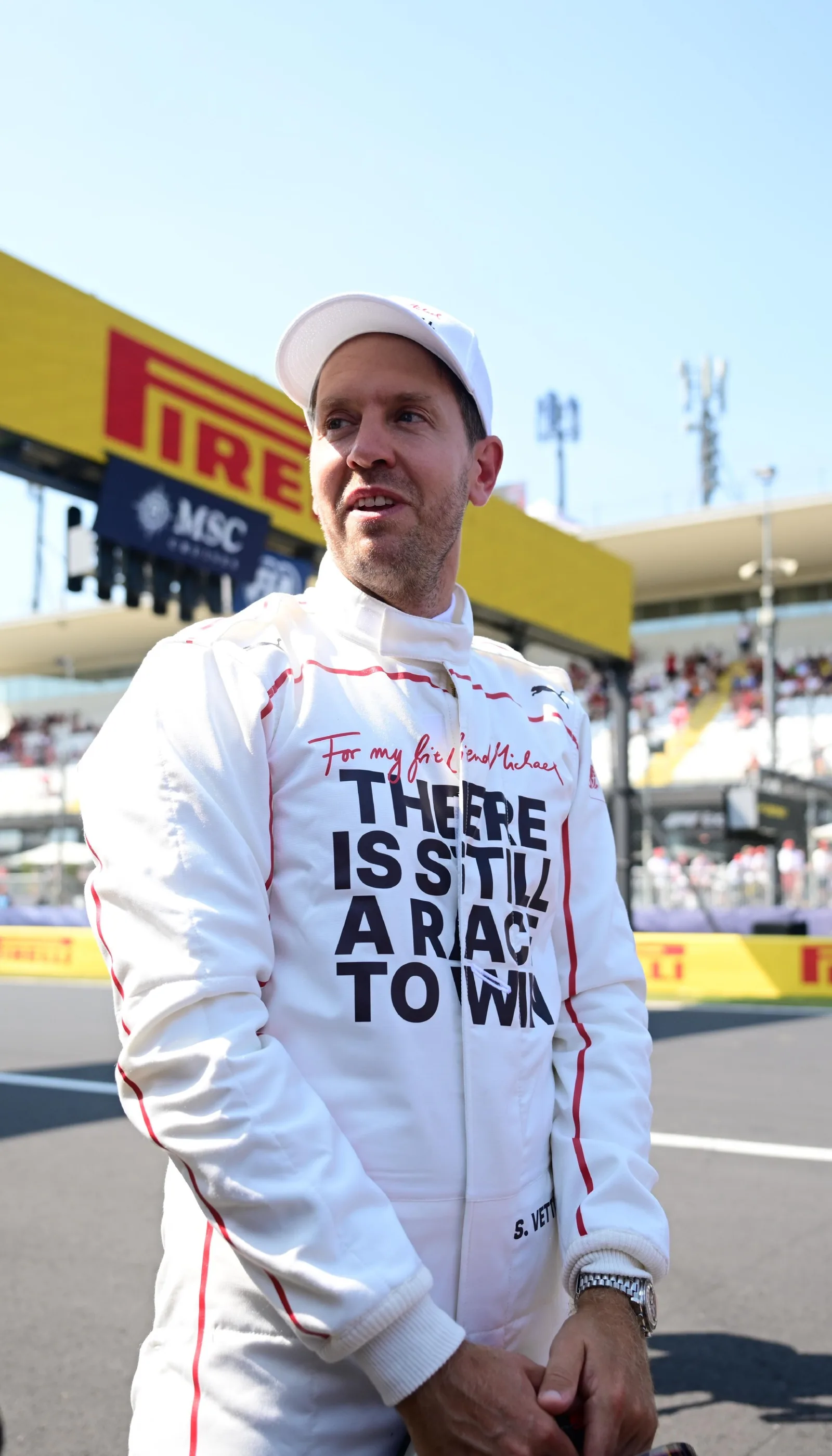
His childhood heroes included Michael Schumacher, and that admiration would later shape his career. Vettel has said he once wanted to be a singer like Michael Jackson, but he accepted that he did not have the voice for it.
Four straight titles at Red Bull, a difficult Ferrari spell and a final season that ended with a point scored at Abu Dhabi.
How did Vettel progress through the junior formulae?
Vettel moved into open-wheel racing in 2003 and won the 2004 Formula BMW ADAC championship with 18 wins from 20 races. He then competed in the Formula 3 Euro Series, finishing fifth in 2005 with 63 points and winning the Rookie Cup. The following year he was runner-up to Paul di Resta.
In 2006 he also raced in Formula Renault 3.5, where he finished first and second at Misano in his first two races. At the same time he was a test driver for BMW Sauber, and he impressed the team with his pace in Friday practice at the 2006 Turkish Grand Prix.
In 2007 he won at the Nurburgring and led the Formula Renault 3.5 championship before BMW Sauber called him up for Formula One.
What was Vettel's Formula One debut like?
Vettel made his Formula One debut at the 2007 United States Grand Prix as a replacement for Robert Kubica, who had crashed in Canada. He started seventh and finished eighth, and he became the youngest driver to score a Formula One point at that time.
He was released by BMW in 2007 to join Toro Rosso, replacing Scott Speed from the Hungarian Grand Prix onward, and that move set up his first race win the following year.
At Monaco in 2008 he scored his first points of the season with a fifth-place finish, after a difficult start in which he had retired on the first lap in three races.
How did Vettel win his first Grand Prix in 2008?
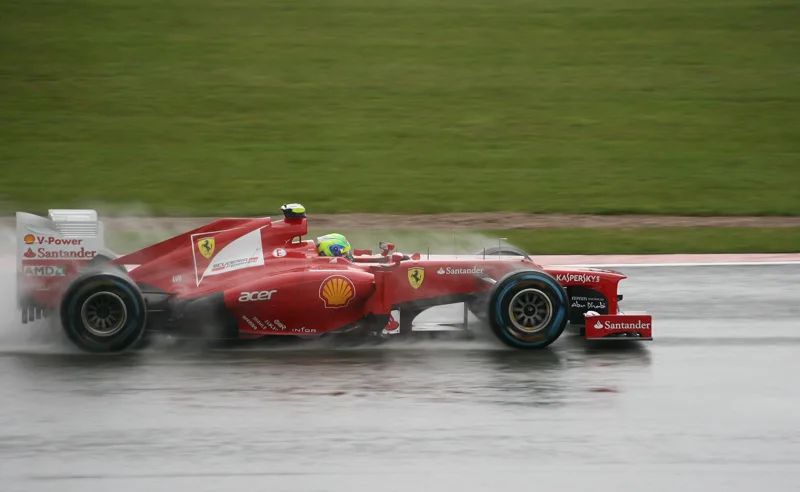
The 2008 Italian Grand Prix, run in the wet, made him the sport's youngest winner at that time, at 21 years and 74 days old. He led most of the distance and crossed the line 12.5 seconds clear of Heikki Kovalainen. It was also Toro Rosso's only win, and he had already become the youngest pole-sitter earlier that weekend.
The result led the German media to dub him Baby Schumi. He was named Rookie of the Year at the Autosport Awards that season.
Vettel played down the comparison and said he wanted to be the New Vettel. Commentators pointed to the similarities, though: both grew up in small towns, both started in karting near Cologne, and both were admired for their hands-on role with their engineers.
How did Vettel's title years with Red Bull unfold?
Vettel was promoted to Red Bull Racing in 2009, replacing the retired David Coulthard. He won the Chinese Grand Prix from pole, which was Red Bull's maiden pole and win, and he finished runner-up to Jenson Button in the championship that year.
He also won the inaugural Abu Dhabi Grand Prix, the first day-night race in the sport's history, and the Chinese win remained one of the high points of his first year with the team.
In 2010 he won the Abu Dhabi Grand Prix from pole to become the youngest World Drivers' Champion, aged 23. He entered that final race 15 points behind Fernando Alonso and beat him to the title.
Earlier that season he became the youngest driver to win at the same track on two occasions, after his Japanese victory. Red Bull's 1-2 finish at Brazil also secured the team's first World Constructors' Championship.
| Season | Team | Title position and highlights |
|---|---|---|
| 2009 | Red Bull | Runner-up to Button, China win |
| 2010 | Red Bull | Champion, youngest ever at 23 |
| 2011 | Red Bull | Champion, 15 poles, 11 victories, 392 points |
| 2012 | Red Bull | Champion, by three points over Alonso |
| 2013 | Red Bull | Champion, 13 wins, 155 points over Alonso |
| 2014 | Red Bull | Winless season before moving to Ferrari |
| 2015 | Ferrari | Third overall, three wins, 13 podiums |
| 2016 | Ferrari | Winless, seven podium finishes |
| 2017 | Ferrari | Second overall, behind Hamilton |
| 2018 | Ferrari | Second overall in the Fight for Five |
| 2020 | Ferrari | 13th overall with 33 points |
| 2021 | Aston Martin | 12th overall, final podium at Azerbaijan |
In 2011 he won the title with wins in Australia and Malaysia, and he took 15 poles, 11 victories and 17 podiums from 19 races. He finished the season with a record 392 points. He also became the second driver to take ten or more wins in a season, after Michael Schumacher.
Pirelli's director, Paul Hembery, was impressed that Vettel was the only driver to visit the tyre maker's factory and talk through its work, a sign of how closely he engaged with the technical side of the sport.
The 2012 title came down to the final race in Brazil, where he finished sixth to win by three points over Alonso. That made him the youngest ever triple world champion. The 2013 season was his most dominant, with 13 wins and nine consecutive race wins, a then-record, and it secured a fourth successive title.
Earlier that year, at Japan, he took his second career grand slam, which cut his gap to Fernando Alonso to four points after Alonso retired.
Why was the Ferrari period so difficult?
After a winless 2014 season, Vettel joined Ferrari, replacing Alonso and partnering Kimi Raikkonen. He won the Malaysian Grand Prix in 2015, Ferrari's first win in almost two years, and he dedicated his Hungarian win that year to Jules Bianchi. He finished third overall with three wins and 13 podiums.
The 2016 season was winless, although he still achieved seven podium finishes. The 2017 season brought a win in Australia, his first in 18 months, but a collision with Lewis Hamilton in Azerbaijan earned him a ten-second penalty. He finished second overall that year, behind Hamilton.
The 2018 season, billed as the Fight for Five, was another close battle with Hamilton. Vettel won the Canadian Grand Prix for his 50th career win, and he became only the fourth man to reach a half-century of victories. He again finished second overall, and Ferrari's struggles after the Singapore upgrades were a major factor.
He won at Singapore in 2019, his last win in Formula One, and he finished fifth overall that year. Ferrari did not extend his contract beyond 2020, and his final season there ended 13th overall with 33 points, his lowest total in a full campaign.
What did Vettel achieve at Aston Martin?
Vettel joined Aston Martin for 2021, replacing Sergio Perez. He scored the team's first points with fifth place at Monaco, and he claimed his final podium with second place at the Azerbaijan Grand Prix. He finished 12th overall, ahead of his teammate Lance Stroll.
That season he made 132 overtakes, the most of any driver, and he won the inaugural Overtake Award. In 2022 he missed the first two races after testing positive for COVID-19, and in July he announced his retirement at the end of the year. His final race was at Abu Dhabi, where he scored his last point and ended the season 12th in the standings.
What records did Vettel leave behind?
When he retired, Vettel had the fourth-most wins (53), the fourth-most pole positions (57), the fifth-most fastest laps (38) and the fourth-most podium finishes (122) in Formula One history. He also won the Race of Champions individual title in 2015, and he won the Nations' Cup six consecutive times from 2007 to 2012 with Michael Schumacher.
He received the Lorenzo Bandini Trophy in 2009 and was German Sportspersonality of the Year in 2010. In 2014 the Laureus World Sports Awards chose him as their Sportsman of the Year, and after he retired he received the Autosport Gregor Grant Award.
How did Vettel's helmets and car names make him memorable?
Vettel used 76 different helmet designs by the end of 2013. In 2012 he celebrated his 50th helmet design with a rusty matte look and 50 tallies, and he later changed the German stripe on his helmet to an Italian one for Ferrari's home race.
He named every car he raced from 2008 to 2021, a tradition he took from American bomber pilots of the Second World War. The Toro Rosso that won his first race was called Julie, and the 2013 championship car, Hungry Heidi, won nine consecutive races. His Aston Martin AMR21 was named Honey Ryder, a nod to the Bond films.
What was Vettel's approach to activism and sustainability?
Vettel has been an advocate for the environment. He has called for neighbouring races to be held on consecutive weekends to cut emissions, and he worked with children in Austria to build a bee hotel. In 2023 he became co-owner of the Germany SailGP Team alongside Thomas Riedel.
He wore the pride flag at the 2021 Hungarian Grand Prix despite being reprimanded for it, and he was named BBC Overseas Sports Personality of the Year in 2013.
After the 2021 British Grand Prix he helped remove litter from the grandstands, and a second bee hotel was later erected at Suzuka before the 2023 Japanese Grand Prix. In May 2022 he appeared on the BBC's Question Time to discuss climate change and energy dependency.
At the 2022 Canadian Grand Prix he wore a T-shirt denouncing the mining of the Alberta oil sands as a climate crime. Alberta's premier called the stance over-the-top hypocrisy, because his team was sponsored by an oil company, and Vettel agreed with the hypocrisy label while arguing that the wider climate debate mattered more.