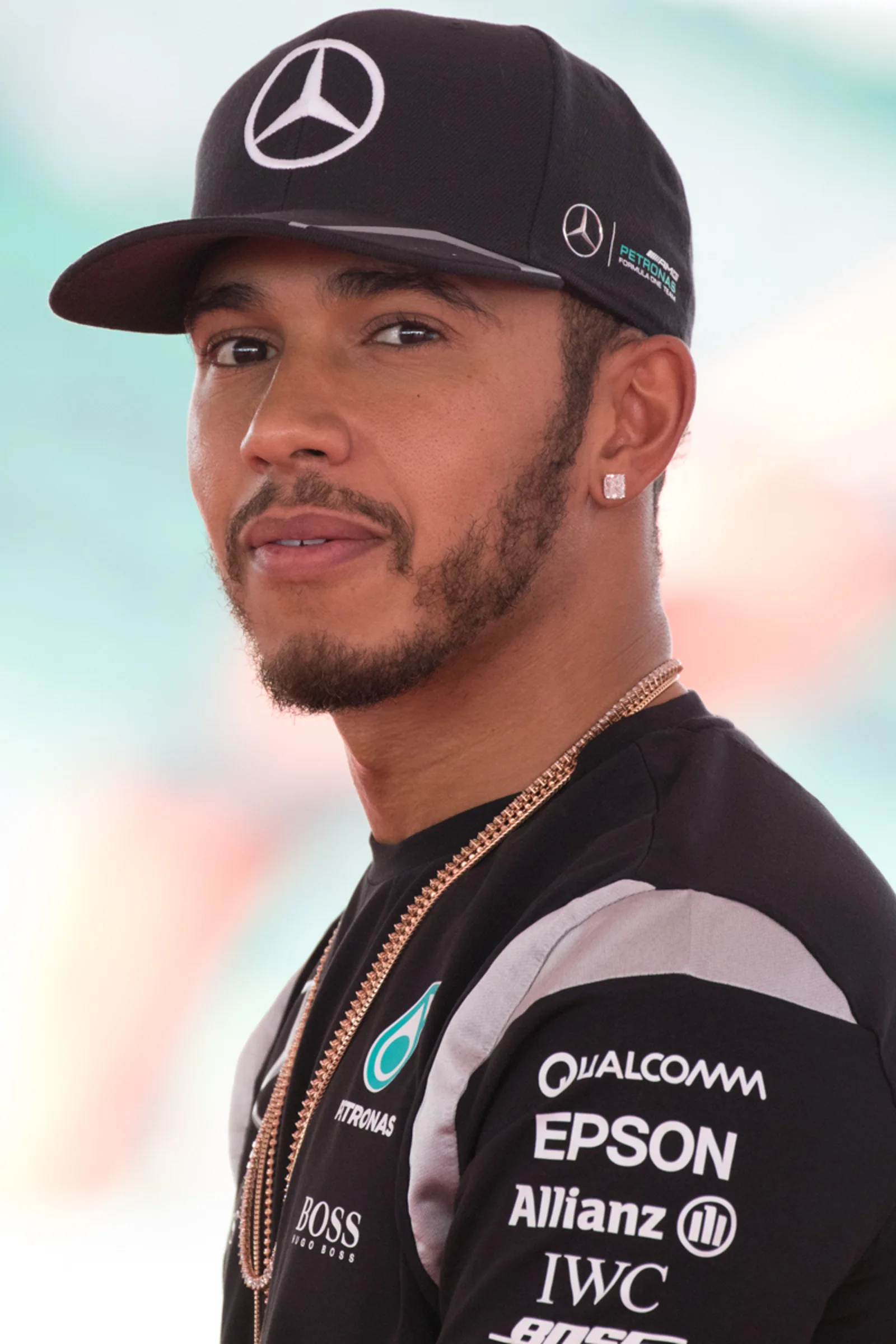

The 1000th World Championship race, a new bonus point and Mercedes' sixth straight constructors' crown, with Lewis Hamilton clinching his sixth title in the United States.
Hamilton clinched his sixth title in the United States, while Mercedes took its sixth straight constructors' crown in Japan. The 2019 season marked the 1000th World Championship race and included the return of the fastest lap point.
The 2019 FIA Formula One World Championship was the 70th running of the title, and it was contested over twenty-one Grands Prix from March to December. Lewis Hamilton successfully defended his crown, winning his sixth title in the United States, and Mercedes secured its sixth consecutive constructors' title in Japan. The year also marked the 1000th World Championship race, which was the Chinese Grand Prix.
The season brought three debutants who would go on to shape the sport: Lando Norris, George Russell and Alexander Albon. Ten teams, each with two drivers, competed, and the championship was run with a new fastest lap point and a revised set of technical rules.
What happened across the 2019 season?
Valtteri Bottas began the year with a dominant win in Australia, finishing 20 seconds ahead of Hamilton, who narrowly beat Max Verstappen for second. Verstappen's third place was the first podium for a Honda-powered car in over ten years, the last having come at the 2008 British Grand Prix.
The second race in Bahrain was a Ferrari weekend that turned into a Mercedes one. Charles Leclerc took his first career pole, but an engine problem let Hamilton take the lead, and Bottas then passed Leclerc to make it a Mercedes one-two. Bottas led the standings by one point after the race, with Hamilton second on points.
In China Hamilton led from the start and won, which gave him the championship lead by six points over Bottas. The team's three straight one-two finishes to start the year had not been matched since Williams in 1992, and Pierre Gasly set the fastest lap after pitting late in the race.
Azerbaijan brought a different story. Charles Leclerc crashed in qualifying and started eighth, but Bottas won the race by 1.5 seconds over Hamilton. The win gave Bottas a one-point lead in the Drivers' Championship, and Leclerc fought back to finish fourth.
Hamilton then won in Spain, where Bottas had taken pole and the safety car came out late. Monaco followed, with Hamilton winning from pole after Verstappen was penalised for an unsafe pit release, and Vettel finished second. Hamilton's win in Canada came after Vettel was penalised for an unsafe re-entry to the track.
The 1000th World Championship race, a new bonus point and a sixth title for Hamilton.
Which teams and drivers changed for 2019?
Red Bull dropped its Renault engines after twelve years and moved to Honda's factory programme, while Toro Rosso also moved to Honda. It was the first time Honda had supplied more than one team since 2008, although neither team was recognised as Honda's official factory team under the agreement.
The team names changed as well. Racing Point F1 Team completed its transition away from the Force India identity, while Sauber was renamed Alfa Romeo Racing in an extension of its sponsorship deal. The Sauber name left the Formula One grid, although it remained in the junior categories for one more year, and it was due to return in 2024 as Kick Sauber.
The driver market was busy. Ricciardo left Red Bull after five years for Renault, and Gasly stepped up from Toro Rosso into his seat. Daniil Kvyat rejoined Toro Rosso, partnered by Alexander Albon, who made him just the second driver from Thailand to start a Grand Prix, after Prince Bira.
Carlos Sainz Jr. moved to McLaren to replace two-time champion Fernando Alonso, who had announced he would retire for 2019. Lando Norris partnered Sainz at McLaren, and Charles Leclerc replaced Kimi Raikkonen at Ferrari, with Raikkonen returning to Alfa Romeo, where he had started his career in 2001.
Lance Stroll joined Racing Point in place of Esteban Ocon, who moved to Mercedes as a reserve driver. George Russell, the reigning Formula 2 champion, joined Williams in place of Stroll, and Robert Kubica returned to the grid after an eight-year absence caused by a near-fatal rally crash in 2011.
Mid-season changes followed. Before the Belgian Grand Prix, Red Bull announced that Gasly would be demoted to Toro Rosso and Albon promoted in his place, so that his performance could be evaluated before the 2020 line-up. The decision was criticised because Gasly had completed only twelve races with the team.
What regulation changes shaped the 2019 season?
Teams agreed to a series of aerodynamic changes designed to improve overtaking. The front wing endplates were reshaped, winglets above the main plane of the front wing were banned, and the slot in the rear wing was widened to make the drag reduction system more powerful. The changes were drawn from a working group looking at the 2021 rules.
The front wing was made 200 mm wider and 20 mm higher, and the rear wing 100 mm wider and 70 mm higher, with a larger DRS opening. Bodywork rules were rewritten to mandate smaller bargeboards and to limit the development of the rear wing endplates, which made more room for sponsor logos.
Driver weights were removed from the minimum car weight calculation, following concerns that drivers were losing dangerous amounts of weight to offset the extra weight of the turbo-hybrid engines. Drivers under 80 kg must now carry ballast around the seat, and the maximum fuel allowance rose from 105 kg (231 lb) to 110 kg (240 lb).
What changed in the sporting rules?
A bonus point returned for the fastest lap in a race. The point is awarded only if the driver finishes in the top ten, and 2019 was the first season since 1959 in which a bonus point was given for setting the fastest lap.
Two bonus points went unawarded in 2019, since Kevin Magnussen and Valtteri Bottas set fastest laps in Singapore and Brazil without finishing in the top ten. Kvyat and Hulkenberg finished the season with identical points, and a count-back system decided the order.
The sport also introduced a new helmet standard with tougher crash tests, aimed at improving energy absorption and deflection. Pirelli renamed its compounds at the FIA's request, using numbers from 1 to 5 for the range and soft, medium and hard for the three compounds used at each race, with colours of white, yellow and red.
Charlie Whiting, the Race Director and Technical Delegate, died days before the opening race in Australia. His deputy Michael Masi was named as his successor as Race Director, and the sport's safety procedures were a continuing concern throughout the year.
Which races shaped the title fight?
The title fight was decided through a long run of Mercedes results. Hamilton won more races than any other driver, and his wins in the middle of the year built a lead that Bottas could not close. Bottas's early wins in Australia and Azerbaijan kept the title race close for much of the first half.
Hamilton's form in France, where he won by 18 seconds, and in Britain, where he equalled Alain Prost's record for home Grand Prix wins, gave him the platform he needed. The British weekend was eventful, because the newly resurfaced track caused trouble, and Romain Grosjean crashed on the pit exit. Verstappen won Austria, the first Honda win since 2006, and Germany, where many rivals crashed.
Germany was run under unusual conditions. Mercedes ran a one-off livery to mark its 125th anniversary in motorsport, and heavy rain before the start meant that the race began from a standing start for the first time that year.
Ferrari's chances came in the later races. Leclerc won Belgium by less than a second and Italy, the first Ferrari Monza winner since Fernando Alonso in 2010. Vettel won Singapore, his record fifth win there, but Hamilton's consistency kept the title out of Ferrari's reach.
| Grand Prix | Winner | Note |
|---|---|---|
| Australia | Valtteri Bottas | 20 seconds ahead of Hamilton |
| Bahrain | Lewis Hamilton | Leclerc's pole; engine problem |
| China | Lewis Hamilton | Mercedes one-two |
| Azerbaijan | Valtteri Bottas | Won by 1.5 seconds |
| Spain | Lewis Hamilton | Fastest lap point |
| Monaco | Lewis Hamilton | Verstappen penalised |
| Canada | Lewis Hamilton | Vettel penalised |
| France | Lewis Hamilton | 18 seconds ahead of Bottas |
| Austria | Max Verstappen | First Honda win since 2006 |
| Britain | Lewis Hamilton | Equalled Prost's home wins |
| Germany | Max Verstappen | Many rivals crashed |
| Hungary | Lewis Hamilton | Extra stop, then held off Verstappen |
| Belgium | Charles Leclerc | Won by less than a second |
| Italy | Charles Leclerc | First Ferrari Monza winner since 2010 |
| Singapore | Sebastian Vettel | Record fifth win there |
| Russia | Lewis Hamilton | Mercedes one-two |
| Japan | Valtteri Bottas | Weekend disrupted by typhoon |
| Mexico | Lewis Hamilton | Tenth Grand Prix win |
| United States | Valtteri Bottas | Hamilton second, sixth title |
| Brazil | Max Verstappen | From pole |
| Abu Dhabi | Lewis Hamilton | From pole, sixth Grand Slam |
Japan was disrupted by Typhoon Hagibis, which cancelled Saturday's running and moved qualifying to Sunday morning. Vettel and Leclerc locked out the front row for Ferrari, but Bottas took the win, showing how quickly the weekend could change.
Who won the 2019 Drivers' Championship?
Lewis Hamilton won his sixth World Drivers' Championship, clinching the title in the United States. He became the second most successful driver in championship wins, second only to Michael Schumacher, and his title came with Mercedes' sixth consecutive constructors' title in Japan.
The United States race settled the title in Hamilton's favour. Bottas won the race from pole, followed by Hamilton and Verstappen, and second place was enough for Hamilton to take the championship. His Mexican win had earlier put him in a strong position, and he finished the season with Abu Dhabi, where he took pole and won from the front.
Leclerc finished the season with the most poles of any driver, which reflected Ferrari's pace in qualifying and showed how close the team had come to a stronger title challenge. That tally was a clear sign of the Ferrari car's qualifying speed across the second half of the year.
What the 2019 season left behind
The season showed how the sport was changing its presentation. The numbered tyre compounds were meant to help fans follow the strategy, while the debutants Norris, Russell and Albon showed the depth of the new generation.
Monaco was a tribute weekend. Teams and drivers honoured the memory of Niki Lauda, who had died the week before the race, and Mercedes painted its halos red. The team also locked out the front row there, with Hamilton on pole and Bottas second.
The title race ended with Hamilton's sixth crown, which put him beyond the reach of most of the sport's historic champions.
Mercedes' sixth consecutive constructors' title tied Ferrari's record from 1999 to 2004, which underlined the team's dominance in the hybrid era. The season closed with Hamilton and Mercedes at the top of both championships, and the sport's future was in the hands of a new generation of drivers.