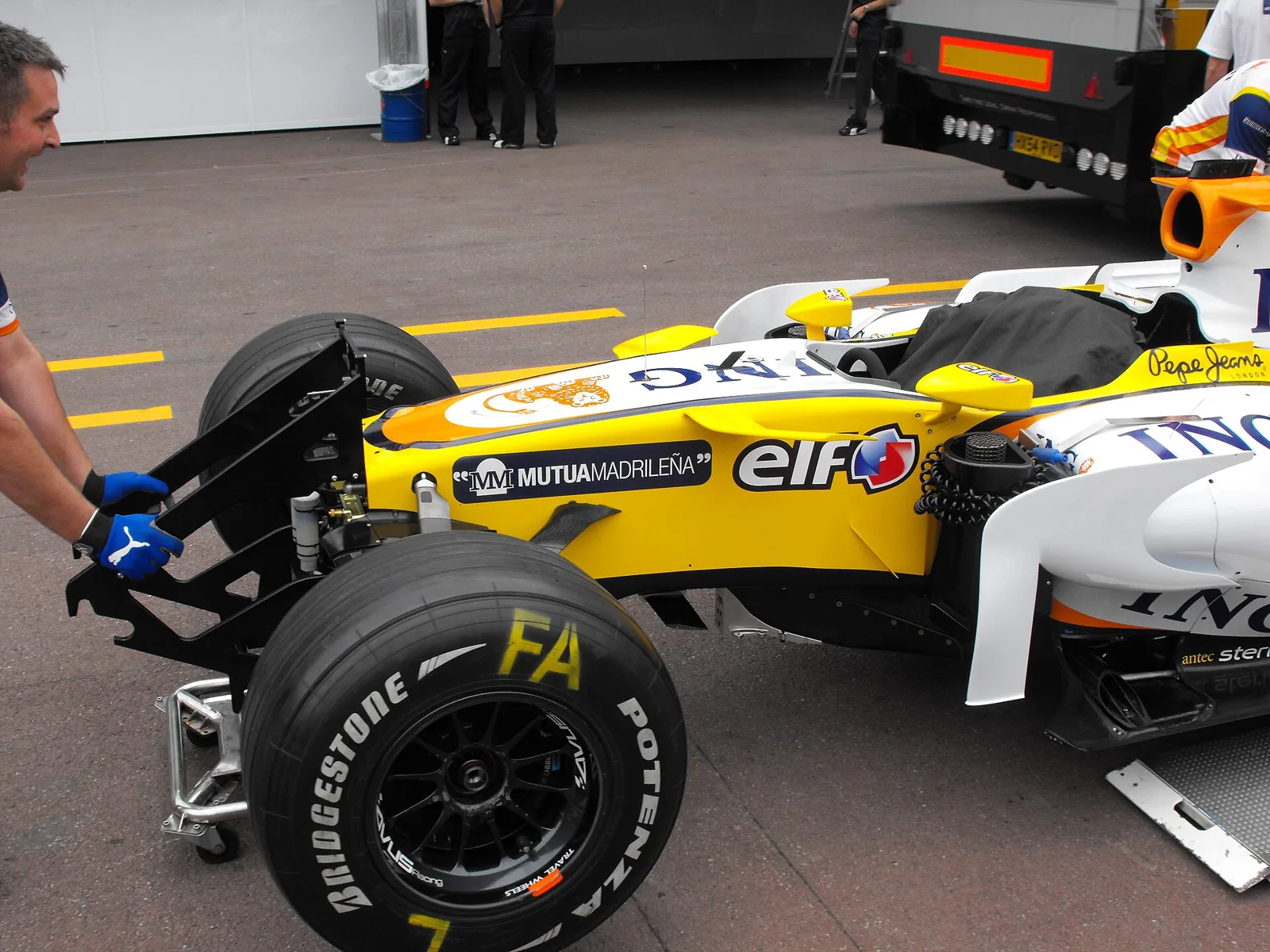
Lewis Hamilton converted a fourth-place start into victory in a race run on standing water, while Kimi Raikkonen's gamble on dry tyres cost him the lead.
Lewis Hamilton won the 2008 British Grand Prix at Silverstone on 6 July 2008 for McLaren Mercedes, with Nick Heidfeld second for BMW Sauber and Rubens Barrichello third for Honda, in a race run in wet conditions. It was Hamilton's win from fourth on the grid.
The 2008 British Grand Prix was held at Silverstone on 6 July 2008 as the ninth round of the season. Lewis Hamilton won for McLaren Mercedes, finishing 68 seconds ahead of Nick Heidfeld in second, while Rubens Barrichello took third for Honda. The race was run in persistent rain and standing water, and it is still remembered as one of the finest wet-weather drives in Formula One.
Who won the 2008 British Grand Prix?
Hamilton started fourth but was second by the first corner, having passed Webber and Raikkonen in the opening moments. He took the lead on lap five and then pulled away from the rest of the field. His win was widely acclaimed as one of the best wet-weather performances the sport had seen.
Heidfeld finished second for BMW Sauber, and Barrichello was third for Honda, its strongest finish of the year. Raikkonen made the fastest lap of the race on lap 18, but a gamble on tyres dropped him back. Of the 20 drivers, 13 finished and eight scored points.
Hamilton's victory put him level at the top of the Drivers' Championship with Felipe Massa and Raikkonen. The result came at a time when he was under pressure, after failing to score in the two previous races and falling from first to fourth in the standings.
A wet race, a 68-second win and a tyre gamble that let a fourth-place starter take the lead for good.
What was the championship picture before Silverstone?
Felipe Massa led the Drivers' Championship with 48 points, Robert Kubica was two points behind him, and Raikkonen was third on 43 points. Hamilton was fourth with 38 points, ten points ahead of Heidfeld. Ferrari led the Constructors' Championship with 91 points, BMW Sauber had 74 and McLaren 58.
Ferrari had been the dominant team before the race. Its drivers had won five of the first eight races, including one-two finishes in Bahrain, Spain and the French Grand Prix. Kubica had scored in every race but one, and he had won his first race four weeks earlier at the Canadian Grand Prix.
Hamilton was under pressure for a different reason. In Canada he retired after colliding with Raikkonen, whose car was stationary at a red light in the pit lane. A ten-place grid penalty followed at the next race, and a drive-through penalty for passing Vettel by missing a chicane meant he failed to score there as well.
Hamilton responded angrily to the negative coverage, saying that the penalties would not distract him and that he would keep battling. He remained confident about his chances of winning the championship going into the weekend.
How did testing and practice go at Silverstone?
Three days of testing took place at Silverstone from 25 to 27 June. Massa was fastest on the first day with 1:20.188, but he suffered a mechanical failure with 30 minutes left, which brought a red flag. Kovalainen went fastest on the second day, and Hamilton set the quickest time on the third day with 1:19.170.
Practice was affected by an accident involving Massa. Two Friday sessions of 90 minutes each were held, followed by a one-hour session on Saturday. In the first session Massa was fastest at 1:19.575, but he crashed at Stowe after an Alonso engine failure left oil on the racing line.
The session was stopped for 18 minutes while cement dust was laid on the oil and his car was recovered. Kovalainen was fastest in the second session, and Alonso topped the final session, which was held in damp conditions. The track dried during that session and the teams switched tyres several times. Track workers spent that time clearing the Stowe area before running resumed.
Qualifying took place in three parts, with the first lasting 20 minutes and the second 15. Cars that failed to reach the final part could refuel before the race, while the top ten could not. Kovalainen took his first Formula One pole at 1:21.049, half a second clear of the field.
How did qualifying shape the grid?
Webber started alongside Kovalainen on the front row, which was the best qualifying result for Red Bull to that point. Raikkonen started third, and Hamilton fourth after pushing too hard on his first run. Heidfeld was fifth for BMW Sauber, ahead of Alonso, Piquet and Vettel.
Massa qualified ninth after a slow tyre change in the final session left him without a second timed lap. Kubica did not set a time in the final session because of a technical problem, which meant he started tenth. It was the first race of the season in which he had qualified behind his teammate Heidfeld.
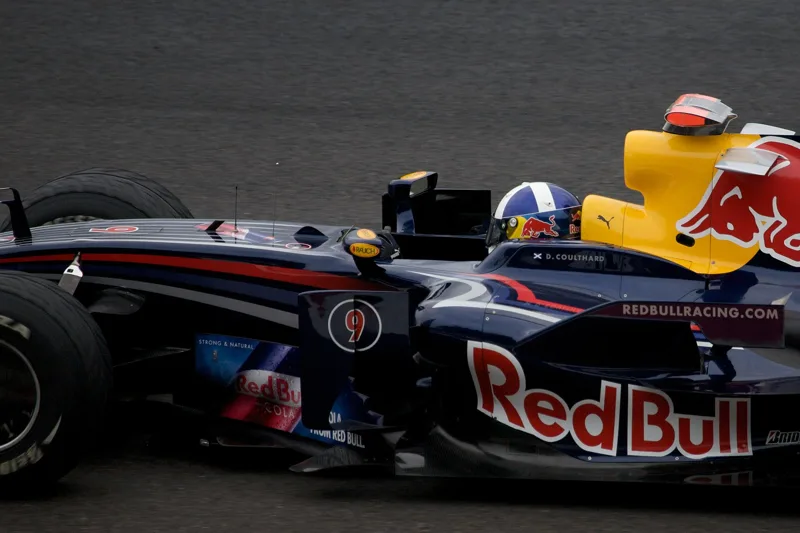
David Coulthard qualified eleventh for his final British Grand Prix, narrowly missing the final part. Bourdais was thirteenth, and Nakajima fifteenth. Rosberg started eighteenth with suspension problems, and Sutil and Fisichella finished the grid for Force India. It was a fitting final appearance for a driver with a long Silverstone record.
How did the race unfold in the rain?
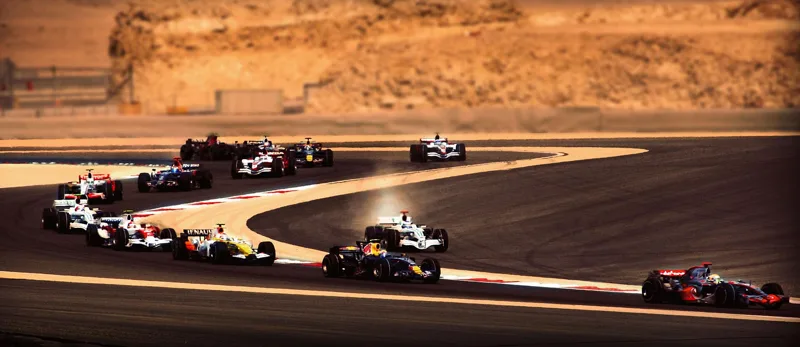
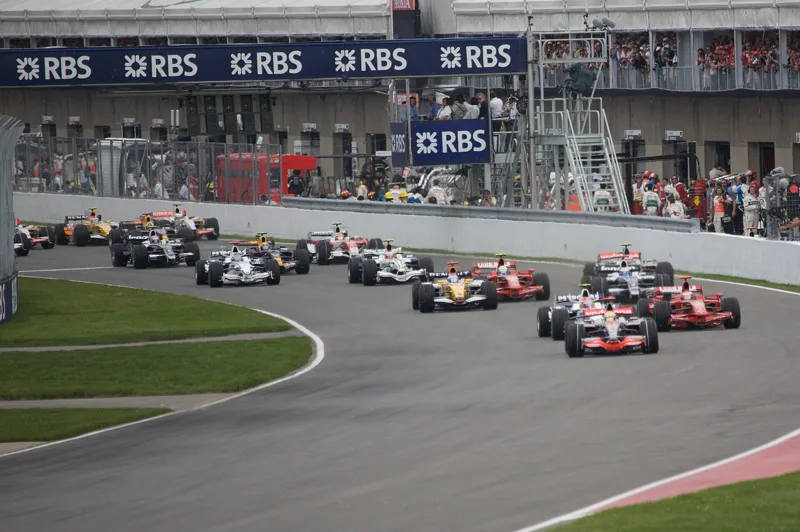
Rain had been falling in the morning and had left standing water on the track, although it had eased before the start. Every driver chose intermediate tyres. Rosberg started from the pit lane after set-up changes. At the start the front three struggled for grip, which allowed Hamilton to edge ahead into the first corner.
Kovalainen retook the lead after brushing tyres with Hamilton, who then tucked in behind his teammate. Webber spun on the Hangar straight and fell to last place. Coulthard and Vettel collided and ended up in the gravel trap, which brought out the safety car for a single lap. Massa spun at Bridge, where he was passed by everyone except Webber.
Alonso showed good early pace, passing Piquet and Heidfeld in the opening laps. Massa spun again on his third lap and dropped to the back of the field. Hamilton passed Kovalainen at Stowe on lap five, and by lap ten there was a six-second gap between them when Kovalainen spun and was passed by Raikkonen.
As the track dried, Raikkonen showed the better pace, and the gap fell below a second by the time both pitted on lap 21. McLaren gave Hamilton fresh intermediate tyres, but Ferrari gambled that the track would keep drying and refuelled Raikkonen without changing his tyres. That decision would prove costly.
Why did Raikkonen's tyre gamble fail?
The rain returned, and Raikkonen could not find grip. He lost up to eight seconds a lap to Hamilton. Kovalainen and Heidfeld reached him by lap 27, and Heidfeld then passed them both for second. Raikkonen did not pit for fresh tyres until lap 30, and that dropped him to eleventh.
Hamilton pitted on lap 38 for a new set of intermediates and fuel, and he led by around 30 seconds at the time. Heidfeld stopped the following lap and chose the same tyres. The gap between the two leaders was then 36 seconds, as the weather forecast suggested the rain would ease.
Several drivers spun in the conditions. Nelson Piquet Jr beached his car in a gravel trap, ending his race. Kubica, Hamilton and Massa lost control in separate incidents and travelled over the grass before rejoining without damage. Raikkonen spun twice in as many laps, but he avoided the barriers each time.
With 20 laps to go, Rubens Barrichello was on extreme wet tyres and around nine seconds a lap quicker than most of the field. He moved up to fourth by passing Kovalainen and Alonso. Kubica retired after losing control and beaching in the gravel. Rosberg ran into the back of Glock, damaging his front wing, and he was forced to pit to change it.
How did Barrichello reach the podium?
Barrichello caught and passed Trulli and Heidfeld for second, but a refuelling problem at his earlier stop meant he would have to stop again. He built a gap of twenty seconds over Heidfeld before pitting on lap 47 for intermediates, and he rejoined third behind Heidfeld.
The final laps saw battles further back. Kovalainen passed Alonso for fifth at Bridge, and Trulli's stop promoted him to fourth. Massa spun on the exit of Woodcote and recovered without damage, and Webber made a similar mistake at the same corner. Raikkonen and then Kovalainen passed Alonso in the closing laps.
Hamilton crossed the line on lap 60 to win by 68 seconds from Heidfeld. It was the largest winning margin since the 1995 Australian Grand Prix. Barrichello finished third for Honda, the team's best result of 2008, and Raikkonen was fourth ahead of Kovalainen and Alonso. Trulli took seventh and Nakajima eighth.
| Position | Driver | Team | Note |
|---|---|---|---|
| 1st | Lewis Hamilton | McLaren Mercedes | Won from fourth; 68-second margin |
| 2nd | Nick Heidfeld | BMW Sauber | Held second from lap 27 onwards |
| 3rd | Rubens Barrichello | Honda | Honda's best finish of 2008 |
| 4th | Kimi Raikkonen | Ferrari | Fastest lap on lap 18 |
| 7th | Jarno Trulli | Toyota | Passed by the leaders in the late stages |
What did the wet tyres decide for Honda?
Extreme wet tyres made a major difference in the closing laps. Barrichello switched to them and gained rapidly on the cars around him, which is how he climbed to the podium. His tyre switch came at a crucial point in the race, when the rain was still heavy.
Both Hondas changed onto the extreme wet-weather tyres on lap 37, with Button queuing behind his teammate in the pit lane while he waited to be serviced. The stop cost Button time, and Honda's own race showed how much a strategy call could matter in the rain.
What did the drivers say afterwards?
On the podium Hamilton described the conditions and the limited visibility. He said he had to clean his visor on almost every lap, and that it was a real mental challenge. He also thanked the fans for their support. He said the conditions had been extreme.
Heidfeld said that the correct tyre choices were vital, and he described the most difficult moments, when cars that had been lapped passed him because they were on better tyres. He said there was so much water that he could not see where it was lying on the track.
Barrichello, whose first podium since the 2005 United States Grand Prix came here, called it a perfect race. He added that his switch to extreme wet tyres had let him pass cars on both sides of the track, which he described as magic. He said that once he switched to extreme wet tyres he was passing people from the inside and the outside, which felt like magic.
How did the standings change?
After the race Hamilton was tied with Massa and Raikkonen at the top of the Drivers' Championship, all on 48 points. Kubica dropped behind Raikkonen and Hamilton but stayed two points behind the leaders, and Heidfeld remained fifth. In the Constructors' Championship BMW reduced Ferrari's lead to 14 points, and McLaren were still ten points behind.