Lewis Hamilton, from third on the grid, took his first Monaco win in a race of changing conditions, safety cars and a Ferrari collision.
Hamilton, racing for McLaren, claimed his first Monaco victory in 2008 after a race shaped by shifting weather and two safety car periods. BMW Sauber's Robert Kubica finished second, and Ferrari's Felipe Massa, who had started from pole, took third.
Lewis Hamilton won the 2008 Monaco Grand Prix for McLaren on 25 May, in a rain-hit race that he controlled through the closing stages. Robert Kubica took second for BMW Sauber, and Felipe Massa, who had started from pole for Ferrari, finished third. The victory was Hamilton's first in Monaco, and he went on to take the world championship that season.
Why was the 2008 race important?
The race was the sixth round of the 2008 Formula One season and covered 76 laps around the Circuit de Monaco. Hamilton's win gave him the lead of the Drivers' Championship by three points from Kimi Raikkonen and by four from Massa. It also kept the title fight wide open, with twelve races still to run.
Ferrari had been the dominant force so far. It had won every race since Hamilton's opening win in Australia, four in a row, and it led the Constructors' Championship. The team had not won at Monaco since 2001, and it had struggled to match McLaren's pace in 2007. That made the principality a significant test for the Italian squad.
A race that was wet, dry, and wet again, and that handed Hamilton the lead of the championship.
Who was on the grid, and which tyres were available?
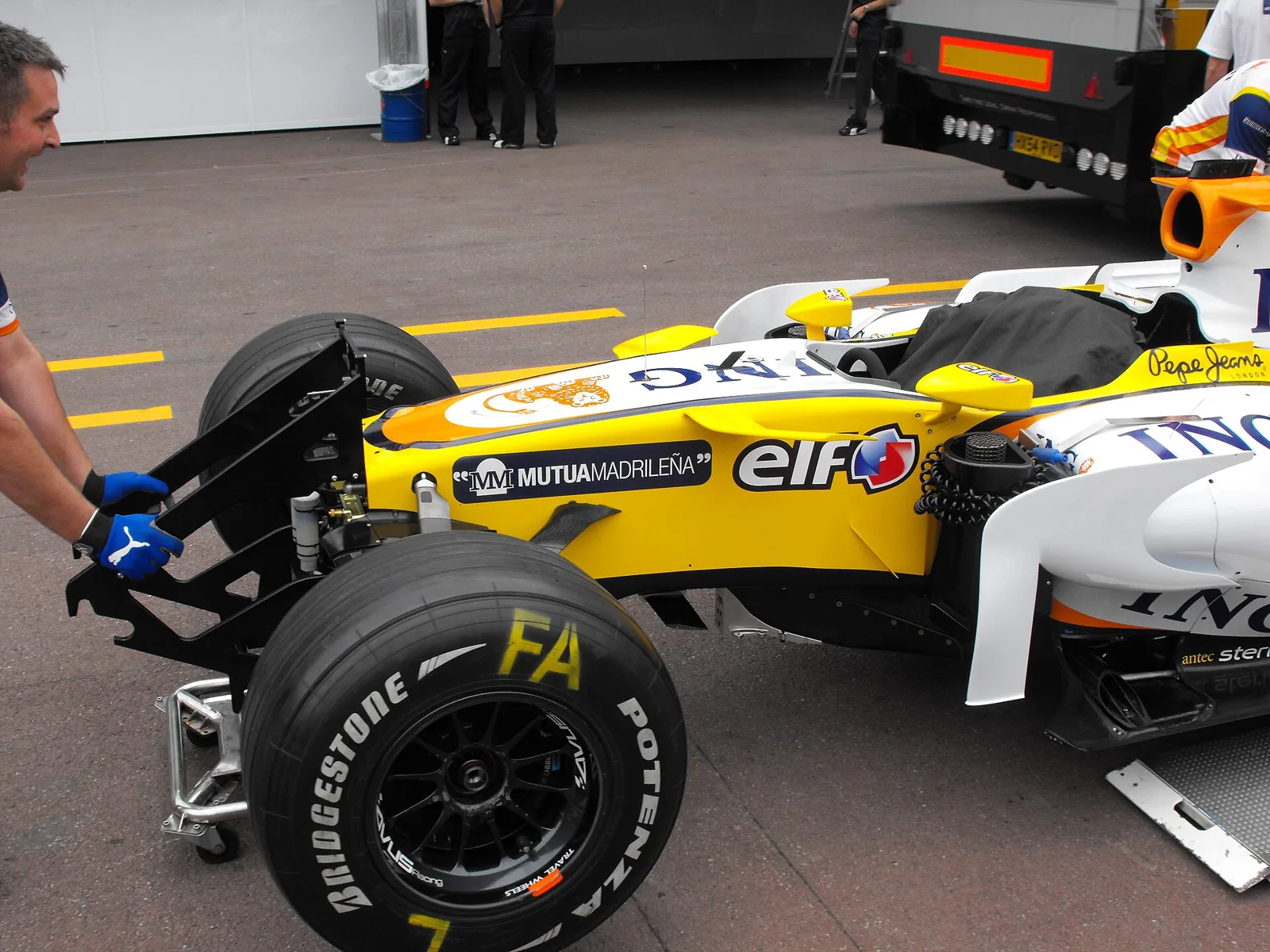
Twenty drivers started the race, split between ten teams. Among the squads were Toro Rosso, Williams and Red Bull, alongside Honda, Renault, Toyota and BMW Sauber, with Force India and Ferrari also entered. Bridgestone brought four compounds: two dry-weather types, the softer of which carried a single white stripe, and two wet-weather types, with the extreme wet also marked by a white stripe.
Before the race Raikkonen led the Drivers' Championship on 35 points, and Massa was second on 28. Hamilton was also on 28 but had one win fewer than Massa, and Kubica was fourth on 24. In the Constructors' Championship Ferrari led with 63 points, 19 ahead of BMW Sauber and 21 ahead of McLaren-Mercedes.
Toro Rosso used its new STR3 for the first time that weekend. The team had run a modified version of the STR2 for the first five races, but a testing crash had left it short of spare parts and delayed the new car. Sebastian Vettel took a five-place grid penalty for an unscheduled gearbox change, because the STR3 used a different transmission. His team-mate Sebastien Bourdais avoided the penalty, as he had failed to finish in Turkey and therefore had a free change.
How did practice go?
Three practice sessions were held, two on Thursday, each lasting 90 minutes, and one on Saturday morning, lasting an hour. After an hour of running, marshals spotted a loose drain cover on the Beau Rivage run and practice was halted. Afterwards Raikkonen led Hamilton, McLaren's Heikki Kovalainen and Massa, with Kubica leading the BMW pair in sixth.
Heidfeld retired after only 13 laps with an engine failure and parked in Casino Square. The second session was disrupted further when both Renault drivers crashed at Sainte Devote, and the marshals had to sweep debris from the track. Hamilton was again quick, fastest ahead of Rosberg, Raikkonen, Massa, Kovalainen and Kubica.
Trulli brushed the wall at Piscine, while Sutil's front wing came off after he clipped the barrier at Rascasse. On Saturday morning light rain fell, and Kovalainen posted the quickest lap of the last session, then lost the car at Piscine and damaged its rear. Rain increased while the debris was cleared, and his time stood. Hamilton ended second fastest.
How did qualifying work?
Saturday's qualifying was split into three segments. The first 20-minute period eliminated the cars that finished 16th or lower. The second, lasting 15 minutes, left the fastest ten cars for the final segment. Cars that missed the final period could be refuelled before the race, but those in it were not, so they started with more fuel than they had carried in earlier sessions.
Massa claimed his third pole of the year, lapping in 1:15.787, with Raikkonen alongside him on the front row. Hamilton was third, only 0.052 seconds slower than Massa. Kovalainen edged out Kubica for fourth, as Kubica struggled to get heat into his tyres on his final run. Rosberg took sixth, ahead of Alonso, Trulli and Webber.
| Grid | Driver | Team |
|---|---|---|
| 1 | Felipe Massa | Ferrari |
| 2 | Kimi Raikkonen | Ferrari |
| 3 | Lewis Hamilton | McLaren |
| 4 | Heikki Kovalainen | McLaren |
| 5 | Robert Kubica | BMW Sauber |
| 6 | Nico Rosberg | Williams |
| 12 | Jenson Button | Honda |
| 19 | Sebastian Vettel, after a five-place penalty | Toro Rosso |
Webber's Red Bull team-mate David Coulthard crashed into the barriers after the tunnel at the end of his second session, and the caution flags around his car denied many drivers a final flying lap. Button, who was 12th behind Timo Glock, blamed the disruption for his result, having set up his car specifically for that run.
What went wrong on race morning?
The Sunday morning warm-up was a lottery. Frequent showers soaked the track, which made the racing slippery and hazardous, and the rain stopped and started again before the start. Coulthard had changed his gearbox after his crash, which earned him a grid penalty that moved him from 10th to 15th. Teams delayed their tyre decisions for as long as they could, and by the three-minute warning most drivers had chosen the standard wet tyre. Only Piquet started on extreme wets.
Kovalainen's engine stalled on the formation lap, and his mechanics pushed the car back to the pit lane, where it was restarted and fitted with a new steering wheel. Kovalainen started from the pit lane as a result.
How did the first laps unfold?
Massa held his lead into Sainte Devote, while Hamilton slipped past Raikkonen on the inside, using the pit lane exit. Kubica moved into fourth, and Alonso took fifth from Rosberg. Rosberg then pitted for a new front wing after contact with Alonso at the hairpin, which promoted Trulli to sixth.
Hamilton hit the barriers at Tabac on lap six, which forced a stop for new tyres. McLaren fuelled him for a longer second stint, and he rejoined fifth, losing only three places in the stop. Alonso suffered a similar accident at Massenet two laps later and rejoined seventh after pitting for extreme wets. Massa's lead of 12 seconds over Raikkonen by lap six disappeared when the safety car came out on lap eight, after Coulthard and Bourdais crashed at Massenet seconds apart.
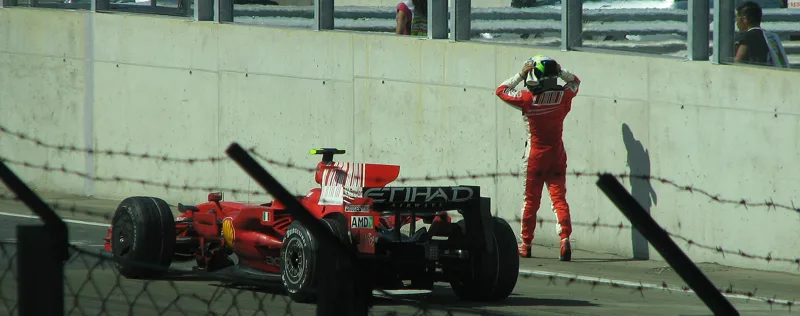
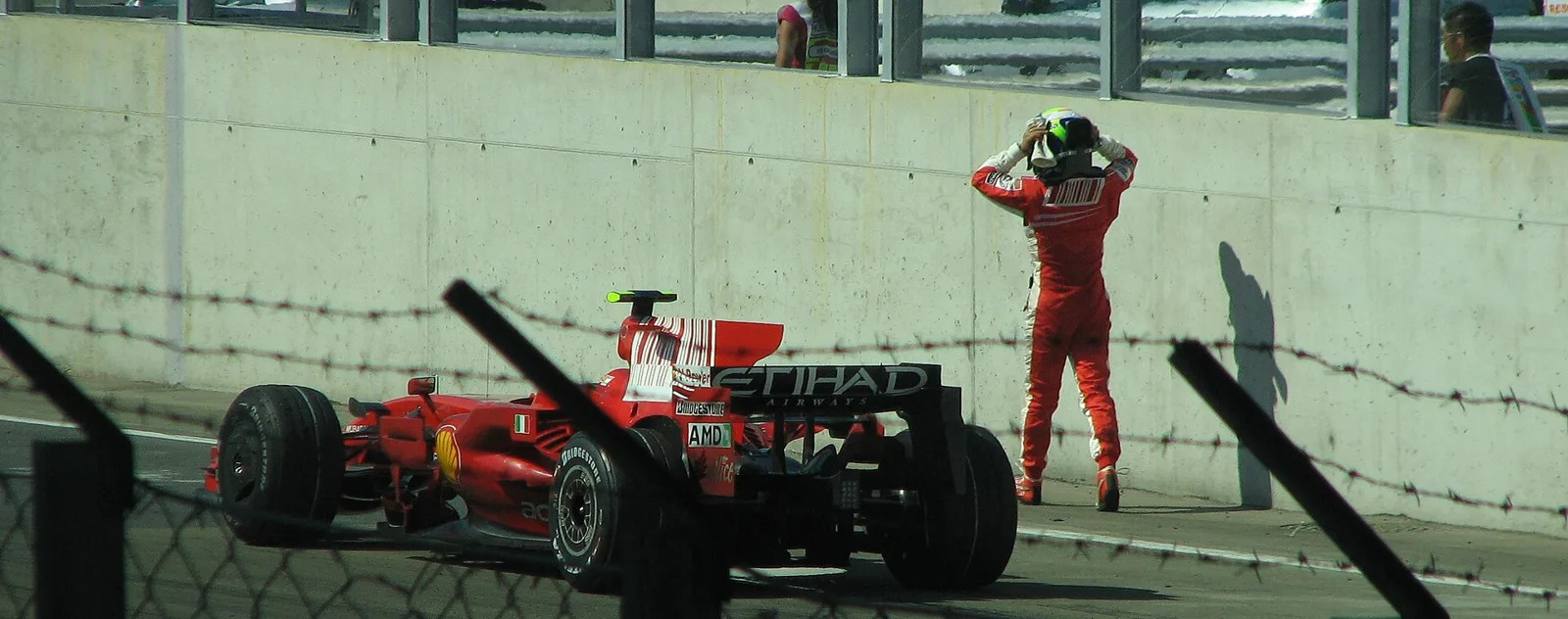
When the safety car returned to the pits after three laps, Massa stretched his lead over his team-mate. Raikkonen then had to take a drive-through penalty for failing to have his tyres fitted by the three-minute warning, which dropped him to fourth. Kubica took the lead when Massa slid off the road at Sainte Devote, and the Ferrari rejoined second as the rain eased.
The lead changed again during the pit stops. Kubica pitted on lap 26 and Massa followed on lap 33, yet Hamilton, carrying more fuel, took over at the front.
How did Hamilton win the race?
As a dry line appeared, Hamilton pulled away from Massa, growing his advantage from 13 seconds to 37 seconds. He made his second stop on lap 54, and his timing was fortunate. He switched to dry tyres just as that strategy proved strongest, and he rejoined 13 seconds ahead of Massa. The Ferrari stopped two laps later and dropped behind Kubica.
A second deployment followed on lap 62, when Rosberg crashed at Piscine and scattered debris across the track, though Rosberg was unhurt. Hamilton's lead survived that interruption, and the safety car went back to the pits on lap 68.
Sutil had made more progress than anyone by the second safety car period. He started 18th, moved up when Kovalainen was sent to the pit lane, and passed Piquet and Bourdais. He then profited when Button, Rosberg, Glock and Trulli stopped for repairs, reaching 11th by lap 14. Later he passed four cars to take seventh and moved to fourth as others pitted.
Alonso, on extreme wets behind Heidfeld, damaged his front wing trying to pass the BMW at the hairpin, which created a queue behind him. Vettel gained 12 places from the grid and switched to dry tyres on lap 52. Webber improved three places to sixth.
Later on lap 68 Raikkonen lost control under braking out of the tunnel and could not avoid Sutil. The Ferrari needed a new front wing, but damage to Sutil's rear suspension ended his race. Webber gained from the incident to take fourth, while Raikkonen dropped to ninth.
What was the final result?
The slow early pace meant the race ran for two hours and 76 laps, rather than the 78 scheduled. Hamilton crossed the line first despite a slow puncture on the final lap, and Kubica came second, with Massa and Webber behind him. Vettel's fifth place earned the STR3 its first points, in its maiden race.
Barrichello and Nakajima came behind Vettel, and After a stall at the start, Kovalainen came back to eighth, a place in front of Raikkonen. Raikkonen's quickest effort, a 1:16.689 on lap 74, was the best of the afternoon. Alonso, Button, Glock and Trulli followed. Heidfeld came home last among the classified runners, 14th and four laps down.
Fisichella's gearbox gave out after 36 laps, and Piquet, having changed to dry tyres on lap 46, ended up in the barriers at Sainte Devote. Four more drivers, Sutil, Rosberg, Coulthard and Bourdais, also failed to finish.
Why did the win matter for the championship?
Hamilton now topped the drivers' table on 38 points. Raikkonen, who had scored nothing at Monaco, stayed second on 35. Massa trailed by a single point and Kubica by three. Heidfeld was sixth, on 20.
In the Constructors' Championship Ferrari kept the lead on 69 points, while McLaren climbed to second on 53 and BMW Sauber slipped to third on 52, with 12 races of the season left.
How did the paddock react?
The podium finishers received their trophies in the royal box, with the principality's ruler present. Hamilton described the early conditions as very hard, explaining that the cars were aquaplaning and that he had struggled to keep his car on the track. He said a stream of water on the track had caused his crash at Tabac, and he praised his team and strategy.
Kubica said tyre problems in his middle stint had kept him from passing Massa until he asked his team to follow Glock onto dry tyres. Massa admitted that a strategy mistake had left him needing another stop, but he said it was good to be on the podium.
Sutil was bitterly disappointed, having been on course for his team's first points. He described it as a dream turning into a nightmare, and he said he had shed a few tears after the collision. Raikkonen apologised and blamed cold brakes for losing control.
Mike Gascoyne, Force India's technical chief, asked the stewards to investigate. After deliberation no action was taken, and he argued that had a Force India driver struck a reigning world champion, a one or two-race ban would have been expected. Sutil was given a reprimand for overtaking three cars while yellow flags were out on lap 13. Had he finished, he would have received a 25-second penalty.
Jackie Stewart, a three-time Monaco winner, said Hamilton could win the race many times and hoped it would be the first of many victories there. Damon Hill, the 1996 World Champion, said the race was a great advertisement for Formula One.
McLaren's next Monaco win came in 2025, when Lando Norris started from pole and beat Ferrari's Charles Leclerc.