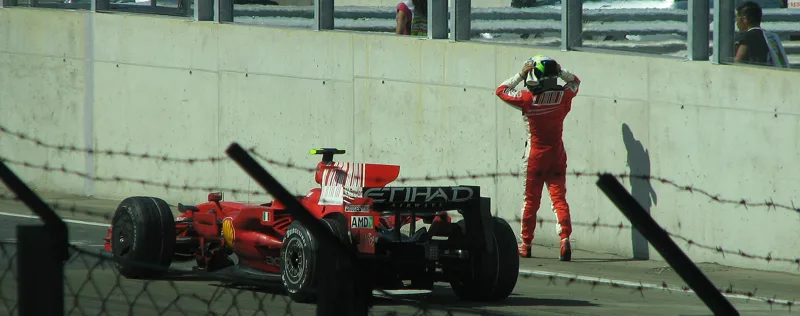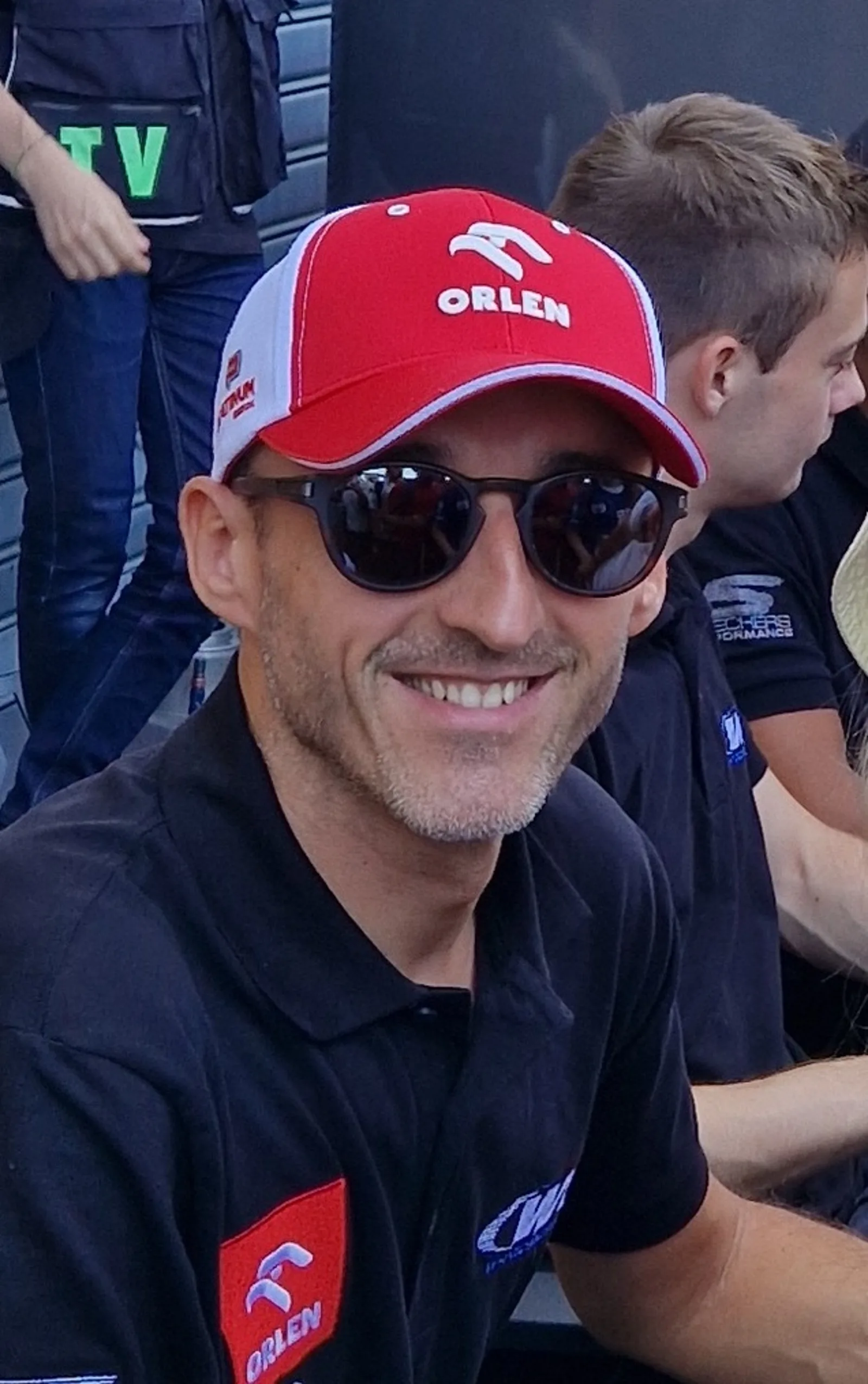
A 2008 Canadian Grand Prix win for BMW Sauber, a near-career-ending accident in 2011 and a return that ended with victory at Le Mans in 2025.
A Pole who raced in Formula One from 2006 to 2010, Robert Kubica returned in 2019 and 2021. His single Grand Prix victory came in Canada in 2008, and after a 2011 rally crash he took the overall Le Mans 24-hour race in 2025.
Robert Kubica is a Pole whose racing career spans Formula One, rallying and sportscars. He raced in Formula One from 2006 to 2010, returned in 2019 and 2021, and won the 2008 Canadian Grand Prix for BMW Sauber. He remains the only Pole ever to take a Formula One start and in 2025 took the overall Le Mans 24-hour race.
His career was split by a near-fatal rally crash in 2011 that left him with a partly amputated forearm. He rebuilt his career in rallying, then in sportscars, and his story is one of the most remarkable recoveries in modern motorsport.
How did Robert Kubica start in motorsport?
Kubica's father, Artur, bought him a small off-road vehicle when he was four, and he spent hours driving it around plastic bottles. A go-kart followed, and he began racing in the Polish Karting Championship at ten. He won six titles in three years in Poland, then moved to a more competitive Italian series, where in 1998 he became the first non-Italian to take the International Italian Junior Karting Championship.
He also won the Junior Monaco Kart Cup twice, a result that gave him early exposure to a track where he would later race in a very different kind of car. By 2000 he was finishing fourth in both the European and World karting championships before he left karting for single-seaters.
In 2002 he won four races and finished second in the Italian Formula Renault 2000 series, and he was seventh in the Eurocup. A one-off Brazilian race at Interlagos ended in a dominant win that season.
A near-fatal crash ended one Formula One career and then, years later, a different kind of racing career began with a Le Mans win.
How did Kubica's junior career lead to Formula One?
His progress was interrupted in 2003 when a road accident broke his arm and left titanium screws in it. He still made his Formula 3 Euro Series debut at Norisring, where he won with a plastic brace on his arm and 18 titanium bolts in place. He finished 12th that year and seventh in his second season with the factory Mercedes team.
In 2004 he took pole for the Macau F3 Grand Prix and broke the lap record, though he finished second in the race. The following year he took the World Series by Renault crown for Epsilon Euskadi, which earned him Formula One testing with Renault.
His first Formula One role came in 2006, when BMW Sauber made him official reserve driver. Results in testing and private sessions drew attention, and the team management chose him to replace Jacques Villeneuve at the Hungarian Grand Prix.
What did Kubica achieve in his first Formula One season?
At the Hungarian Grand Prix in 2006 Kubica qualified ninth, ahead of his teammate Nick Heidfeld, and finished seventh, although he was later disqualified for an underweight car. Villeneuve left the team soon afterwards, and BMW confirmed Kubica's place for the rest of the year.
His third race was the Italian Grand Prix, where he finished third and became the first Polish driver on a Formula One podium. He was also the first Pole to lead a Grand Prix, and only Alexander Wurz, in 1997, had reached the podium so quickly.
He had mistakes too. He finished 12th in Turkey after a poor tyre choice and 13th in China after moving too early to dry tyres on a drying track.
What happened in Kubica's 2007 Canadian crash?
Kubica had a strong 2007 season, finishing in the points consistently until the Canadian Grand Prix. There, approaching the hairpin on lap 27, his car touched Jarno Trulli's Toyota before it hit a bump in the grass that lifted its nose. The car struck the concrete wall, rolled and ended up on its side. The car was hitting the barrier at 300.13 km/h (186.49 mph), with an impact angle of 75 degrees, and the data recorder logged a peak of 75 G.
He was taken to the medical centre, where he was reported to be in stable condition and conscious. Later checks showed a light concussion and a sprained ankle, and he was kept in hospital overnight. He missed the United States Grand Prix as a precaution, and Sebastian Vettel stood in for him. He returned for the French Grand Prix and finished fourth, then finished fourth again at Silverstone.
How did Kubica win the 2008 Canadian Grand Prix?
Kubica's first Formula One victory arrived on 8 June 2008 in Canada, from second on the grid. He passed race leader Lewis Hamilton at the first pit stops, after BMW Sauber's pit crew had completed a faster stop. When Hamilton crashed into the rear of Kimi Raikkonen's Ferrari at the pit exit, Kubica rejoined the race in a strong position. He ran two stops to Heidfeld's one and kept enough of a gap to stay ahead after his second stop.
The win gave Kubica the lead of the Drivers' Championship and made him the only Polish winner in the sport's history. It was also the only win BMW Sauber ever achieved as a team.
The rest of the season was harder. The team struggled in the second half, and he finished second in Japan after leading for 16 laps. He also collected podiums at Valencia and at a rain-affected Monza, and he ended the year fourth in the championship, his best finish overall.
Why did Kubica's BMW years end in 2009?
In 2009 Kubica's season opened with a crash in Melbourne after contact with Sebastian Vettel, which Vettel was later deemed responsible for. The incident cost him a potential result, and BMW's motorsport director Mario Theissen said he would have won ahead of Jenson Button had it not happened.
Results were patchy after that. He retired in Malaysia with engine problems and had a difficult spell with a modified car. A second place at the Brazilian Grand Prix, 7.6 seconds behind Mark Webber, was one of his best results of the year. He described his eighth-place finish at Singapore as the most difficult point he had ever scored.
BMW said on 29 July 2009 that it was pulling out of Formula One at season's end, which left Kubica without a seat for 2010.
How did Kubica perform at Renault in 2010?
Kubica joined Renault for 2010 after a period of uncertainty caused by the parent company's finances and an investment firm's stake in the team. He was partnered by Vitaly Petrov, and he extended his contract to 2012 that July.
The results were encouraging. He finished second in Australia after starting ninth, and he was third at Monaco after holding the position throughout the race. In Belgium he qualified third, but a bungled pit stop cost him a higher finish. After China he was seventh in the standings, 20 points behind Jenson Button.
Mark Hughes wrote that Kubica was arguably the best driver in the sport at that stage, citing his strong showings at Monaco, Spa and Suzuka.
What happened at Kubica's 2011 rally crash?
Kubica tested Renault's new car in Valencia in early 2011, setting the fastest time on the final day. Three days later, on 6 February, he went off on the opening stage of the Andora rally in Italy. His Skoda Fabia went off at speed and struck a barrier, which penetrated the cockpit.
He was trapped for more than an hour before rescuers could free him. In hospital doctors confirmed a partial amputation of his forearm, along with breaks in his right elbow, shoulder and leg, and heavy blood loss. He underwent a seven-hour operation by a team of seven doctors, and two more operations followed. The condition of his hand was unclear for some time, and he missed the 2011 season.
Renault signed Nick Heidfeld as his replacement. Kubica left hospital to begin rehabilitation in April 2011, but by November it was clear he would not be ready for 2012.
How did Kubica rebuild his career through rallying?
He suffered a setback in January 2012, when he re-broke his right leg after slipping on ice near his home in Italy. He returned to competition in September 2012, winning the Ronde Gomitolo di Lana in a World Rally Championship car by a minute.
In 2013 he drove for Citroen in the European and WRC2 championships and won the inaugural WRC-2 title. He took wins at the Acropolis Rally, the Rally d'Italia, the Rallye Deutschland, the Rallye de France and the Rally RACC Catalunya, the last of them his fifth victory of the season. He also tested with the Mercedes Formula One team, though the limited movement in his injured arm made a tight Formula One cockpit a problem on twisty circuits.
In 2014 he moved to the main WRC class with a Ford Fiesta, finishing 16th overall with 14 points. He won the non-championship Monza Rally Show that year, beating motorcycle champion Valentino Rossi into second. In 2016 funding limited him to a single WRC round, Monte Carlo.
Why did Kubica return to Formula One with Williams?
Kubica's return to Formula One started with a Renault test in 2017 in a Lotus E20, his first Formula One event since the 2011 crash. He completed 142 laps at the Hungaroring, finishing fourth-fastest, about 1.5 seconds behind Sebastian Vettel. Williams tested him after Felipe Massa's second retirement announcement, and he completed 100 laps in his first Williams test after the 2017 Abu Dhabi Grand Prix.
He joined Williams as reserve driver for 2018 and returned to the grid in 2019 as a full-time driver alongside George Russell. He chose number 88 for his car. The FW42 was among the slowest cars on the grid, but his tenth-place finish at the 2019 German Grand Prix, after penalties for others, gave him his first point since his return and ended a long run without points.
He finished 19th in the championship with one point and announced his exit from Williams in September 2019. Nicholas Latifi replaced him.
Kubica then joined Alfa Romeo as a reserve driver for 2020 and stood in for Kimi Raikkonen, who had tested positive for COVID-19, at the 2021 Dutch and Italian Grands Prix. He finished 15th at Zandvoort and 14th at Monza. Those were his last Formula One starts.
What did Kubica achieve in endurance racing?
Kubica's endurance career began in 2021 with Orlen Team WRT, competing in the European Le Mans Series, where the team won three rounds and took the LMP2 title. Between 2021 and 2024 he took two European Le Mans Series titles and one WEC crown, all in LMP2. He returned to WRT in 2023 and won the LMP2 class championship again.
In 2024 he stepped up to the Hypercar class with AF Corse, driving the No. 83 Ferrari 499P. On 1 September 2024 he took the Lone Star Le Mans race, making him the third driver to win both a Formula One race and a World Endurance Championship race, after Fernando Alonso and Mark Webber.
The 2025 24 Hours of Le Mans was his biggest result. He shared the car with Phil Hanson and Ye Yifei, making him the first Pole to win the race overall. The team finished second in the final round at Bahrain later that year.
| Season | Team | Result |
|---|---|---|
| 2006 | BMW Sauber | Third at Italy; seventh at Hungary, later disqualified |
| 2007 | BMW Sauber | Consistent points finishes; crash at Canada; fourth at France and Britain |
| 2008 | BMW Sauber | Winner at Canada; second at Japan; fourth overall |
| 2009 | BMW Sauber | Second at Brazil; eighth at Singapore |
| 2010 | Renault | Second at Australia; third at Monaco and Belgium |
| 2019 | Williams | Tenth at Germany; 19th overall with one point |
| 2021 | Alfa Romeo | Fifteenth at Zandvoort; fourteenth at Monza |
What is Kubica's legacy?
Kubica is remembered as a driver whose talent was obvious early, and whose career was reshaped by an accident that nearly ended it. No other Polish driver has taken a seat on the Formula One grid, and his Canadian win remains a landmark for his country.
His comeback is one of the most striking in modern motorsport. He won a world rallying title, returned to Formula One and then went on to win the Le Mans 24 Hours overall. He also served as a model for other drivers who face long recoveries from serious injury.