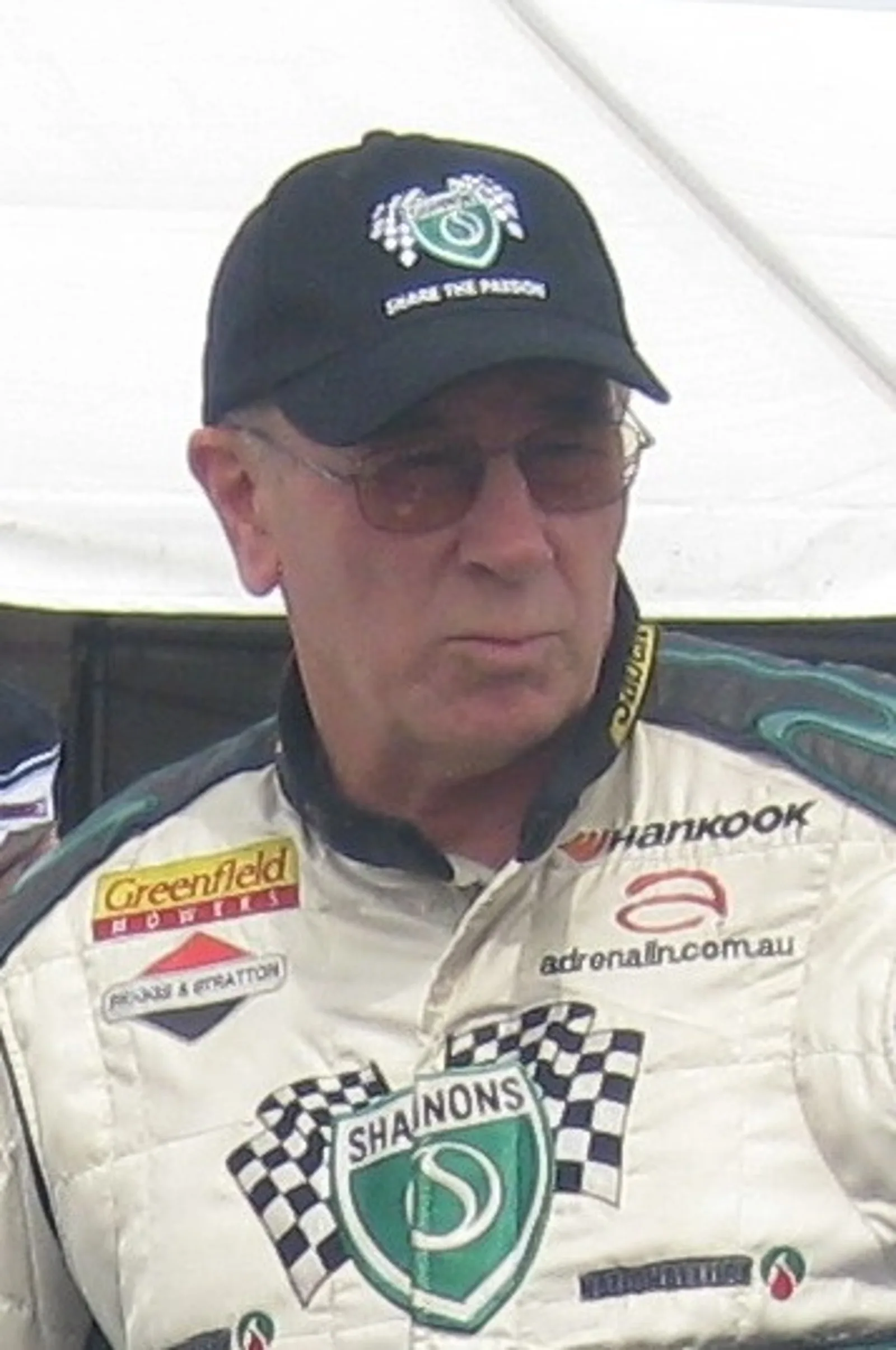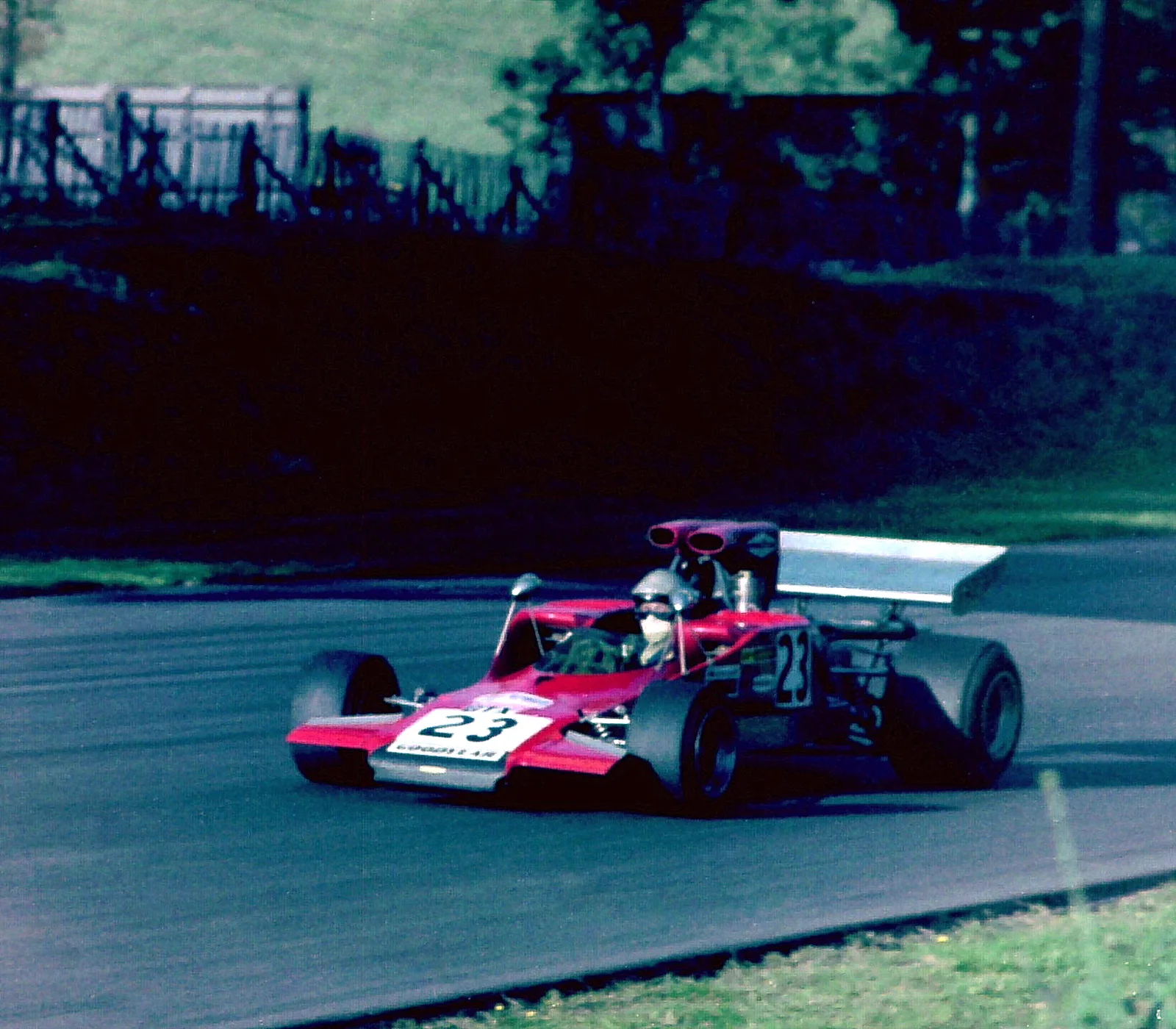
A Sydney driver who won the European Formula 5000 title, took three British touring car crowns and built BMW's Australian touring car team.
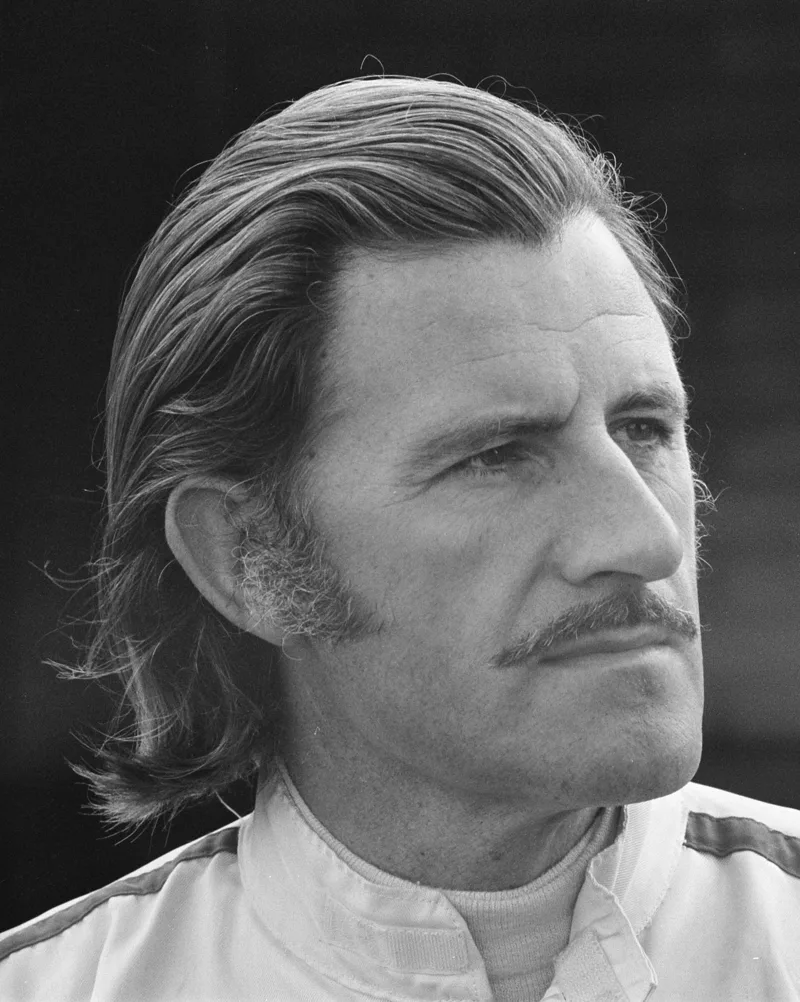
Frank Gardner was an Australian driver born in Sydney in 1931. He took three British Saloon Car titles and the European Formula 5000 crown in 1971, raced nine Formula One Grands Prix without points, and later ran BMW's Australian touring car team.
Frank Gardner was an Australian driver who raced in Europe, the Tasman Series and touring cars, and later ran BMW's factory team in Australia. He took three British Saloon Car Championship titles and the European Formula 5000 crown in 1971. He contested nine World Championship Formula One Grands Prix without scoring a point.
Who was Frank Gardner?
Frank Gardner was born on 1 October 1931 in Sydney. He is best remembered for touring car racing and sports car endurance events, but he was also a capable open-wheel driver. He died on 29 August 2009 at his home in Mermaid Waters, Queensland, aged 78.
Some references give 1930 as his birth year, but he altered the date on his papers while still under age, which let him obtain a racing licence.
He never scored a Formula One point, yet his career ran from Le Mans and the Tasman Series to BMW's Australian touring car team.
How did Gardner get into racing?
Gardner was raised by his uncle, Hope Bartlett, after his father died. Bartlett was a racing driver and golfer who had a strong reputation in Australia and New Zealand. He guided Gardner towards engineering, and the young man was more interested in preparing cars than in driving them.
Before sailing to England in late 1958, Gardner had run a Mobilgas petrol station at Avalon, on the northern beaches of Sydney. He drove Jaguar XK120s, a C-Type and a D-Type, and he repaired the C-Type and D-Type with friends after both were written off by insurers. Jaguar was his first English target, but the Midlands winter put him off, and he next took a mechanic's job at Aston Martin.
His Aston Martin link produced an early highlight. He was part of the team that won the 1959 24 Hours of Le Mans. He had insisted that one car run a Colotti gearbox, and the team's boss, John Wyer, fitted it to one of the cars. That car won the race while the other one broke down. Gardner then spent time at the Jim Russell Driving School, preparing cars and becoming its standout student, and he was later the first person hired by Jack Brabham for the new MRD Formula One team.
How did Gardner perform in Formula One?
His Formula One tally was nine World Championship starts, beginning on 11 July 1964. He never scored championship points, but he did well in non-championship events. His non-championship results included third at the Autodromo di Pergusa in Sicily in the 1965 Mediterranean Grand Prix, fourth at Brands Hatch in the 1965 Race of Champions, and third at Oulton Park's 1971 International Gold Cup.
In 1967 he also raced a factory Brabham in the Gold Cup at Oulton Park. Much of his open-wheel racing came in the Tasman Series, where he shared grids with drivers such as Jim Clark, Graham Hill and Jochen Rindt.
What did Gardner win in the Tasman Series?
The 1972 New Zealand Grand Prix at Pukekohe went to Gardner, who drove a Lola T300-Chevrolet. Tasman Formula rules governed the race, which allowed Formula 5000 cars, and it opened the 1972 Tasman Series. He finished third in the series in 1967 and again in 1972.
He treated the New Zealand win as a personal milestone, because his uncle had won the New Zealand title in the 1930s. Gardner took part in the Tasman Series every year, and it was a regular part of his winter programme while he raced in Europe.
His Australian results were strong too. He finished second at the Australian Grand Prix at Lakeside in 1966, behind Graham Hill, and third at Warwick Farm in 1967, behind Jim Clark. In 1972 he took second at Sandown, behind Graham McRae.
How did Gardner do in sports cars and Le Mans?
Gardner was a regular in sports car racing, and his results covered several championships and countries. In 1961 he won his class at Le Mans in a works Lotus Elite shared with David Hobbs. In 1966 he finished second at the 1000 km Spa round of the World Sportscar Championship.
In 1966 he also travelled to the United States to race in the newly established Trans-Am Series. He finished fourth outright at Riverside in the last race of the inaugural season, and he won the Under 2 litre division in a Lotus Cortina. Fellow Australians in the early Trans-Am were Allan Moffat, Harry Firth and Horst Kwech. A single NASCAR start at Rockingham in a Ford came in 1968.
His most unusual sports car story came in 1969. The 917 made its debut at the Spa 1000 km, but factory drivers favoured the 908, which kept winning. The 917 ran only one lap at Spa. At the Nurburgring that year, the factory entered a single 917 and none of its drivers wanted to race the car, which was overpowered and aerodynamically unstable. Porsche's 908/02 spyders swept the top five places and clinched the championship.
How did the Porsche 917 finally finish a race?
David Piper was asked to drive a 917 at the 1000 km Nurburgring, and he brought his neighbour Frank Gardner along to share the car. Porsche had already spent heavily on the 917 and needed results to sell the cars to privateer teams. Hubert Hahne and Dieter Quester, both BMW factory drivers, had been asked to test the car on Friday, but BMW stopped them from driving it.
Piper and Gardner flew in on Saturday, when the track was wet, and they could do little with the car. On Sunday they started the race and finished eighth, four laps behind the winners. It was the first race finish for the 917, and Piper later bought one of the cars for himself.
What did Gardner win in British touring cars?
Gardner took the British Saloon Car title three times, in 1967 with a Ford Falcon Sprint, in 1968 with a Ford Cortina Lotus and Ford Escort, and in 1973 with a Chevrolet Camaro. He was runner-up in 1970 in a Ford Mustang Boss 302.
His touring car career continued in Australia. In 1975 he and Bob Morris were runners-up in Bathurst's Hardie-Ferodo 1000, driving a Holden Torana SL/R 5000 L34.
How did Gardner build a touring car team in Australia?
Back home full-time from the mid-1970s, Gardner took the 1977 Australian Sports Sedan Championship in a heavily modified Chevrolet Corvair. Soon after, he began to manage teams, beginning with a team that ran Allan Grice's touring car and sports sedan cars in the late 1970s.
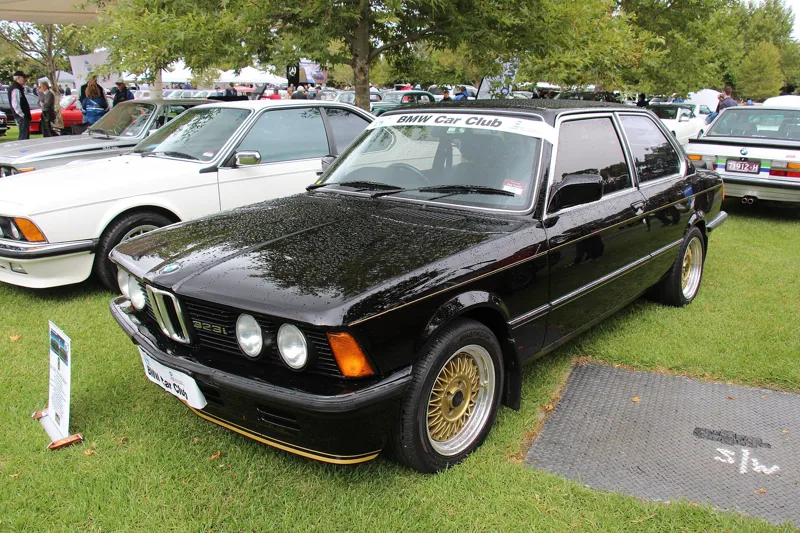
That led to BMW's factory touring car programme in the Australian Touring Car Championship. Gardner's JPS Team BMW began with a BMW 318i turbo in 1980 and ran until 1987. With Jim Richards at the wheel, his team claimed the 1985 and 1987 Australian Touring Car titles, first in a 635 CSi and then in an M3.
Gardner's own involvement also produced a 1988 Bathurst 1000 win, when Tony Longhurst and Tomas Mezera drove a Benson and Hedges Sierra for LoGaMo Racing, a team he advised. The team later ran the Fords through 1989 and 1990.
What went wrong at the 1983 Bathurst 1000?
The race was a major disappointment for JPS Team BMW. Richards qualified the Group C BMW 635 CSi in fourth place, which made the car a dark horse for the race. On lap 3 the car slowed, and the team found metal filings in its fuel system. It completed only four more laps before retiring.
Gardner later suspected sabotage, though he named nobody and would not speculate on a motive. Others pointed to the car's European origin, since it was not Australian made, and to its cigarette sponsorship. Richards and chief mechanic Pip Baker disputed the sabotage claim and believed contaminated fuel could explain the failure.
After 1983 Gardner was team manager and the main test driver. The team was based in Sydney and tested at Amaroo Park, while its drivers were based in Melbourne and on the Gold Coast, so he completed more running in the BMW 635 CSi and M3 than either Richards or Tony Longhurst.
How did the BMW team end and what came next?
Gardner retired at the end of 1987 and the JPS team closed. BMW Australia's programme passed to the former Holden Dealer Team run by Peter Brock, but that arrangement lasted one season, as the BMW M3 struggled against the increasingly strong Sierras.
The team returned in 1991 with the upgraded BMW M3 Evolution, run by Longhurst Racing with Gardner in charge. The 1980 Formula One World Champion Alan Jones drove the second car. The factory BMW programme ran until 1998, moving into Supertouring in 1994, and it won Super Touring titles in 1994, 1995 and 1997, the first with Longhurst and the last with Paul Morris.
In the 1990s the operation passed to the Morris family and was renamed Paul Morris Motorsport. It won the 1997 Bathurst 1000, and Gardner continued to run the team until he retired in 1998.
What is Gardner's legacy beyond racing?
Gardner was known as an engineer as well as a driver, and that training helped him as a team boss. He also gave talks about his own experiences and the characters he met in motor racing.
In 1973 he wrote the book Racing Drivers Manual, published by Patrick Stephens Ltd in collaboration with Castrol Oils. It mixed practical advice for young drivers with his own recollections. In 1980 he published Drive to Survive, which was still in print 25 years later.
He also developed a passion for road driver training, starting at Calder Park, the Melbourne circuit run by Bob Jane. In 1990 he opened a Performance Driving Centre, located between Brisbane and the Gold Coast, and he was awarded the Order of Australia for services to motor racing. Earlier he had been an unbeaten boxer and a champion surf life saver, captaining the Whale Beach club in Sydney.
What are Gardner's main results?
| Period | Event or series | Result |
|---|---|---|
| 1953 | Australian surf boat rowing | Australian champion |
| 1959 | 24 Hours of Le Mans | Aston Martin team victory as a member |
| 1961 | 24 Hours of Le Mans | Class win with David Hobbs |
| 1964 to 1971 | Formula One | Nine Grands Prix; no points |
| 1967 | British Saloon Car Championship | Champion, Ford Falcon Sprint |
| 1968 | British Saloon Car Championship | Champion, Ford Cortina Lotus and Escort |
| 1971 | European Formula 5000 | Champion |
| 1972 | New Zealand Grand Prix | Winner at Pukekohe |
| 1973 | British Saloon Car Championship | Champion, Chevrolet Camaro |
| 1977 | Australian Sports Sedan Championship | Champion, Chevrolet Corvair |
| 1988 | Bathurst 1000 | Win with the Sierra run by his team |
| 1997 | Bathurst 1000 | Win with Paul Morris Motorsport |