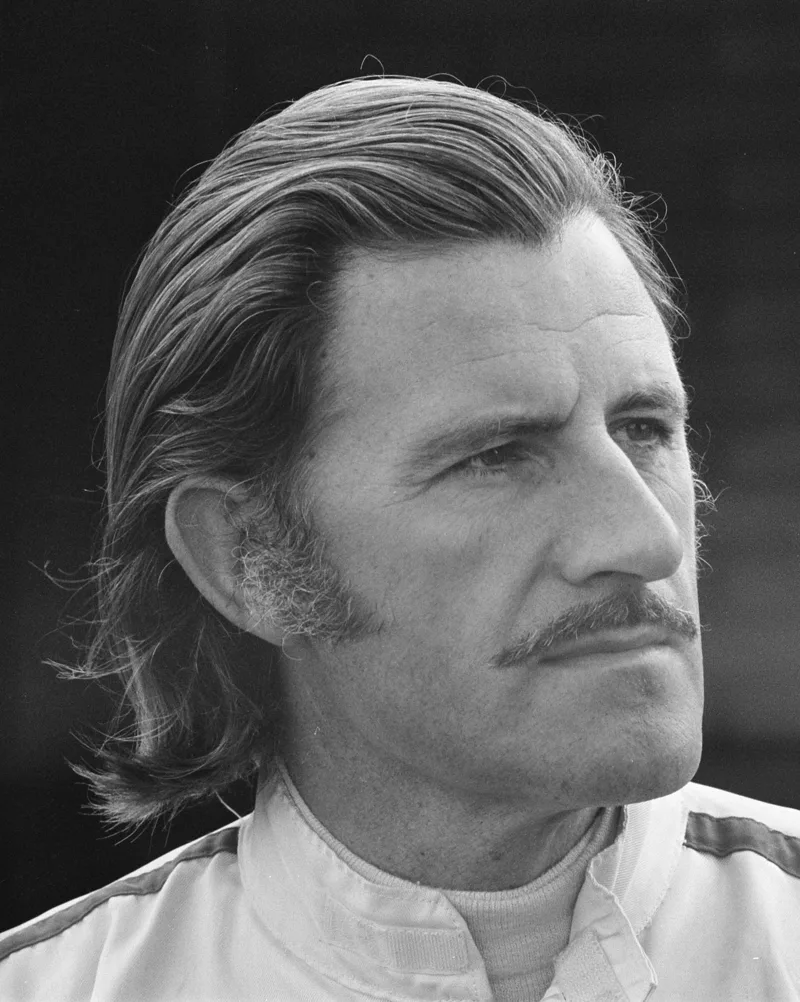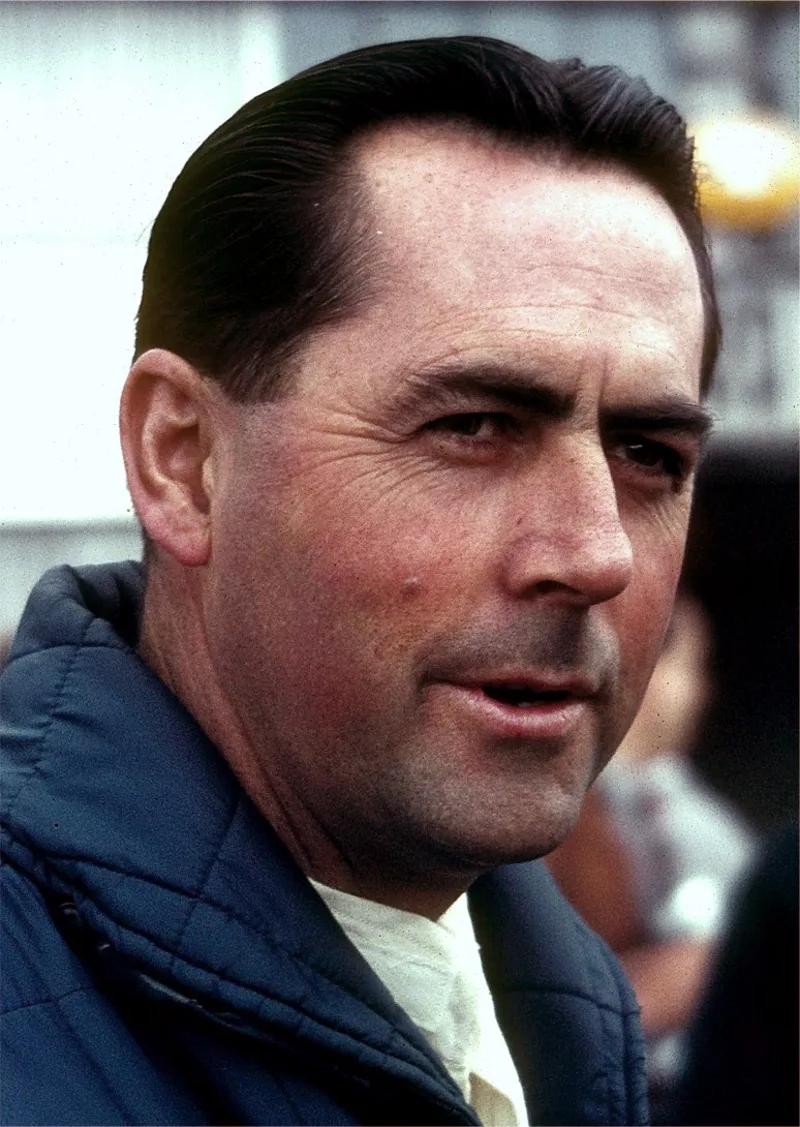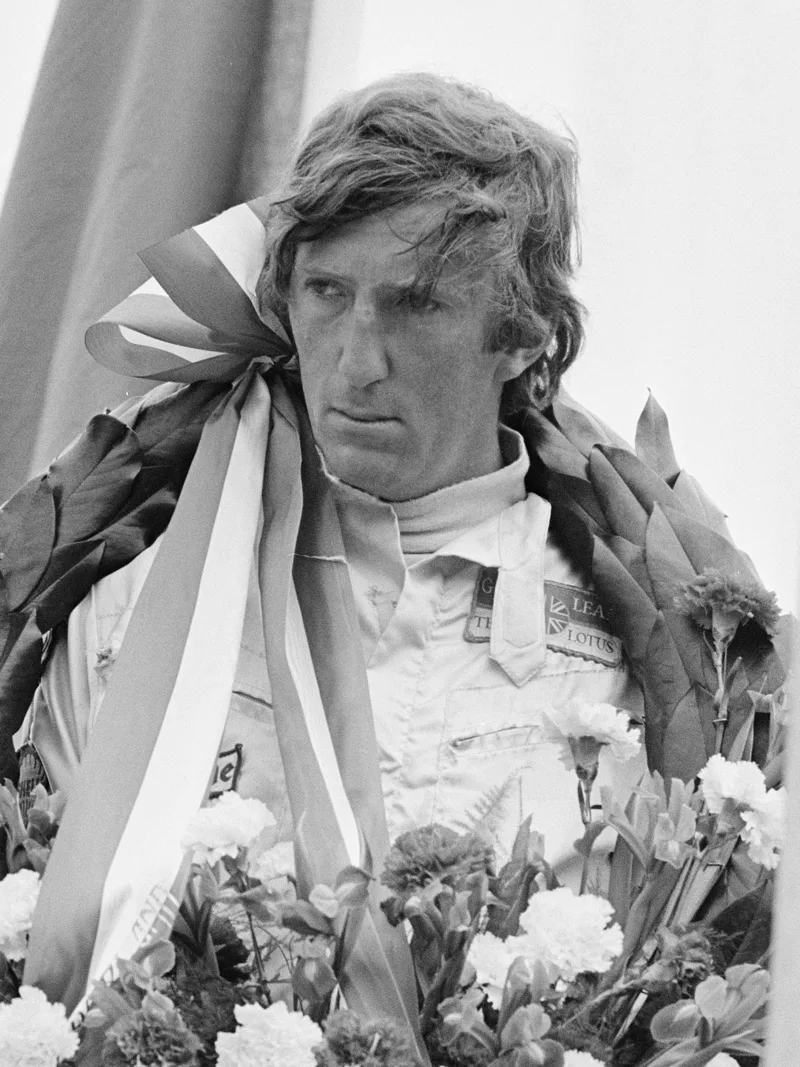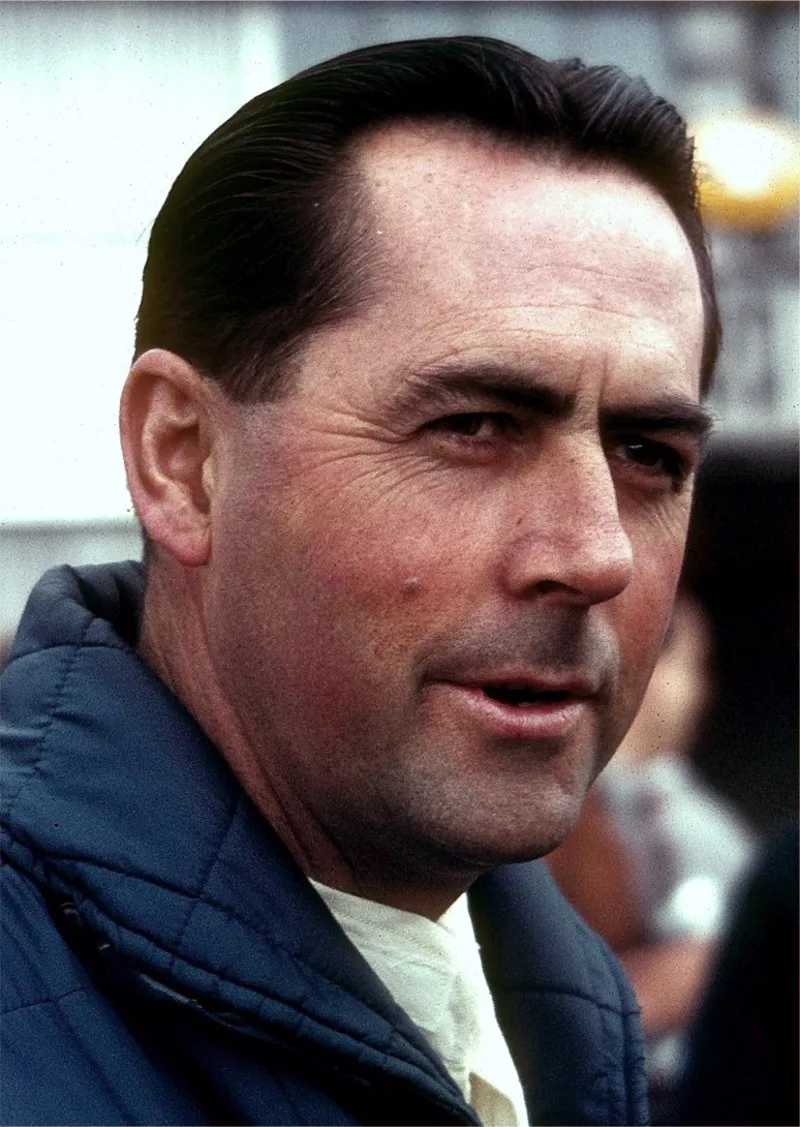
A fire-pump maker took Cooper to the 1959 world championship; seven years later an Australian engine reconditioner took Brabham to another.
Coventry Climax, a British maker of fire pumps and forklift trucks, supplied the FPF engine that took Jack Brabham to the 1959 world championship in a Cooper. Repco, an Australian parts and engine-reconditioning firm, then built the V8 that won the 1966 and 1967 titles for Brabham and Hulme.
The engine that won Jack Brabham the 1959 world championship came from a company that built fire pumps. Seven years later, the engine that won him another title came from an Australian company best known for reconditioning engines and, today, for selling spare parts.
Coventry Climax and Repco never set out to be Formula One powerhouses. Their route to the top runs through searchlight generators, a forklift truck, a Hillman Imp, an Oldsmobile aluminium block and a workshop in Victoria, and it explains why two modest engineering firms beat the established names for a while.
Coventry Climax engine origins: from Lee Stroyer to fire pumps
The business began in 1903 as Lee Stroyer, a joint venture between Jens Stroyer and Horace Pelham Lee, a former Daimler man who saw an opening in the young internal combustion engine trade. After Stroyer left, Lee moved the firm to Paynes Lane in Coventry in 1905 and renamed it Coventry Simplex.
Early customers were adventurous. GWK fitted Coventry-Simplex twin-cylinder engines to over 1,000 light cars from 1911 to 1915. Lionel Martin used one of the engines in the first Aston Martin, and Ernest Shackleton chose Coventry-Simplex power for the tractors on his 1914 Imperial Trans-Antarctic Expedition. During the First World War the company turned out hundreds of engines for the generator sets that ran searchlights.
In 1919 Pelham Lee bought an existing firm, Johnson & Smith Ltd, and renamed it Coventry Climax Engines Ltd, with premises in East Street, Coventry. Through the 1920s and 1930s it supplied engines to a long list of light-car makers, among them Morgan, Triumph, Standard, Clyno and GWK.
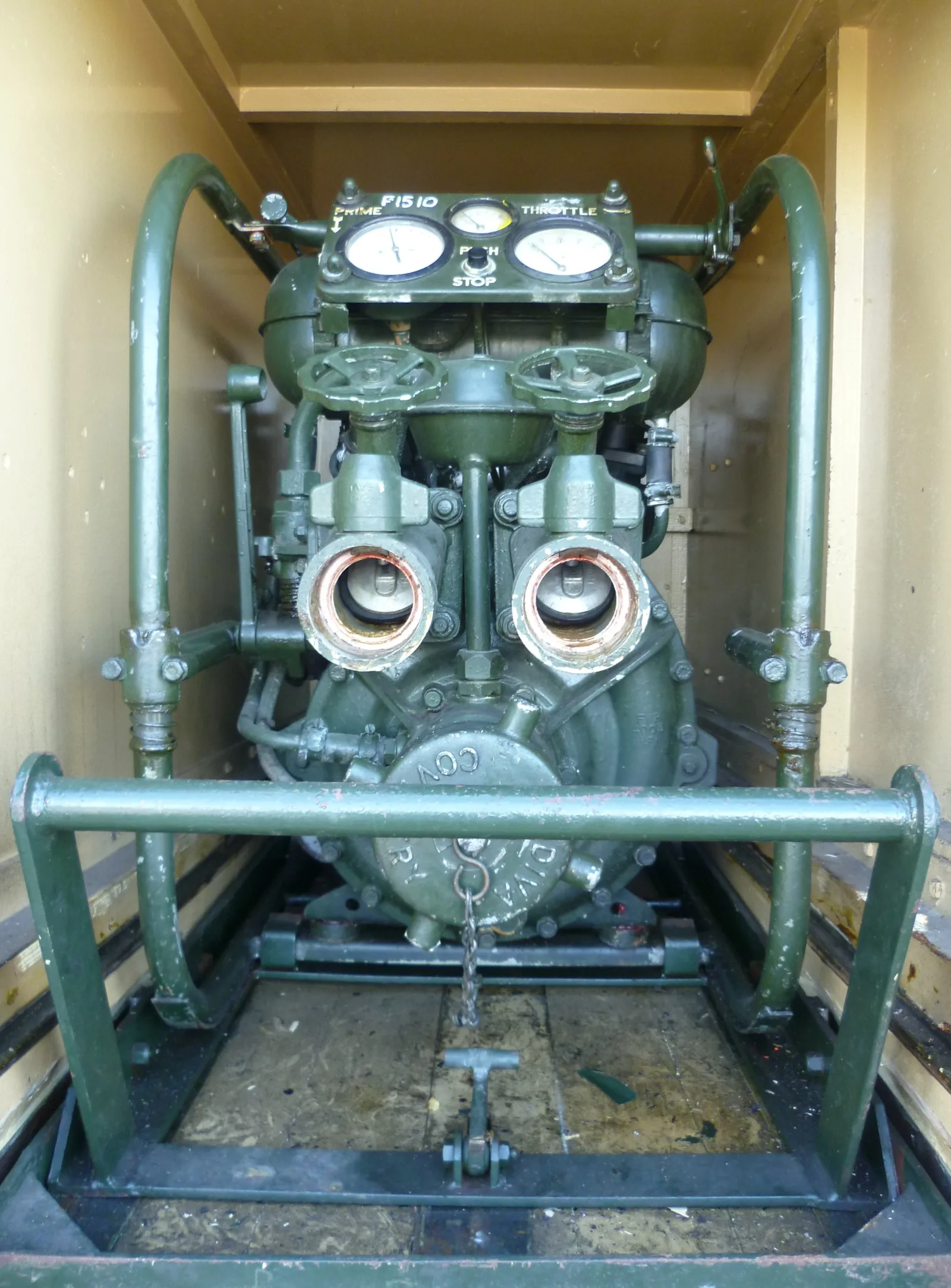
The fire pump grew out of a closure. When Swift shut in 1931, Climax found itself holding a stock of engines, which it converted to drive electric generators, a field it knew from the searchlight work. Pumps driven by the same engines came next, and fitted to a trailer as a mobile fire-fighting unit they sold very well. As the economic troubles of the 1930s squeezed the car-engine business, Leonard Pelham Lee, who had succeeded his father, set up a separate division for the pumps, and it thrived through the late 1930s and the war.
By the late 1940s the firm had moved away from car engines towards marine diesels, fire pumps and forklift trucks. Its ET199 of 1946, which the company claimed as the first British-built forklift, was designed to carry 4,000 lb (1,800 kg). Wartime marine diesel experience also fed the Armstrong Whitworth H30 multifuel engine, which later served as an auxiliary unit in the Chieftain and Challenger tanks.
Both engines won titles by being light and dependable while their rivals chased power.
The Feather Weight: a pump engine that racing people wanted
In 1950 Harry Mundy joined, and the company set out to answer a government request for a portable fire pump that could move twice the water of the earlier specification at half the weight. The result was a lightweight, all-aluminium overhead-camshaft engine, named the FW for Feather Weight.
Shown at the Motor Show in London, it caught the eye of the racing fraternity because of its power for its weight. Persuasion came from Cyril Kieft, whose F3 driver was Stirling Moss, and from a young Colin Chapman. Lee drew the conclusion that success in competition could bring in more customers, and the team went on to design the FWA, a Feather Weight engine for Automobiles.
Walter Hassan and Harry Mundy designed the FW together, and the engine's firefighting origins shaped its character. A fire pump had to run at close to full throttle with no warm-up, which forced careful attention to lubrication and to how its parts expanded with heat. The payoff was exceptional durability in rough racing conditions, at the price of high oil consumption.
How the head was laid out
The FW series also carried an interpretation of Harry Ricardo's intake turbulence theory. Intake and exhaust valves were tilted towards the side of the engine where their ports sat, so the gas flows going into and out of the cylinder encouraged a swirl in the same direction. The later crossflow, twin-cam FPF reached the same goal differently, with intake tracts joined to the ports in a staggered, corkscrew fashion.
Coventry Climax FPF and the Cooper years
A Climax racing engine first ran at Le Mans in 1954, in one of two Kieft 1100 sports racers. Neither car finished, and the engines were not to blame. The FWA then became popular in sportscar racing, followed by the Mark II and by the FWB, which came close to 1.5 litres. New Formula Two rules suited that capacity, and the engine quickly became the one to have.
By 1957, Climax engines were turning up in Formula One, behind the driver in Cooper chassis. First came the FWB, then the FPF. Stirling Moss gave Climax its first Formula One win in Argentina in 1958, driving a 2-litre car. Against 2.5-litre opposition the engines were generally short of power, and it took the 2.5-litre FPF of 1959 to carry Jack Brabham to the title in a Cooper-Climax.
The FWMV V8 and Climax's exit
When a new 1.5-litre formula arrived in 1961, the FPF got a fresh lease on life, and Climax began work on a V8, the FWMV. It became competitive in 1962, fitted to Lotus, Cooper, Brabham and Lola cars, and Jim Clark's Lotus did best of all. Across all its versions, crossplane and flat-plane, two-valve and four-valve, the FWMV took 22 Grand Prix victories before 1966.
The V8 also settled an argument. The Mk.III and Mk.4 became famous for showing that a flat-plane crankshaft suited a racing V8 better than a crossplane, despite the engineering theory of the time, and flat-plane cranks became the norm in V8 racing engines from the 1970s on.
Then the company stepped away. At Earls Court in 1962, chairman Leonard Pelham Lee announced that Coventry Climax would stop building Formula One engines, saying the firm was losing money and not gaining enough publicity. Climax stayed in the sport until it could not produce an engine for the 3-litre formula, and it left after the unsuccessful FWMW project, apart from a 2-litre version of the FWMV. Jaguar Cars bought the company in 1963. In May 1964 the Royal Automobile Club gave Lee its Dewar Trophy, with a citation praising engines that had brought British cars to the forefront in Grand Prix racing.
The Hillman Imp connection
The road-going legacy is more modest, and it is the Hillman Imp. In the early 1960s Rootes approached Climax to mass-produce the FWMA for a compact family car project called Apex. The package, an all-aluminium overhead-cam engine with a full-synchromesh aluminium transaxle, seemed radical at the time; Alec Issigonis, of Mini fame, had declared synchromesh on every forward gear impossible. Mass production worked, and the project reached the market as the 875cc Hillman Imp, with over 400,000 built by 1976, counting the later 998cc version.
What became of Coventry Climax
Jaguar merged with the British Motor Corporation in 1966, the group became British Leyland in 1968, and Coventry Climax ended up in its Special Products Division. In the early 1970s the fire pump business returned to private ownership. The company went into receivership in 1986 and was acquired by Cronin Tubular, and in 1990 the engine business was sold to Horstman Defence Systems of Bath, which broke its link with Coventry.
Repco: from Automotive Grinding Company to Formula One
Repco's name is short for Replacement Parts Company. Geoff Russell founded it in 1922 as the Automotive Grinding Company, trading from premises in Collingwood, Victoria. It listed on the Australian Securities Exchange in 1937 and for many years was known for reconditioning engines and for specialised manufacturing, work that earned it a high reputation.
Repco had racing form before Brabham, having developed the engine for the Maybach Specials of the 1950s, which won races including the 1954 New Zealand Grand Prix.
How the Repco Brabham V8 came together
The route to Formula One began with a friendship. Jack Brabham knew Phil Irving, a senior engineer at Repco, and together with another Repco engineer, Michael Gasking, they led Repco into importing and servicing Climax engines in 1962. Later Repco produced the Climax FPF in Australia, under licence, for the Australian and New Zealand markets.
In 1964 the Tasman Series was created with a 2,500 cc limit. Brabham asked Repco to develop an engine, and Repco-Brabham Engines Pty Ltd was established in April 1964 in Richmond, moving in December 1964 to Maidstone, Victoria. The engine was based on an Oldsmobile aluminium V8, the 215 cubic inch Jetfire, with a short-stroke flat-plane crankshaft and new Repco cylinder heads, camshafts and cam drive; the heads were cast by Commonwealth Aircraft.
Then the rules changed. The FIA announced in 1963 that Formula One engine capacity would double to 3 litres from 1966, and Coventry Climax decided to quit race engine building, so few teams were ready. Brabham proposed a 3-litre version of the 2.5-litre engine, using a longer-stroke flat-plane crank. The Repco board agreed, partly because the expected rival, a 2.75-litre Climax FPF with four cylinders, looked near-obsolete, and because Ford had yet to reveal the Cosworth DFV, which came at the end of 1965.
Irving's team designed the F1 engine, using single-overhead-camshaft, two-valve heads. The first unit, the E1, fired up on 21 March 1965, 51 weeks after Irving began the design, and produced 235 bhp (175 kW) on the dynamometer. Brabham had been impressed by Dan Gurney's 1962 Indy 500 debut, when Gurney qualified eighth as a rookie with a GM aluminium stock block.
The block came from Oldsmobile's F85, with 18 head studs per bank, rather than the similar-looking Buick 215 with 14. The belief that the engine used a Rover V8 or Buick block is a common misconception. Repco bought twenty-six partially assembled Oldsmobile blocks from GM through Holden, and made much else in Australia: the crankshaft was machined from forged EN40 steel in England by Laystall, while Repco subsidiaries supplied pistons and bearings, an Australian firm called Dreadnaught made the valves, and the fuel injection came from Lucas.
Repco Brabham V8 titles in 1966 and 1967
A ceiling of 310 bhp (231 kW) made the Repco easily the weakest of the new 3-litre engines. Yet it was light, compact and frugal, and it fitted an existing 1.5-litre Formula One chassis. Unlike its rivals it was reliable, and its low weight and power put little strain on chassis, suspension, brakes and tyres.
Brabham debuted it at the South African Grand Prix on 1 January 1966, took pole and the fastest lap, and retired with a fuel injection failure. From there the season belonged to him. In his one-off BT19 he won four consecutive races and took three poles, and he claimed both titles in a nine-race year, a unique achievement for a driver and constructor. It was his third world championship, and Brabham-Repco also won the International Cup for F1 Manufacturers.
The 2,995.58 cc engine had a bore and stroke of 3.50 x 2.375 in (88.9 x 60.3 mm). It first gave about 285 bhp (213 kW; 289 PS), and on the test bed it recorded 315 bhp (235 kW; 319 PS) at 7,800 rpm, along with 230 lb ft (310 Nm) of torque at 6,500 rpm. In race trim about 299 bhp (223 kW; 303 PS) was available.
For 1967 the bore and stroke stayed the same, but Repco produced the 700 series with a block of its own design, lighter by 30 lb and stiffer thanks to cross-bolted main bearing caps. A figure of 330 bhp (246 kW; 335 PS) at 8,500 rpm was often quoted. Brabham scored two poles early in the year, then the Cosworth DFV appeared in the Lotus 49, and Jim Clark and Graham Hill took every remaining pole. The Lotus was still fragile, though, and the Brabham drivers won two races each. Denny Hulme, who collected more results, took the title, followed by Brabham, and the team again won the constructors' cup.
Repco V8 and Cosworth DFV power figures
| Engine | Year | Power |
|---|---|---|
| Repco 620 V8, initial | 1966 | About 285 bhp (213 kW) |
| Repco 620 V8, race trim | 1966 | About 299 bhp (223 kW) |
| Repco 620 V8, test bed | 1966 | 315 bhp (235 kW) at 7,800 rpm |
| Repco 700 series, often quoted | 1967 | 330 bhp (246 kW) at 8,500 rpm |
| Cosworth DFV | 1967 | 410 hp (310 kW) at 9,000 rpm |
| Repco 32-valve, achieved | 1968 | About 380 bhp (283 kW) at 9,000 rpm |
Why the Repco F1 engine failed in 1968
The Ford engine became available to other teams in 1968, and Brabham concluded that more power was needed. In hindsight he said the single-cam engine's reliability might have been enough to beat the stronger Cosworths even in 1968. Repco instead built a new V8 with gear-driven twin overhead camshafts and four valves per cylinder. It targeted 400 bhp (298 kW; 406 PS) at 9,500 rpm but reached only about 380 bhp (283 kW; 385 PS) at 9,000 rpm.
The season was a disaster. Valve gear unreliability proved insurmountable, Jochen Rindt managed two poles and two podiums, and Brabham himself collected two points. Distance hurt too: the gap between the UK and Australia had always made correcting faults slow and difficult.
Repco had spent far more than it intended and sold very few customer engines, so it stopped the project. Cosworth power went into the works Brabhams for 1969, along with most private entries. A pair of older Brabham-Repcos started the 1969 South African Grand Prix with local drivers Sam Tingle and Peter de Klerk, but scored no points on the marque's last appearance in the world championship.
Repco's other racing engines
Elsewhere the V8 had a longer life. The 2.5-litre version was never very successful in the Tasman Series, at first producing no more than the FPF it was meant to beat, though Brabham won the 1967 South Pacific Trophy at Longford in his BT23A. In 1969 Leo Geoghegan drove a Repco-powered Lotus 39 to victory in the inaugural Japanese Grand Prix at Fuji.
A larger sports car version, with 400 bhp, was raced by Bob Jane and Frank Matich in Elfin 400 cars in 1967 and 1968. Matich also took it to the 1967 Can-Am series and won the 1968 Australian Tourist Trophy. Enlarged to 5.0 litres, the engine dominated Australian sports car racing. A turbocharged version was less fortunate: its development team nicknamed it "Puff the Tragic Wagon" for its shortage of horsepower.
Repco also built a Formula 5000 engine from the block and head castings of the Holden 308 V8, adding Lucas fuel injection, Bosch dual-coil ignition and more than 150 special parts. It first won the 1970 Australian Grand Prix with Frank Matich in a McLaren M10B. By 1976 the 4.9-litre (4,940 cc) Repco-Holden was rated at about 500 bhp (373 kW; 507 PS), against roughly 520 bhp for a Chevrolet V8 and 470 bhp for the Repco Leyland.
The cars Brabham built in England carried the name Repco Brabham whatever engine they used, under a sponsorship deal that ran to the end of the 1960s and supported Repco's international marketing.
Where Repco goes next
Today Repco runs stores across Australia and New Zealand selling parts and accessories. Genuine Parts Company acquired it and the Exego group on 1 July 2013. Repco has sponsored the Bathurst 1000 and the Supercars Championship by name since 2021, and in 2024 it became title sponsor of the D1NZ National Drifting Championship.
GPC Asia Pacific announced in August 2026 that the online retailer Sparesbox would join Repco as part of its Repco Performance Hub brand, effective 8 September 2026.