From a modified Austin 7 in 1948 to six drivers' titles, ground effect and monocoque chassis, the career of the founder of Lotus Cars.
Colin Chapman set up Lotus Cars in 1952 as a spare-time venture and later ran a Formula One team that took seven Constructors' crowns. He is remembered for the monocoque chassis, wing-based downforce and ground effect, and for fast, light cars that others copied.
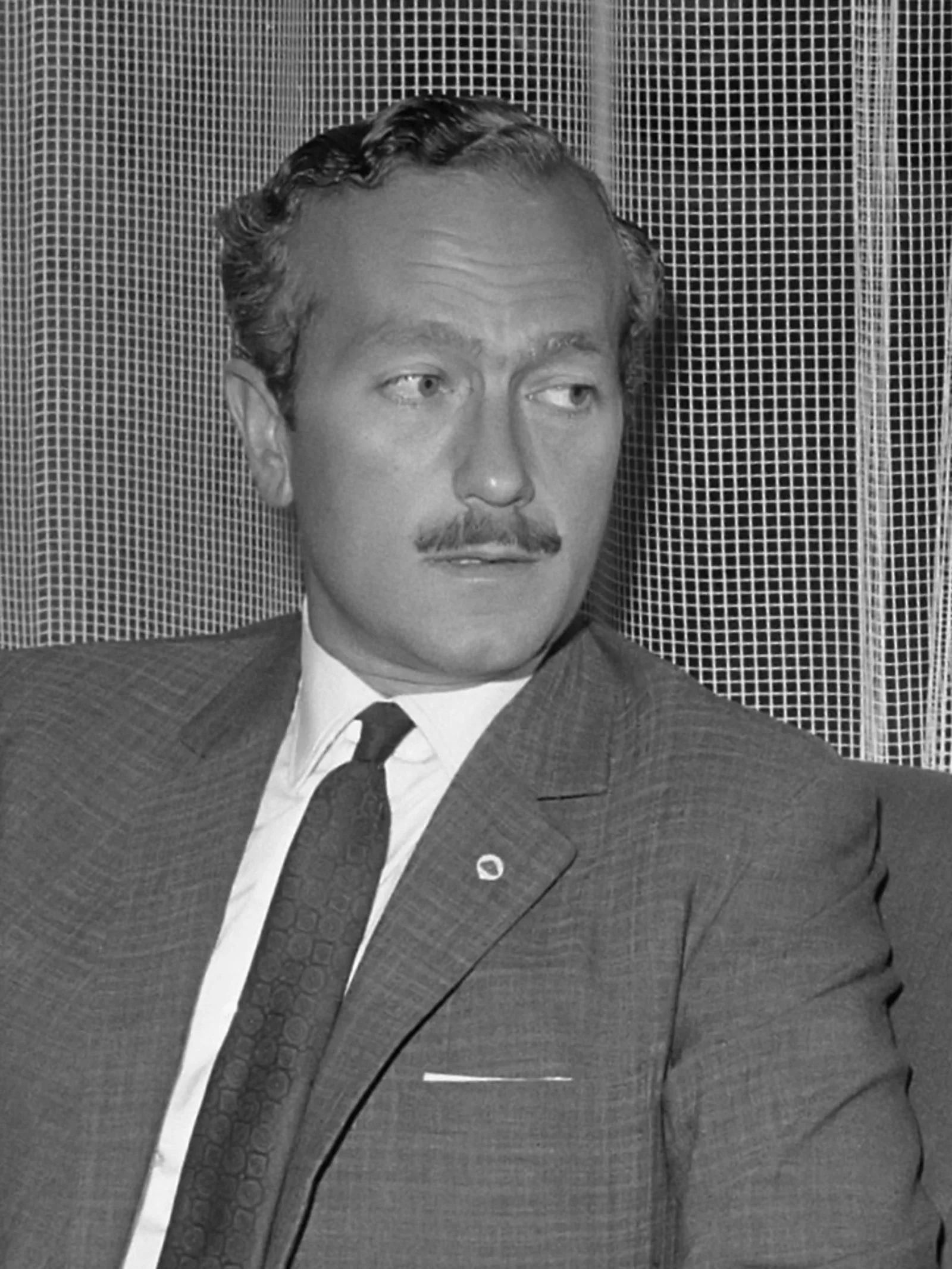
Colin Chapman, an English engineer and inventor, founded the sports car maker Lotus Cars. Born in 1928, he started Lotus in 1952 as a spare-time project and went on to reshape Formula One design. His cars won seven Constructors' titles and six Drivers' Championships for Team Lotus between 1962 and 1978.
Who was Colin Chapman?
Born in Richmond, Surrey, on 19 May 1928, Anthony Colin Bruce Chapman spent his childhood in north London. His father ran a hotel close to Hornsey station, and Chapman was schooled at the Stationers' Company's School.
He studied structural engineering at University College London, flew with the university's air squadron, and left without a degree in 1948. He sat his final mathematics paper a year later, after a brief spell in the Royal Air Force.
A self-taught engineer who built a sports car company from a spare-time project and reshaped Formula One design for a generation.
How did Chapman start Lotus?
In 1948 Chapman built a reworked Austin 7 he called the Mk1, and raced it in local events. He named the car Lotus, and the prize money paid for his next project. He never confirmed why he chose the name, though one theory linked it to a nickname for his girlfriend, later his wife, Hazel.
He showed a talent for finding advantages inside the rules. An early engine had a six-port head, and he reworked the ports to improve flow and power until rivals were outclassed and the rules were changed. Over 100 kits of the Lotus 6 were sold through 1956.
The Lotus 7 of 1957 was the breakthrough. Caterham still builds a version of it today, and more than 90 clones, replicas and derivatives have been offered by different makers over the years.
Did Chapman race in Formula One?
Chapman raced as well as designing. In 1956 he drove a Vanwall in Formula One, but a practice crash at Reims, in which his car struck teammate Mike Hawthorn, ended his driving career. From then on he concentrated on the technical side of the sport.
Chapman's cars were small, light and mid-engined, and with John Cooper he helped turn the premier series in that direction. Their handling often beat the front-engined Ferraris and Maseratis, even though those cars had more power.
How did Lotus come to dominate Formula One?
Chapman's partnership with Jim Clark was the foundation of the team's success. Team Lotus won its first World Championship in 1963, with Clark in the Lotus 25, and in 1965 Clark drove a Lotus 38 to victory at the Indianapolis 500, the first mid-engined car to win there.
Clark's death in 1968 devastated Chapman, who said publicly that he had lost his best friend. Team Lotus's wider talent pool was also impressive, because the Lotus also employed Mike Costin, Keith Duckworth and Graham Hill at various points.
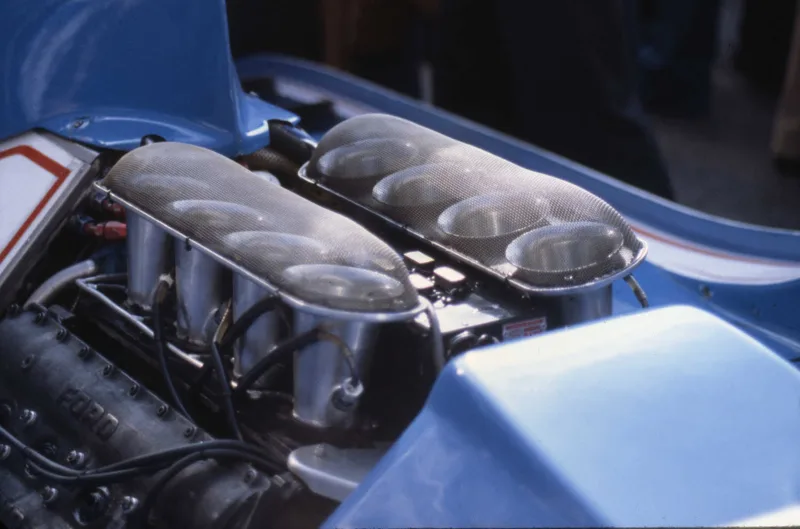
In 1966 Chapman talked Ford into backing development of the DFV engine that Cosworth was building, and it became a dominant race engine.
What were Chapman's major technical innovations?
Many of Chapman's ideas still appear in top-level motor sport. He was an early user of struts at the rear of a car, which became known as Chapman struts. Their front-mounted counterparts are the MacPherson struts used on so many road cars.
His biggest single change was popularising the monocoque chassis in racing with the 1962 Lotus 25. The body was lighter and stronger than a tubular frame, and it offered better driver protection in a crash. Lotus had already used a fibreglass monocoque in the 1958 Lotus Elite, one of the first production cars made from composite materials.
The American driver Dan Gurney saw the Lotus 25 at Zandvoort and was so impressed that he took the idea to Indianapolis. Chapman then proposed an aluminium monocoque Indianapolis car to Ford, and Ford accepted. The Lotus 29 made its Indianapolis debut in 1963, and Clark finished second.
Chapman was also among those who brought aerodynamics into Formula One. Lotus used wings for positive downforce at a Tasman race in early 1968, while Ferrari and Brabham actually got wings into a race first, at Belgium that same year. The early wings sat about 3 feet (0.91 m) above the car, and some failed, which led the FIA to require stronger mounting.
Chapman also moved radiators from the nose to the sides of the car, reducing frontal area and centralising weight. These ideas remain common on high-performance racing cars.
Working with Tony Rudd and Peter Wright, Chapman introduced ground effect to Formula One. A low-pressure area under the car, created by the Venturi effect, pulled the car onto the track in corners. Early designs used sliding skirts to keep that area sealed.
What did the Lotus 79 and Lotus 88 mean for Chapman?
Chapman's next aim was a car that generated all its downforce through ground effect, without wings and the drag they cause. The result, the Lotus 79, dominated the 1978 championship. Skirts were later banned because they could be damaged, for example by driving over a kerb, and the car could then lose downforce and become unstable.
The FIA raised the minimum ride height from 1981 and required flat-bottomed cars from 1983, to remove much of ground effect. Designers later recovered a good part of that downforce through other means, using wind-tunnel work.
One of his last major technical ideas was the 1981 Lotus 88, a dual-chassis car. Ground effect needed the aerodynamic surfaces to be precisely located, which meant a very stiff suspension that was punishing for the driver. Chapman's answer was a car with two chassis: one softly sprung for the driver, and one stiffly sprung for the skirts and related parts.
The Lotus 88 cleared scrutineering at a couple of events, but rivals protested and it never raced. Development stopped there, and the ban left Chapman depressed and disillusioned with Grand Prix racing.
How did Chapman change the business of racing?
Chapman was also a businessman who understood sponsorship. He introduced major advertising to motor racing, helping to turn Formula One from a pastime for wealthy amateurs into a high-technology business worth millions of pounds. His cars became rolling billboards, first for the cigarette brands Gold Leaf and then, most famously, John Player Special.
Lotus's production side also built many relatively affordable sports cars, and Chapman's company was one of only a handful of English performance car builders to survive the industrial decline of the 1970s.
What was the DeLorean connection?
Chapman's involvement with the American businessman John DeLorean's stainless steel sports car project began in 1978 and lasted until his death. The factory was in Northern Ireland, and most of its funding came from the UK government. The project later evolved into the DMC DeLorean.
In October 1982 DeLorean was charged with drug trafficking after an FBI sting, and the DeLorean company then collapsed. Administrators found that GBP 10,000,000 of British taxpayers' money had gone missing. Chapman died before the full scale of the affair emerged, and later the company's engineering concept was sold to Toyota, which used it to develop the AW11 MR2.
How did Colin Chapman die?
The same day, Team Lotus was testing a Formula One car with active suspension, which later raced as the Lotus 99T in 1987. The same day Chapman suffered a fatal heart attack at his home in Norwich. He was 54 years old.
He was married to Hazel Chapman, who lived until 2021. The couple had two daughters and one son. The evening before, he saw a show by his longtime friend Chris Barber and the jazz band.
What honours did Chapman receive?
Chapman received several honours over his career. The Royal Aero Club presented him with Mike's Mug in 1961 and named The Guardian's Young Businessman of the Year in 1970. The 1970 New Year Honours added a CBE, for export work.
He became a Royal Designer for Industry in 1979. 1994 brought an induction into the International Motorsports Hall of Fame, and 1997 added him to the Motorsports Hall of Fame of America.
What did Team Lotus achieve, year by year?
| Year | Car or event | Why it mattered |
|---|---|---|
| 1948 | Mk1, a modified Austin 7 | The first car to carry the Lotus name |
| 1952 | Lotus founded | Started as a spare-time project |
| 1957 | Lotus 7 | The breakthrough car; basis for Caterham and many clones |
| 1962 | Lotus 25 | Popularised the monocoque chassis in racing |
| 1963 | Lotus 25 with Jim Clark | Team Lotus's first World Championship |
| 1965 | Lotus 38 at the Indianapolis 500 | Clark won; first mid-engined winner there |
| 1978 | Lotus 79 | Ground effect car that dominated the championship |
| 1981 | Lotus 88 | Two-chassis design; banned before racing |
| 1982 | Chapman's death | Died aged 54 in Norwich |