How a Lotus dealership became the custodian of the Seven, the kit car tradition behind it, the Levante V8 experiment and the racing ladder.
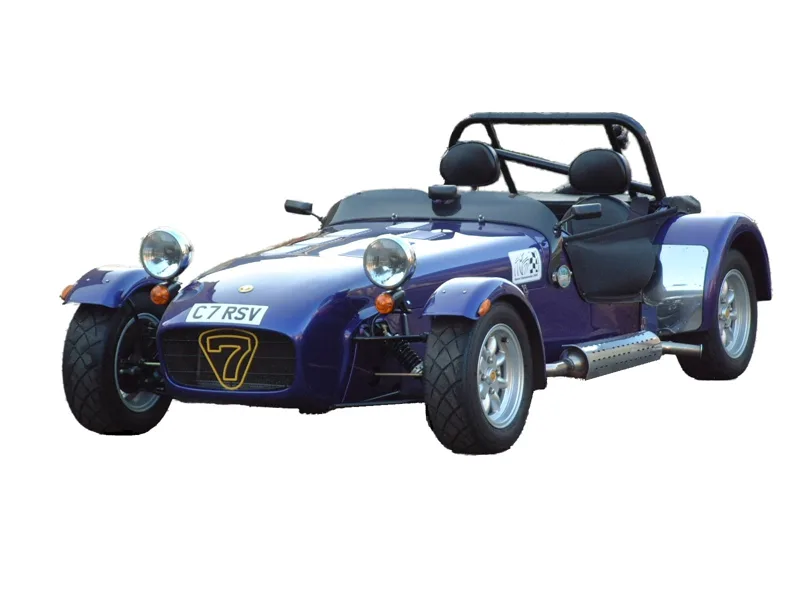
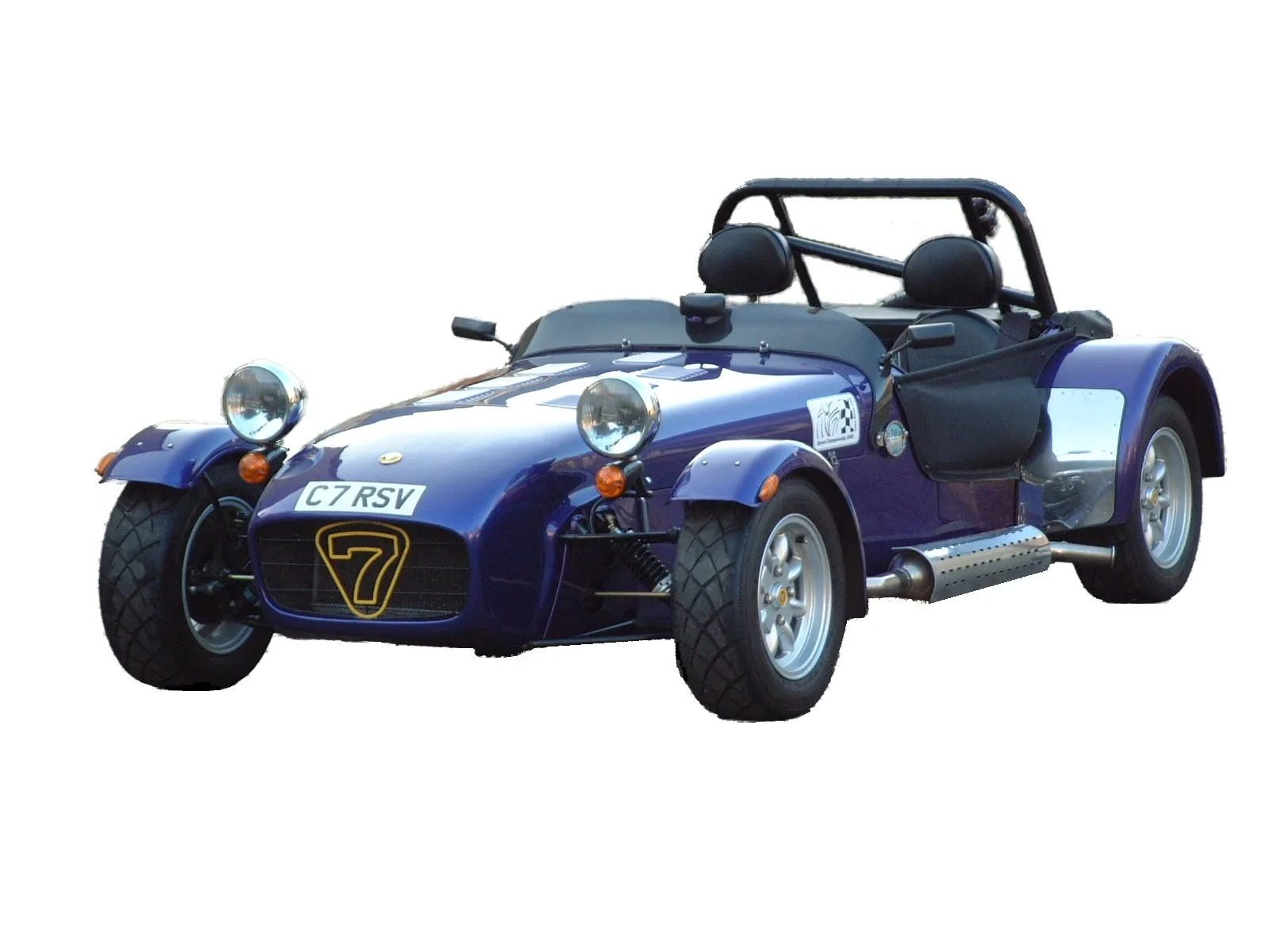
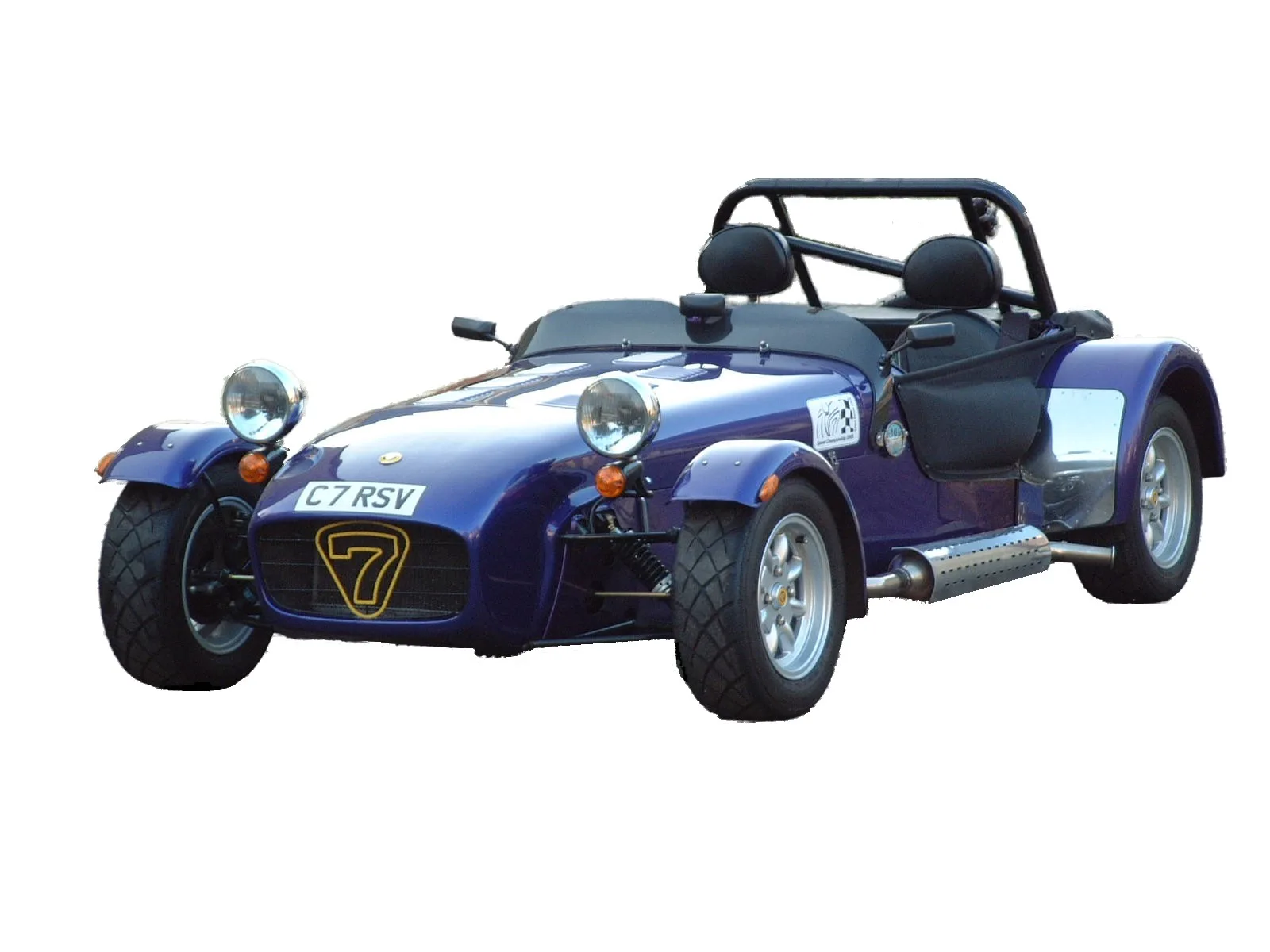
Caterham Cars is a British maker of lightweight sports cars whose Seven traces back to the Lotus Seven of 1957. Graham Nearn bought the rights to the design in 1973, and the company has since built it as kits and factory cars.
Caterham Cars is a British specialist that has built lightweight sports cars around one stripped-back idea since 1973. That idea began with Colin Chapman's Lotus Seven, and Caterham has carried it forward through kits, factory-built cars and a motorsport ladder. The company is now owned by the Japanese group VT Holdings and is headquartered in Dartford, England.
Where did Caterham Cars come from?
Caterham began as a dealer for the Lotus Seven in the 1960s. In 1973, when Lotus said it would stop making the model, founder Graham Nearn acquired the right to keep building it, and the company has carried the Seven forward ever since.
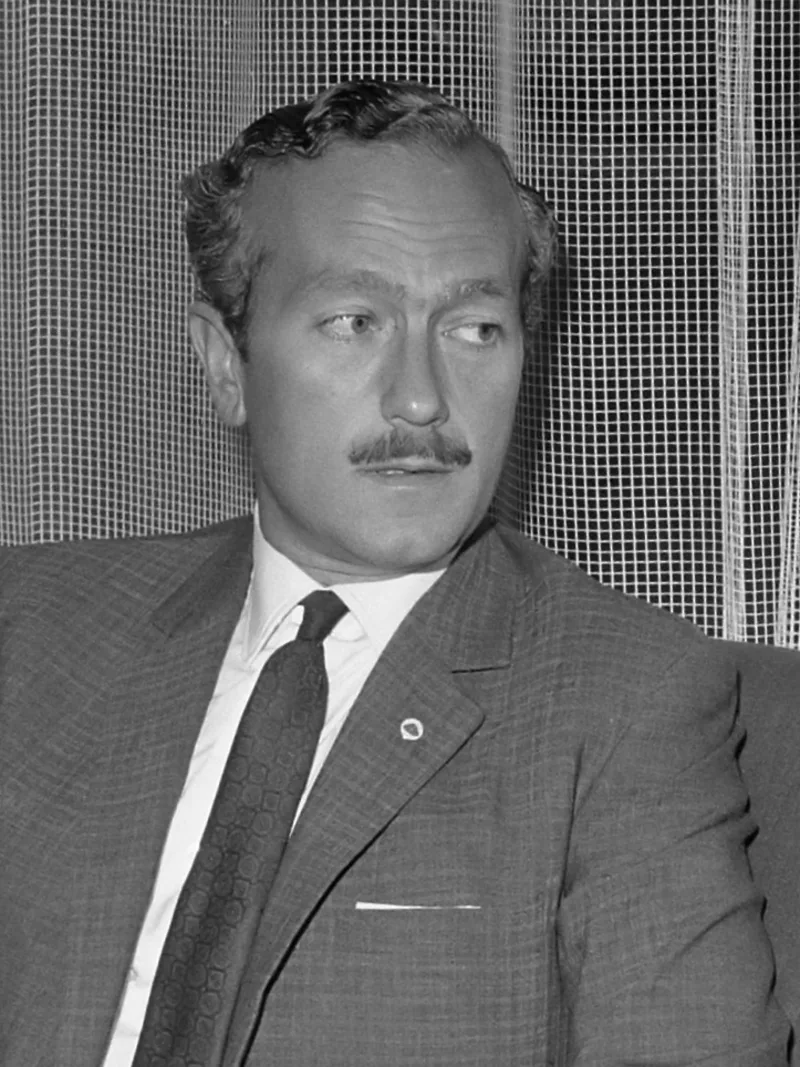
Chapman's Lotus company introduced the first Seven, the Series 1, in 1957. Enthusiasts took to it as a cheap, light machine that worked equally well on the road and on the track. Lotus followed with revised Series 2, Series 3 and Series 4 versions in 1960, 1968 and 1970.
Caterham first restarted production with the Series 4, but buyers found it unpopular, so the line returned to the Series 3 in 1974. That year Seven Cars Limited built 20 production cars, numbered 1 to 20, alongside a prototype numbered 0.
Built on Colin Chapman's 1957 Lotus Seven, the Caterham keeps its low-mass recipe after half a century.
How did the Twin Cam engine shape the first cars?
The first cars used the Ford-Lotus Twin Cam. Tuner Vegantune built engines with reconditioned twin cam heads for the important Japanese market, which kept the Seven selling there.
In 1977 Caterham took over the rights to build and develop the Twin Cam, and in 1983 it introduced the VTA as a replacement. Built by Vegantune with belt-driven cams, the VTA displaced 1.6 or 1.7 litres and produced 140 to 160 hp (104 to 119 kW). Only around 40 units reached Caterham, and quality control was uneven, so the company turned to the Cosworth BDR or the single-cam 1700 Supersprint.
What is the Caterham Seven today?
Caterham's flagship is the Seven, a direct development of the Series 3 Lotus Seven first launched as the Caterham 7 in 1973. The car marked 50 years of continuous production in 2007 and remains a favourite in clubman-style racing.
The Seven is still sold in the spirit of its Lotus roots. Its appeal lies in driving engagement rather than comfort, which is why many owners treat it as a track car or a weekend machine rather than a daily driver.
How is a Caterham Seven built?
A Seven combines aluminium panels with a tubular steel chassis, and the nose cone and wings are made from GRP or carbon fibre depending on the specification. Every Seven is a front-engined, rear-wheel drive two-seater. Its performance comes from low mass rather than engine size.
Some versions weigh less than 500 kg (1,102 lb). Caterham achieves this by leaving out comfort and safety equipment: no fixed roof, no doors, no radio, no air conditioning, no airbags, no ABS and no cruise control. The result is a car that is impractical for everyday use but well suited to a track day or a fast drive on a quiet road.
Why are Caterhams sold as kits?
Caterham sells most Sevens as kits in the UK. The tradition began with Lotus, which offered the Seven in kit form to help buyers avoid new car tax. Every model except the CSR is still offered as a complete knock down kit today.
Owners who want to build their own car have long been part of the Seven's appeal. Modern kits differ from many rival kit cars because every part arrives ready to assemble, so the buyer needs no donor car, no fabrication and no special skills.
Fully assembled cars are also available in the UK, registered for the road under Individual Vehicle Approval (IVA) rules. That gives buyers who do not want to build their own car a route to the same machine.
How do Sevens reach the United States?
US Sevens were traditionally sold only as kits, which let them avoid some modern safety rules that apply to manufacturers. Since 2014, Superformance has been Caterham's official US distributor, selling part-built Sevens as rolling chassis through its dealer network.
The buyer can finish the build alone or have a Superformance dealership complete it. The first US line-up included the 280, 360, 480 and 620R, the last of which was the most extreme factory combination of its era.
International demand grew as the company added a Formula One team and restructured around worldwide distribution. Homologation, safety and emissions rules have since made exports harder, so engine and specification choices vary from country to country.
Where has Caterham been based?
Caterham's offices, factory and showroom stayed in the town of Caterham until 1987, when production and administration moved to Dartford. In 2012 part of the business moved to Leafield in Oxfordshire, and in 2024 production moved into a new facility back in Dartford.
The Caterham showroom beside the railway station closed in 2013 after its premises were sold for development. The showroom moved to temporary facilities in Crawley, while a Midlands showroom continues to operate outside Leicester.
The Leafield site had previously been used by the Arrows and Super Aguri Formula One teams. Caterham intended it as the home for developing and building its future models, and it also housed the Caterham F1 team after that team left Hingham in Norfolk.
What was the Caterham 21?
The Caterham 21 was a 1994 two-seat roadster built on a modified Seven chassis with a new GRP body. It was a soft-top alternative to rivals such as the MG F and the Lotus Elise, but only 48 examples were built.
Mechanically the 21 was close to the Seven, using a modified spaceframe with a wrap-around windscreen and a fold-away fabric hood. A full body stiffened the structure, so the car felt considerably more rigid than a Seven, while comfort was added only where it was needed.
The 21 was slow to reach customers. Caterham underestimated how much work a new car required, and many buyers who had paid deposits switched to the Elise. Early cars were used as prototypes, so the first owners helped iron out faults.
Despite modest sales, the 21 contributed experience. It raced in the 24-hour Belcar series in Europe and helped Caterham develop the wide-track front setup later used on SV cars. The CSR's sweeping interior is also reminiscent of the 21.
What is the SP/300.R?
The SP/300.R is a track-only Caterham designed with Lola Cars. Customer testing began in 2010 and release was scheduled for 2013, with production limited to 25 cars a year. It is a limited edition aimed at drivers who want a dedicated circuit car.
Being track only, the SP/300.R sits outside the road-going range and the racing ladder. Its joint development with Lola brought in outside specialist engineering at a time when Caterham was building up its own capabilities.
Which Caterham 7 chassis are available?
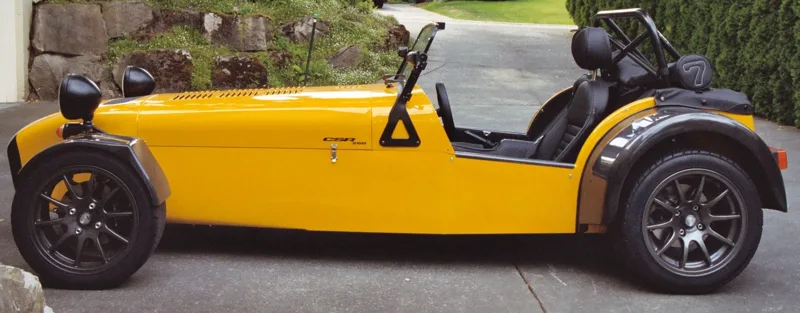
Three chassis are currently offered: Series 3, Series 5 and CSR. The Series 3 is the most popular and keeps the size and layout of the Lotus 7 Series 3 it descends from. The Series 5 suits larger drivers, while the CSR is the newest, stiffest and most refined option.
The Series 5, usually called the SV, arrived in 2000 for drivers over 6 ft (1.8 m), because the S3 cabin is tight for taller people. The SV looks much like the S3 but is longer, taller and wider, with more luggage space, a larger fuel tank and extra stability. It is 25 kg (55 lb) heavier than the S3.
The CSR, launched in 2005, was a bigger step. It takes the SV's larger dimensions and adds a much stiffer chassis, inboard pushrod front suspension, fully independent rear suspension, improved aerodynamics, Cosworth engines and an integrated dashboard.
How do the Seven trims differ?
The Classic is the most basic Seven, Roadsport suits road and touring use, and Superlight targets track and fast road driving. Engines range from 105 bhp in the Classic to 263 bhp in the Superlight, with each trim adding equipment or performance on top of the same core car.
The Classic strips away non-essential equipment. It once used a live rear axle, but now uses De Dion tube rear suspension. Engines are a 1.4-litre K-Series with 105 bhp or a 1.6-litre K-Series with 120 bhp.
Roadsport gets a full windscreen and weather equipment. The trim traces back to 1996, when it was called the Superlight R, and the softer Seven Clubsport 1.8 arrived in 1998. Engines are a 1.6-litre Ford Sigma producing 120 to 150 bhp, or a 2.0-litre Ford Duratec with 175 bhp.
Superlight adds carbon bodywork and a close-ratio six-speed gearbox, while a wind deflector replaces the windscreen. The R400 variant tunes a 2.0-litre Duratec to 210 bhp (157 kW; 213 PS).
The CSR comes as the CSR200 with 200 bhp and the CSR260 with 260 bhp. The CSR Superlight is the performance flagship with the same 260 bhp but no windscreen or integrated dash. The 2.3-litre Ford Duratec is tuned by Cosworth, and the basic CSR set an unofficial 1.17.4 on the BBC Top Gear test track at Dunsfold.
What did the Superlight race cars achieve?
Caterham's Superlight race cars sit at the top of its racing ladder. The R300 was introduced for 2009 as a bridge to the R400, which is Caterham Motorsport's premier British championship car with a 220 bhp Cosworth-powered engine.
The R400 uses a Quaife six-speed sequential gearbox in place of the standard Caterham unit. Its job is to give experienced racers a step up from the Academy classes before they move into the top series.
The R500 is the latest of the Superlight racing cars. Its 2.0-litre Duratec makes 263 bhp and 177 lb ft of torque. With a sequential gearbox it reached 60 mph in 2.88 seconds, carried a 520 bhp per tonne power-to-weight ratio and had an advertised top speed of 150 mph. Top Gear named it its car of the year for 2008.
The R600 arrived in October 2012 with supercharging, slick tyres and a sequential gearbox, for a series above the R300 level. The 620R followed in September 2013 as a supercharged R500, making 315 PS (311 hp; 232 kW) at 7,700 rpm and 219 lb ft (297 N m) of torque at 7,350 rpm. It reached 60 mph in 2.79 seconds with a top speed of 155 mph.
Which engines have Sevens used?
Early Sevens relied on Ford Kent units and Cosworth-derived BDA/R engines, enlarged to 1.7 litres and producing 150 to 170 bhp. From the early 1990s Caterham also fitted K-Series, Vauxhall and Rover engines, and later Ford Duratec and Ecoboost units.
The Vauxhall engines included the 16-valve 2.0XE, and their range ran from 165 bhp (123 kW; 167 PS) to 320 bhp (239 kW; 324 PS) in some factory-built versions. Rover-based engines ranged from 110 to 250 bhp in the R500 Evolution.
A 250 bhp Caterham JPE, short for Jonathan Palmer Evolution, briefly held the production car record for 0-60 mph at 3.4 seconds. The McLaren F1 later beat that time, and the JPE became a footnote in the company's engineering story.
Typical output across the range runs from 140 bhp (104 kW; 142 PS) to more than 300 bhp (224 kW; 304 PS). Aftermarket tuners fitted Ford Zetec, Honda Fireblade and Blackbird, Suzuki Hayabusa and even Mazda rotary engines. Since 2017 several cars have used the turbocharged 1.6-litre Ford Ecoboost.
In 2001 MG Rover became the sole engine supplier for factory-built Sevens, using K-series units with Xpower branding. When MG Rover collapsed, the 2005 model switched to a Ford Duratec.
Gearboxes come in three forms: the Ford T9 five-speed, a modified Mazda MX-5 five-speed and Caterham's own six-speed. The T9 is cheap and durable but has ratios meant for a heavier car, while the six-speed is costly yet suits the Seven well. Quaife supplies replacement gear kits and sequential boxes for racing.
What was the Levante RST-V8?
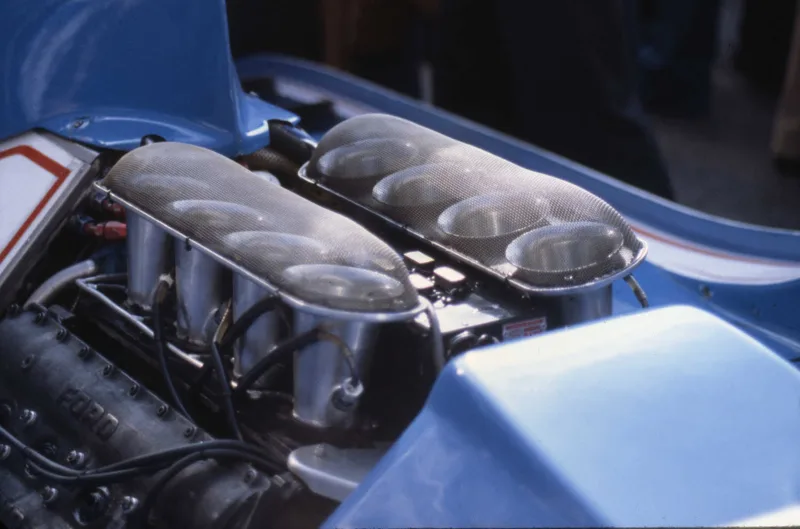
The Levante was a RS Performance build with mostly carbon fibre bodywork, Kevlar seats and a 2.4-litre supercharged V8 with 40 valves. Its published output was over 500 bhp, its claimed weight 520 kg (1,146 lb), and only eight cars were made.
RS Performance Engine Developments was led by Russell Savory, and the published specification shifted between announcement and launch. Early figures listed 550 bhp (410 kW; 558 PS) and 530 kg (1,168 lb), while the later website said in excess of 500 bhp and 520 kg (1,146 lb) or 530 kg.
The eight cars cost 115,000 pounds sterling, sold out and marked more than 50 years of production. Each buyer received two days of mandatory driver training as part of the price.
How did Caterham compete in motor racing?
Caterham's competition record includes a Formula One team, a GP2 team and a grassroots ladder of championships. The F1 team was Team Lotus renamed for 2012, and it raced through 2013 and 2014 before financial problems brought it down.
Caterham Racing competed in GP2 from 2012 to 2014. It had started as Caterham Air Asia in 2011 and wore the same green and yellow livery as the F1 team. The team also developed drivers for the F1 side until both operations stopped.
The Caterham Academy began in 1995 as the Caterham Scholarship, a novices-only series. In 2017 the starting price was 24,995 pounds sterling for a modified Roadsport with a sealed Ford Sigma engine and a five-speed gearbox. Two parallel Academy championships have run since 2000, and around 1000 racing drivers have come through the series.
The ladder continues through the Superlight classes to the premier British championship. In 2012 Caterham also announced a karting series for 2013, aimed at giving newcomers a cheap way into motorsport.
Who runs Caterham today?
Caterham is owned by VT Holdings, the Japanese firm that had imported the Seven since 2009 and bought Caterham Cars in 2021. Bob Laishley became chief executive in July 2022 after six years as programme director for NISMO road cars.
Caterham was independent until Team Lotus acquired it in 2011, forming the Caterham Group. Before that, an ex-Lotus management team ran the business under chief executive Ansar Ali and chief operating officer Mark Edwards. Graham Macdonald joined in 2007, spent five years as chief financial officer and became chief executive in 2012.
Laishley's background covers car design, engineering and programme management across more than 40 years. In 2021 Caterham also appointed a new agency of record to run its customer strategy, marketing and media, including a brand-wide CRM rollout.
What are the Caterham specifications?
| Specification | Detail |
|---|---|
| Layout | Front-engined, rear-wheel drive, two seats |
| Chassis | Tubular steel with aluminium sheet body |
| Lightest versions | Under 500 kg (1,102 lb) |
| Classic engines | 1.4-litre K-Series 105 bhp; 1.6-litre K-Series 120 bhp |
| Roadsport engines | 1.6-litre Ford Sigma 120 to 150 bhp; 2.0-litre Duratec 175 bhp |
| CSR engines | 2.3-litre Ford Duratec tuned by Cosworth; 200 or 260 bhp |
| R500 | 263 bhp; 0-60 mph in 2.88 seconds; 520 bhp per tonne; 150 mph |
| 620R | 315 PS (311 hp; 232 kW); 0-60 mph in 2.79 seconds; 155 mph |
| Levante RST-V8 | 2.4-litre supercharged V8; over 500 bhp; 520 kg (1,146 lb) |
| Gearboxes | Ford T9 five-speed; Mazda MX-5 five-speed; Caterham six-speed |
| Academy entry (2017) | 24,995 pounds sterling |