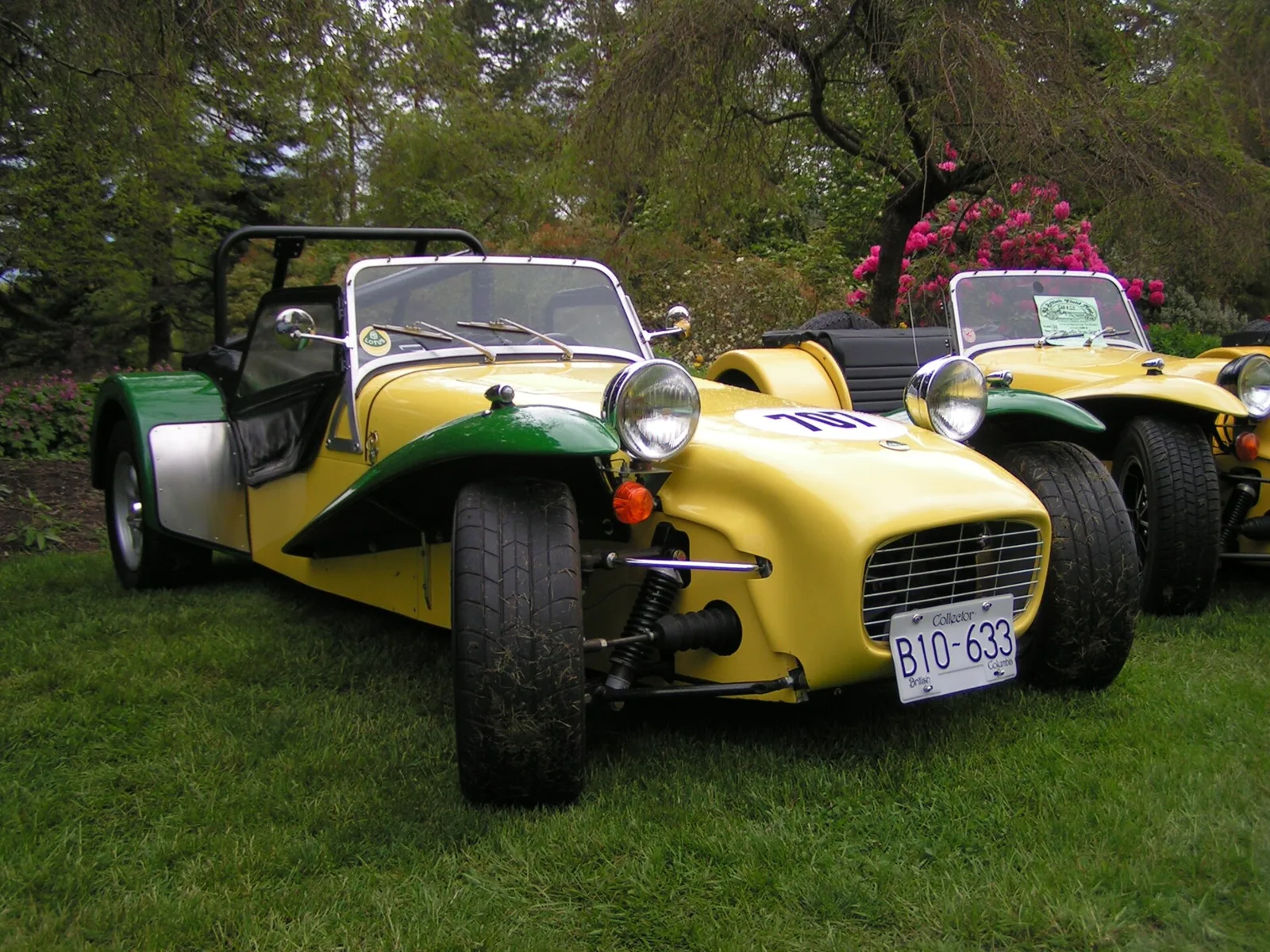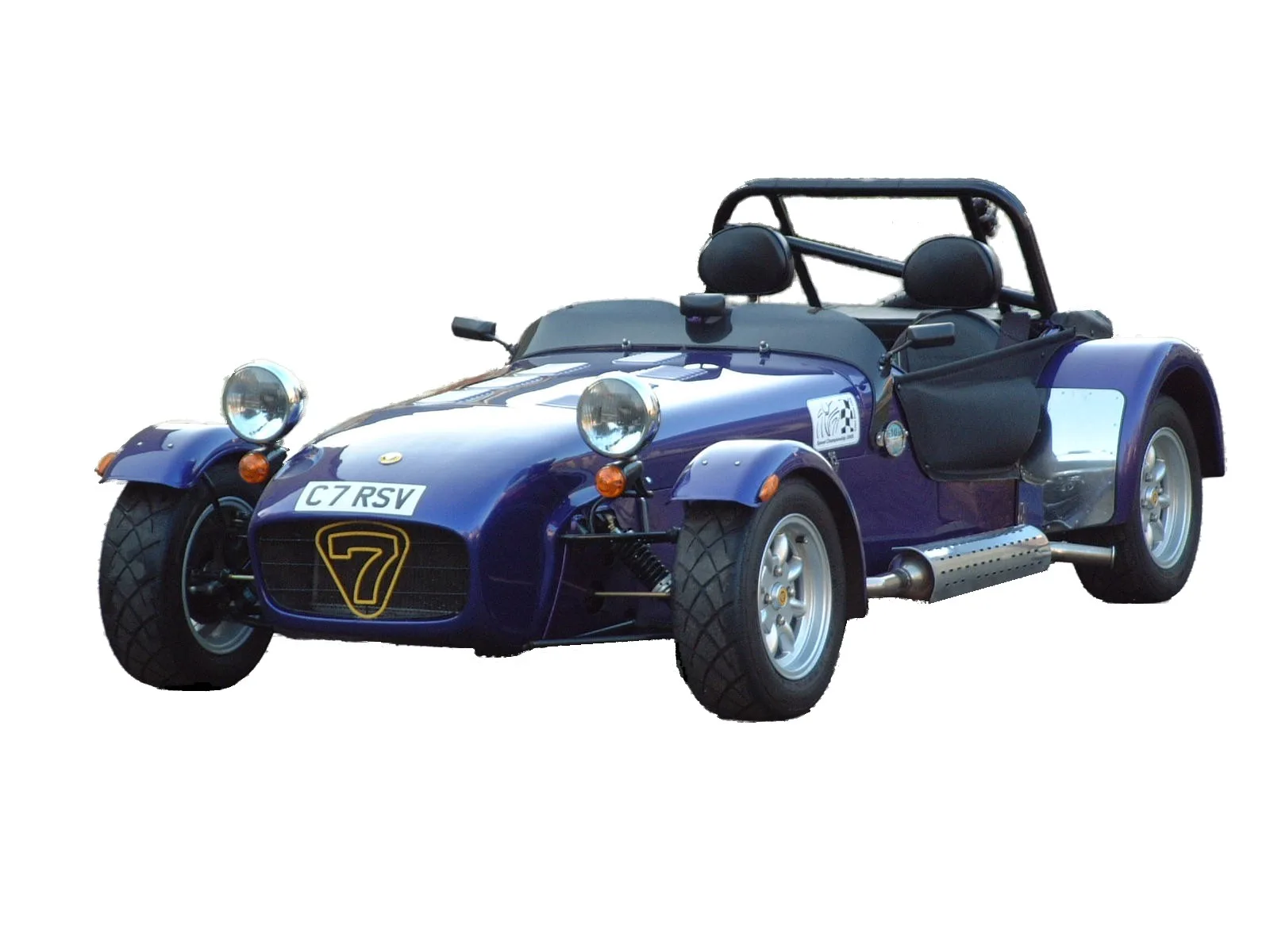
From Colin Chapman's 1957 Lotus Seven to today's Caterham range, the car that stayed light, quick and close to its kit-car roots.
The Caterham 7 is a lightweight British sports car, built by Caterham Cars since 1973 from the design it bought from Lotus. It is offered as a kit or factory car, with engines from Lotus, Vauxhall, Rover, Ford and Suzuki over its life.
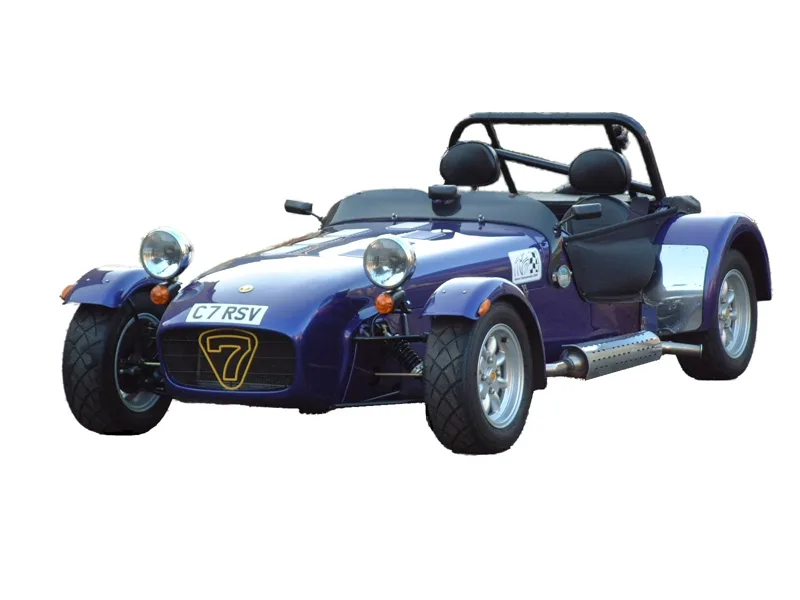
The Caterham 7 is a super-lightweight sports car built in England by Caterham Cars. It descends from the Lotus Seven, which Colin Chapman's company sold from 1957 to 1972, and Caterham still builds both kits and factory-finished cars. The modern car keeps the original's light, responsive character while evolving well beyond the Series 3 design it grew from.
Where did the Caterham 7 come from?
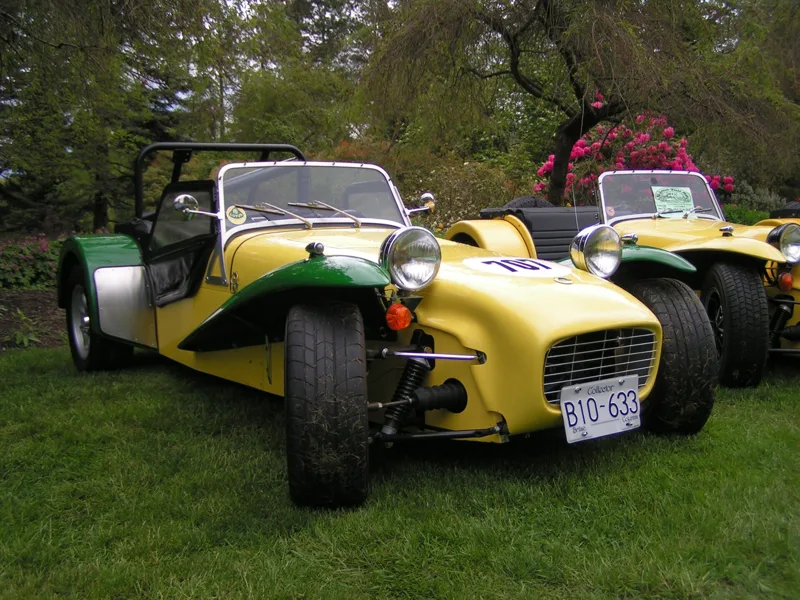
The Caterham 7 traces back to Colin Chapman's Lotus 7, a former Royal Air Force pilot turned structural engineer. Chapman's guiding idea was to simplify a car and then add lightness, and the Lotus 7 debuted at the 1957 Earl's Court Motor Show. It was sold factory-built or as a kit, which avoided purchase tax and made it far cheaper for enthusiasts.
Pricing reflected that choice. The built car cost GBP 1,036 with purchase tax, while the kit version came to GBP 536. The Lotus weighed 725 lb (329 kg), and it was widely seen as a step beyond the earlier Lotus 6, performing well on track and remaining legal on the road.
A prototype ran at the Brighton Speed Trials in September 1957, and Graham Hill was winning races in a Coventry Climax-engined Super Seven by 1958. Racing was part of the car's identity from the start.
A kit-friendly lightweight that Caterham turned from a Lotus rights purchase into a range of track-ready machines.
How did Caterham take over the Seven?
In 1973 Lotus decided to shed its kit car image and focus on limited-series racing cars and upmarket sports cars. It sold the rights to the Seven to its remaining agents, Caterham Cars in England and Steel Brothers Limited in New Zealand. The Series 4 was the current production car at the time.
When Caterham ran out of Lotus Series 4 kits in 1974, it introduced its own version of the Series 3 as the Caterham Seven. Today's Road sports and Superlight models in narrow-bodied chassis form are the direct descendants of that car and therefore of the original Lotus 7.
Caterham now owns the legal rights to the Seven design and name. The company has acted against rival builders in the past, and in South Africa it lost a case against Birkin because it had never obtained the claimed rights from Lotus.
What is under the skin of the Caterham 7?
The Caterham 7 uses a space-frame chassis with stressed aluminium body panels, a formula borrowed from the Lotus Mark VI. The frame has been modified many times to fit different engines and suspension setups and to find more cockpit room, but the basic approach has barely changed. The Series 4 was the exception, using steel for the cockpit and engine bay and glassfibre for the bodywork.
Early cars ran a live rear axle, first from various Fords and later from the Morris Ital. De Dion rear suspension arrived in the mid-1980s, and both layouts were offered until 2002, when the live-axle option was phased out. It returned later for the 160, 165, 170 and Super Seven 600. Late-1990s and early-2000s cars such as the Superlight used adjustable double wishbones and a de Dion rear axle.
In 2000 Caterham introduced the SV, or Special Vehicle, chassis for buyers who could not fit comfortably into the Series 3 cockpit. It adds 110 mm (4.3 in) of cockpit width at a cost of 25 kg (55 lb), and both chassis sizes remain available today on most models.
The SV chassis gave the basic dimensions for the Caterham CSR. Its front suspension moved inboard with pushrods, and the De Dion rear was replaced by a lighter, fully independent double wishbone layout. Extra modifications raised torsional stiffness by 25%.
Which engines powered the Caterham 7?
Early cars used the Lotus TwinCam engine, later built by Vegantune, followed by Ford Crossflow units. Caterham took over the rights to the Twin Cam in 1977 and had Vegantune build engines with reconditioned heads for the Japanese market. The VTA variant, launched in 1983 on a 1598 cc Ford block, produced 140 to 160 hp (104 to 119 kW), but quality control was uneven.
By 1990 the top engine was the two-litre Vauxhall HPC from the Calibra, producing 165 to 175 bhp. The 1993 JPE special edition, named for Formula 1 driver Jonathan Palmer, used a Vauxhall touring car engine with about 250 bhp (186 kW). Its weight fell to around 530 kg (1,168 lb) with an aeroscreen in place of the windscreen, and it reached 0 to 60 mph in about 3.5 seconds.
The Rover K-series arrived in 1991 as a 1.4-litre from the Metro GTi and became the backbone of the range for 15 years. A 1.6-litre followed in 1996 and a 1.8-litre a year later. The 1996 Superlight range focused on weight reduction and bespoke tuning, and the Superlight-R offered a dry-sump VHPD variant producing around 180 bhp (134 kW) in a car weighing as little as 490 kg (1,080 lb).
What was the Superlight R500?
The Superlight R500 took the concept further, using a Rover 1.8-litre K-series tuned by Minister Racing Engines to around 230 bhp (172 kW) at 8,600 rpm. It weighed 460 kg (1,014 lb). It began as a kit but quickly became a factory-build only car. Quoted 0 to 100 mph time was 8.2 seconds, though EVO magazine measured 8.8 seconds.
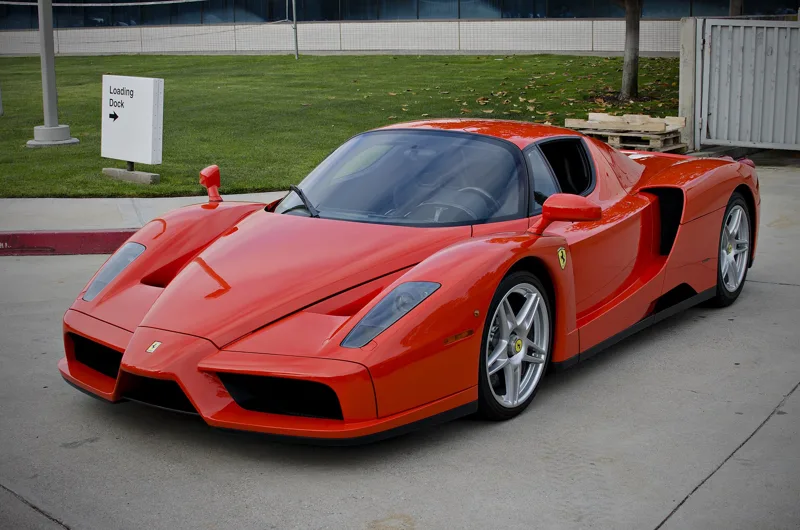
The R500 EVO, which arrived in 2004, was bored out to 1,998 cc and delivered 250 bhp (186 kW). At GBP 42,000 it sold poorly, with only about three believed sold. It set several benchmarks that still stand. Its 0 to 100 mph to 0 time of 10.73 seconds beat a Ferrari Enzo that cost ten times as much.
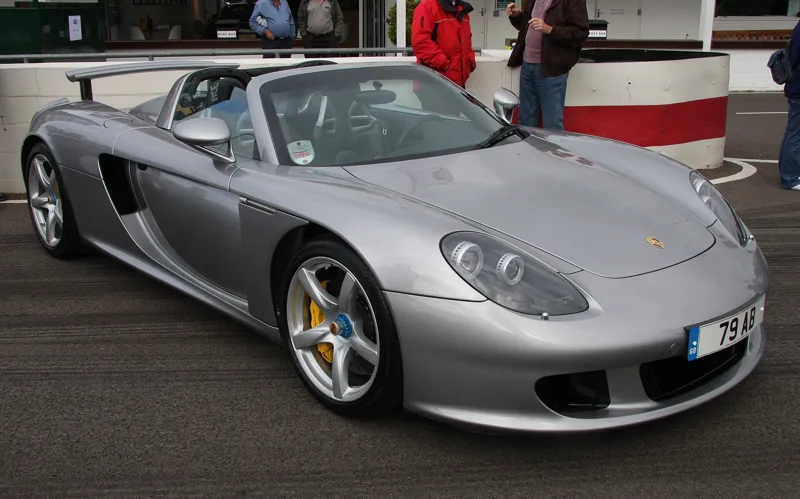
EVO magazine timing at the Bedford Autodrome West Circuit kept the R500 EVO at the top of its production-car list until late 2006, just ahead of a Porsche Carrera GT. Only the Radical SR3 1300 has since posted a faster time.
Why did Caterham move to Ford and Suzuki engines?
After Rover and Powertrain were gone, Caterham began replacing the K-series with Ford engines. The Sigma unit went into the road sports and later 270 and 310 models, while 2.0-litre and 2.3-litre Duratec engines served the Superlight, CSR and the 360, 420, 620 and Super Seven 2000 ranges. In 2013 the 620R used a supercharged 2.0-litre Duratec rated at 315 PS (311 bhp; 232 kW).
The 2013 entry-level 160 and 165 used a 660 cc three-cylinder Suzuki turbo producing 80 hp (60 kW; 81 PS), with a live rear axle from the Suzuki Jimny. The 165 was sold in Europe with a small aeroscreen because the full windscreen frame did not meet EU field-of-vision rules. Both ended in September 2018 when WLTP testing arrived in Europe.
The 170 replaced the 160 in 2021, using a Suzuki R06A turbo producing 84 hp (62 kW). It is the lightest of the current range at 440 kg (970 lb) in R specification and is the first Caterham with a live rear axle since the Morris Marina supply dried up.
Did the Caterham 7 ever go racing?
The Caterham 7 was built to race from the outset. Its strongest result came at the Nelson Ledges 24-hour race in Ohio, where a four-man Caterham team in a modified Vauxhall HPC won by seven laps after 990 laps, ahead of works teams from Honda and Mazda.
Caterham Super 7 Racing, a one-make championship, began in 1986. Caterham Academy followed in the UK in 1995 as a novices-only format, with entry at GBP 17,995 in 2009 money. A 2002 R400 finished 11th overall out of 200 starters at the Nurburgring 24-hour, and the company's racing ladder now runs from Road sports B to Eurocup.
The car was banned from UK production car racing in 1976 for being too successful. Graham Nearn, the Caterham boss, lobbied his local MP and the RAC lifted the ban in 1980 with tight limits, including an 84 hp (63 kW) Crossflow engine.
What does the current Caterham 7 range include?
The current range offers two chassis types, the narrow Series 3 and the wider SV, and is powered by a 2.0-litre Ford Duratec except the 170. Models are named by horsepower per tonne, with S or R packages for street or track. The 170 starts at GBP 22,990 in semi-kit form, while the 620 is factory-built only.
The 360 has 180 bhp (134 kW) and reaches 0 to 60 mph in 4.8 seconds, with a 130 mph (209 km/h) top speed. The 420 uses 210 hp and starts at GBP 42,390. The 420 Cup adds a six-speed sequential Sadev gearbox and Bilstein dampers for GBP 56,490.
The 620 sits at the top for performance, with 310 hp, 0 to 60 mph in under three seconds and a six-speed sequential gearbox, from GBP 58,490. The CSR 20 marked 20 years of the CSR, with only 20 built at GBP 79,995.
What is the CSR?
The CSR is the top of the range and is in some respects a separate model. It has its own chassis, suspension and interior, with a 2.3-litre Cosworth Duratec in 200 bhp or 260 bhp form. The CSR260 covers 0 to 60 mph in 3.1 seconds and reaches 155 mph (249 km/h), and only the factory builds it.
The CSR Superlight arrived in 2006 with a limited-slip differential, a quicker steering rack and Dynamic Suspensions dampers developed with Multimatic. It weighs 550 kg (1,213 lb) and delivers 472 bhp per tonne (352 kW), a figure that shows how far the concept had moved from the original.
What are the Caterham 7 specifications?
| Specification | Detail |
|---|---|
| Original Lotus 7 weight | 725 lb (329 kg) |
| Chassis options | Series 3 narrow body or SV, 110 mm (4.3 in) wider cockpit |
| 170 | 84 hp (62 kW) Suzuki R06A, 440 kg (970 lb) in R specification, GBP 22,990 |
| 360 | 180 bhp (134 kW), 0 to 60 mph in 4.8 seconds, 130 mph (209 km/h) |
| 420 | 210 hp, from GBP 42,390 |
| 620 | 310 hp, 0 to 60 mph in under three seconds, from GBP 58,490 |
| Superlight R500 | 263 bhp (196 kW), 0 to 60 mph in 2.88 seconds, 150 mph (241 km/h) |
| CSR260 | 260 bhp (194 kW), 0 to 60 mph in 3.1 seconds, 155 mph (249 km/h) |
| CSR Superlight | 550 kg (1,213 lb), 472 bhp per tonne (352 kW) |