A former wartime airbase in Surrey, laid out by Lotus and used for the BBC's Power Laps and the celebrity Star segment across many series.
Dunsfold Aerodrome in Surrey hosts the Top Gear test track, a circuit whose layout Lotus Cars designed. Presenters and The Stig used it for Power Laps and celebrity Star runs, and redevelopment plans for the site later proposed demolishing the track and its runway drag strip.
Dunsfold Aerodrome in Surrey, England, is home to the Top Gear track, where the BBC motoring programme timed cars and celebrities across many series. Lotus Cars designed the layout on a former wartime airbase, and its route of roughly 2.82 km (1.75 mi) became a regular setting on British television.
What is the Top Gear test track?
The Top Gear test track is a circuit built on the site of a Royal Canadian Air Force airbase in Surrey. Lotus Cars designed it as a testing facility, and the BBC programme used it for Power Laps and celebrity lap times until the track's future was thrown into question by redevelopment plans.
After the war the site passed to British Aerospace and its predecessors, which used it as a manufacturing and test facility. The old runway and perimeter roads then became a setting for car tests.
Richard Hammond described the track as an equaliser, because 0-60 mph times and top speed figures mean very little on it. The route was built to show how a car behaves under pressure.
A Lotus-designed proving ground that turned lap times into television, from Power Laps to celebrity Star runs.
How is the track laid out?
The circuit is about 2.82 km (1.75 mi) long and begins on the perimeter road outside the programme's studio. Painted lines and stacks of tyres mark the course, which runs over the runway and includes a drag strip that was not used for timed laps.
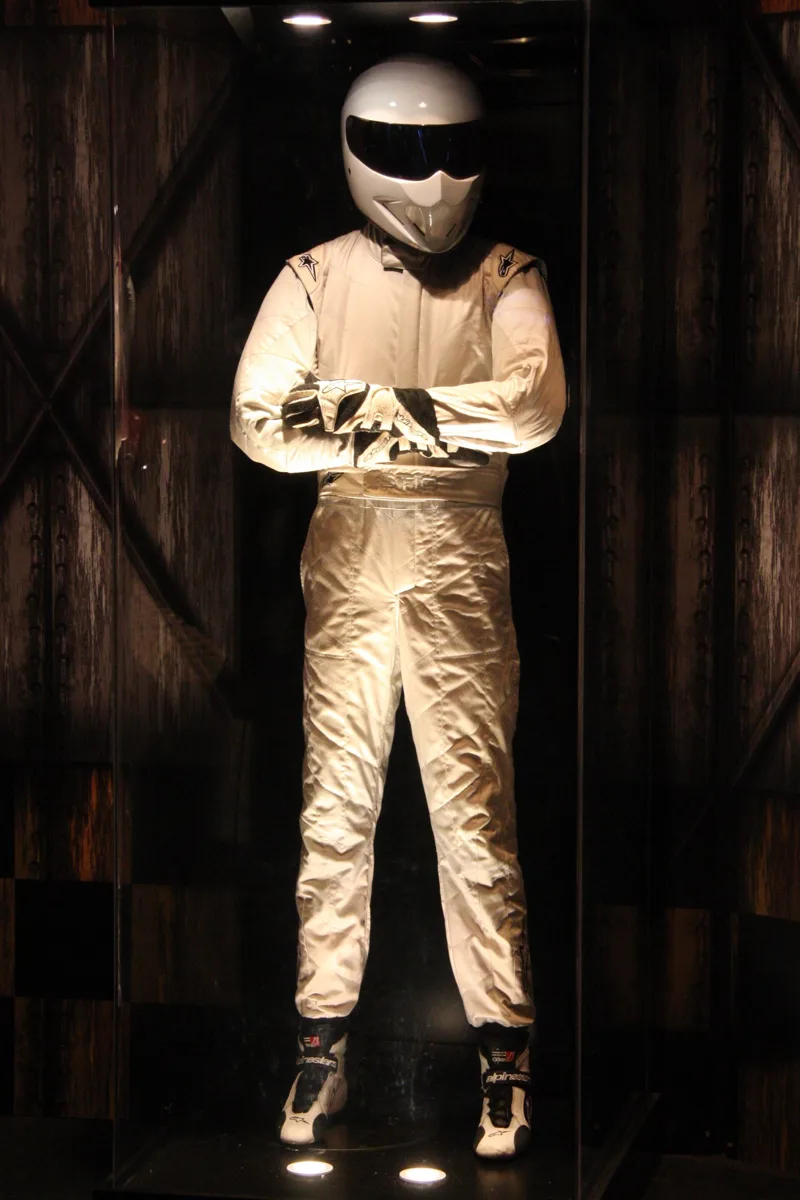
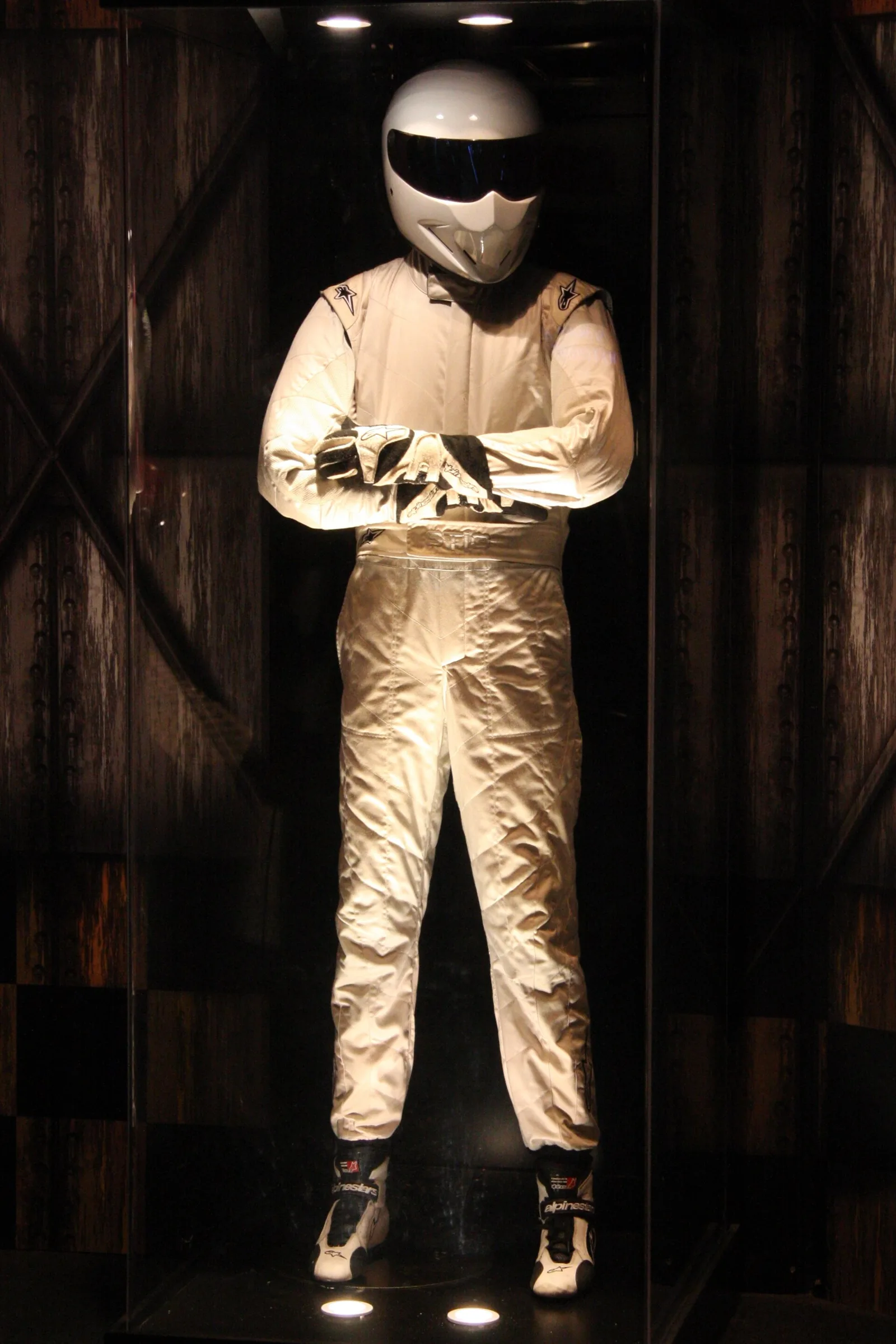
Test drivers from Lotus designed the main route. The corners were chosen to provoke understeer, test brake balance and load the tyres, so each lap said as much about the car's handling as its speed. Presenters drove new cars around the airfield first, and The Stig then took them round the course for an official time.
The track also served other roles during challenges. In one test of tailgating prowess with vans, the runway section stood in for a motorway lane, and the runway also hosted drag races and speed trials now and then.
Which corners make up the course?
The lap follows a sequence of named corners, from a fast opening kink to a final turn that was renamed after an actor. Several names honour people connected with the programme.
- Crooner Curves: a fast right-left kink at the start of the course.
- Willson Bend: the first proper turn, and the one most often shown when The Stig runs a car.
- Chicago: a long right-hander that wraps a tyre wall and leads onto the main runway, designed as a steady-state corner that highlights understeer or oversteer.
- Hammerhead: a left-then-right sequence that again exposes handling faults.
- Follow Through: a flat-out section that resembles turns 11 and 12 at Albert Park.
- Bentley Bend: a left-hander named after Jon Bentley, a former Top Gear presenter, and commonly called the tyres.
- Bacharach Bend: known as the Penultimate Corner after the first series, and often regarded as the most challenging corner on the course.
- Gambon: the final corner before the finish line, named after Sir Michael Gambon, who took it on two wheels in series 1, episode 8. It was previously known as Carpenters Corner.
How were Power Laps timed and judged?
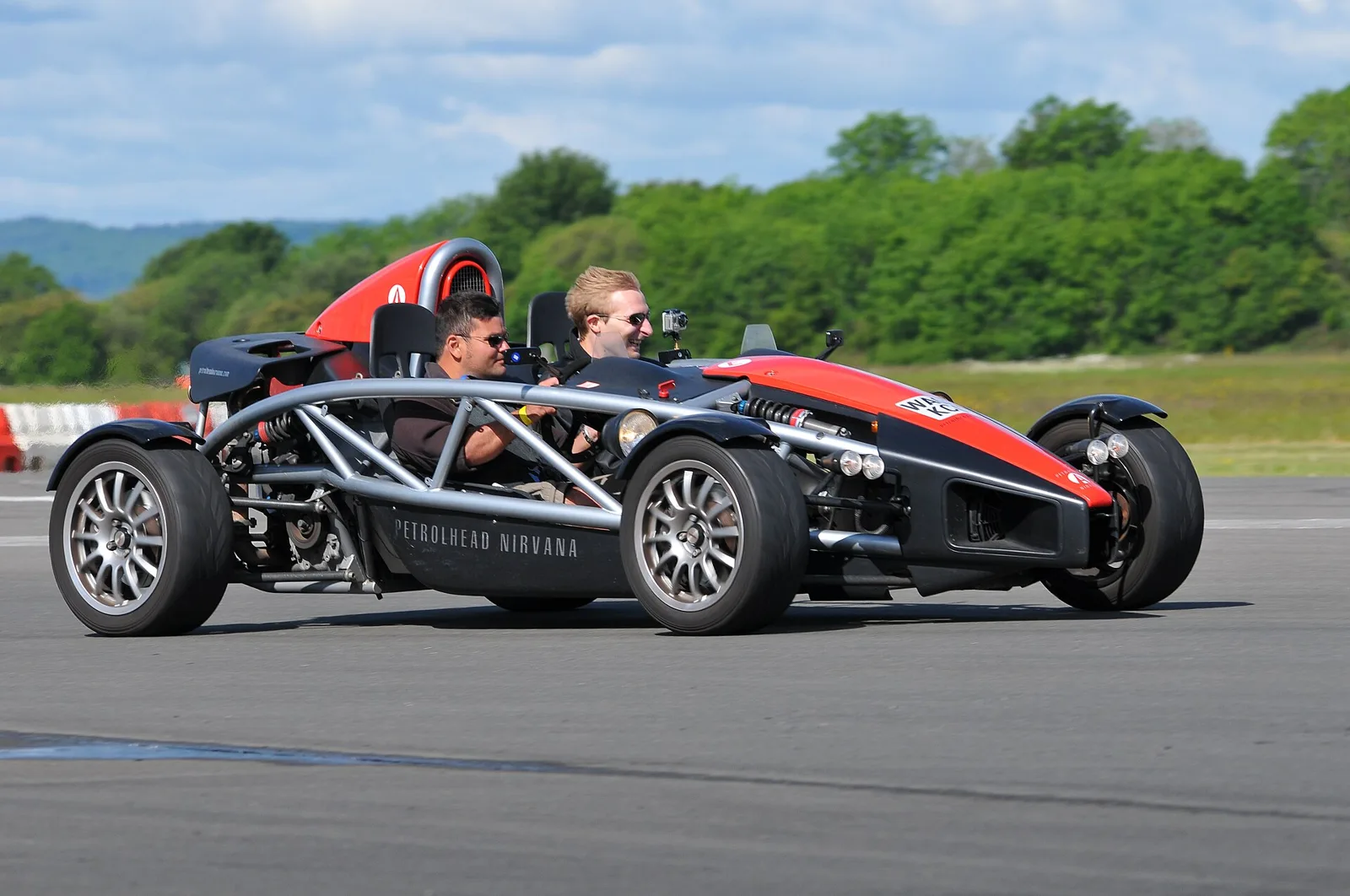
Power Laps were timed by The Stig in cars that had been reviewed on the programme. A car qualified for the Power Board only if it was a road-legal production model able to clear a standard speed bump, and each lap used the maker's adjustable settings at maximum performance with traction control switched off.
Only the top 20 entries are shown on the board. The Bugatti Veyron, with 1001 PS (987 bhp; 736 kW), was the second most powerful production car ever to appear on the programme. It only reached fifth place, and the team put that down to the car weighing 1,888 kg (4,162 lb), heavier than any of the four faster cars.
The Veyron returned in Series 15, Episode 5, when The Stig set 1:16.8 in the 1,200 PS Super Sport model, a new lap record. The Koenigsegg CCX later posted 1:17.6 after an optional rear spoiler was fitted, following a spin by The Stig in the unmodified car. Koenigsegg attributed the gain to other adjustments rather than the spoiler.
Not every entry stayed on the board. The Ferrari FXX owned by Michael Schumacher, timed at 1:10.7, was removed because it was not road-legal and used slick tyres. The Caparo, Radical and Westfield count as road-legal in the UK, yet none can clear a speed bump, and the Caparo time stayed ineligible because the car driven was a prototype without adjustable ride height.
Some Power Lap attempts took place without the programme. Ultima ran laps at Dunsfold without BBC backing, and said its GTR had been overlooked by the production team.
Who set the fastest celebrity laps?
The fastest professional time in the Liana belongs to Daniel Ricciardo, who set 1:42.2. The fastest non-professional was Ellen MacArthur, who finished in 1 minute 46.7 seconds and beat Jimmy Carr by 0.2 seconds.
On the early Liana list, Terry Wogan and Richard Whiteley were both beaten by Billy Baxter. Baxter drove under direction from Jeremy Clarkson in the passenger seat, finishing in 2 minutes 2 seconds, 1.4 seconds clear of Wogan and 4 seconds clear of Whiteley.
The Liana took a battering from its stars. Michael Gambon clipped the final corner and took the car onto two wheels, which gave the corner its name. Lionel Richie lost a front wheel, prompting Clarkson to coin the phrase pulling a Lionel, and David Soul wrecked the gearboxes of two Lianas during his appearances.
Christopher Eccleston used the only automatic Liana, and only 40 such cars existed in the UK. Damon Hill appeared as a star in July 2005. After Nigel Mansell's appearance, the Liana was kept in reserve for Formula One drivers, and the Formula One list was kept separately from the celebrity list.
How did the Star segment change over the years?
The Star segment ran in series 1 to 22 with a series of different cars, then returned in a faster form after the rallycross experiment. The table below sets out each car and the series it was used in.
| Car | Series | Years | Notes |
|---|---|---|---|
| Suzuki Liana | 1 to 7 | 2002-2006 | Worth 9995 pounds sterling when first introduced |
| Chevrolet Lacetti | 8 onwards | 2006-2010 | Five practice laps, then one timed lap |
| Kia Cee'd | 15 | 2010-2013 | Followed the Lacetti era |
| Vauxhall Astra 1.6 Tech Line | 20 | 2013-2015 | Sold at auction for 17,800 pounds sterling |
| Mini Rallycross Car | 23 | Single series | Rallycross route with a jump and a water splash |
| Toyota GT86 | 24 to 28 | 2017-2020 | Named Star in a Reasonably Fast Car |
The Liana era produced the most wear. Over its service the car logged 1,600 laps, used 400 tyres, had its brakes changed 100 times and needed six new clutches.
The Lacetti brought a stricter format. Each star had five practice laps and then one timed lap, with no allowance given for mishaps. Times of 1:51 and over fell into what Clarkson called the Thespian Zone, because classically trained actors often posted slow laps there.
Series 11 changed the format to two stars per episode, usually paired because they worked on the same television show. Each drove individual laps without the other in the car, and Simon Cowell posted 1:45.90 on 11 November 2007 and held the fastest lap until Jay Kay beat it.
The Astra was returned to Vauxhall, then went under the hammer for charity on 27 December 2015, fetching 17,800 pounds sterling.
Series 23 tried something different. A Mini Rallycross Car gave two celebrities a route with a jump and a water splash. The format was scrapped after Chris Evans resigned, because of negative feedback, and the basic format returned in series 24 with a Toyota GT86.
The GT86 format lasted until series 28. Both The Stig and Chris Harris instructed the celebrities, and the segment was axed from series 29 so the production could keep to social distancing during the COVID-19 pandemic. It has not returned in later series.
What redevelopment plans affect the track?
Planning consent for 1,800 homes on the aerodrome site came through in December 2016. The proposal included demolishing the test track and the runway drag strip, so the circuit's future became tied to that scheme.
The aerodrome has had several lives: a wartime airbase, then a manufacturing and test site for British Aerospace and its predecessors, and finally a television proving ground. Housing would change the setting entirely, so readers should treat demolition as a proposal rather than a finished event.
How has the track appeared in video games?
The Top Gear track has been reproduced in several racing titles, most notably Gran Turismo 5, which included a fully rendered version. Forza Motorsport also featured the circuit, and simulators such as rFactor and Assetto Corsa gained versions of it as well.
Players of Gran Turismo 5 Prologue were told on 24 October 2007 that they could download Top Gear episodes inside the game, .The track also appeared around 2003 in Grand Prix Legends, a PC simulation, in a very basic form.
Forza Motorsport 4 included the track along with a drag race mile, and the sequels carried it forward. Forza Motorsport 5 kept the layouts but dropped the drag race mile, while Forza Motorsport 6 and 7 offered the full track and both separated rings, raced in either direction and in dry or wet conditions.
The track also appeared in lighter formats. The Top Gear website games section carried a basic version of the track, and the programme's mobile game, Top Gear Extreme Parking, features it too. Forza Motorsport 4 added an achievement for completing a lap in the Kia Cee'd.