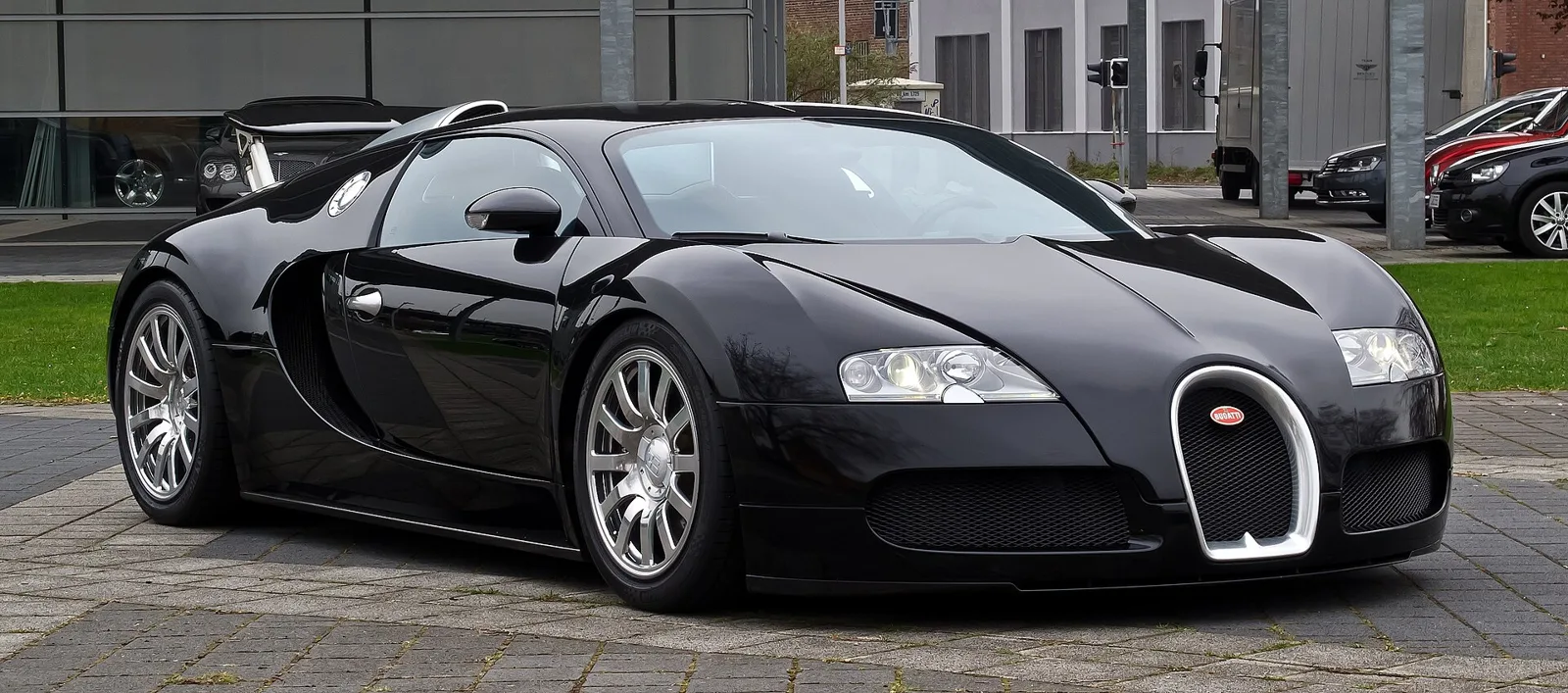
Volkswagen's mid-engined flagship took years to move from concept to showroom, then set the standard for production car speed.
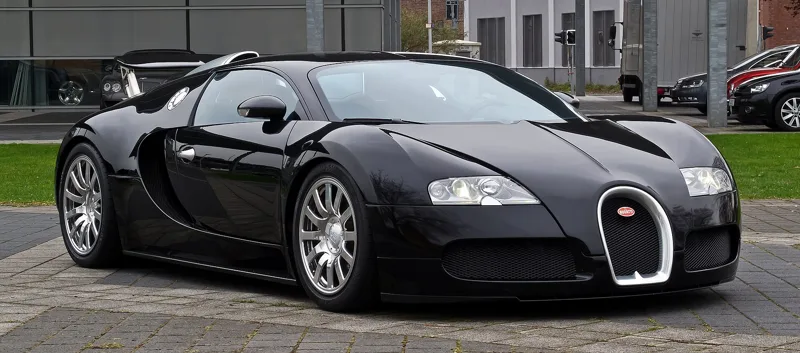
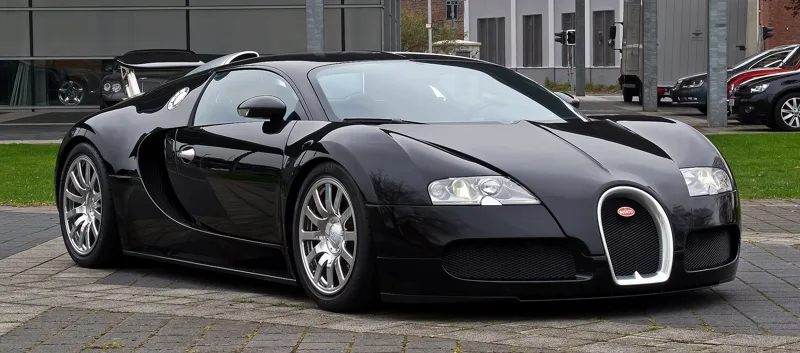
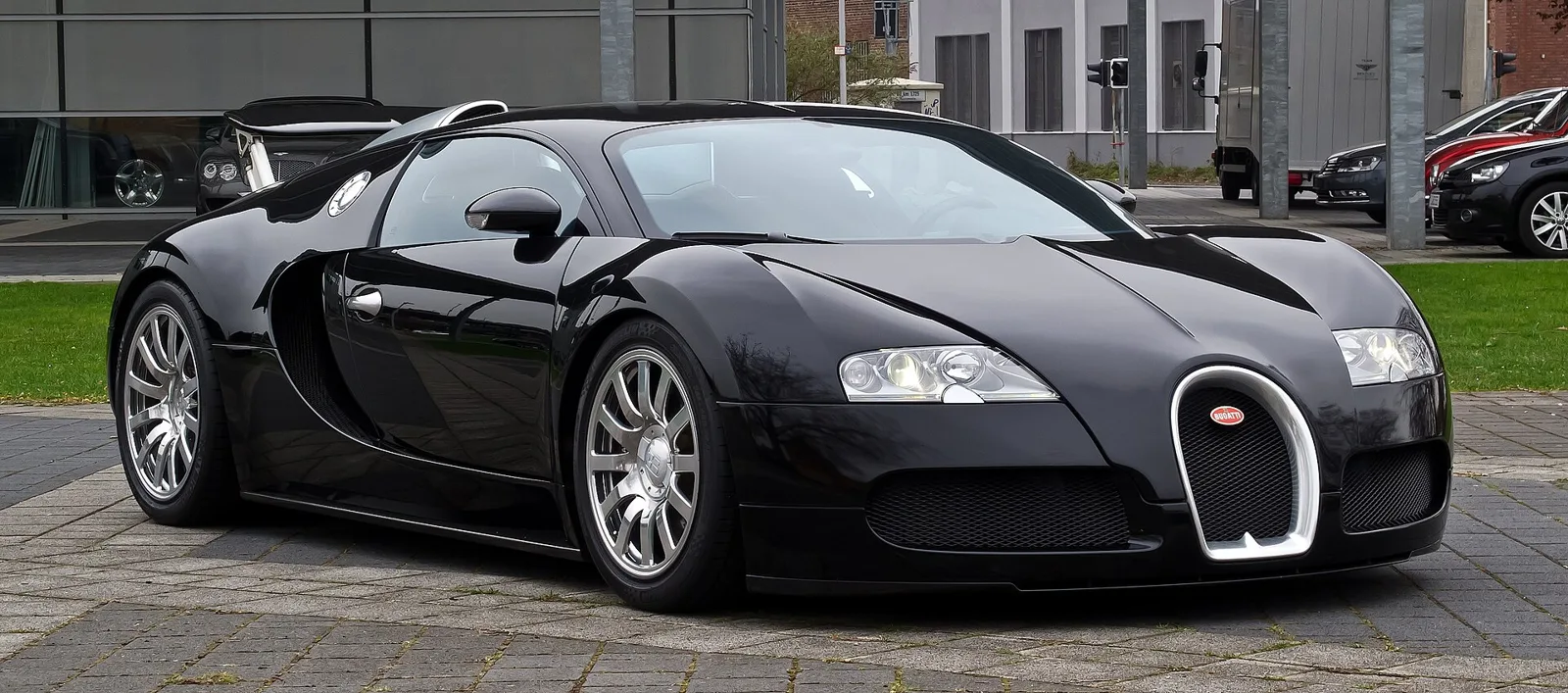
The Bugatti Veyron was a mid-engined sports car built by Volkswagen Group and Bugatti between 2005 and 2015. Its 8.0-litre quad-turbo W16 made 1,001 PS, and the Super Sport later reached 431.072 km/h (267.856 mph) on a test track.
Built by the Volkswagen Group and Bugatti from 2005, the Veyron paired a W16 engine producing 1,001 PS with permanent all-wheel drive. Production ran until 2015, and the Chiron later took over the production speed record the Veyron had set.
Where did the Veyron come from?
Volkswagen acquired the Bugatti name in May 1998 and spent the following months producing concept cars for a new flagship. The Giugiaro-designed concepts came first, but the design that reached production was Hartmut Warkuss's own, not the rival proposal. The Veyron's first public form, the EB 18/4, appeared at the Tokyo Motor Show in October 1999.
The Volkswagen Group approved production in 2001, although the step from prototype to series car brought many technical problems. The first roadworthy prototype was finished in August 2003, and series production did not start until September 2005.
Shown at Detroit, Geneva and Paris in 2000, the EB 16/4 already had the four-bank W16 engine that every production car would use. Engineers reworked the car repeatedly over the next five years before the design was settled.
The name honours Pierre Veyron, a Bugatti development engineer and test driver who shared the 1939 Le Mans 24 Hours win with Jean-Pierre Wimille. The letters EB honour the company founder, Ettore Bugatti, while 16.4 refers to the 16 cylinders in the engine.
A W16 engine, a seven-speed dual-clutch and a top speed that needed a special key to unlock.
The long road to production
Engineers reworked the early prototypes repeatedly before the design was settled. The finished car measures 4,462 mm (175.7 in) overall, and it made heavy use of existing parts from Volkswagen Group models and other suppliers. Shared components kept costs in check, but the heavy loads of the Veyron also meant some of them wore faster than expected.
Ten radiators keep the car cool, three of them serving the intercooler loop, and others handle the engine, air conditioning, transmission, differential and engine oil. Hartmut Warkuss led the chief design work, the exterior was shaped by Jozef Kaban, and Wolfgang Schreiber oversaw much of the engineering.
Burmester Audiosysteme built the sound system. Walter de Silva had submitted a rival design, but Warkuss's own proposal was chosen for production.
How much power did the W16 make?
The original Veyron's W16 produced 736 kW (987 hp; 1,001 PS), with 1,250 Nm (922 lbf ft) of torque, figures certified by TUV Sueddeutschland. The engine has 7,993 cc spread across 16 cylinders, and quad turbocharging feeds it. Four camshafts drive the 64 valves.
The gearbox is a seven-speed dual-clutch unit built by Ricardo, and gear changes take less than 150 milliseconds. Permanent all-wheel drive runs through the Haldex Traction system, so every wheel receives drive at all times.
Volkswagen's figures put the car at 530 PS per ton, with a kerb weight of 1,888 kg (4,162 lb). Michelin PAX run-flat tyres were designed around the car's top speed and cost US$25,000 per set.
How did the Veyron handle and stop?
The Veyron braked with carbon fibre reinforced silicon carbide discs from SGL Carbon, held by AP Racing monobloc calipers with eight titanium pistons at the front and six at the rear. Bugatti claims 1.3 g of braking on road tyres. Those figures come from the manufacturer, so independent testers may record different numbers.
At speed the rear wing swings up to 55 degrees in 0.4 seconds and acts as an airbrake, adding deceleration on top of the discs. An anti-lock system is also fitted to the handbrake as a backup if the main brakes fail.
Ride height changes with speed. Above 220 km/h hydraulics lower the body to 9 cm (3.5 in) of clearance, and normal running sits at 12.5 cm (4.9 in). Top speed mode drops the car further, to 6.5 cm (2.6 in).
How fast was the Veyron?
The Veyron's top speed mode reached 407 km/h (253 mph) when the car was at rest and the driver had used a special key. Normal operation was capped at 343 km/h (213 mph), so the higher figure needed a deliberate set-up. James May came close to the full speed on Top Gear as well.
Entering the mode requires turning a key in a keyhole to the left of the seat. A checklist then confirms the car and driver are ready. If it passes, the rear spoiler retracts, the front air diffusers shut, and the clearance drops for the run.
Runs of that kind were meant for controlled test tracks, and the checks built into the car reflected that purpose.
The Super Sport and its record
The Super Sport was the most powerful Veyron, lifting output to 1,200 PS (882 kW; 1,183 hp) at 6,400 rpm. Its torque reached 1,500 Nm (1,106 lb ft) between 3,000 and 5,000 rpm, and a revised aerodynamic package went with the extra power. Production was limited to 48 units.
Customer cars were electronically limited to 415 km/h (258 mph) to protect the tyres. The rarer World Record Edition came in five units, with an orange finish and special carbon bodywork, and its limiter was deactivated.
For road enthusiasts, the Super Sport offered the most extreme version of the car, with a clear step up in power over the standard model.
How did the Super Sport set its record?
James May ran the car at 417.61 km/h (259.49 mph) on 4 July 2010, and Pierre Henri Raphanel then made the official runs. Bugatti's test driver averaged 431.072 km/h (267.856 mph) across two passes, one at 427.933 km/h (265.905 mph) and one at 434.211 km/h (269.806 mph).
Guinness first questioned the result because the record car had its speed limiter deactivated, which broke the official guidelines. After a review with outside experts, the organisation confirmed the record in April 2013, saying a change to the limiter did not alter the car's fundamental design or engine.
The result took the production crown from the SSC Ultimate Aero TT, and it stood as the benchmark for road cars for several years.
Which open-top Veyrons were built?
The Grand Sport was a targa-top version unveiled at the 2008 Pebble Beach Concours, limited to 150 units. The Grand Sport Vitesse followed in 2012 with 1,200 PS, reaching 100 km/h in 2.6 seconds, although normal roads capped it at 375 km/h (233 mph).
With the hardtop fitted, the Grand Sport matched the coupe's top speed, but without the roof it was limited to 369 km/h (229 mph). Fitting the temporary soft roof lowered the cap to 130 km/h (81 mph).
Production of the Grand Sport began in the second quarter of 2009, and the first 50 cars were offered only to registered Bugatti customers.
The World Record Car Edition of the Vitesse was limited to 8 units and sold for EUR 1.99 million. Anthony Liu then drove an open-top Vitesse to 408.84 km/h (254.04 mph), a figure that made it the fastest open-top production car.
Bugatti also built a Legend series that honoured racing figures including Jean-Pierre Wimille and Ettore Bugatti. The series contained six models, each limited to three cars.
How many Veyrons were built?
Bugatti built around 450 Veyrons over more than 10 years of production. By 6 August 2014, 405 cars had been delivered to customers, with another 30 already ordered.
Limited editions made up a small part of that total. The Super Sport was capped at 48 units, the World Record Edition at five, and the Vitesse World Record Car at 8. The Grand Sport's 150 units included 50 reserved for registered customers.
The final production car, a Grand Sport Vitesse named La Finale, was shown at Geneva between 5 and 15 March 2015, closing the chapter on the original model.
What replaced the Veyron?
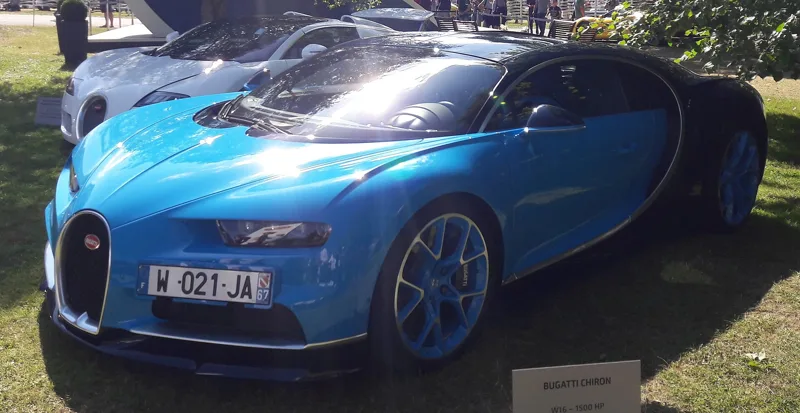
The Chiron succeeded the Veyron. Its concept form, Vision Gran Turismo, was shown at the September 2015 Frankfurt Motor Show, and the production car debuted at Geneva in March 2016. Production began in 2017 and was limited to 500 units, with the final Chiron built in May 2024.
The brand's aim was to keep the same mix of speed and luxury, and the limited run of 500 cars reflected that approach. The Veyron had shown that a road car could reach speeds once confined to race machinery.
How did critics react?
Top Gear's presenters praised the Veyron heavily. Jeremy Clarkson called it the greatest car ever made and pointed out that each car cost GBP 5 million to produce while customers paid GBP 1 million. James May compared it to Concorde, a moment in engineering history.
The Veyron was named Car of the Decade by Top Gear in 2010. The standard car lapped the programme's test track in 1:18.3 in 2008 and did not top the leaderboard, while the Super Sport later managed 1:16.8, the fastest time recorded there at the time.
Gordon Murray, the McLaren F1 designer, first dismissed the car as a pointless exercise. After driving it, he called it a huge achievement and praised its styling. Martin Roach's 2011 book went further, treating the car as a celebrity in its own right.
Richard Hammond lost a race against a Eurofighter Typhoon. In a one-mile (1.6 km) drag race against a McLaren F1 in Abu Dhabi, the McLaren led at the start before the Veyron pulled ahead at higher speeds.
What are the Bugatti Veyron specifications?
The table below lists the core figures for the Veyron 16.4 and the Super Sport and Vitesse versions. Where a value belongs to one variant, the row names it so the figures do not blur together. Figures are quoted in metric first, with imperial units in brackets, and they reflect the original Veyron unless a row says otherwise.
| Specification | Detail |
|---|---|
| Engine | 8.0-litre quad-turbocharged W16, 7,993 cc |
| Bore and stroke | 86 by 86 mm (3.39 by 3.39 in) |
| Valves | 64, served by four camshafts |
| Output | 736 kW (987 hp; 1,001 PS) |
| Torque | 1,250 Nm (922 lbf ft) |
| Transmission | Seven-speed dual-clutch by Ricardo |
| Drive | Permanent all-wheel drive, Haldex Traction |
| Kerb weight | 1,888 kg (4,162 lb) |
| Power-to-weight | 530 PS per ton |
| Overall length | 4,462 mm (175.7 in) |
| Drag coefficient | Cd=0.41 normal, 0.36 lowered |
| Top speed mode | 407 km/h (253 mph), at rest only |
| Normal top speed | 343 km/h (213 mph) |
| Super Sport output | 1,200 PS (882 kW; 1,183 hp) |
| Super Sport record | 431.072 km/h (267.856 mph) |
| Vitesse road limit | 375 km/h (233 mph) |
Why the Veyron still matters
Before the Veyron, road cars at speeds like those in the record runs were rare enough to be newsworthy. Bugatti made that performance a published, certified figure, and its mix of W16 power, all-wheel drive and a focus on top speed gave later hypercar makers a clear template to follow.
Its small production run, roughly 450 units across a decade, means surviving examples are scarce. The open-top Vitesse and the World Record Car Edition are the most talked-about of the special editions among collectors.
Frequently asked questions
How fast was a customer Super Sport?
The customer version was held to 415 km/h (258 mph) by its limiter, while the record car reached 431.072 km/h (267.856 mph) on the official test day. The limiter existed to protect the tyres at extreme speed, and the review of the record turned on it.
Was there an open-top Veyron?
Yes. The Grand Sport and Grand Sport Vitesse were both open-top versions. The Vitesse reached 408.84 km/h (254.04 mph) with its roof off on a record run, the best figure for an open car in this line.
Could a buyer customise the colours?
Yes. From December 2010, buyers could choose exterior and interior colours through the Veyron 16.4 Configurator on Bugatti's official website, and the car could be specified accordingly.
What did the Mansory special editions cost?
Mansory's Linea Vincero cost US$1 million more than a standard Veyron, while the Linea Viviere was priced at US$2.3 million. The Viviere Diamond Edition followed with marble coloured paintwork.
,_5._April_2012,_D%C3%BCsseldorf.jpg)