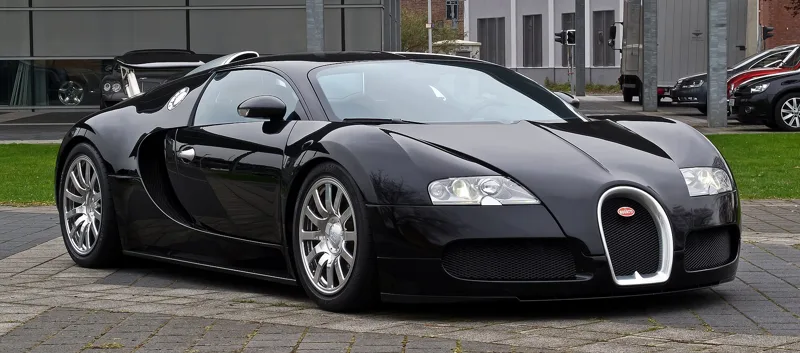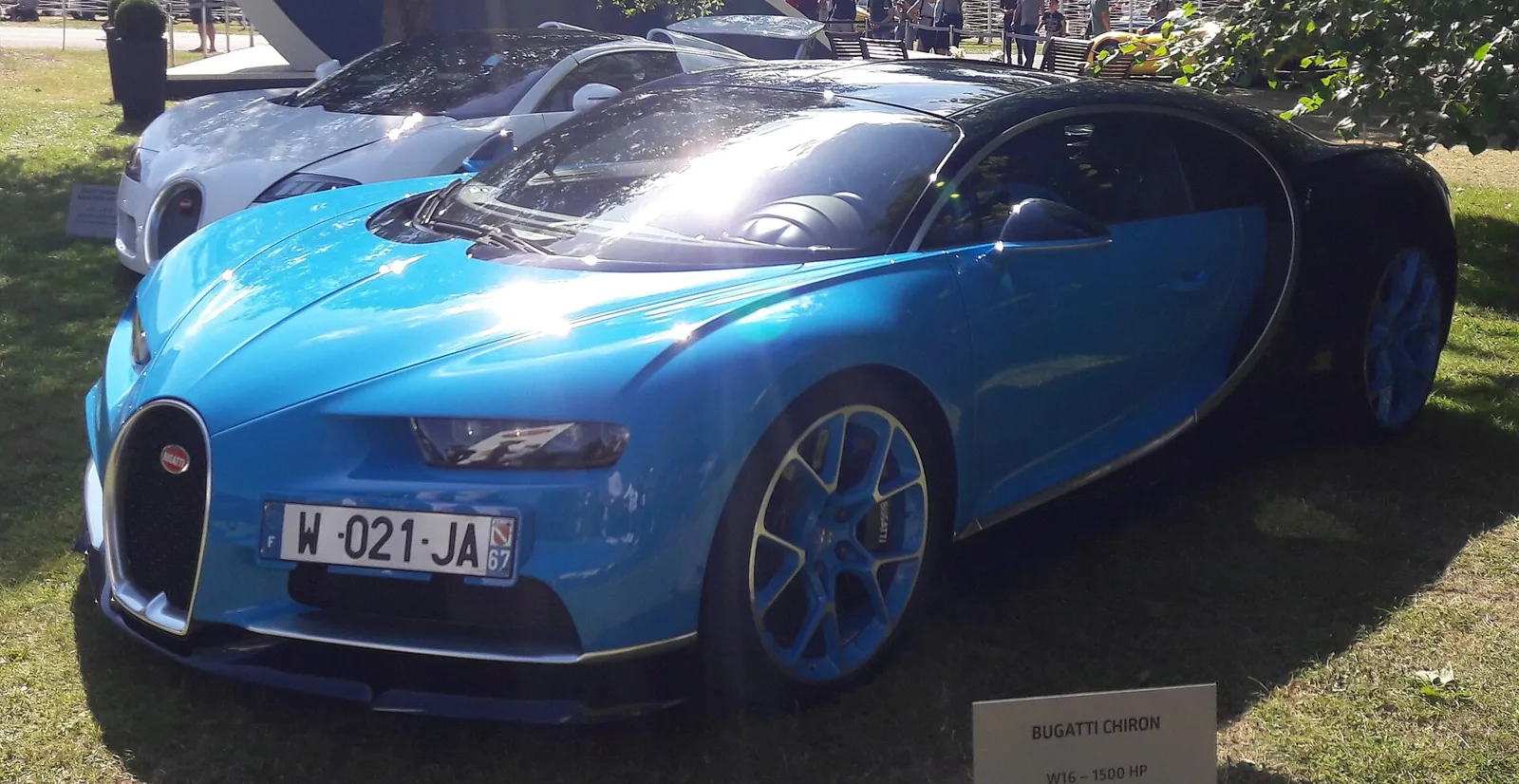
Bugatti's mid-engined successor to the Veyron used an 8.0-litre quad-turbo W16 with 1,479 hp, sold out its 500 units and ended the W16 era with the L'Ultime.
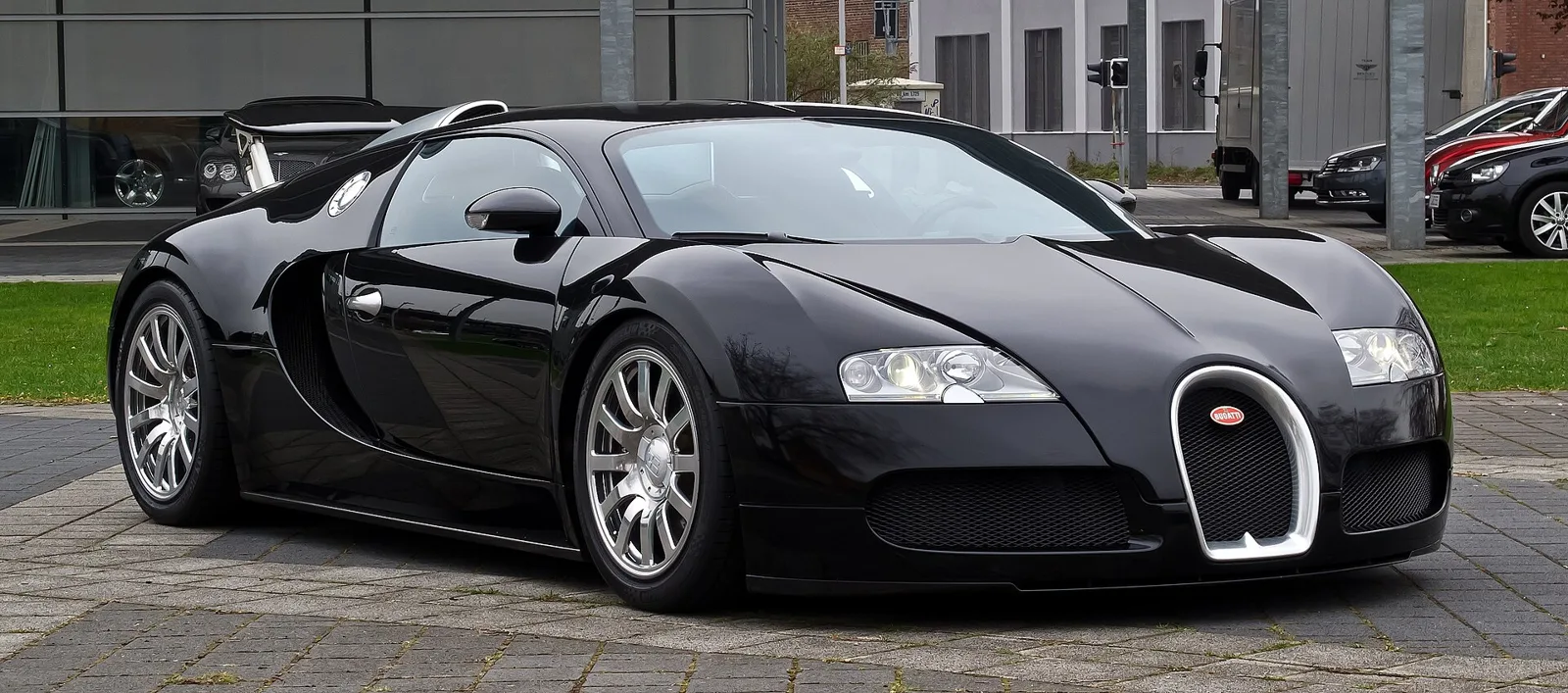
The Chiron is a two-seat mid-engined car with an 8.0-litre quad-turbo W16 rated 1,479 hp. Bugatti built only 500 of them, and the series ended in May 2024 with the L'Ultime, the last car to use the W16.
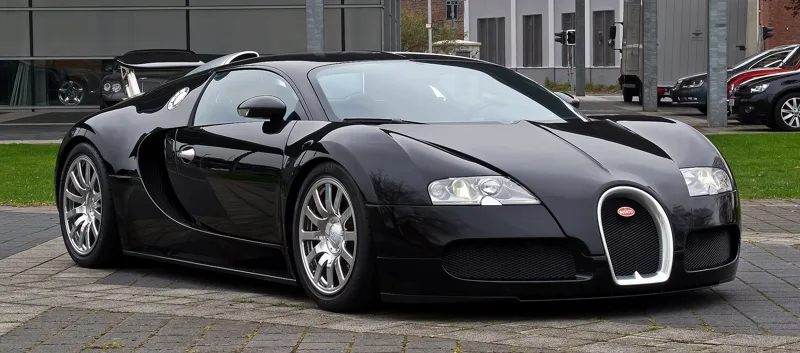
The Bugatti Chiron is a mid-engined two-seater that Bugatti Engineering drew up in Germany, with Bugatti assembling it at Molsheim in France. The car succeeded the Veyron and appeared in public at Geneva on 1 March 2016. Its 8.0-litre W16 is rated at 1,479 hp (1,500 PS; 1,103 kW), and only 500 were ever planned.
Where did the Chiron come from?
Bugatti Engineering GmbH in Germany designed and developed the Chiron, while Bugatti Automobiles S.A.S. built it at Molsheim in France. The design was first previewed as the Vision Gran Turismo concept at the 2015 Frankfurt show, before the production car made its Geneva debut.
The name honours Monegasque driver Louis Chiron. A 1999 Bugatti 18/3 Chiron concept car had used the same name, so the badge carried a history that stretched back well before the production car arrived.
Like the Veyron, it relies on a carbon fibre body, independent suspension and Haldex all-wheel drive. The body is rated at 50,000 Nm per degree of stiffness, which gives the structure the rigidity its output requires.
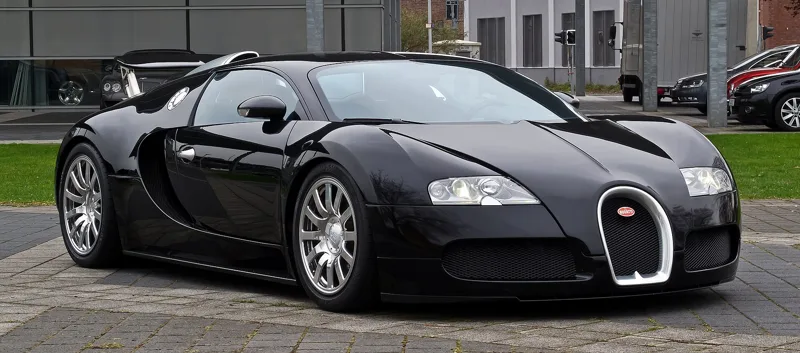
A 1,479 hp W16 mid-engine two-seater that sold out its 500 units and closed the era of the Bugatti W16.
How much power does the Chiron make?
At 6,700 rpm the peak comes from the 7,993 cc quad-turbo W16, rated 1,500 PS (1,479 hp; 1,103 kW), and from 2,000 to 6,000 rpm it delivers 1,600 Nm (1,180 lb ft) of torque.
The engine is a heavily updated version of the Veyron's W16, and it was the main component carried over from the earlier car. The change in output shows how much the Chiron's engineering moved on in a short space of time. Against the Veyron, the Super Sport trails by 221 kW (296 hp; 300 PS), and the original car by 367 kW (492 hp; 499 PS).
Fuel use is rated at 22.5 L/100 km (12.55 mpg-imp; 10.45 mpg-US) on the mixed cycle, a figure that says a great deal about how the W16 was tuned for sheer output rather than economy.
How fast is the Chiron?
Bugatti claimed 0-100 km/h in 2.4 seconds, 0-200 km/h in 6.5 seconds and 0-300 km/h in 13.6 seconds. In a 2017 test the car reached 400 km/h in 32.6 seconds and stopped from that speed in 9.4 seconds.
The electronically limited top speed is 420 km/h (261 mph). Without the specific key the limit drops to 375 to 380 km/h, a restriction Bugatti tied to tyre safety at the speeds the car can reach.
Independent testing by one owner indicated that the Chiron can easily reach its limited top speed, which underlines how much headroom the chassis and powertrain carry.
| Specification | Detail |
|---|---|
| Engine | 7,993 cc quad-turbo W16 |
| Peak output | 1,479 hp (1,500 PS; 1,103 kW) at 6,700 rpm |
| Torque | 1,600 Nm (1,180 lb ft), 2,000 to 6,000 rpm |
| 0-100 km/h | 2.4 seconds (claimed) |
| 0-200 km/h | 6.5 seconds |
| 0-300 km/h | 13.6 seconds |
| 0-400 km/h | 32.6 seconds (2017 test) |
| Electronic top speed limit | 420 km/h (261 mph) |
| Mixed fuel consumption | 22.5 L/100 km (12.55 mpg-imp; 10.45 mpg-US) |
| Body stiffness | 50,000 Nm per degree |
| Production | 500 units |
The table covers the core figures for the standard car. Variant figures such as the Super Sport 300+ and Profilee are discussed in the sections that follow, so the base specification stays clear.
What were the Chiron's main variants?
The Chiron Sport debuted in 2018 with the same engine but weighed 18 kg (40 lb) less. It came with a lighter exhaust, firmer suspension and torque vectoring, and buyers paid US$400,000 extra for it from late 2018.
The 2019 Super Sport 300+ used a W16 tuned to 1,580 hp (1,600 PS; 1,175 kW). Only 30 were built, at EUR 3.5 million net each, and the first eight reached owners in September 2021.
The Pur Sport of 2020 was limited to 60 units. Its redline rose by 200 rpm to 6,900 rpm, and it weighed 50 kg (110 lb) less than the standard car thanks to a 3D printed titanium exhaust and extensive Alcantara trim.
The Chiron Noire, which celebrated the 1936 Type 57SC Coupe Aero, was limited to 20 cars. Its Noire Elegance and Noire Sportive versions offered different finishes on the same black carbon theme.
How did Bugatti sell the Chiron?
Two hundred cars were sold before the first handover, and demand was strong enough to close the order books early. The base price was EUR 2,400,000, and buyers put down EUR 200,000 up front. The first three examples reached customers in Europe and the Middle East during March 2017.
Sales were complete by January 2022. The final base-spec car left the line in September 2023, and the series closed in May 2024 with the L'Ultime, the last Chiron of all.
Bugatti built 500 units in total. The one-off Profilee, which was not part of that run, brought the number of Chirons sold to 501 when it was auctioned in early 2023.
What records did the Chiron set?
Bugatti used the 2017 IAA show to reveal a 0-400-0 km/h record of 41.96 seconds, set over 3.2 kilometres (2 miles) at Ehra-Lessien. Juan Pablo Montoya was behind the wheel. The top speed figure was verified by an independent inspection body.
On 2 August 2019 test driver Andy Wallace pushed a prototype of the Super Sport 300+ to 490.484 km/h (304.773 mph) at Ehra-Lessien. The speed was verified by TUV, Germany's technical inspection association.
Koenigsegg's Regera and other machines have since beaten that 0-400-0 mark, yet the Chiron's run still shows how far a production-based hypercar could be pushed. Records of this kind tend to fall as engineers chase the next figure.
How did the Chiron become a toy?
Lego recreated the Chiron as a 1:8 scale Technic model in 2018, using 3,600 individual parts. The project put the car's proportions on display for visitors. A full-size working model followed later that year, built from more than 1,000,000 pieces.
The full-size model used 2,304 Power Functions motors, and its top speed was 20 km/h (12 mph). It was test driven by Andy Wallace at the Ehra-Lessien track, which made the stunt a serious piece of engineering in its own right.
How did the Chiron's W16 differ from the Veyron's?
The Chiron kept the Veyron's quad-turbocharged W16 layout but heavily updated the engine, lifting output far beyond the earlier car's figures. Its torque plateau of 1,600 Nm between 2,000 and 6,000 rpm gave strong pulling power across a wide band.
Bugatti kept the W16 as the centrepiece because it gave the output the car needed without forcing a new engine concept. The engineering effort went into making a familiar layout handle far more output than before.
What makes the Chiron Pur Sport different?
The Pur Sport was a handling-focused variant introduced on 3 March 2020 and limited to 60 units. It had a 6,900 rpm redline, lighter bodywork and a more focused chassis, and its tyres were co-developed with Michelin for extra lateral grip.
The gearbox ratios were reworked to keep the engine inside its strongest band. Carbon-fibre anti-roll bars and a fresh Sport+ setting completed the sharper package.
Deliveries reached the halfway point on 1 December 2022, a sign that demand for the rarer variants stayed strong across the later part of the programme.
What did the Profilee add to the range?
Built on Pur Sport foundations, the one-off Profilee arrived in December 2022 with a reshaped aero package and a small rear wing. It sprinted to 100 km/h in 2.3 seconds and was limited to 380 km/h (236 mph), the quickest accelerating car in the range.
Bugatti had planned a run of 30 units, but all 500 Chiron places were already committed by the time the pre-series car was built. The project was cancelled, leaving the Profilee as the only example, which RM Sotheby's sold in February 2023.
The car used woven leather on the dashboard, centre console and door panels, the first Chiron to do so, and its lower body was bare carbon tinted blue. Those details gave it an identity that set it apart from the standard run.
How did Bugatti design the Chiron's bodywork?
The Chiron's bodywork followed the Veyron's carbon fibre construction, with a stiff structure that supported the car's power and high-speed stability. The design work was shaped by the need to manage airflow at speeds close to the car's limit. The bodywork also had to cope with extreme speeds.
Aero blade wheels on the Pur Sport guided turbulent air towards the rear diffuser. The Profilee went further with wider air dams, a larger front grille and a revised rear wing.
Aerodynamic changes were a recurring theme across the variants, from the Super Sport 300+ with its longer tail to the Profilee's revised wing, showing how each derivative pursued a different performance goal.
What did the Chiron's special editions celebrate?
Many Chiron editions marked anniversaries or pioneers of the marque. The 110 Ans Bugatti of 2019 celebrated the company's long history, while the Les Legendes du Ciel of 2020 honoured Bugatti racing drivers who had flown in the French Air Force.
The La Voiture Noire of 2019 paid tribute to the 1936 Type 57SC Coupe Aero, and the F.K.P. Hommage honoured 20 years since the Veyron debut. Those editions show how Bugatti used the Chiron platform as a canvas for design history, not only as a vehicle for speed. Collectors treated each one as a distinct chapter of the Chiron story.
What role did Bugatti's test driver play?
Andy Wallace, Bugatti's official test driver, was central to the Chiron's record runs and to the Lego full-size project. His work on the car's top speed and handling gave the company confidence in its claims. His involvement gave the claims a credible basis.
Wallace drove the pre-production Super Sport 300+ to its record speed at Ehra-Lessien, and the run was verified by the TUV inspection body. Few hypercars have had a test driver whose runs were checked so formally.
The Lego model was also tested by Wallace, a striking piece of engineering in its own right, which reflected how Bugatti used its engineering culture to promote the car far beyond the showroom.
Frequently asked questions
How fast is the Bugatti Chiron?
Bugatti claims 0-100 km/h in 2.4 seconds, and the electronic limit is 420 km/h (261 mph). The record top speed was 490.484 km/h (304.773 mph), set by a prototype Super Sport 300+.
How many Chirons were built?
Production was limited to 500 units, and 501 Chirons were sold including the Profilee. The Profilee sold at RM Sotheby's for EUR 9,792,500 in February 2023.
What did a Chiron cost?
A buyer had to put down EUR 200,000 before taking delivery of a car listed at EUR 2,400,000. Special editions cost more, such as the Super Sport at EUR 3.2 million net.
What is the L'Ultime?
L'Ultime closed the Chiron story as the last car built with the W16. Production ended in May 2024.