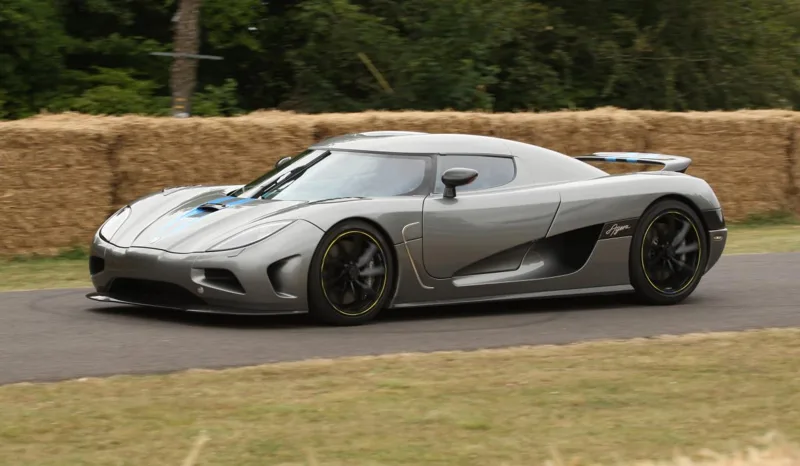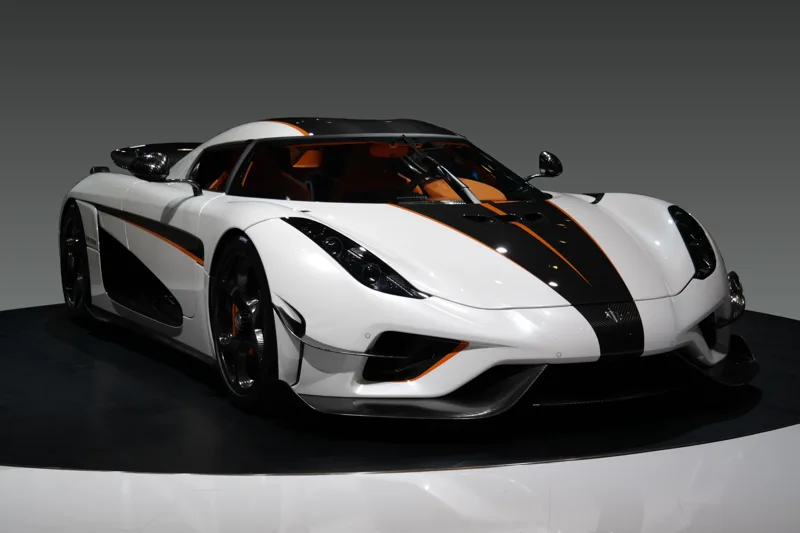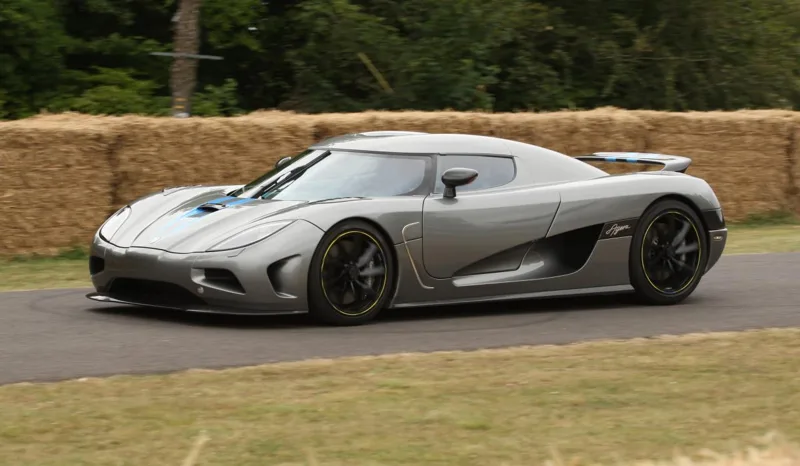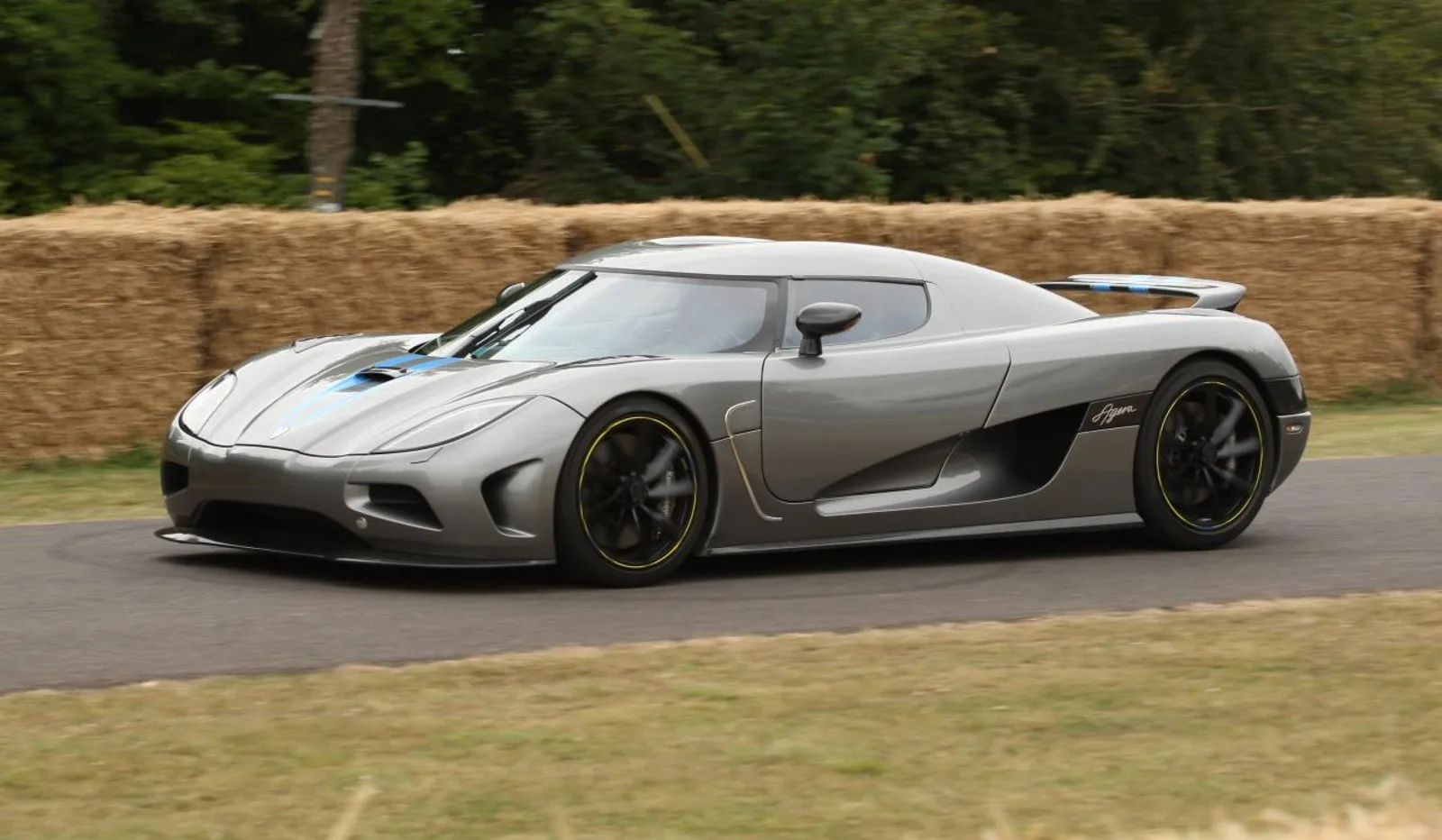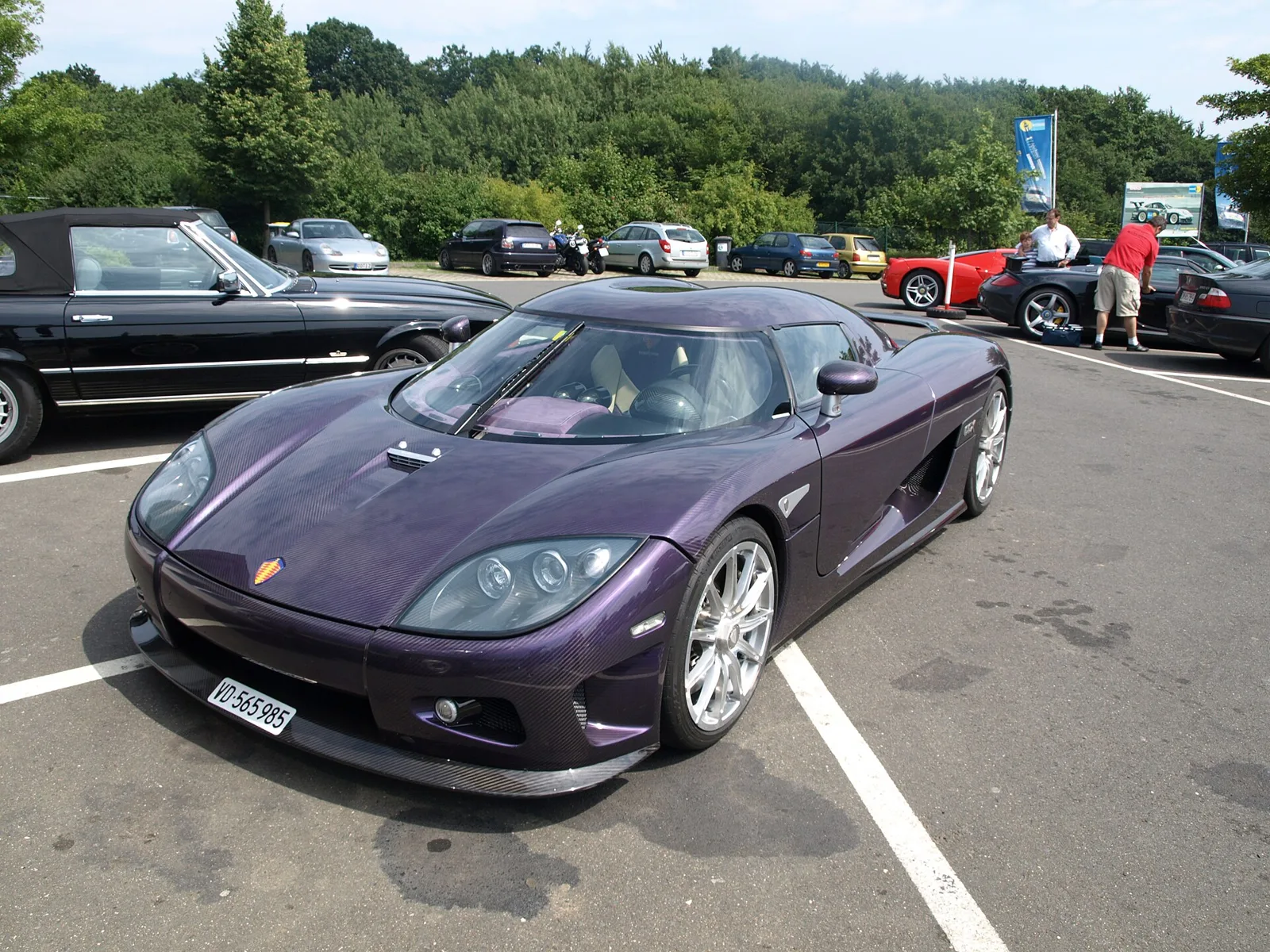
A supercharged mid-engine coupe that Koenigsegg reworked for American rules, powered by its own 4.7L V8 and built in only 49 examples.
The Koenigsegg CCX was a targa-topped sports coupe built by Swedish maker Koenigsegg from 2006 to 2010, with 49 examples made. Its 4.7L twin-supercharged V8 was designed in-house to meet US rules and run on 91 octane fuel.
The Koenigsegg CCX was a targa-topped coupe from the Swedish manufacturer Koenigsegg Automotive AB, built between 2006 and 2010. It was engineered to meet global safety and environmental rules, and above all to be sold in the United States. Only 49 were produced in total.
Why was the CCX built?
The programme set out to build a worldwide car that met safety and environmental rules, with the United States as the main target. Adapting the CCR for that market meant rethinking several major parts rather than adding paperwork to an existing design.
The earlier car used a Ford Modular engine. For the CCX that unit was replaced by an in-house Koenigsegg engine, built to run on 91 octane fuel, which was widely sold in the United States, and to satisfy Californian emission rules.
The name is short for Competition Coupe X. The X marks a decade since the first CC prototype was finished and driven in 1996, as X is the Roman numeral for ten.
A supercharged targa coupe designed to meet American rules, built in only 49 cars, and remembered for its Top Gear lap.
What engine did the CCX use?
The CCX used a 4.7L twin-supercharged V8 developed in-house by Koenigsegg. Peak output was 806 PS (593 kW; 795 hp), peaking at 7,000 rpm, with 920 N-m or 679 lb-ft of torque reached at 5,500 rpm, all on 91 octane gasoline.
The block was cast from 356 aluminium alloy and then T7 heat-treated, a process that helps the casting hold together. Grainger and Worrall, a casting specialist with Formula One experience in drivetrain parts, made the castings for Koenigsegg.
Assembly, build and testing took place at Koenigsegg's Angelholm plant. The engine was dry-sumped, with a separate oil pump, and an internal cooler sprayed oil onto the pistons to handle high cylinder pressures on 91 octane fuel.
How efficient was the CCX?
Combined running gave 14 mpg-US, equal to 17 L/100 km or 17 mpg-imp. The highway figure was 18 mpg-US, or 13 L/100 km and 22 mpg-imp, which was a reasonable result for an engine of this output.
Drive reached the road via a torque-sensitive limited-slip differential. Two transmissions were offered: a CIMA six-speed manual and a six-speed sequential manual.
How was the body reworked?
The chassis was made from carbon fibre reinforced with Kevlar, bonded to an aluminium honeycomb structure, in the same way as the earlier models. The body kept the targa top and the dihedral synchro-helix doors, but nearly every panel was reworked.
The front bumper was new, and the car gained improved brake cooling, fog lamps and US patented headlamps. A fresh air intake on the bonnet acted as a ram-air booster, and air intakes behind the front wheels improved airflow. A glass window sat over the engine.
The frontal area was 2,894 sq in (1.867 m2), and the drag coefficient was 0.32. The CdA came to 0.56 m2 (6.0 sq ft). Venturi tunnels under the rear and a flat floor helped generate downforce, with an optional spoiler adding more.
At 200 km/h (124 mph), front downforce was 60 kg (130 lb) and rear downforce 65 kg (143 lb). The body grew by 88 mm (3.5 in), a change that answered US rear impact rules and gave the muffler more room.
What changed inside the CCX?
The cabin gained 50 mm (2 in) of extra headroom, and the seats were Sparco carbon fibre shells. The changes meant taller occupants could fit without the car losing its low profile.
Interior trim varied across the editions, but the basic layout stayed the same. The Edition cars later gained leather carpets, Edition side step plates and a chronograph instrument cluster.
What were the wheels and brakes like?
Carbon fibre wheels were offered as an option. They were lighter by 3 kg (6.6 lb) than the standard forged alloys, which had telephone-dial spokes, and both types used centre locking nuts.
Wheel sizes were 19 inches front and 20 inches rear. Michelin Pilot Sport 2 tyres measured 255/35 Y19 at the front and 335/30 Y20 at the rear. Carbon ceramic brakes were optional, with 380 mm (15 in) discs at the front and 362 mm (14.3 in) discs at the rear, trimming 2 kg (4.4 lb) from the unsprung mass.
What was the CCXR?
The CCXR was a greener take on the CCX. It used the same engine, converted to run on E85 and E100 ethanol as well as standard 98 octane petrol. Its fuel injectors, fuel lines and piston rings were modified, and the superchargers ran at a higher boost setting.
On ethanol the CCXR produced 1,018 PS (749 kW; 1,004 hp), with 1,060 N-m (782 lb-ft) of torque from 5600 rpm. The gain came from the cooling effect of ethanol in the combustion chambers, combined with the extra boost that ethanol's higher octane rating allowed.
Ethanol has a lower energy content than petrol, so the CCXR burned slightly more fuel than the CCX. The EU combined figure stood at 11 mpg-US (13 mpg-imp), or 22 L/100 km.
What were the CCX Edition and CCXR Edition?
The 2008 Geneva show brought two special editions from Koenigsegg, the CCX Edition and the CCXR Edition. They used a remapped 4.8L twin-supercharged V8, and production was capped at two cars for the CCX Edition and four for the CCXR Edition.
Modifications took the CCX Edition to 900 PS (662 kW; 888 hp) on ordinary petrol, and torque rose to 940 N-m (693 lb-ft). The CCXR Edition's ratings stayed the same as the standard CCXR.
For track use, the Editions had firmer springs, anti-roll bars, revised dampers and a lower chassis. A bare carbon body, 11-spoke aluminium wheels, a bespoke rear wing and a bigger front splitter with side winglets completed the look. At 250 km/h (155 mph) the set-up made 350 kg (772 lb) of downforce.
Later, Koenigsegg built two CCXR Special Edition cars. They had a double F1 wing, a revised aero package and wheel vents on top of the body, along with Koenigsegg's first F1 Paddleshift system.
Each Edition was built on the same core structure as the standard car, so the changes concentrated on the engine tune, the aero pieces and the trim. That kept production close to the base model while giving buyers a car with its own character.
What made the CCXR Trevita unusual?
The CCXR Trevita was a limited edition with a diamond weave carbon fibre finish. The name comes from Swedish, meaning three whites. The Koenigsegg Proprietary Diamond Weave was developed in-house and treated the fibres in small quantities before further processing.
Three Trevitas were planned, but the diamond weave proved so complex to make that only two were built. Both had Shimmering Diamond Weave bodywork, a twin-deck carbon rear wing, an Inconel exhaust, carbon ceramic brakes with ABS and an F1 paddle-shift gearbox.
The Trevita cost US$4.8 million, which made it one of the most expensive sports cars of its time. One was later owned by the boxer Floyd Mayweather and sold in 2017 for $2.6 million.
Did the CCX race?
Koenigsegg's answer for the FIA GT Championship was the CCGT, a race car built from the production CC range. It debuted at the 2007 Geneva Motor Show and was built under ACO and FIA rules for the GT1 class.
Its engine came from the CCX unit, with the superchargers removed and the capacity raised to 5.0 litres. It produced over 600 kg of downforce and over 600 hp normally aspirated, although racing rules restricted its power.
Two months after its first shakedown runs the GT1 regulations changed. Carbon monocoques were disallowed, and a minimum of 350 road cars a year was required for a competing model. Koenigsegg could not meet that figure, so the CCGT was prevented from racing.
The CCGT was later sold at the Bonhams Goodwood Festival of Speed auction on 14 July 2023 for 3,319,000 pounds, including the buyer's premium.
How many CCX cars were built?
Production ran from 2006 to 2010, with 49 cars in total. The breakdown was 30 CCX, 9 CCXR, 6 CCX/CCXR Editions, 2 CCXR Special Editions and 2 CCXR Trevitas.
One CCX was used for crash tests, and one CCXR remained a factory test car. Some CCX cars were later upgraded to CCXR specification, which blurred the line between the two models.
How did the CCX perform on Top Gear?
In 2007 the CCX became the quickest car on Top Gear's Power Lap, clocking 1:17.6. That record stood until the Ascari A10 posted 1:17.3.
The car first lapped the circuit in 1:20.4. An optional rear wing was then bolted on after The Stig spun it off at 130 mph following a power steering failure. Koenigsegg later said the improvement came from chassis and suspension adjustments rather than the spoiler, but the wing remained the credited reason.
The name on the lap board was a joke about the difficulty of spelling the marque, and it gave the brand a memorable moment on the show.
What awards did the CCX win?
The CCX received the 2009 Best Performing Green Exotic award from duPont Registry. Forbes also named it one of the 10 Most Beautiful Cars.
Those honours sat alongside the Top Gear record and the CCXR's ethanol capability, which gave the car a green credential that few supercars of its era could match.
What are the Koenigsegg CCX specifications?
| Specification | Detail |
|---|---|
| Layout | Mid-engine sports car, targa top |
| Years built | 2006 to 2010 |
| Engine | 4.7L twin-supercharged V8 |
| Output | 806 PS (593 kW; 795 hp) |
| Torque | 920 N-m (679 lb-ft) |
| Combined economy | 17 L/100 km (14 mpg-US) |
| Frontal area | 2,894 sq in (1.867 m2) |
| Drag coefficient | Cd 0.32 |
| CCXR on ethanol | 1,018 PS (749 kW; 1,004 hp) |
| CCX Edition | 900 PS (662 kW; 888 hp) |
| Front wheels | 19 inches, 255/35 Y19 |
| Rear wheels | 20 inches, 335/30 Y20 |
| Total production | 49 cars |