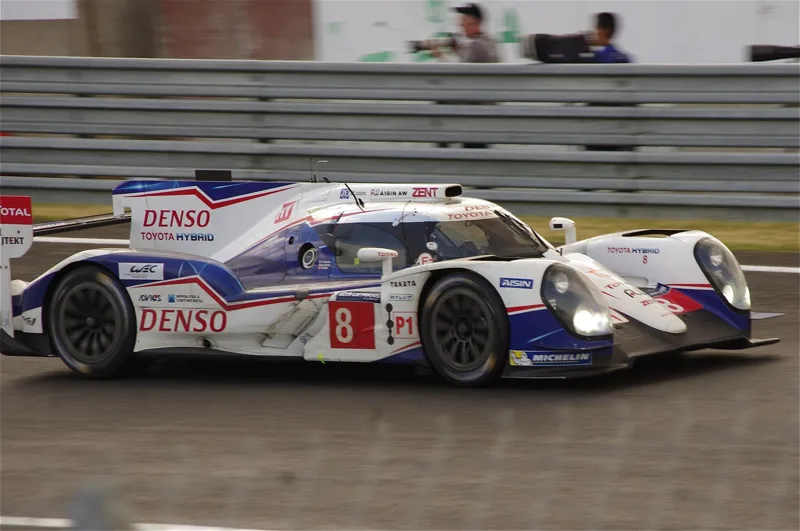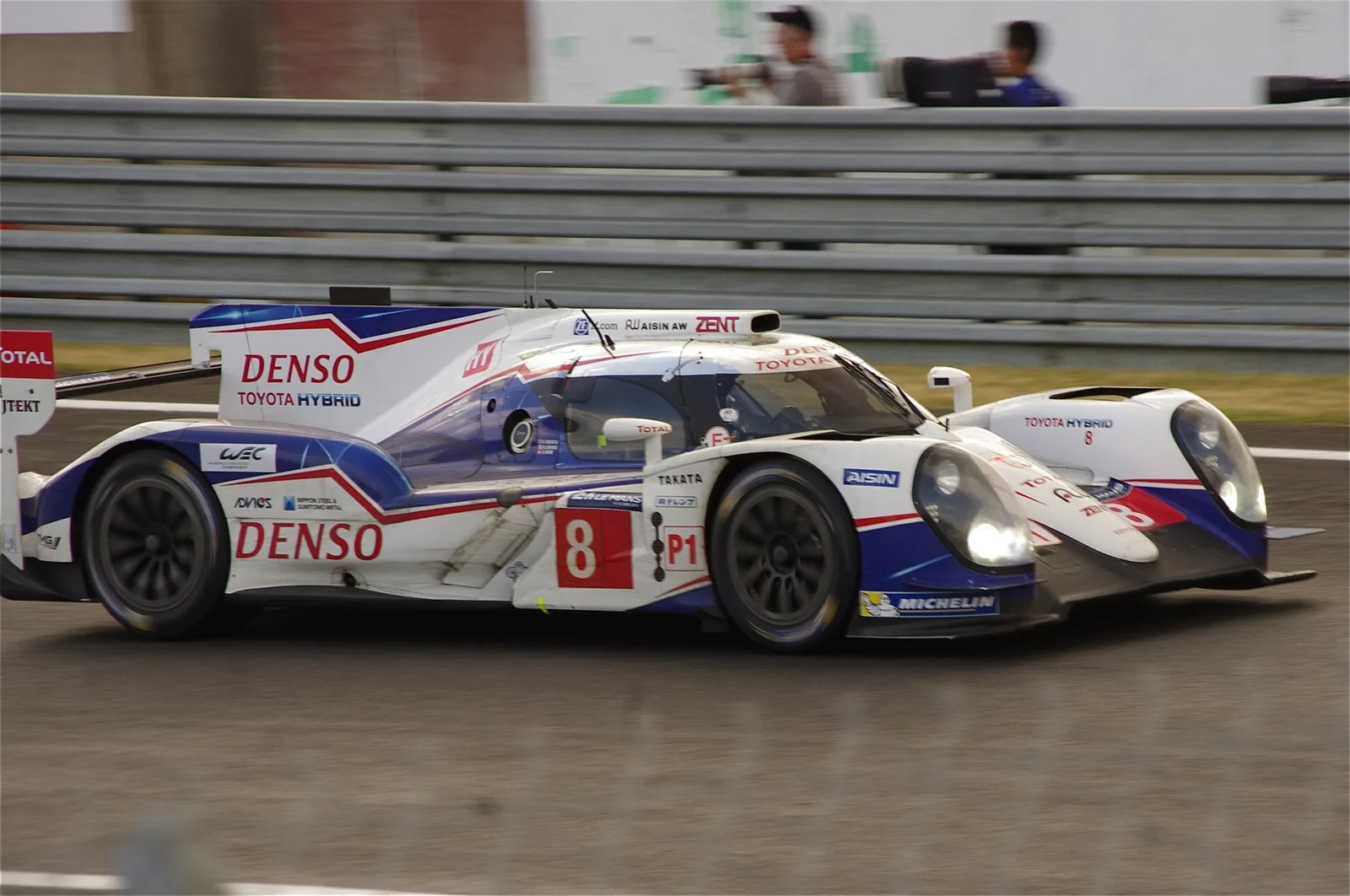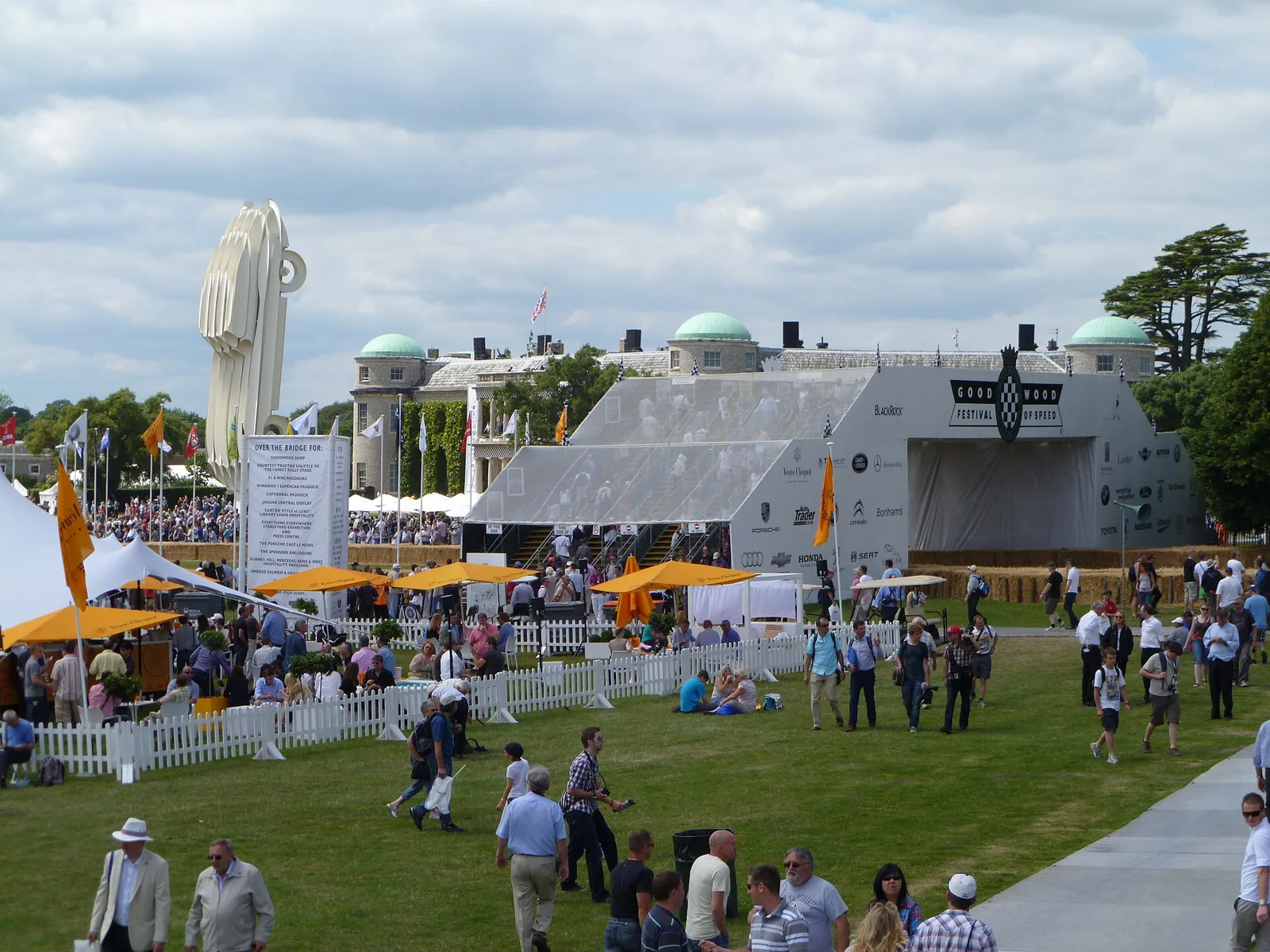
Founded in 1993 by Lord March on his Sussex estate, the hillclimb grew into a festival of modern and historic motor racing.
The Goodwood Festival of Speed is a motorsport festival in West Sussex, founded in 1993 by Lord March on the Goodwood estate. Its hillclimb course is 1,890 metres long, climbing 92.7 metres, and the outright record of 39.081 seconds was set in 2022 by an electric car.
Every late June or early July, the Goodwood estate in West Sussex fills with cars for a festival built around a hillclimb. Modern and historic racing machines, supercars, concept vehicles and flying displays all share one site, and the programme runs for several days. The festival was deliberately timed to avoid the Formula One season, so fans can see both sets of machinery.
How did the festival begin on the Goodwood estate?
Lord March, now the Duke of Richmond, founded the festival in 1993 to restore racing to the estate, which has deep roots in British motor sport. He had hoped to hold a race at Goodwood Circuit, but lacked the permit, so the first event was staged on the estate grounds instead.
The inaugural event, held on Sunday 20 June 1993, attracted 25,000 people even though it coincided with Le Mans that year. Sally Mason-Styrron was the first to climb the hill, behind the wheel of a Ferrari 166 MM Barchetta. A second clash with Le Mans followed the next year, and from then on the dates were set to avoid both Le Mans and Formula One.
A hillclimb on a country estate that was scheduled around Le Mans and Formula One from its second year.
How did the festival grow into a three-day event?
The festival grew steadily. Saturday was added in 1994, making it a weekend event, and Friday followed in 1996 to make it a three-day festival. A Thursday programme, the Moving Motor Show, joined the festival in 2010, and from 2019 the event ran for four days.
By 2014 the festival was drawing roughly 100,000 visitors a day across its three days. The 2003 festival set a record of 158,000 visitors; afterwards advance tickets became mandatory and the cap settled at 150,000. The festival was among the few major events to adapt quickly to changing conditions, though it was not without setbacks.
The 2020 festival was held without spectators because of the COVID-19 pandemic, and it was streamed online and shown on terrestrial television. The 2021 event returned to full capacity at its original location, running from July 8 to 11, and it was the first time since 2019 that spectators were back in force. Severe weather warnings led to the Saturday programme of 2023 being dropped.
What is the hillclimb like?
The hillclimb course is 1,890 metres (1.17 miles) long, with nine turns. The rise is 92.7 metres (304 ft), so the average gradient works out at 4.9%. Spectators stand right beside the hill itself, which keeps them close to the cars as they pass.
The outright record was set in 2022, when Max Chilton drove an electric McMurtry Speirling to 39.081 seconds. Before that, Nick Heidfeld's 41.6 seconds in a McLaren MP4/13 from 1999 had held for two decades, and that car was the reigning constructors' champion of its season. Formula One cars ran until 2023 without beating that time, and safety rules now stop Formula One cars from running tyre warmers or setting official timed laps.
A practice run in 2019 brought the time down to 39.90 seconds, set by Romain Dumas in the all-electric Volkswagen ID.R. At the 2025 festival, Alpine's hydrogen Hy6 car was refuelled on site.
Which other attractions have been part of the festival?
The Soapbox Challenge ran as a gravity-powered downhill race from 2000 to 2004, starting just below the hillclimb finish line. Entries came from Cosworth, Prodrive and other companies, with riders such as Barry Sheene at the wheel. Frequent accidents and rising costs led to its suspension, and it returned in 2013 with Bentley and McLaren.
A forest rally stage has been part of the festival since 2005, run by the Southern Car Club under a Motorsport UK permit. Hannu Mikkola designed the 2006 forest stage, which had its own start and finish at the top of the wood, separate from the demonstration area. That allowed cars to start at timed intervals, so many more could run.
Other attractions have come and gone. The Supercar Paddock has shown road-going supercars since 2000, and since 2014 cars have been able to opt into a timed run. The Arena for drifting and stunt driving opened in 2019, and the Future Lab pavilion has shown science and technology reveals since 2017. The Cartier Style et Luxe show began in 1995 west of the house, and the Moving Motor Show ran from 2010 to 2018.
In 2018 a driverless Roborace car ran the course for the first time, and a 2019 official run took 66.96 seconds. The festival has also featured gravity stunt shows, motocross and trials bike riding in its action sports programme.
What incidents has the festival seen?
Two fatal accidents have happened at the event. In 1993, during the inaugural meeting, vintage motorcyclist Chas Guy was killed in practice when his Vincent started a violent steering wobble and threw him into a tree. Motorcycles are not timed on their runs since then.
In 2000 John Dawson-Damer crashed his Lotus 63 into the finish gantry after losing control on the hill, as the festival's second fatal accident. He was killed, and so was a marshal, Andrew Carpenter, while another marshal, Steve Tarrant, was seriously injured and lost a leg.
What does the central display look like?
Aston Martin set up the central display for the first festival in 1993. Sculptor Gerry Judah has designed the central installation on the lawn outside Goodwood House since 1997. The displays honoured car marques until 2017, when for the first time they honoured a career, that of Bernie Ecclestone.
The poster art has its own history. Peter Hearsey illustrated it from the festival's beginning until he retired in 2015, and in 2016 the poster was designed by Klaus Wagger, who had won a competition to design the official Mille Miglia poster in 2000.
How do visitors get close to the action?
Visitors are accorded close access to the hillclimb course, and the festival is designed so that the public can stand near the cars. The Supercar Paddock lets road-going cars sit in full view, and the Arena offers drifting and stunt shows through the day, with a large viewing area above the drift paddock.
Balcony moments give fans another way to see the sport. Motorsport stars are interviewed on the balcony of Goodwood House to mark their careers and the festival, and the list of guests has included MotoGP legends and Red Bull Racing figures.
How has the festival been broadcast?
ITV gives live coverage throughout the weekend, and Sky Sports simulcasts the Sunday show. The festival has also been streamed on YouTube since 2019, so people far from Sussex can follow the hillclimb in real time.
The estate has a long life in video games too. A Goodwood Festival of Speed event is available in Gran Turismo 6, with the 2014 and 2015 central displays shown, and the nearby Goodwood Motor Circuit appears in Gran Turismo Sport and Gran Turismo 7.
How does the Shootout decide the fastest driver?
The Hill Climb Shootout, also called the Sunday Shootout, is a contest held during the festival. It is held on the Sunday, and it brings together the drivers who posted the fastest hillclimb times of the weekend. They race to reach the finish line in the quickest time.
The Shootout gives the festival its most dramatic finish. Drivers who have already set the fastest times are pitted against one another on the same hill, so the result turns on the final runs rather than on earlier practice. The 2020 event had been scheduled for July 9 to 12 before it was cancelled and later run in October.
Key facts about the hillclimb
| Measure | Value |
|---|---|
| Course length | 1,890 metres (1.17 miles), nine turns |
| Height climbed | 92.7 metres (304 ft) |
| Average gradient | 4.9% |
| Outright record | 39.081 seconds, Max Chilton, 2022 |
| Long-standing record | 41.6 seconds, Nick Heidfeld, 1999 |
| Practice best | 39.90 seconds, Romain Dumas, 2019 |