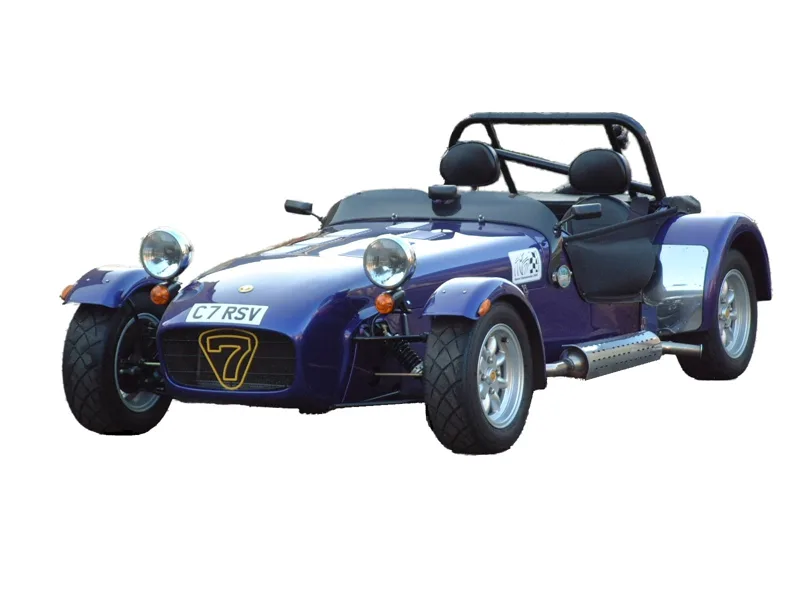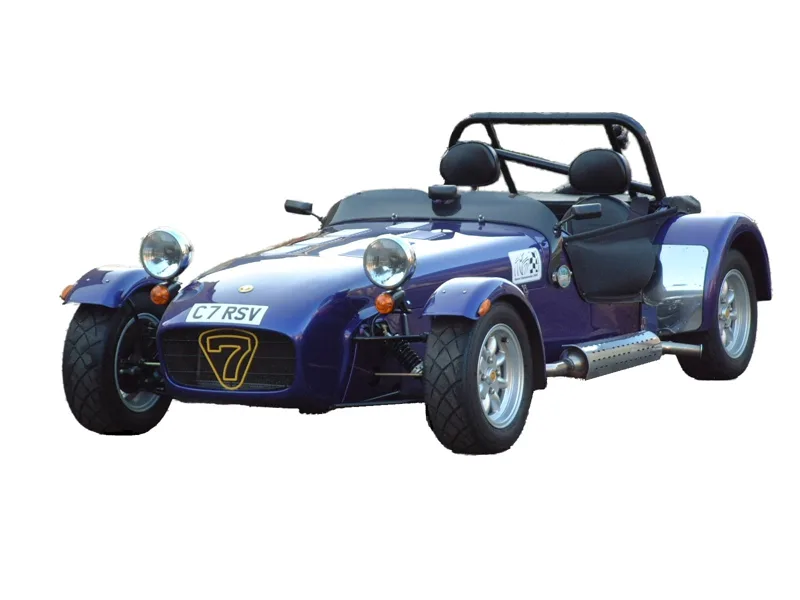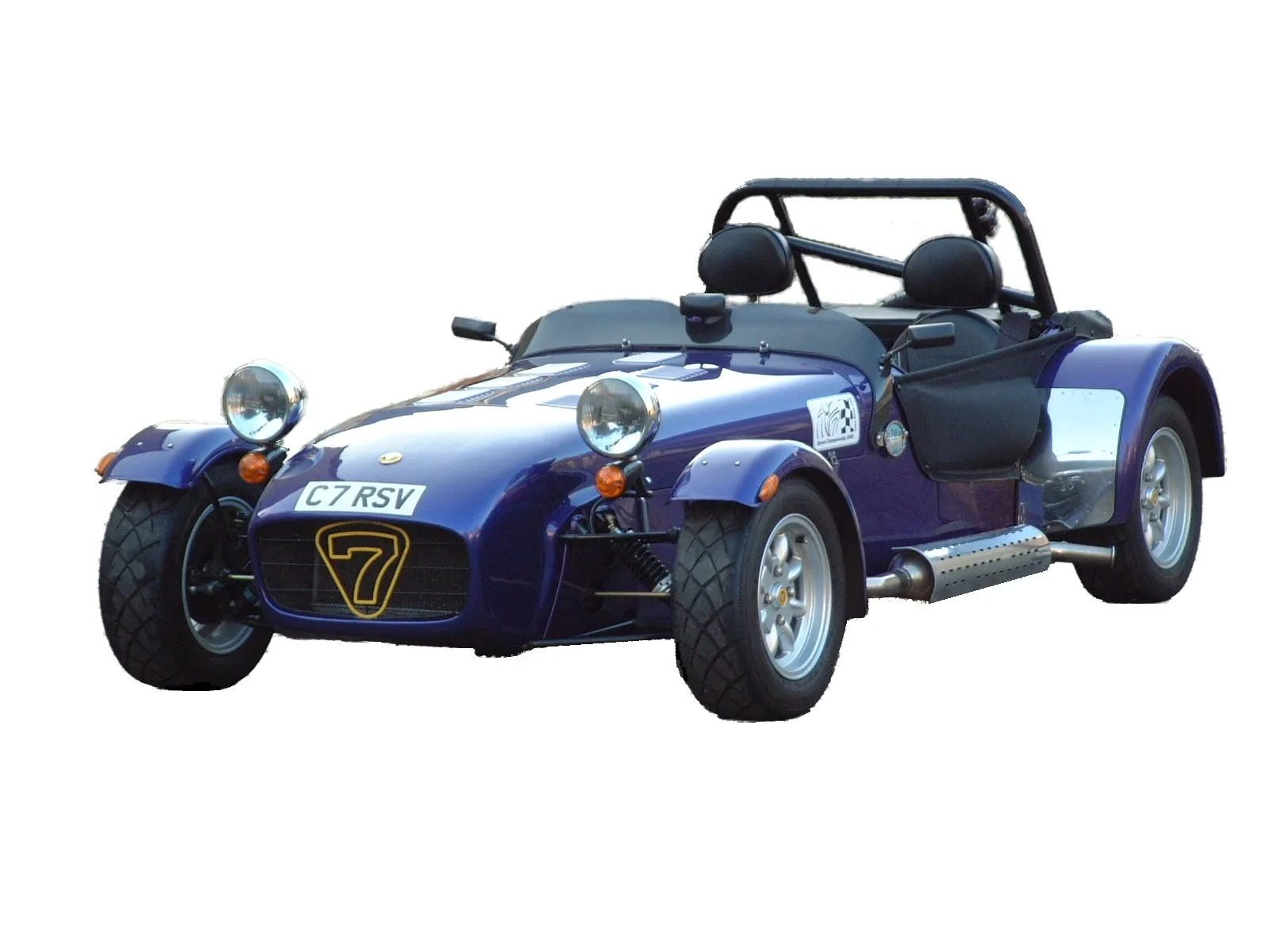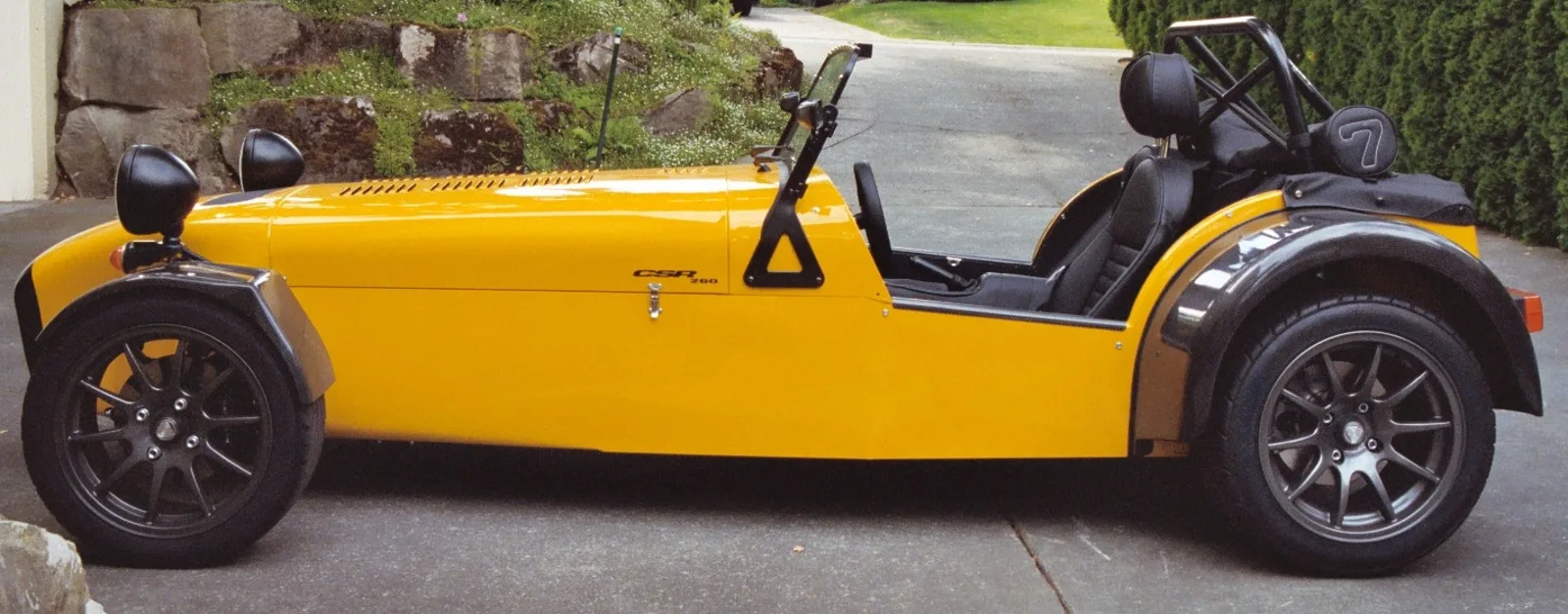
The most heavily modified Caterham, with a Cosworth-tuned engine rated at 260 bhp and a kerb weight of 575 kg (1,268 lb).
Caterham's CSR is the most modified version of the Seven, with a Cosworth-tuned engine rated at 260 bhp and a kerb weight of 575 kg (1,268 lb). It was built in England and reached American buyers only in tiny numbers from 2006.
The Caterham Seven CSR is the most heavily modified version of the Seven, yet it still looks like the car that came before it. Built in England, it pairs a Cosworth-tuned Ford Duratec engine with a body that weighs 575 kg (1,268 lb), and its handling figures have been compared with those of supercars.
What is the Caterham Seven CSR?
The Caterham Seven CSR is a two-seat sports car from Caterham Cars, built in England. It is the most heavily modified Caterham, with a Cosworth-tuned 2.3-litre Duratec engine offering 260 bhp (194 kW) and a kerb weight of 575 kg (1,268 lb) in its top form.
The car reached American buyers in summer 2006, but only in tiny numbers. It keeps the main look of the Super Seven, so it is easy to recognise even though much of its engineering has changed.
The most radical redesign in the Seven's 48-year history, still recognisably a Seven.
Where does the CSR fit in Caterham's history?
The CSR is the biggest overhaul the Seven has seen in 48 years.
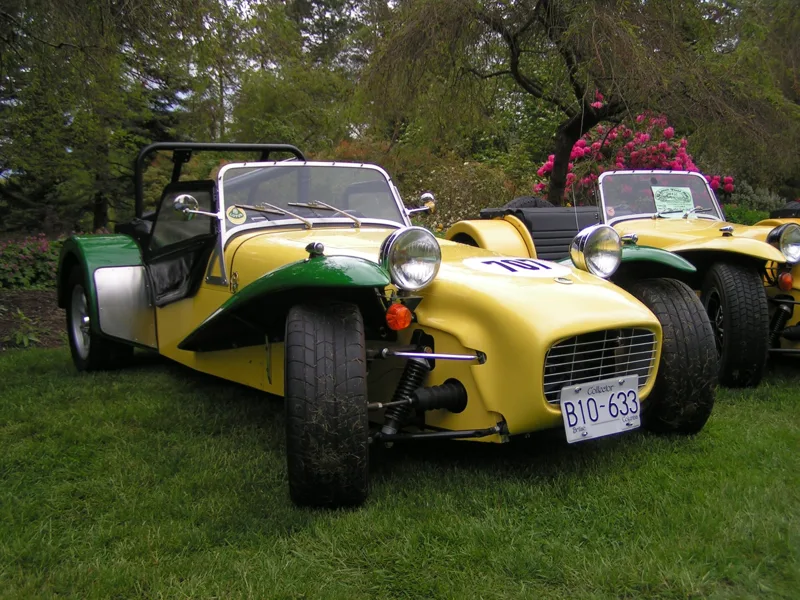
Colin Chapman's philosophy of adding lightness still guides the design, even though the CSR is slightly heavier than some other Caterhams.
How is the CSR's chassis different from older Sevens?
The CSR gained a stronger frame, with new tubular steel that improved torsional stiffness by somewhere between 25% and 100%. It is also wider than earlier models, and the frame needed the extra strength to carry the big 2.3-litre Duratec unit.
The front suspension is double wishbone, fully adjustable, with inboard springs and dampers. At the rear, a fully independent double wishbone layout replaced the De Dion tube used on earlier cars.
There are no power brakes and no power steering on the CSR.
What engines does the CSR offer?
The CSR is offered with two engines based on the same Duratec block. The entry model makes 200 bhp (149 kW) at 7000 rpm, while the upgraded Cosworth-tuned unit makes 260 bhp (194 kW) at 7500 rpm. Both use a 2,261 cc inline four with 16 valves and dual overhead camshafts.
- On the 260, Cosworth's changes reach the head, block, crank, rods and pistons.
- Both versions use a dry-sump layout, with an extra internal pump to circulate oil.
- The 260 has a custom roller-barrel throttle system, while the 200 keeps an enlarged butterfly inlet system.
- A Cosworth-designed chip is fitted to the 260 engine for a further increase in performance.
Torque is 200 lb ft (271 N m) at 6200 rpm on the 260, and 165 lb ft (224 N m) at 5750 rpm on the 200. The 260 engine can run a little rougher at low revs, which is a trade-off for the extra output.
How quick is the CSR in a straight line?
The 260 model is quoted at 3.1 seconds from 0-60 mph, an estimate from the manufacturer, while Car and Driver measured 3.6 seconds. The 260 reaches 100 mph from rest in 8.9 seconds and tops out at 155 mph (249 km/h). The 200 model is limited to 140 mph (225 km/h).
Power-to-weight is 410 bhp (310 kW) per ton on the 260. The quarter mile takes 12.1 seconds at 113 mph (182 km/h), and 0-120 mph takes 15 seconds.
The Car and Driver figure was held back by the rev limiter on the test car. The cut-off arrived at 7,700 rpm, roughly 300 rpm below the redline and 2 mph before 60, so the magazine had to shift before reaching 60 mph and lost half a second.
How does the CSR handle?
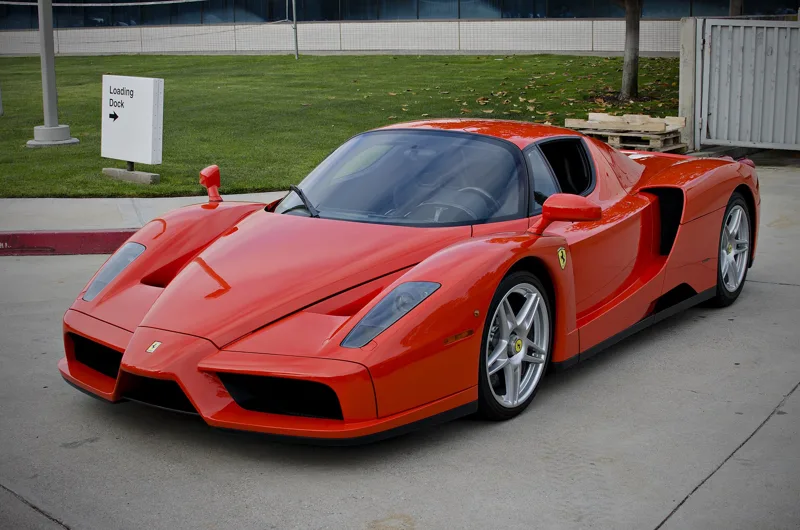
The CSR weighs 575 kg (1,268 lb) and generates 1.05 g of lateral acceleration on the skidpad. That result beat the 2007 Porsche 997 Turbo at 0.94 g and the Ferrari Enzo at 1.01 g, so the car outperforms many supercars on the skidpad.
Lightness is central to the handling. Without power steering or power brakes, the car responds directly to driver inputs, and its weight distribution of 49-51% between front and rear keeps the balance even.
How well does the CSR brake?
The test figure for the CSR is a stop from 70 mph (113 km/h) in 140 feet (43 m). That compares with 99 feet (30 m) from 60 mph for the Porsche 997 Turbo and 119 feet (36 m) from 60 mph for the Ferrari F50, so the speeds in each comparison are not identical.
Comparisons with ordinary cars make the point more clearly. A 2011 Chevrolet Cruze LS needed 167 feet (51 m) to stop from 70 mph, while Formula One cars can stop from 62 mph in 56 feet (17 m).
Why does speed hurt the Caterham?
At speed the CSR's aerodynamics work against it. The car still produces 50 lb (23 kg) of lift at 100 mph (161 km/h), and lift lowers the load on the tyres. That can leave the car feeling loose and cuts into both top speed and handling.
Caterham has tackled the problem with several changes that reduce lift by 50%. Each one targets a different source of turbulence around the front of the car.
What aerodynamic changes did Caterham make?
The main changes are the front cycle wings, a vent on the nose cone and a plastic panel behind the radiator. Together they reduce lift by 50% and cut turbulence around the front wheels.
The front cycle wings sit closer to the tyres, which reduces turbulence. A small lip on each wing angles air upward and produces a little downforce.
The most important change is the opening placed on top of the nose cone. A plastic panel behind the radiator sends air straight out through the vent, so the airflow from the radiator no longer disturbs the car's underside.
What did reviewers say about the CSR?
Reviews of the CSR have been broadly positive, and the criticisms that recur are about comfort and price.
Automobile Magazine's Preston Lerner called the Caterham the purest street car he had driven, praising the direct responses from steering, throttle and brakes. He was less happy with the ride, the fixed seat rake and the lack of a dead pedal for the left foot.
Autocar also liked the car while questioning the price. Its reviewer praised the grip, steering and handling, and called the CSR 260 an intoxicating, extreme car.
Edmunds.com described the CSR as the performance bargain of the car world. Its reviewer was blunter about practicality, saying the roof and side doors were of little use and luggage space was almost nonexistent.
How much does a CSR cost?
Autocar put a basic CSR 260 at GBP 37,000 when built by Caterham, or GBP 34,500 for a self-build kit. Paint added GBP 795, or GBP 1100 for metallic, and the carbon seats cost GBP 1200.
Autocar also listed a limited-slip differential at GBP 750, and it argued that the aerofoil front suspension arms should cost GBP 500. The reviewer's objection was about value rather than performance, since the car itself was praised.
Can you buy a CSR in the UK and the US?
In Britain the CSR is road legal under the Individual Vehicle Approval scheme, subject to an inspection, and Caterham sells it directly. In the US it arrived in summer 2006 in tiny numbers.
Because the cars are manufactured in the UK, Caterham sells them directly to British buyers. The approval route is what makes the car legal for use on the road there.
In the US, the CSR is illegal as a production vehicle because it lacks some safety features and does not meet emissions standards. US law requires the engine and transmission to be bought separately from the chassis, and chassis are supplied through Superformance, Caterham's official distributor. Licensing depends on state, county and city regulations.
What are the Caterham CSR specifications?
| Specification | Detail |
|---|---|
| Engine | 2.3-litre Ford Duratec tuned by Cosworth, inline four, 2,261 cc |
| Power | 260 bhp (194 kW) at 7500 rpm; 200 bhp (149 kW) at 7000 rpm (200 model) |
| Torque | 200 lb ft (271 N m) at 6200 rpm; 165 lb ft (224 N m) at 5750 rpm (200 model) |
| Kerb weight | 575 kg (1,268 lb) |
| Power-to-weight | 410 bhp (310 kW) per ton (260 model) |
| 0-60 mph | 3.1 seconds estimated (260); 3.6 seconds Car and Driver |
| 0-100 mph | 8.9 seconds (260 model) |
| Top speed | 155 mph (249 km/h) (260); 140 mph (225 km/h) (200) |
| Lateral acceleration | 1.05 g on the skidpad |
| Wheelbase | 2,315 mm (91.1 in) |
| Length and width | 3,300 mm (130 in); 1,685 mm (66.3 in) |
| Height | 1,015 mm (40.0 in) hood down; 1,140 mm (45 in) hood up |
| Fuel economy | 10.22 litres/100 km (23 mpg) |
| Brakes | 254 mm (10 in) vented front discs |
| Tyres | Avon CR500, 195/45 R15 front, 245/40 R15 rear |
| Weight distribution | 49-51% front to rear |
| Lift | 50 lb (23 kg) at 100 mph (161 km/h) |