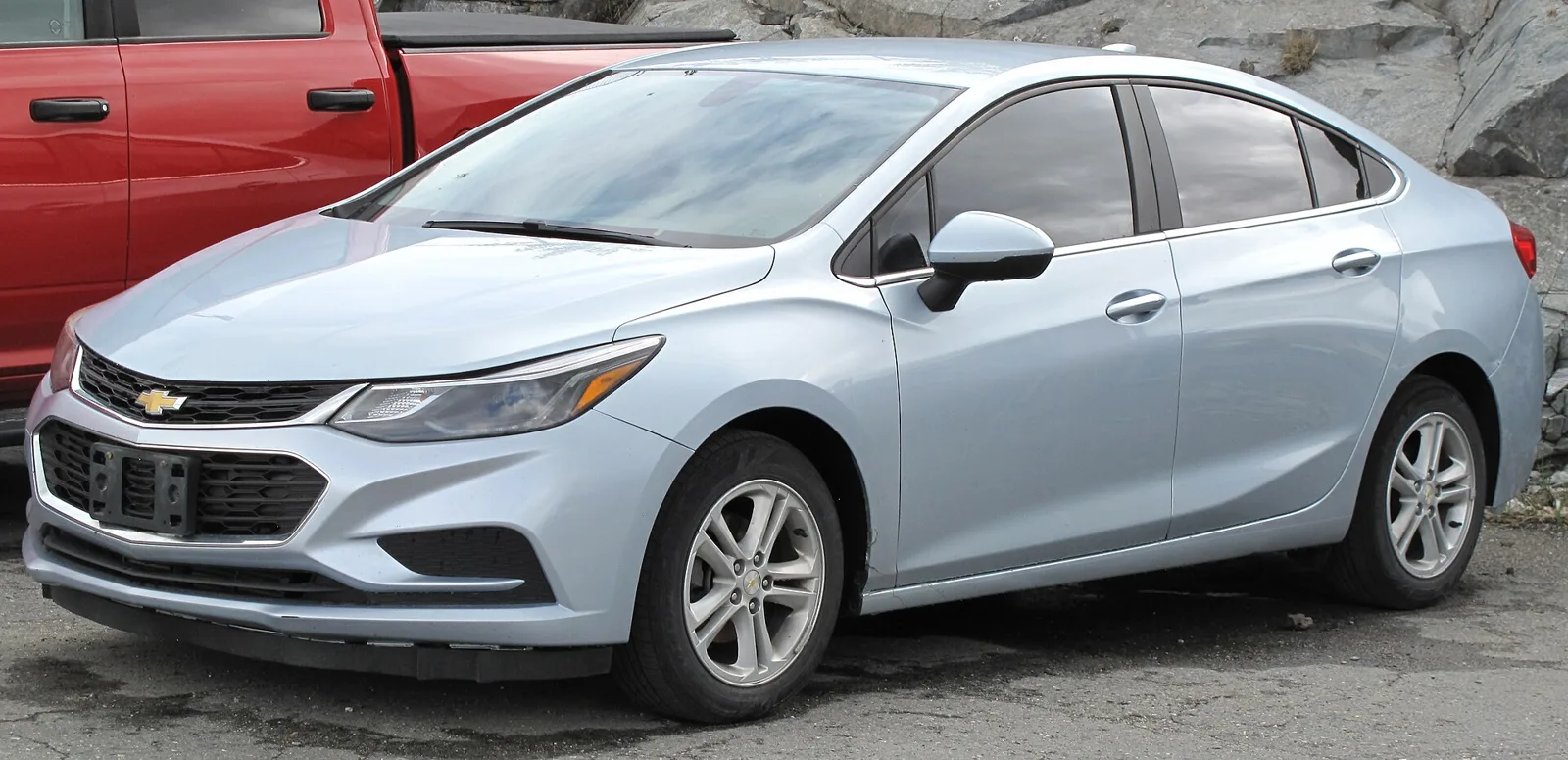
A compact that General Motors built across the world, from a Holden-engineered concept in 1999 to the South American plant that stopped making it at the end of 2023.
The Chevrolet Cruze was a compact car that General Motors built from 2008 to 2023. It was sold in Australia as the Holden Cruze from 2009, was assembled at Elizabeth from 2011, and its last production was in Argentina, ending on 29 December 2023.
The Chevrolet Cruze was a global compact that General Motors built from 2008 to 2023. It began life in South Korea as the Daewoo Lacetti Premiere, reached Australia as the Holden Cruze in June 2009, and ended in Argentina, the last plant to build it. Its story runs through several continents, a run of recalls and a set of racing titles.
What is the Chevrolet Cruze?
The Cruze was designed as a globally developed compact, offered first as a four-door sedan, with a five-door hatchback added from 2011 and a station wagon from 2012. It replaced several compact models, including the Chevrolet Optra, which was sold under various names internationally, the Chevrolet Cobalt in North America, and the Holden Astra in Australasia.
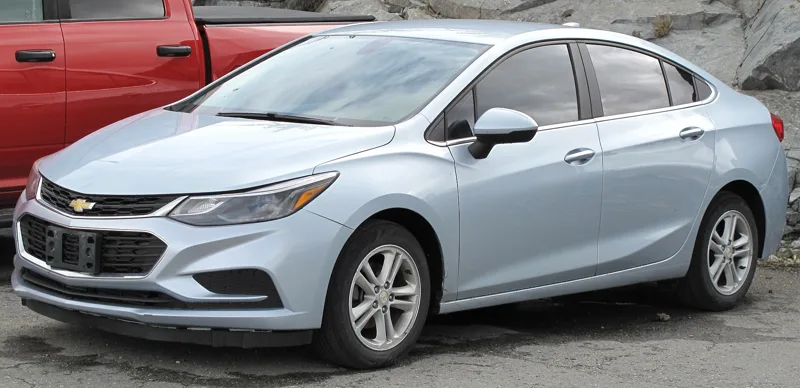
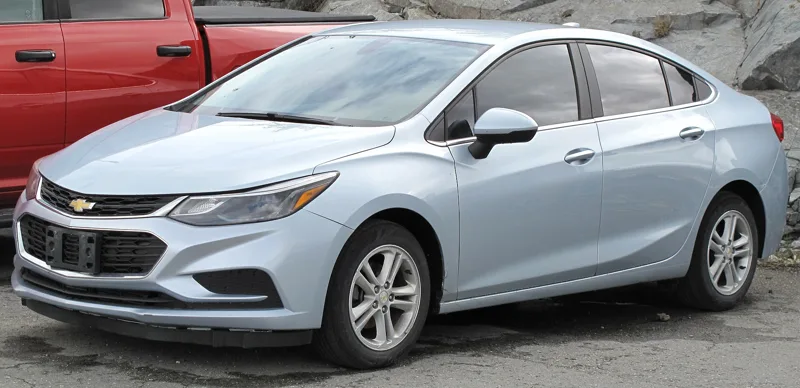
South Korean buyers first met it in 2008 as the Daewoo Lacetti Premiere. It adopted the Chevrolet name in 2011, when the Daewoo brand was discontinued. In Australasia it was sold from 2009 to 2016 as the Holden Cruze, and then as the Holden Astra Sedan, a sedan complement to the Astra family.
The Cruze was built across the world, but its Australian chapter began with a Holden-engineered concept and ended with a plant closure.
Where did the Cruze name come from?
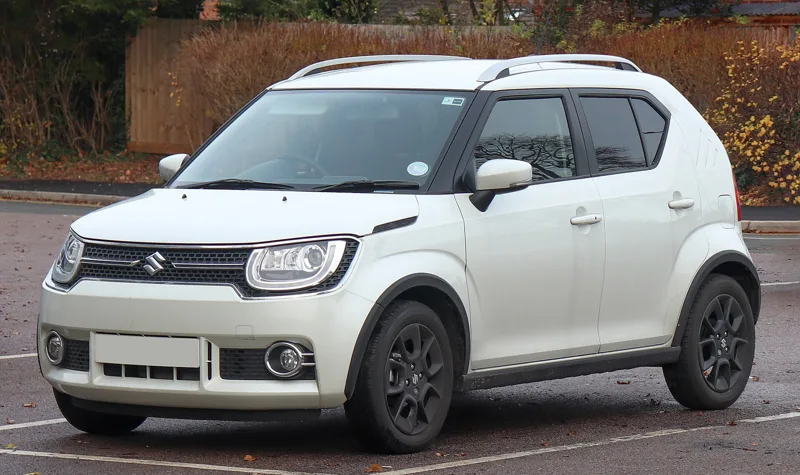
General Motors used the name Cruze before the global car appeared. The original was shown as the Chevrolet YGM1 concept at the 1999 Tokyo Motor Show, and it drew on the Suzuki Ignis, a five-door hatch sold as the Swift in Japan. Whatever the badge said, the concept came from GM's Australian arm, Holden.
Holden carried out most of the engineering on that first Cruze and devised the nameplate. The production car was revealed in October 2001 and was built by Suzuki in Japan, with Japanese sales beginning the following month. From 2002 to 2006 that generation was sold in Australia as a Holden and in New Zealand as a Chevrolet.
How was the global Cruze developed?
The 2008 J300 was developed to replace the Chevrolet Cobalt, the Daewoo Lacetti and the Holden Astra. South Korea's GM Daewoo team led much of the design work, and Opel contributed as well. The programme spanned 27 months and cost US$4 billion, and The car went through 221 prototypes, tested from Canada to Sweden and from China to Australia.
The front-wheel drive Delta II platform carried MacPherson struts at the front and a solid torsion beam at the rear. GM said the body structure was 65 percent high-strength steel. North American cars were reinforced around the engine compartment because they carried a larger engine than in other markets, and they used a more advanced rear suspension from the Opel Astra J.
Why did Holden build the Cruze in Australia?
Holden announced the car at the Melbourne International Motor Show in February 2009, and the Cruze reached dealers on 1 June 2009, replacing the Holden Viva. Holden launched it with a 1.8-litre petrol engine and an optional 2.0-litre turbodiesel, both mated to a five-speed manual or an optional six-speed automatic.
Local production started at the Elizabeth plant in South Australia in March 2011. The Australian government committed A$149 million to the programme from its Green Car Innovation Fund, and the South Australian government added a further A$30 million. Initial local content was put at 40 to 50 percent by retail value, with Holden planning to lift it over time.
The Series II sedan was revealed on 28 February 2011, with Prime Minister Julia Gillard attending to drive the first example off the line. It had new grille, bumper and lower air intake styling, and it introduced a turbocharged 1.4-litre engine that Holden called iTi, short for intelligent turbo induction.
What engines did the Cruze use?
Global cars used the 1.6-litre and 1.8-litre Family 1 inline-four engines, along with a 2.0-litre VM Motori turbodiesel marketed as VCDi. A 1.4-litre turbocharged Family 0 petrol was introduced for the United States in 2010. In 2011 a new 2.0-litre Family Z diesel replaced the earlier VCDi unit of the same size.
The second generation J400 used the 1.4-litre turbo in North America, rated at 153 hp (114 kW) and 177 lb ft (240 Nm). In Australia the J400 used a 1.4-litre turbo rated at 110 kW (150 hp) at 5,600 rpm, with 235 Nm (173 lb ft) at 1,600 to 4,000 rpm. A 2017 diesel in the United States used a 1.6-litre turbo-diesel with a nine-speed automatic.
The 2014 US Clean Turbo Diesel used a 2.0-litre Multijet engine with 148 hp (110 kW) and 258 lb ft (350 Nm). It started at $25,695 and was rated at 44 mpg on the highway and 27 in the city, but it sold weakly, at about 2 per cent of US models.
How safe was the Cruze?
The Australasian New Car Assessment Program awarded the Cruze five stars in May 2009, with 35.04 of 37 points. The China New Car Assessment Program gave five stars the following July. Euro NCAP also gave five stars, with 96 percent for adult protection and 84 percent for child occupants, although pedestrian protection rated only 34 percent.
In the United States the Insurance Institute for Highway Safety listed the Cruze as a 2011 Top Safety Pick, and the National Highway Traffic Safety Administration gave it five stars overall. The Cruze received a marginal rating in the small overlap test. In Latin America the most basic version received four stars for adults from Latin NCAP in 2011.
Which recalls affected the Cruze?
Consumer Reports found the Cruze scored the lowest in reliability among compact sedans in its first year. GM recalled 2,100 North American Cruzes in April 2011 after a report of the steering wheel separating from the column while moving. Holden also recalled 9,098 petrol-engined 2010 cars in Australia, and 485 in New Zealand, over a faulty fuel hose.
The largest campaign came in June 2012, when GM recalled 413,418 Cruzes built at Lordstown, Ohio, over an engine compartment fire risk. Models from 2011 and 2012, built between September 2010 and May 2012, were included, along with 9,547 Australian-built cars. In August 2013 another recall covered 292,879 Lordstown cars for a possible loss of power brake assist.
In March 2014 GM halted sales of 2013 and 2014 Cruzes with 1.4-litre engines, which were about 60% of the range, and later disclosed a faulty right-side axle shaft as the reason.
What was the second-generation Cruze?
The second-generation Cruze went on sale in the United States in early 2016, after engineering changes delayed it by a year. It had a new split grille and a fastback-like sloping roofline, and it offered a 1.4-litre turbocharged four-cylinder with 153 hp (114 kW). A five-door hatchback followed for the 2017 model year.
In Australia the second generation was sold as the Holden Astra, with a sedan in LS, LS+, LT and LTZ trims. At the Lang Lang Proving Ground south-east of Melbourne, Holden logged 100,000 kilometres of testing, which produced a firmer ride than the international car.
Did the Cruze race?
In 2009 the Cruze debuted in the World Touring Car Championship, where its naturally aspirated 2.0-litre car won six races in its first season. Chevrolet won the manufacturers' championship in 2010, 2011 and 2012, and Yvan Muller took the drivers' title in 2010 and 2011. In 2012 Rob Huff became champion ahead of Alain Menu and Muller.
In the British Touring Car Championship, Jason Plato won the drivers' title in 2010 with Chevrolet. In Scandinavia, Rickard Rydell won the 2011 Scandinavian Touring Car Championship for NIKA Racing. In Argentina, the Cruze debuted in the TC2000 in 2011, and Agustin Canapino won the title in 2016 and 2021 with the second-generation car. The second-generation Cruze also debuted in Stock Car Brasil in 2016.
How did GM reduce noise in the Cruze?
GM fitted an isolated four-point engine mount and placed sound damping material in the dashboard panel, luggage compartment, decklid, doors, carpet and headlining. The doors also used a triple-layer sealing system to cut noise.
The Cruze's body was 65 percent high-strength steel, and its front suspension used MacPherson struts. Its turning circle is 10.9 metres (36 ft) with hydraulically assisted rack-and-pinion steering.
When did the Chinese Cruze launch?
The Cruze launched in China on 18 April 2009 as a sedan built at GM India's Halol factory, with a five-speed manual or six-speed automatic and 1.6-litre or 1.8-litre engines. Hatchback models arrived there in 2013.
The Chinese sedan range was the 1.6 SL, 1.6 SE, 1.8 SE and 1.8 SX, with the two 1.8-litre models offered only with an automatic. Hatchback models arrived there in 2013 with 1.6-litre or turbocharged 1.6-litre engines.
What did the North American Cruze offer?
The US and Canadian Cruze entered limited production at Lordstown, Ohio, in July 2010 as a 2011 model. Full production began on 8 September 2010, and the car replaced the Chevrolet Cobalt on the same lines, with GM assigning three shifts to build it.
Trims were LS, LT, LTZ and Eco. The base LS had the 1.8-litre petrol, air conditioning and power locks, while the LT and LTZ used the 1.4-litre turbo. Eco models swapped the spare tyre and jack for a tyre inflator kit, which saved 12 kilograms (26 lb). Standard safety equipment included electronic stability control and ten airbags. From the 2012 model year the 1.4-litre turbo could also be ordered with a six-speed manual, and models without power front seats lost the front seat cushion tilt option.
Why was the Cruze hatchback a Holden project?
Holden in Australia was responsible for the design and development of the hatchback body variant, and the hatchback went on sale in Europe in mid-2011. The Australian-built hatchback arrived at the Elizabeth plant in late 2011, joining the sedan made there since March 2011.
In Europe the Cruze used 1.6-litre and 1.8-litre petrol engines and 2.0-litre and 1.7-litre diesels. In mid-2011 the 1.6-litre petrol gained power, rising from 113 bhp to 122 bhp when the hatchback arrived.
How did Cruze sales perform?
Cruze sales reached three million units worldwide in August 2014, 16 months after passing the two million mark. By April 2016, cumulative sales of cars carrying the Cruze name had exceeded four million worldwide.
Production did not end in one place. The Lordstown plant in Ohio built its last sedan on 6 March 2019, and it was closed and sold. China ended production in February 2020, after the Chevrolet Monza sold more strongly there. Argentina ended production at the end of 29 December 2023, and that closed the Cruze's run.
Specifications
| Generation | Launch | Engine highlight | Market note |
|---|---|---|---|
| J300 (first) | 2008 | 1.6-litre and 1.8-litre Family 1 inline-four | Replaced Cobalt, Lacetti and Holden Astra |
| J300 Australia | 1 June 2009 | 1.8-litre petrol, 2.0-litre turbodiesel | Holden Cruze, made at Elizabeth from March 2011 |
| J400 (second) | Early 2016 North America | 1.4-litre turbo, 153 hp (114 kW) | Holden Astra in Australia |
How did the Cruze end in Australia?
Holden ended manufacturing of the Cruze at its Elizabeth plant on 7 October 2016. The Astra hatchback took over the line, alongside a restyled sedan renamed the Astra Sedan.