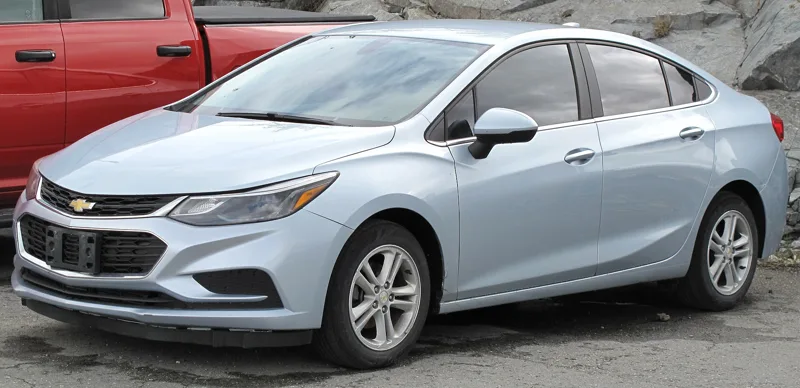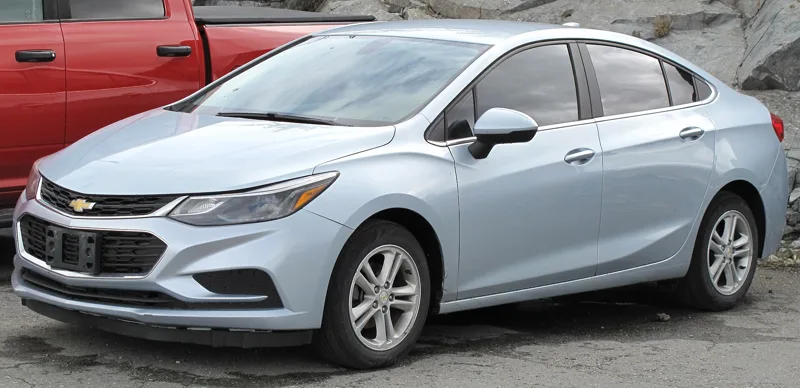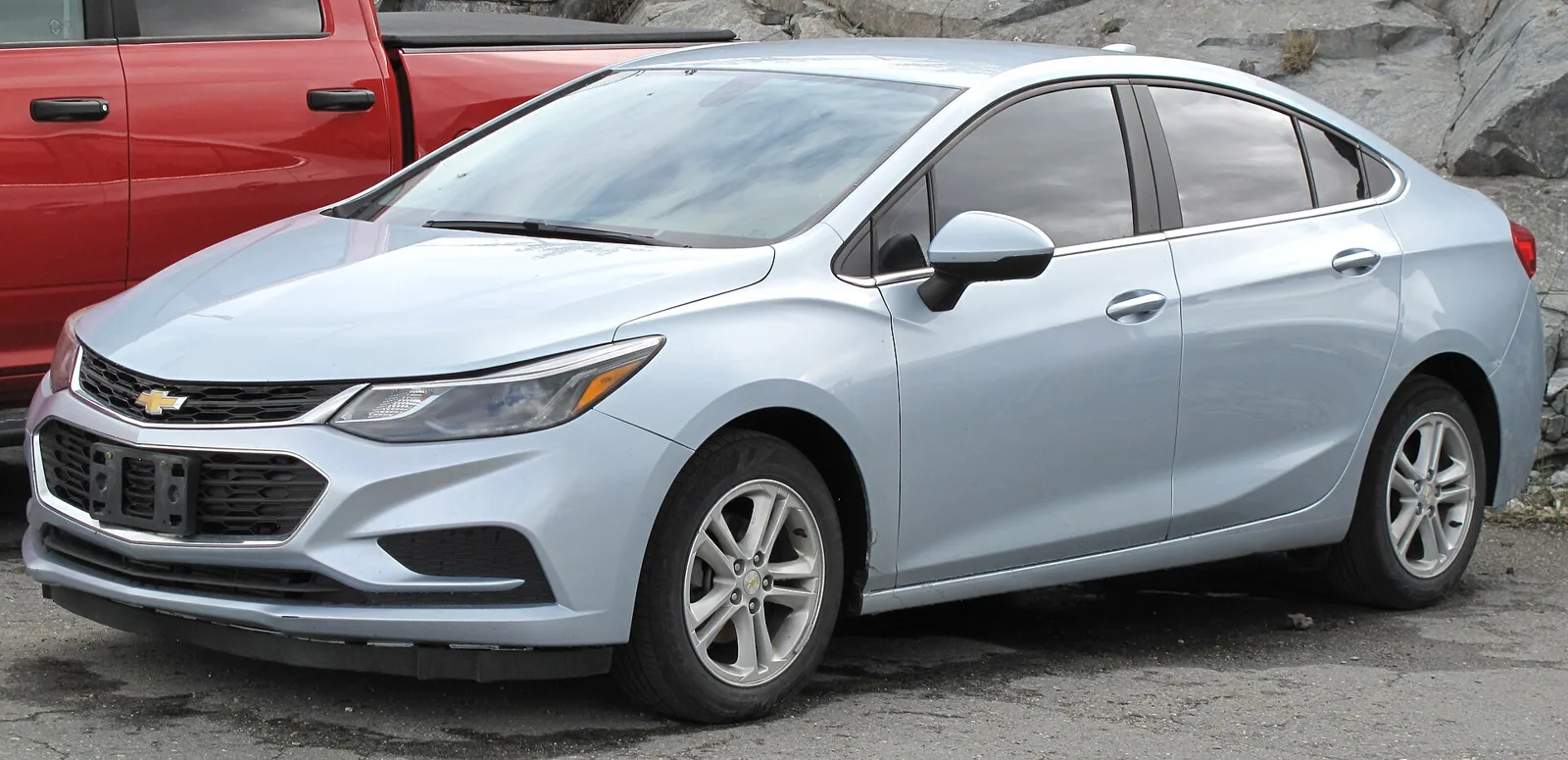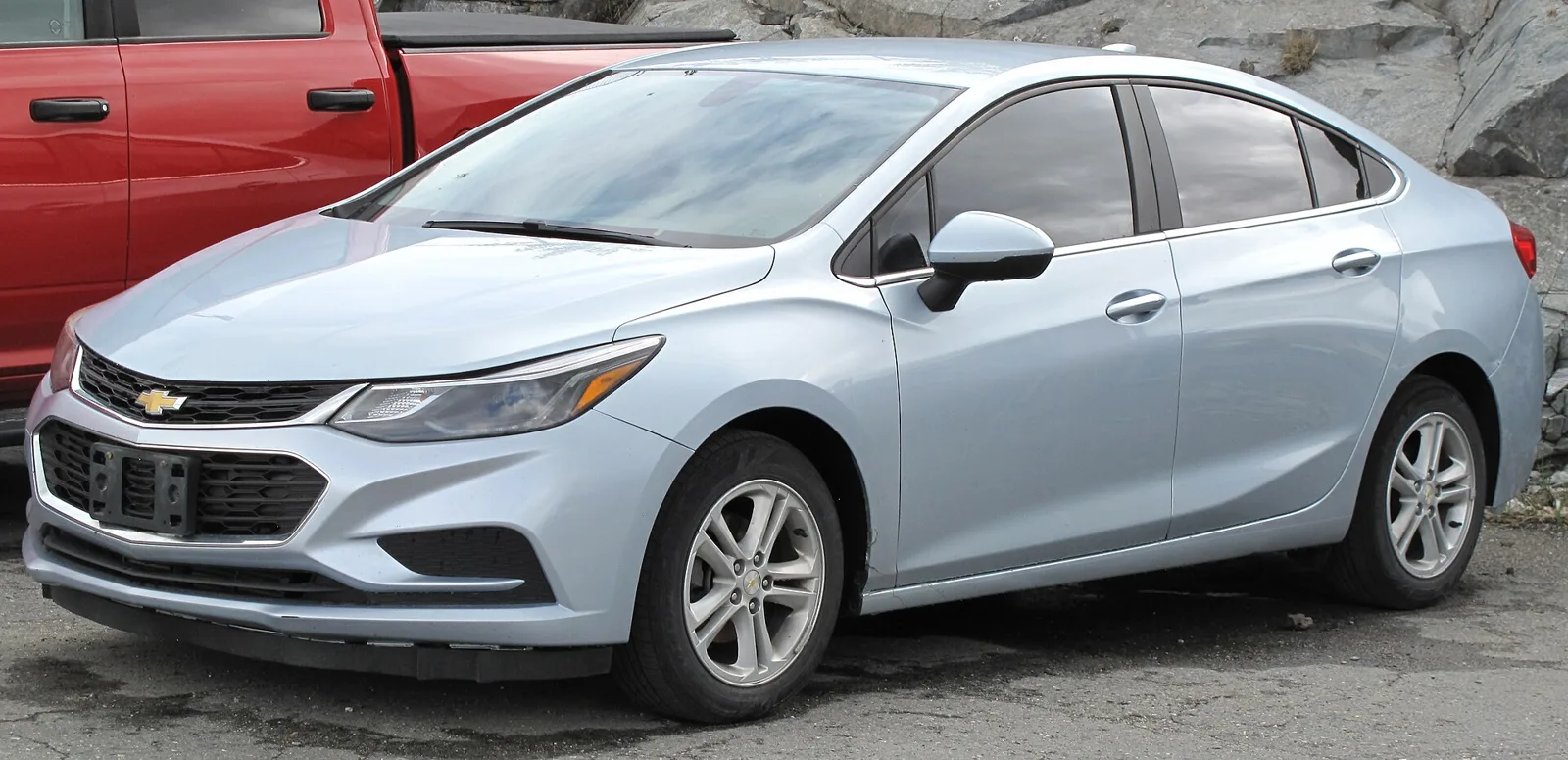
A General Motors compact that won top crash marks and then struggled with recalls, set against Toyota's eleventh-generation Corolla, which sold across Asia, Australasia and North America.
The Chevrolet Cruze was a General Motors compact built from 2008 to 2023 that earned five stars from ANCAP in 2009. The Toyota Corolla E170/E180, the eleventh generation, was sold internationally from 2013 to 2024, and its facelifts added airbags and stability control.
The Chevrolet Cruze and the Toyota Corolla E170/E180 both competed in the compact sedan segment across Asia-Pacific markets, and both had strong crash ratings. The Cruze, built by General Motors from 2008 to 2023, earned five stars from ANCAP and Euro NCAP but later faced a run of large recalls. The Corolla, the eleventh generation of Toyota's long-running compact nameplate, was sold from 2013 to 2024 across ASEAN, Australasia, the Middle East and North America.
Why were these compact sedans compared?
In Australasia the two cars met head on. The Holden Cruze was sold there from 2009 to 2016, and the Corolla E170 served ASEAN, Australasia, the Middle East, South Asia and North America as its eleventh-generation sedan.
The Cruze replaced the Chevrolet Cobalt, the Daewoo Lacetti and the Holden Astra, while the Corolla Altis name was used across much of Asia. Both ended their production runs as the market shifted towards SUVs.
A General Motors compact with strong crash marks and a bruising recall record, set against a Toyota Corolla that sold for longer across more markets.
Where did each car come from?
General Motors introduced the Cruze in 2008, mainly developed by GM Korea. It was first released in South Korea in 2008 as the Daewoo Lacetti Premiere, and it took the international Chevrolet Cruze name in 2011, when the Daewoo brand was discontinued.
The Cruze was a global programme, with GM Daewoo leading design and engineering alongside GM's German-based Opel division. It spanned 27 months at a cost of US$4 billion. GM ran 221 prototypes through testing across seven countries, from Sweden and the United Kingdom to Australia and the United States.
Toyota's E170/E180 was the eleventh generation of the Corolla and sold internationally from 2013 to 2024. The North American E170 debuted first, while Japan and Hong Kong received a smaller E160 instead, and the E170 family used Toyota's New MC platform rather than the E160's B platform.
The Corolla's wheelbase grew by 100 mm (3.9 in) over the previous generation. Its regional E170 variant was produced mainly in Thailand, Taiwan and North America, and it was marketed as the Corolla Altis across much of Asia.
How did the platforms differ?
The Cruze sat on the front-wheel drive GM Delta II platform, with a body structure that was 65% high-strength steel. Its front suspension used MacPherson struts, and the rear used a solid torsion beam axle, a cheaper choice than the multi-link rear used by some more expensive rivals.
GM adapted the North American Cruze from the global platform, reinforcing the engine compartment for the larger engine that the American car used. Steering was hydraulically assisted outside North America and electric in the US, with a turning circle of 10.9 metres (36 ft).
The Corolla used the New MC platform, and the E170 kept a conventional torsion-beam rear suspension across all of its trims. Its different body and electrical architecture set it apart from the E180 built on the same platform.
Both cars were built for multiple markets. The Cruze was built in South Korea, Russia, China, India, Vietnam, Kazakhstan, Thailand, Brazil and the US, while the Corolla E170 was built mainly in Thailand, Taiwan and North America.
The Cruze body family grew over time. A five-door hatchback concept was shown at the Paris Motor Show on 1 October 2010, with sales in Europe starting in mid-2011, and Holden in Australia handled the design and development of that hatchback. The station wagon, unveiled at the Geneva Motor Show in February 2012, offered load space from about 500 litres (20 cu ft) up to nearly 1,500 litres (50 cu ft) with the rear seats folded.
Which engines did the two cars use?
The Cruze came with a 1.6-litre Family 1 inline-four and a 1.8-litre version of the same engine, plus a 2.0-litre VM Motori turbodiesel marketed as VCDi. All three paired with a five-speed manual or an optional six-speed automatic with Active Select.
In the US the Cruze gained a 1.4-litre turbocharged Family 0 petrol engine in 2010, and the 1.8-litre there was later upgraded to a standard six-speed manual. In 2011 a new 2.0-litre Family Z diesel replaced the earlier VM unit, and Chinese models gained a turbocharged 1.6-litre with a six-speed manual from late 2011.
The Corolla in Indonesia used only the 1.8-litre Dual VVT-i when it launched in January 2014, dropping the 2.0-litre engine because of small sales. Singapore used a 1.6-litre 1ZR-FE with a seven-speed Super CVT-i, while Thailand offered a 1.8-litre 2ZR-FBE flexi-fuel engine and CNG-powered 1.6-litre versions.
In India the Corolla Altis ran a 1.8-litre 2ZR-FE petrol and a 1.4-litre D-4D diesel, and the Gulf states used a 1.6-litre 1ZR-FE or a 2.0-litre 3ZR-FE depending on the market. Latin NCAP tested the most basic Latin American Cruze, and the Corolla range varied widely from market to market.
Corolla launches across Asia
Malaysia launched the Altis in January 2014 in three forms, the 1.8 E, the 2.0 G and the 2.0 V, with a seven-speed sequential CVT standard across the range. In November 2014 the 2.0 G was replaced by a 1.8 G, and the car was refreshed again in December 2016.
Singapore began selling the Altis on 10 January 2014 with only the 1.6-litre 1ZR-FE and a seven-speed Super CVT-i. It was later split into Classic and Elegance trims, and by the mid-2017 facelift every trim had seven airbags and standard stability control.
Thailand unveiled its Altis on 14 January 2014 in seven grades, and it was the only market to offer the full range, because the plant there built cars for several export markets. Thai buyers could also choose CNG-powered 1.6-litre versions, while the E Sport special edition added an aero body kit and 17-inch alloys.
Pakistan's Toyota Indus launched the eleventh-generation Corolla in July 2014 with eight trims. The base XLi lacked ABS, power mirrors, power windows and central locking, and the 2020 arrival of the Toyota Yaris led Indus to discontinue the 1.3-litre variants.
Specifications side by side
| Specification | Chevrolet Cruze | Toyota Corolla (E170/E180) |
|---|---|---|
| Launch | 2008 globally; Holden Cruze in Australasia 2009 | Sold internationally from 2013 |
| Body styles | Sedan; five-door hatchback from 2011; station wagon from 2012 | Sedan (E170); smaller E160 for Japan and Hong Kong |
| Platform | GM Delta II, front-wheel drive | Toyota New MC platform |
| Rear suspension | Solid torsion beam axle | Torsion beam on all E170 trims |
| Engines | 1.6 and 1.8-litre Family 1; 1.4-litre turbo (US); 2.0-litre VCDi diesel | 1.6-litre 1ZR-FE; 1.8-litre 2ZR-FE or 2ZR-FBE; 2.0-litre 3ZR-FE in the Gulf |
| Transmissions | Five-speed manual or six-speed automatic | Six-speed manual; seven-speed CVT-i in several markets |
| ANCAP | Five stars, 35.04 of 37 points (May 2009) | Not given |
| Euro NCAP | Five stars: 96% adult, 84% child, 34% pedestrian | Not given |
| IIHS | 2011 Top Safety Pick; marginal small overlap | Not given |
| Recalls | 413,418 cars in 2012; 292,879 in 2013 | Not given |
| Production ended | South Korea 2018; US and Mexico 2019; China 2020; Argentina 2023 | E170 India production ended 31 March 2020; series ended 2024 |
How did the two cars fare in crash tests?
The Cruze earned strong crash marks in several markets. ANCAP gave it five stars in May 2009 with 35.04 of a possible 37 points, and China's C-NCAP followed with five stars in July 2009.
Euro NCAP also gave the Cruze five stars, with 96% for adult protection and 84% for child protection. Its pedestrian score was much lower at 34%, which is a useful caveat for anyone buying one for city use.
In the US the Cruze earned good ratings in the IIHS front moderate overlap, side, rear and rollover tests and was named a 2011 Top Safety Pick. It received only a marginal rating in the small overlap test, and NHTSA gave it five stars overall.
The Corolla's safety story runs through its facelifts. Malaysia's December 2016 facelift brought seven airbags, ABS with EBD and brake assist, vehicle stability control and ISOFIX child seat anchors. Singapore's 2017 facelift also added seven airbags and made VSC standard on every trim.
What reliability and recall problems did the Cruze have?
Consumer Reports found that the Cruze had the lowest reliability score among compact sedans in its first year. The car's early years were then marked by a series of recalls that tested GM's response, and the problems were not confined to one plant, since both Lordstown and the Australian-built cars were affected.
In April 2011, 2,100 Cruzes in North America were recalled after the steering wheel could break away from the column while moving. In June 2012, GM recalled 413,418 cars built at Lordstown, Ohio, over a risk of engine compartment fires caused by fluids trapped near the engine.
The same fire risk prompted a recall of 9,547 Australian-built Cruzes, although no engine fires were reported in Australia. GM then recalled 292,879 Lordstown cars in August 2013 for a microswitch fault that could cut brake assist.
GM said it was aware of 27 low-speed crashes that might have involved the brake fault. In March 2014 it halted sales of 2013 and 2014 Cruzes with the 1.4-litre engine, about 60% of the cars, first without a stated reason, then citing a faulty right-side axle shaft.
How did each car evolve over its life?
The Cruze received a mild facelift for 2013, unveiled at the 2012 Geneva Motor Show, with new fog lamp vents, minor grille and headlamp updates, new alloy wheels and the MyLink entertainment system. Chevrolet unveiled a refreshed 2015 model at the New York show on 12 April 2014, with an angular nose like the Malibu's.
The Corolla E170 went through several facelifts. Indonesia's facelift came on 16 January 2017 with seven airbags, and the India facelift in March 2017 raised the airbag count from two to seven. India's production ended on 31 March 2020, because the model would not meet the Bharat Stage 6 standard.
The Cruze story ended with restructuring at GM Korea. The Cruze's South Korean production stopped in 2018 as part of GM Korea's restructuring, and the Holden Astra Sedan supply to Australasia ended with it, while the Corolla series finished in 2024.
Which car suits which buyer?
On the figures, the Cruze suits a buyer who values a five-star record from ANCAP and Euro NCAP, a choice of diesel or turbo power and a body style that later included a wagon and a hatchback. The Corolla suits a buyer who wants a Toyota with a long production run, a choice of manual or CVT, and a family of facelifts that added airbags and stability control.
The Cruze's early years carry the heavier recall record, with a steering recall, a fire recall and a brake recall. A buyer looking at a used Cruze should check whether those campaigns were completed on the car in question.
Neither car is the clear winner. The Cruze has the stronger published crash scores, while the Corolla has the broader spread of engines and the longer run of facelift updates. The decision rests on whether a buyer weighs crash scores or the record of the car over its life.