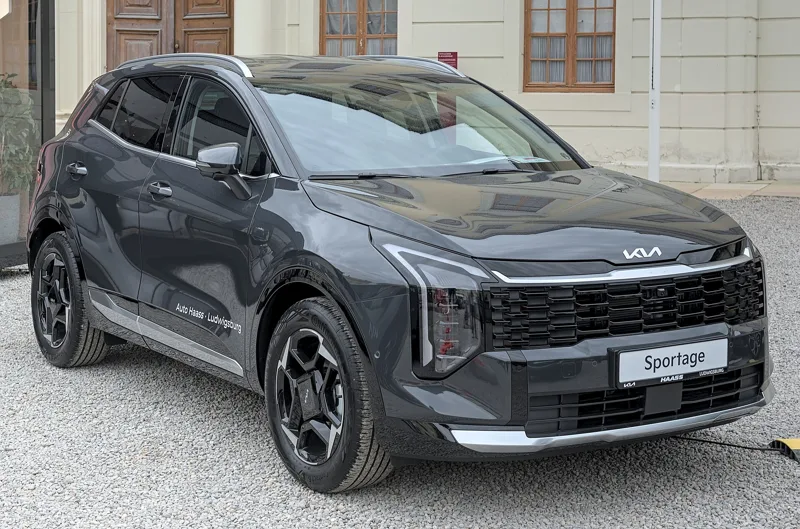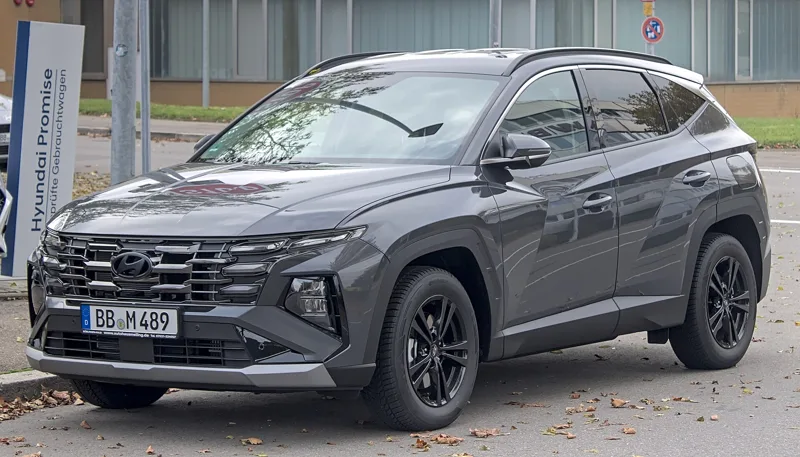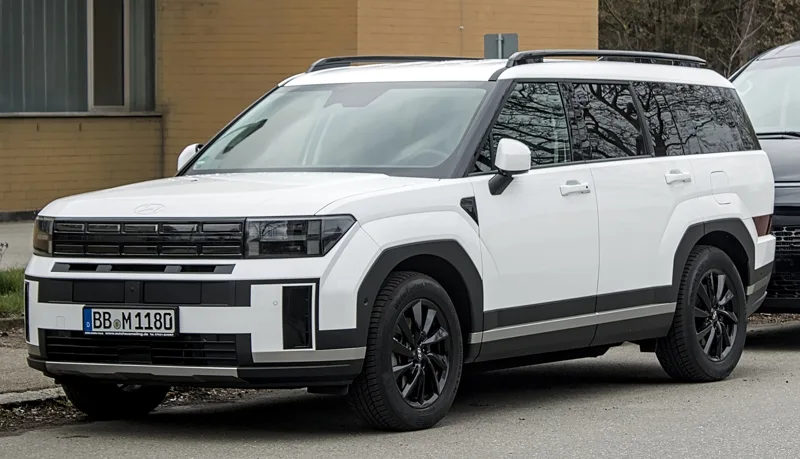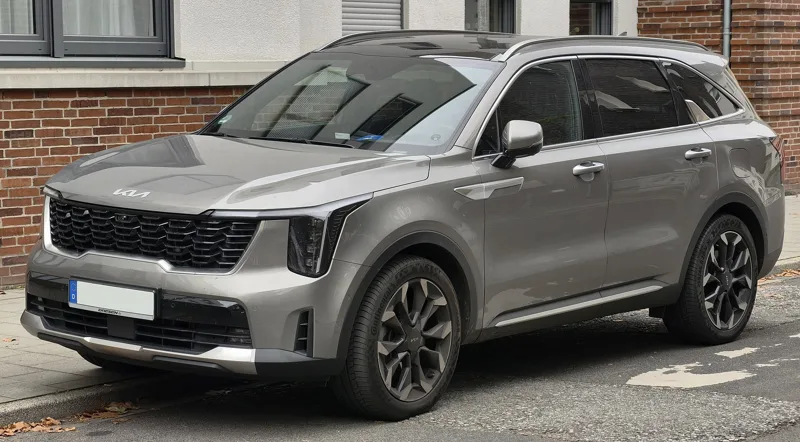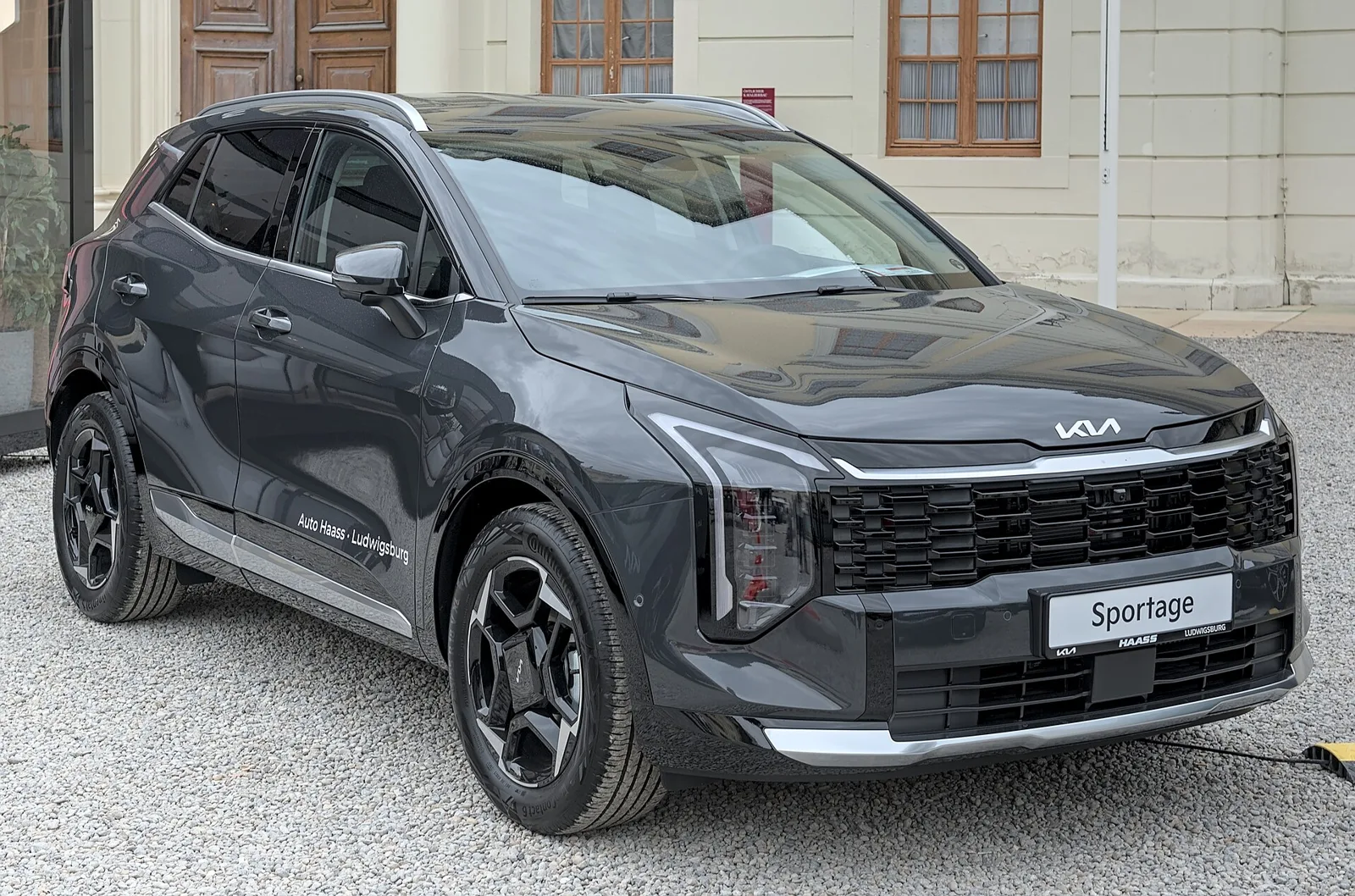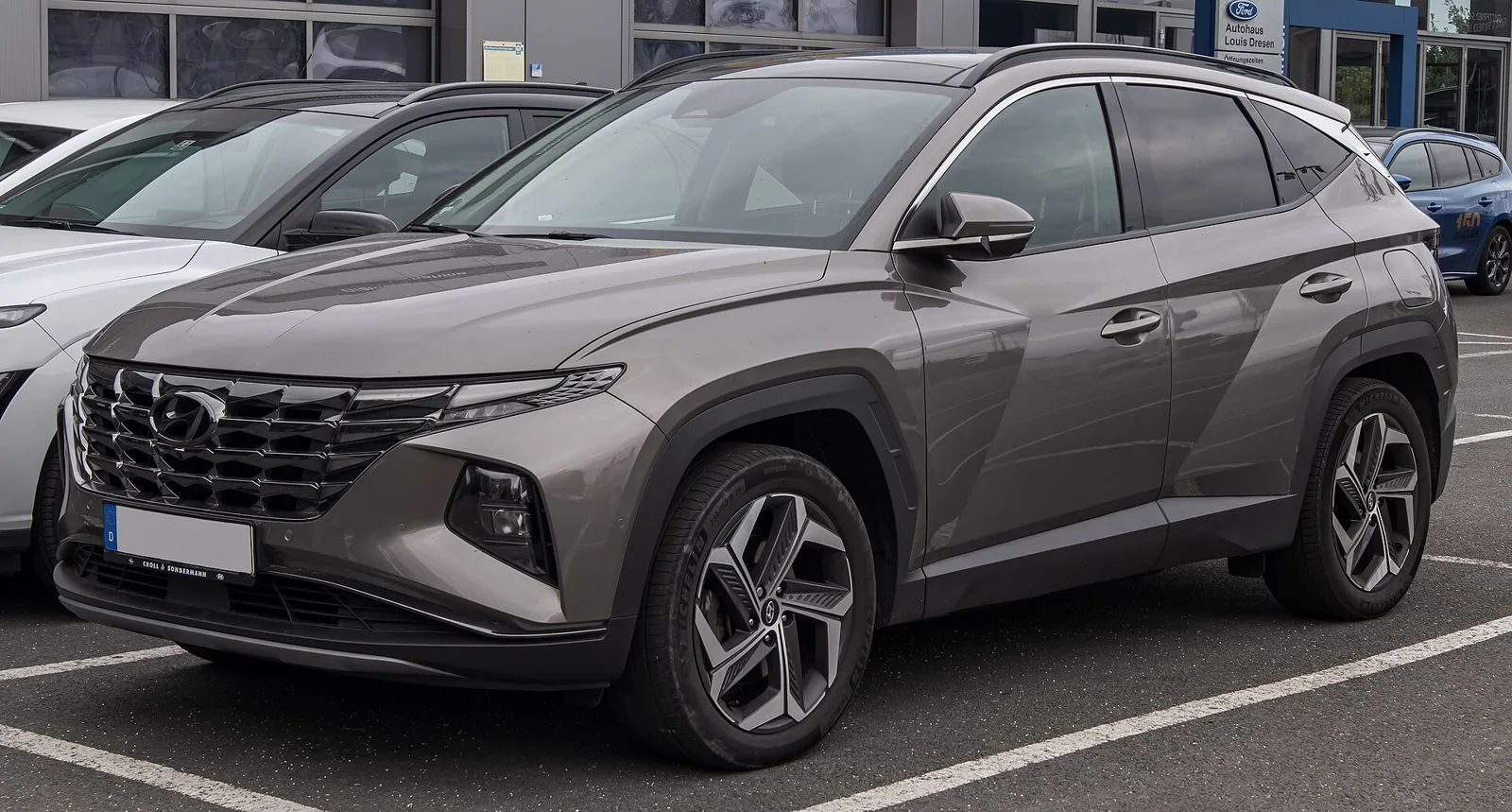
The Tucson and the Sportage have shared platforms and engines for much of their histories, but each brand has taken its crossover in a different direction.
The Hyundai Tucson is a compact crossover SUV that Hyundai has built since 2004 and that has sold more than 7 million units. The Kia Sportage is a compact crossover that Kia has built since 1993 across five generations, sharing platforms and engines with the Tucson for much of its history.
The Hyundai Tucson and the Kia Sportage are close relations, sharing platforms and engines through much of their histories. The Tucson is Hyundai's best-selling model, with more than 7 million units sold since its 2004 launch, while the Sportage has been Kia's best-selling model globally since 2016.
Where did the Tucson come from?
The first Tucson arrived in 2004, once its name had been revealed in November 2003. Hyundai pitched it as a more compact choice than the Santa Fe, and it shared an Elantra-based platform with the second-generation Kia Sportage that followed.
In the US, the first-generation Tucson came in GL, GLS, SE and Limited trims for 2007 models, with the Limited formerly called LX. The GLS and Limited used a 2.7-litre V6, while the GL came only with a 2.0-litre four. Standard equipment included six airbags, electronic stability control, alloy wheels and premium cloth seats.
Changes followed quickly. In 2006 the LX became the Limited, with colour-coded cladding and automatic climate control, and in 2007 the GL and GLS were renamed GLS and SE to match the naming used across Hyundai's range.
The name refers to Tucson, Arizona, and about 1.4 million of the car's more than 7 million sales have been in Europe. Development was shared with Kia from the first generation onward, so the two crossovers have often used the same platforms and engines. That shared engineering is the key to understanding how the two cars relate, even where their styling and trim packages differ.
Hyundai also built a Tucson Fuel Cell Electric Vehicle as a test car for its second-generation hydrogen fuel cell. It had an 80 kW electric motor, a range of 300 kilometres (186.4 mi) and a top speed of 150 km/h (93 mph). The car first appeared at the 2005 Los Angeles show, and in 2008 it covered 4,300 miles (6,900 km) on the Hydrogen Road Tour.
The first Tucson took the Best New Crossover prize at the Canadian Car of the Year awards for 2005. It was later named one of the most reliable vehicles in the 2009 Consumer Reports survey, and in Japan it was sold as the Hyundai JM until November 2009.
Two crossovers that began on shared ground, and that now chase different buyers in different markets.
How did the Sportage start out?
The Kia Sportage has been built since 1993 across five generations, and it began as a compact SUV on a body-on-frame chassis. It debuted in Asia in July 1993, with European sales beginning two years afterwards.
The first Sportage was developed on a Mazda Bongo base platform and shared engines, transmissions and differentials with Mazda vehicles. That work took place while Kia was tied to Ford and Mazda, which shaped how the early car was engineered.
Buyers could pick a five-door SUV body or a three-door soft-top convertible. Kia also built a stretched Sportage Grand, which added 305 mm (12.0 in) of body length and lifted luggage capacity from 1,570 to 2,220 litres.
The first generation sold in low numbers, even in South Korea, and it was discontinued there in 2002. Its ANCAP crash result of one star out of five was the lowest possible, with the seat belts failing and the vehicle structure collapsing.
The Sportage returned for the 2005 model year after a two-year hiatus, again sharing an Elantra-based platform with the first Tucson. Fans of the original and some critics said it had grown considerably larger and lost its off-road ability, but the 173 PS (127 kW) V6 proved popular with buyers.
How did the Tucson's second generation change the names?
The second-generation Tucson was sold as the ix35 in most markets beyond Korea and North America, including Europe, Australia and China. The car debuted at the 2009 Frankfurt show after a 36-month project that cost 280 billion won (roughly US$225 million).
Designer Cha Il-Hoei drew the ix35 in 2007 with input from former BMW designer Thomas Burkle, and the look grew out of the ix-onic concept. The car used the company's flowing design language, with sweeping, coupe-like lines and a premium feel.
In Australia the ix35 came in Active, Elite and Highlander trims. The 2.0-litre Theta II petrol drove the front wheels on the Active and Elite, while the 2.4-litre Theta II and a 2.0-litre R-series diesel went on the Elite and Highlander.
In North America the second generation kept the Tucson name with GL, GLS and Limited trims. The new GL arrived for 2011 with a 2.0-litre four and a choice of five-speed manual or six-speed automatic, replacing the 2010 GLS as the base trim.
The Tucson name returned with the third generation, and Hyundai dropped the ix35 nameplate everywhere. The third-generation TL was previewed in February 2015 and debuted in Geneva on 3 March 2015, reaching showrooms in the second half of that year as a 2016 model.
Which engines did each car offer?
The second-generation Tucson's European diesel was a 2.0-litre unit rated at 184 hp (187 PS; 137 kW), with fuel use of 6.5 litres per 100 km, or 15.4 km per litre (36.2 mpg-US). The 2.0-litre petrol made 166 hp (168 PS; 124 kW) and used 8.5 litres per 100 km, or 11.8 km per litre (27.7 mpg-US).
North American cars came with a 2.0-litre four rated at 165 hp (167 PS; 123 kW), alongside a 2.4-litre rated at 176 hp (178 PS; 131 kW) with a six-speed automatic. Hyundai said the 2.4-litre made almost the same power as the old V6, while returning 20% better fuel economy than the old four.
The third-generation North American Tucson for the 2016 model year offered a 2.0-litre direct-injection four, with 164 hp (166 PS; 122 kW) and torque of 151 lb-ft (205 N-m). The alternative was a 1.6-litre turbo, with 195 lb-ft (264 N-m) of torque and 175 hp (177 PS; 130 kW), paired with a seven-speed dual-clutch.
The Sportage's third generation used a 2.0-litre Hyundai R diesel rated at 184 hp (137 kW), and the Theta T-GDi petrol engine, also at 2.0 litres, completed the line-up.
In North America the fourth-generation Sportage came with a naturally aspirated 2.4-litre four, producing 181 hp (135 kW), and a 2.0-litre turbo rated for 240 hp (179 kW). Both engines were mated to a six-speed automatic, with torque figures of 175 lb-ft (237 N-m) and 260 lb-ft (353 N-m).
| Feature | Hyundai Tucson | Kia Sportage |
|---|---|---|
| Launch | 2004, after a November 2003 name announcement | Asia in July 1993, Europe two years later |
| Early platform | Elantra-based, shared with the second-generation Sportage | Mazda Bongo base for the first generation |
| Current generation | Third generation TL, from 2015 | Fifth generation NQ5, unveiled 8 June 2021 |
| Best-selling status | Hyundai's best-selling model, more than 7 million units | Kia's best-selling model globally since 2016 |
| Turbo option, North America | 1.6-litre turbo, 175 hp (177 PS; 130 kW), 2016 | 2.0-litre turbo, 240 hp (179 kW), fourth generation |
| Facelift timing | 2018 facelift for the 2019 model year | 2024 facelift for the 2026 model year |
How did the third and fourth generations differ?
The third-generation Tucson is 65 mm longer and 30 mm wider than its predecessor, on a wheelbase stretched by 30 mm. Seats-up cargo capacity grew from 465 to 513 litres, so the car gained practical room alongside its larger footprint.
The third generation also brought lane departure warning, blind spot detection and automatic braking for pedestrians and cars. A dual-clutch automatic and Hyundai Active Cornering Control were offered as well, and the North American 2016 range came in SE, Eco, Sport and Limited trims.
The Sportage's third generation, known as the SL series, reached Asian and European markets in April 2010, North and Central America in August 2010 and Australia in October 2010, all for the 2011 model year. It won the 2011 Car of the Year award in Slovakia and topped the JD Power 2012 survey, scoring five stars across all categories.
For the 2014 model year the Tucson gained GDI Theta II engines, LED lights and new alloy designs. The Sportage's 2014 facelift brought a reworked Kia badge on a new grille, LED tail lights and new alloys.
The Sportage's fourth generation was unveiled at the Frankfurt Motor Show in September 2015 and reached markets in 2016. Kia said the contrast between sharp edges and smooth surfaces was inspired by modern fighter jets.
The fourth-generation range was broad. Petrol engines were a 1.6-litre, a 2.0-litre and a 2.4-litre, and the diesel was a 2.0-litre R-series turbo with 400 N-m (295 lb-ft) of torque and 135 kW (184 PS) of power. A 1.6 T-GDi turbo petrol offered 130 kW (177 PS) with 265 N-m (195 lb-ft) of torque.
In North America the 2019 facelift for the early 2020 model year reworked the headlights and bumpers, and its nose borrows from the Stinger. A sportier S model was added, priced between the LX and EX, and equipment levels rose across the range.
What did the safety tests show?
The second-generation Tucson earned the Insurance Institute for Highway Safety (IIHS) Top Safety Pick award in 2010. The second-generation Sportage earned five stars from the National Highway Traffic Safety Administration, but the IIHS judged it acceptable, though only for frontal and side protection, and poor for roof strength.
The third-generation Sportage was rated five stars by Euro NCAP in 2010 and received a Top Safety Pick from the IIHS. The roof test became tougher in 2010, when a vehicle's roof had to withstand three times its weight for the acceptable rating, compared with the federal requirement of 1.5 times.
The fourth-generation Sportage earned five stars from Euro NCAP in 2015, and the 2017 model received an IIHS Top Safety Pick. The 2022 Sportage's top trim also received the award.
Latin America told a different story. The Sportage built in Korea, in its simplest Latin American specification, with two airbags and no electronic stability control, scored 0 stars from Latin NCAP 3.0 in 2021.
The first-generation Tucson's Euro NCAP result in 2006 was 4 stars for adults, 3 for toddlers and 1 for pedestrians.
How did the fifth-generation Sportage and the Tucson facelifts compare?
Kia unveiled the fifth-generation Sportage on 8 June 2021 and published its specifications a month later. It was built on Kia's N3 platform, with two body lengths and wheelbases depending on the market.
The long-wheelbase version is said to offer 80 mm more legroom and 7 mm more headroom, according to Kia. The model also has a Terrain Mode that adjusts settings for snow, mud and sand, plus electronically controlled suspension on some versions.
Hybrid and plug-in hybrid versions gained an E-Handling system, and the automatic gets a compact shift-by-wire dial. The model also has autonomous emergency braking and lane centering assist.
A facelift followed in late 2024, released on 5 November for the 2026 model year. Changes included a new 2-spoke steering wheel, a curved digital cockpit with a 12.3-inch touchscreen and an 8-speed automatic in place of the 7-speed dual-clutch on the 1.6 T-GDi.
The Tucson's 2018 facelift was shown at the New York International Auto Show for the 2019 model year. It added a cascade grille, a reshaped hood and tailgate, a rectangular fuel door and updated LED headlights.
The Sportage also reached new markets recently. It launched in Malaysia on 4 December 2024, assembled locally at the Inokom plant in Kulim, and in Pakistan on 29 January 2025 as the Sportage L.
Which buyer suits each car?
Neither car has a clear overall winner, so the right choice depends on the buyer's market and priorities. A buyer who wanted Hyundai's best-selling model would look at the Tucson, while one who wanted Kia's best-selling model globally would look at the Sportage.
The two cars share platforms and engines through much of their history, so buyers often compare trims and equipment rather than underlying engineering. For North American buyers, the 2016 Tucson offered four trims and a 1.6-litre turbo, while the fourth-generation Sportage offered three trims and a 2.0-litre turbo, plus an S model after 2019.
The Tucson moved from a more compact alternative to the Santa Fe into Hyundai's best-selling model. The Sportage moved from a body-on-frame SUV into a car-based crossover, and it is now Kia's best-selling model globally.