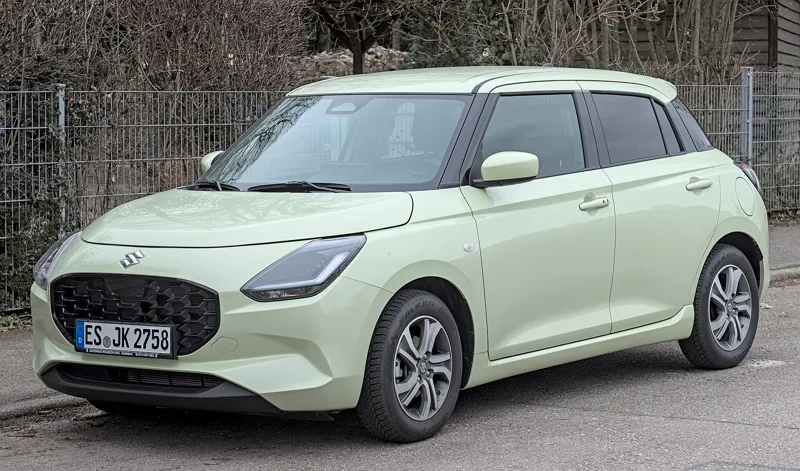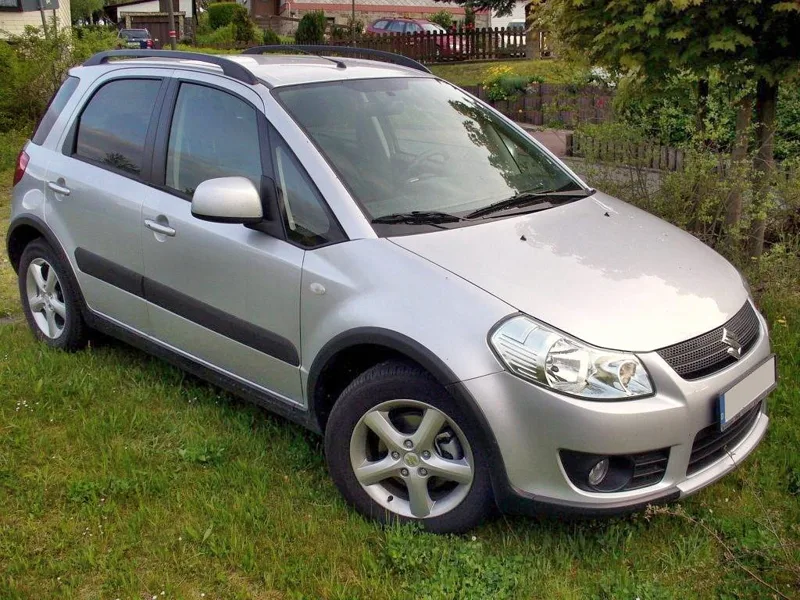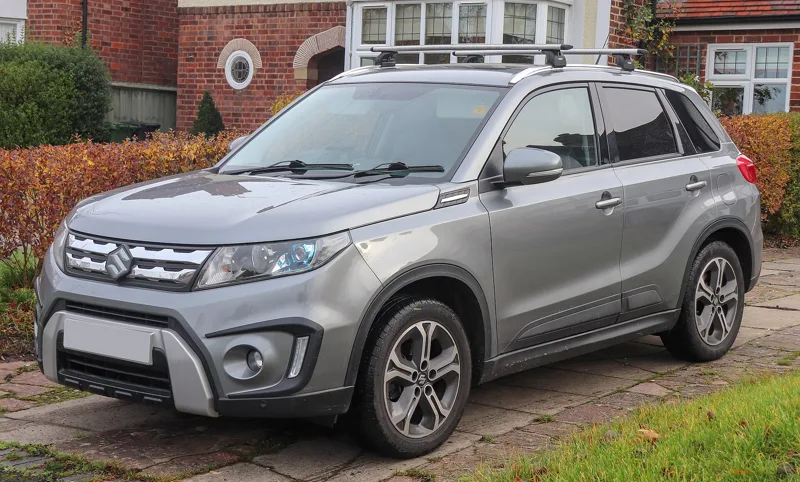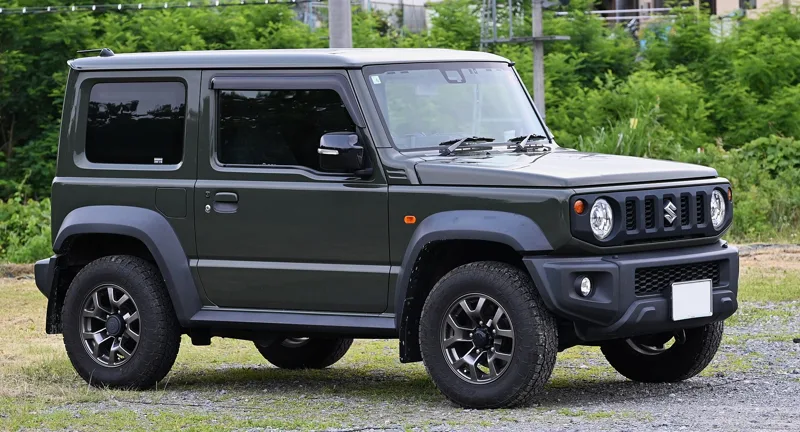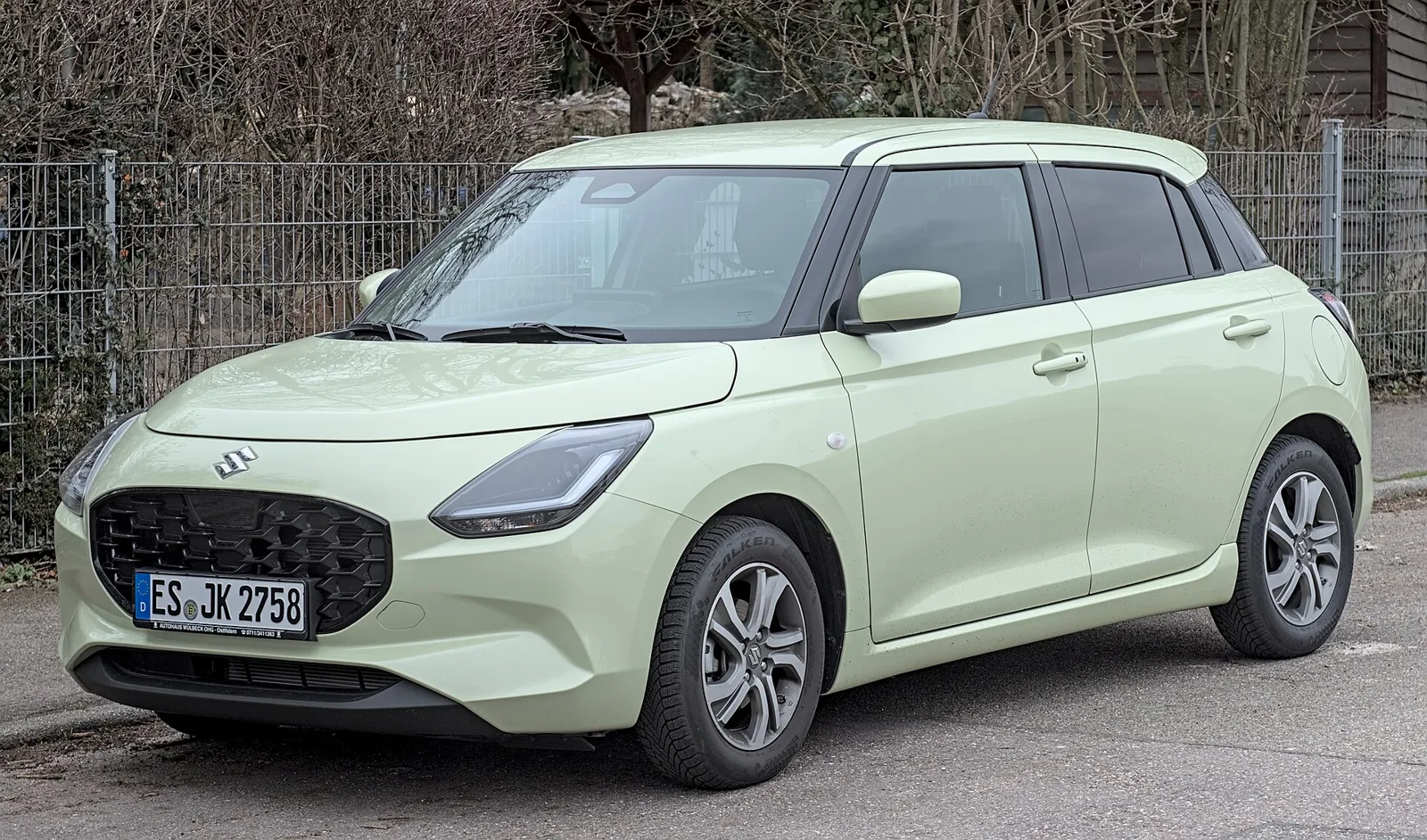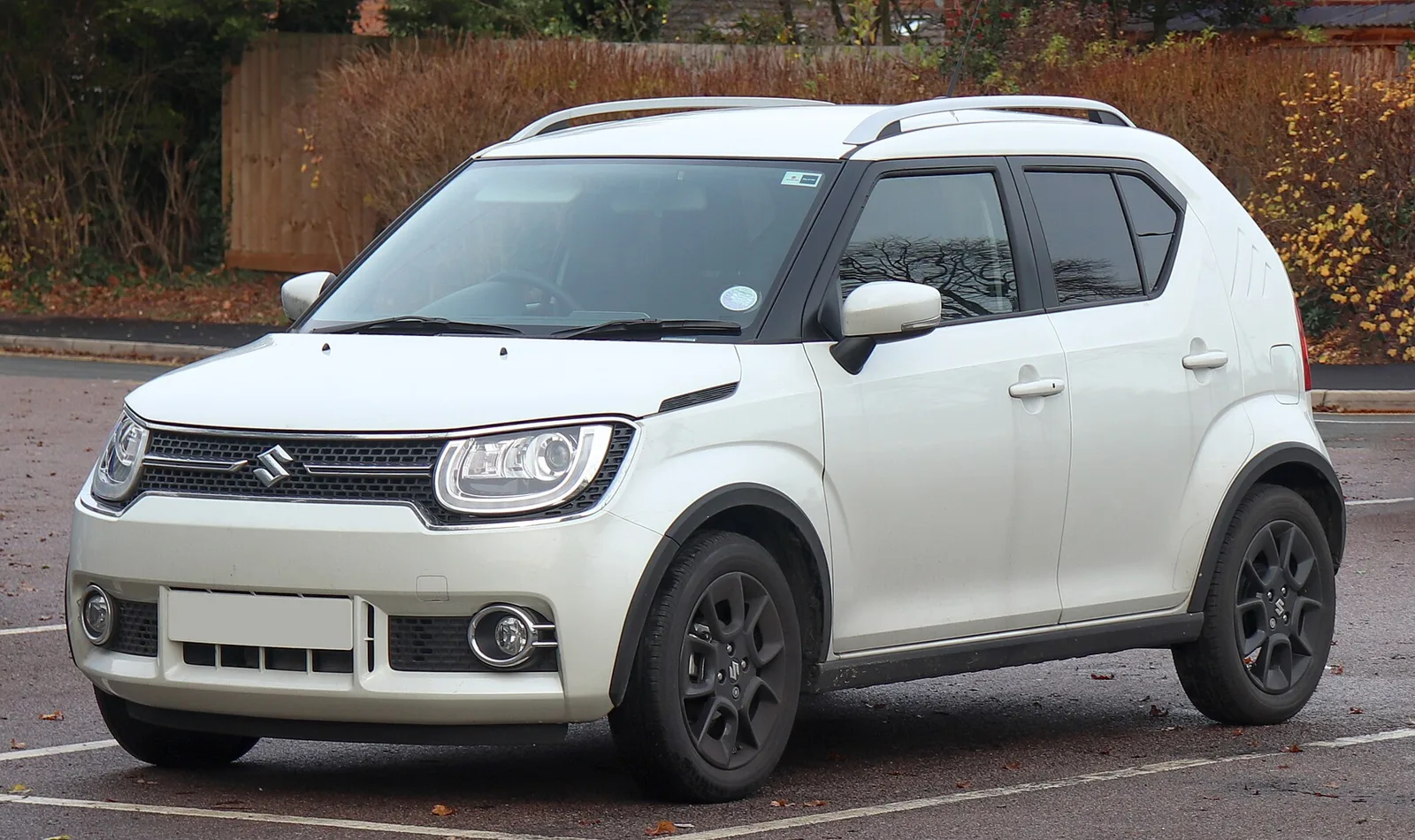
A subcompact that replaced the Cultus, shared its DNA with a Chevrolet and later became a crossover-styled city car with mild-hybrid power.
The Ignis was a Suzuki subcompact launched in 2000 that later became a crossover-style city car. Its second generation, launched in 2016, added a mild-hybrid option to the petrol range. In Europe and Australasia the Ignis replaced the Cultus-based Swift, and it kept the Ignis name in those markets.
The Suzuki Ignis was a small Suzuki that ran from 2000 to 2026, first as a subcompact hatchback and later as a crossover-styled city car. It took over from the Cultus in many markets, and its name is Latin for fire. The second generation arrived in 2016 with a mild-hybrid option alongside the standard petrol engine.
Where did the Ignis name come from?
The Ignis took over from the Suzuki Cultus when it debuted in 2000, and Latin gives the name its meaning of fire. The Cultus had been sold as the Suzuki Swift in many markets, and the Ignis replaced that car in Europe and Australasia. Japanese models were badged Swift, which was the first time that name appeared in Japan.
A subcompact that replaced the Cultus in 2000 and returned as a mild-hybrid city car in 2016, with a Sport version that brought rally styling to the road.
What was the first-generation Ignis like?
The first series was a three- and five-door hatchback, powered by Suzuki's new M family of inline-four petrol engines. These had DOHC and four valves per cylinder with variable valve timing. The 1.3-litre M13A and 1.5-litre M15A were offered, with a five-speed manual as standard and a four-speed automatic as an option.
Four-wheel drive combined with automatic transmission was limited to Japan, because that pairing was incompatible with European emission standards. Export cars received a detuned 1.3-litre rated at 61 kW (83 PS; 82 hp), while the 1.5-litre stayed within the Sport range.
A 2003 facelift added new wheel trims and a revised grille insert, and clearer turn signal lenses on the headlamps. Production finally ended in 2006.
What was the Ignis Sport?
The Ignis Sport arrived in 2003 after the car's use in the 2002 World Rally Championship season, and it was a three-door performance model. Badged Swift Sport in Japan, it used the same 1.5-litre engine tuned to 85 kW (116 PS; 114 hp), or 80 kW (109 PS; 107 hp) in Europe.
The Sport had a body kit, lowered and firmer suspension, a close-ratio gearbox and a tuned exhaust. It had Recaro seats, white dials with blue illumination and carbon-effect trim. It reached 100 km/h (62 mph) from rest in 8.9 seconds, with a top speed of 185 km/h (115 mph). Production ceased in 2005.
How was the Ignis linked to the Chevrolet Cruze?
A General Motors and Suzuki venture meant that the Ignis also formed the basis of the Chevrolet Cruze from 2001. The concept was revealed as the YGM1 at the 33rd Tokyo Motor Show in 1999, and Holden, GM's Australian arm, carried out most of the engineering work.
GM revealed the production Cruze on 22 October 2001, with sales starting on 1 November in Japan. It was built at Suzuki's plant in Kosai, Shizuoka, which marked GM's return to Japanese manufacturing since 1939. Holden brought the Cruze to Australia on 1 July 2002 and discontinued it after January 2006.
The 1.3-litre Cruze produced 65 kW (88 PS; 87 hp), and the 1.5-litre made 73 kW (99 PS; 98 hp). Buyers could choose front-wheel or all-wheel drive, and the Japanese Chevrolet version continued until 2008.
Why did Europe get a longer Ignis?
Suzuki of Europe applied the Cruze changes to the Ignis in 2003, lengthening the car by 145 mm (5.7 in) behind the rear axle to add interior and luggage space. The European version was built in Esztergom, Hungary, by Magyar Suzuki. Suzuki in Japan kept the original shape for its own Suzuki-badged model.
Subaru sold a version called the G3X Justy across Europe from 2003. It differed mainly in its larger fog lamps, front bumper, grille and badging, and it debuted at the Frankfurt Motor Show that September. The G3X Justy passed to the Daihatsu Boon and Sirion in 2007.
What changed with the second generation?
Suzuki first showed a small four-wheel-drive concept, the iM-4, at the Geneva show on 3 March 2015. The production car followed at the 44th Tokyo Motor Show on 30 October 2015 and was launched in Japan in January 2016. The second-generation car had styling cues from the 1977 Suzuki Cervo SS20, including embossed vent motifs.
The car used a 1.25-litre K12C inline-four producing 91 PS (67 kW; 90 hp) and 118 N m (87 lb ft) of torque. A mild-hybrid version added a 3Ah lithium-ion battery under the front passenger seat and an idle-stop function, and the hybrid parts added only 6.2 kg (14 lb).
The hybrid motor produced 3.1 PS (2.3 kW; 3.1 hp), with 50 N m (37 lb ft) of torque. Transmissions were a five-speed manual and a CVT, and both were available with front-wheel or all-wheel drive.
Where was the second generation sold?
The European car used the same 1.25-litre petrol and mild-hybrid engines as Japan, and it made 1 PS (0.7 kW; 1.0 hp) less than the Japanese version. Buyers could choose a five-speed manual or an automated manual called AGS, and all-wheel drive came only with the manual.
In India the car was sold as the Maruti Suzuki Ignis, launched as a replacement for the Ritz and distributed through NEXA dealerships. It used a 1.2-litre K12M petrol with 82 PS (60 kW; 81 hp), and a 1.25-litre diesel that was discontinued in 2018. The company claimed 280,000 units had been sold since the January 2017 launch.
Indonesia received the car as an import from India in April 2017, in GL and GX trims with the 1.2-litre K12M engine. A Sport Edition followed in January 2018, and production ended on 2 July 2024.
How did the 2020 facelift change the Ignis?
The facelift arrived in Japan on 4 February 2020, followed by India at the 15th Auto Expo on 7 February, Indonesia in April and Australia in May 2020. The United Kingdom received it in August 2020. It brought new front and rear bumpers, a revised gauge cluster colour and a four-slot grille flanking the Suzuki logo.
In mid-2020 the European car gained a 1.2-litre K12D Dualjet mild-hybrid engine rated at 83 PS (61 kW; 82 hp), and its torque was 107 N m (79 lb ft). Its battery capacity rose to 10Ah, and a CVT replaced the AGS automated manual gearbox.
What are the Suzuki Ignis specifications?
| Specification | Detail |
|---|---|
| First generation engines | 1.3 L M13A (65 kW; 88 PS; 87 hp JIS) and 1.5 L M15A (81 kW; 110 PS; 109 hp JIS) |
| Ignis Sport | 1.5 L, 85 kW (116 PS; 114 hp) in Japan; 0-100 km/h (0-62 mph) in 8.9 seconds |
| Sport top speed | 185 km/h (115 mph) |
| Second generation engine | 1.25 L K12C, 91 PS (67 kW; 90 hp), 118 N m (87 lb ft) |
| Mild hybrid motor | 3.1 PS (2.3 kW; 3.1 hp), 50 N m (37 lb ft); 3Ah lithium-ion battery |
| India diesel | 1.25 L D13A DDiS 190 turbo diesel, 75 PS (55 kW; 74 hp) |
| India petrol | 1.2 L K12M, 82 PS (60 kW; 81 hp), 113 N m (83 lb ft) |
| Europe from 2020 | 1.2 L K12D Dualjet, 83 PS (61 kW; 82 hp), 107 N m (79 lb ft) |
| Indonesia production end | 2 July 2024 |