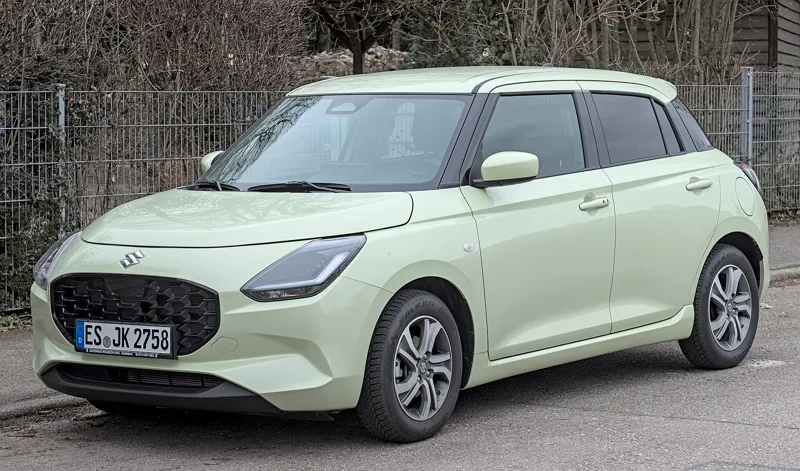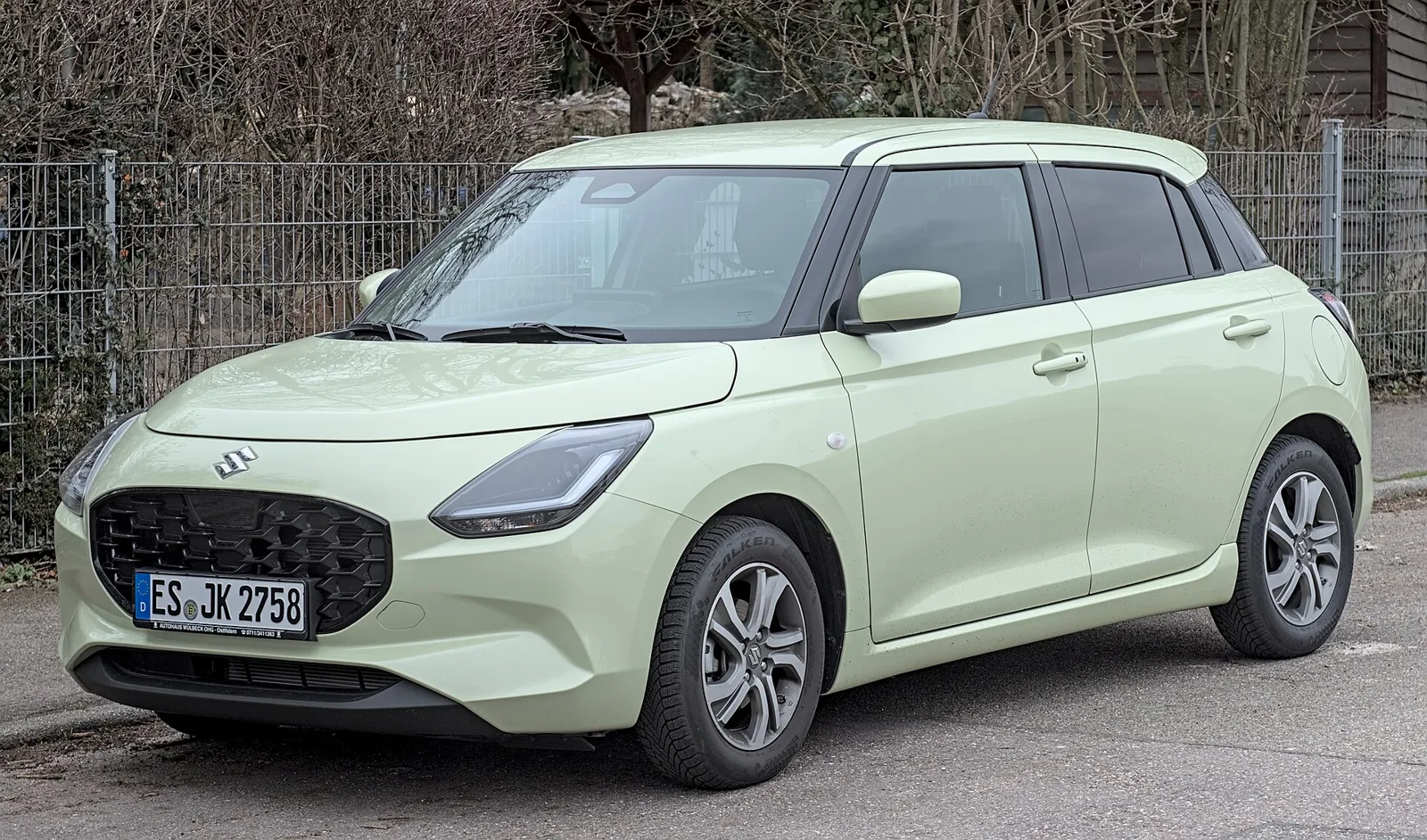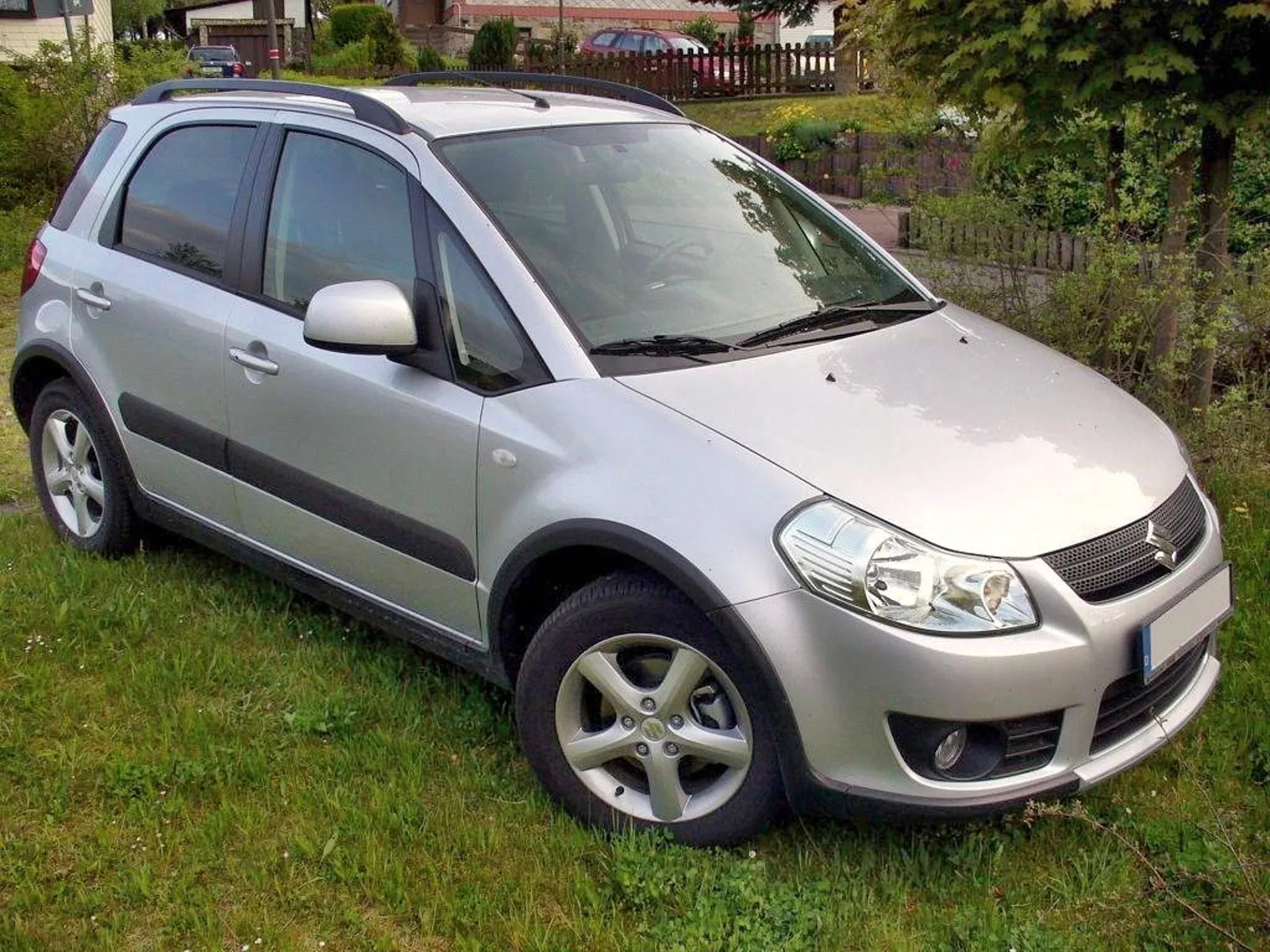
A Giugiaro-styled subcompact built with Fiat, offered with all-wheel drive and diesel power, then reborn as the S-Cross crossover.
The SX4 was a Fiat-linked subcompact crossover from Suzuki, sold from 2006 with petrol and diesel engines. An iAWD all-wheel drive option was offered, and the second generation became the S-Cross in 2013. A third generation followed in 2021 for the European market.
The Suzuki SX4 was a subcompact car and crossover that Suzuki built from 2006, developed in partnership with Fiat. It arrived as a five-door hatchback with an optional all-wheel drive system, and a sedan followed. Its successor, the S-Cross, became a separate crossover in 2013 and kept the nameplate going through a third generation.
Where did the Suzuki SX4 come from?
The SX4 grew out of a development deal between Suzuki and Fiat, agreed in April 2003. Its design came from Giorgetto Giugiaro's Italdesign studio, and it replaced the Aerio tall hatchback and sedan. The car was introduced in Japan on 1 December 2005.
Europe received a rebadged version called the Fiat Sedici alongside the Suzuki model. The car was then shown internationally at the 76th Geneva Motor Show in March 2006, where it marked its move beyond Japan.
A joint development agreement is a formal arrangement in which two manufacturers share the cost and engineering of a vehicle, which is why the SX4 and the Sedici were so closely related.
The name is an abbreviation of Sports X-over 4 Seasons. The SX4 designation had been used once before, by American Motors Corporation from 1981 through 1983, so Suzuki was reviving a name with a history.
A Fiat-linked subcompact that became a crossover family, with all-wheel drive and a diesel option when it counted.
What engines did the SX4 use?
Early engines were a 1.5-litre petrol unit identical to the one used in the Swift, a 1.6-litre petrol rated 102 PS (75 kW; 101 hp) in the Indian sedan, and a 1.9-litre DDIS diesel rated 107 PS (79 kW; 106 hp). The Fiat diesel was rated 120 PS (88 kW; 118 hp) with 280 Nm (210 lb-ft) of torque.
The all-wheel drive system was called iAWD, and it offered three modes. Drivers could choose front-wheel drive, automatic AWD or a 50:50 lock, and the lock could only be used up to 64 km/h (40 mph) before the car reverted to automatic.
Four-wheel drive systems with a lock mode are useful on loose surfaces, because they keep power split evenly when grip is poor.
The 2010 update brought the 1.6-litre VVT engine's output up from 107 to 120 PS (79 to 88 kW) and met Euro 5 rules. A 2.0-litre DDiS diesel, producing 135 PS (99 kW; 133 hp) with 320 Nm (240 lb-ft), joined the all-wheel drive range.
A new six-speed manual or a four-speed automatic was offered with the 1.6-litre cars.
Variable valve timing, or VVT, adjusts when the valves open and close, which helps a small engine deliver more output while staying efficient.
How big was the SX4 inside?
The five-door hatchback offered 300 L (270 L VDA) of boot space with 60:40 split-fold rear seats. Folding them created a flat load area of up to 1045 L (625 L VDA), and the sedan's boot held 515 liters of cargo.
The second generation grew in every direction, reaching 4,300 mm (169.3 in) long and 1,765 mm (69.5 in) wide, with a 2,600 mm (102.4 in) wheelbase. That wheelbase was 100 mm (3.9 in) longer than the earlier car's, and the boot grew to 430 litres (15 cu ft) from 270 litres (9.5 cu ft).
The VDA label refers to a European method of measuring cargo volume, so those figures are not always directly comparable with other manufacturers' numbers.
How did the first generation develop year by year?
Suzuki built the North American SX4 from the 2007 model year as its entry-level AWD vehicle, with iAWD as standard. The US base model was the five-door hatchback with power locks, power windows, and keyless entry. Suzuki Auto posted its best year-end close in company history in 2007, with SX4 sales a primary contributor.
In 2008 Suzuki and Fiat sold nearly 75,000 SX4s and Sedicis across Europe, a total that made the car the second best-selling vehicle in Hungary that year after the Swift. Suzuki Indonesia also launched the X-Road, a base variant with rear drum brakes and no rear spoiler.
The SportBack added a lowered sport suspension and body kit from 2010. Indonesia's RC1 variant followed with more accessories, including 17-inch wheels and LED headlamps. The first generation ended in most markets after the 2014 model year, after US and Canadian sales had stopped in 2013.
Changes of this kind are typical for a long-running car, where a manufacturer adjusts equipment, trim and mechanicals rather than replacing the whole model.
What was the SX4 sedan?
The sedan was marketed as the SX4 Sport, and it debuted at the 2007 New York show. It replaced the Suzuki Aerio sedan and went on sale in Japan, India and some Eastern European countries. Its boot held 515 liters of cargo.
Suzuki later replaced the SX4 sedan with the Ciaz, which carried that role forward in the company's line-up.
A sedan with a separate boot lid offers a different proposition from a hatchback, and some buyers in the period preferred that shape.
What did the second-generation S-Cross bring?
The SX4 S-Cross arrived in Europe in autumn 2013, after an unveiling at the 2013 Geneva Motor Show. It was a new subcompact crossover that grew in every direction, and its boot was far larger than the first car's, at 430 litres (15 cu ft) against 270 litres (9.5 cu ft).
The engine line-up included a Fiat Multijet 1.6-litre turbo-diesel, which was offered with the second generation. The range later gained the 1.4-litre K14C turbo, rated 140 PS (103 kW), in the facelifted model, and the new engine's turbo ran a boost pressure of 1.1 Bar.
The S-Cross was not sold in the United States or Canada, because Suzuki had withdrawn from those markets. It was offered in Brazil and Mexico instead, and in India it became the Maruti Suzuki S-Cross, launched in September 2015 through NEXA outlets only.
A crossover in this class sits above a supermini in height and ground clearance, giving a raised seating position without the bulk of a full SUV.
The S-Cross earned a maximum five-star Euro NCAP rating in 2013. That result was a clear improvement on the four stars the original SX4 had earned in 2006.
What changed with the third generation?
Suzuki revealed the third-generation SX4 S-Cross online on 25 November 2021, and it remained a Hungarian product for the European market. The car was heavily based on the previous generation, which made the update a focused one rather than a full redesign.
Its exterior dimensions and interior space stayed unchanged from the second generation, so the change is in the engineering and the styling rather than the packaging.
Carrying over an established body and most of its mechanicals is a cost-effective way to refresh a model, and it explains why the third generation looks familiar.
Fuel economy for the 1.4-litre mild hybrid range is rated at 5.3 to 6.1 L/100 km on the WLTP test, depending on drive layout and transmission. The third generation remains the one that Suzuki continued to build in Hungary for Europe.
Did the SX4 compete in rallying?
Yes. At the 2007 Geneva Motor Show Suzuki announced an entry into the World Rally Championship, with the Suzuki World Rally Team running the SX4 WRC in the World Rally Car class. The programme ran the car in the World Rally Car class.
Entering the championship required a dedicated rally car built to its regulations, which is why a factory team was needed rather than a standard road car.
The SX4 also had a hydrogen sibling. The SX4-FCV concept used an 80 kW hydrogen fuel cell and a 68 kW electric motor, with a top speed of 150 km/h (93 mph) and a range of 250 km. It was unveiled in 2008 at the Hokkaido Toyako summit.
Concept cars like the FCV show how a manufacturer tests new drivetrains in public before committing to production. The fuel cell car never became a production model, but it showed what Suzuki was exploring alongside its mainstream range.
How safe was the SX4?
The SX4 earned four stars from Euro NCAP in 2006, while the S-Cross earned the maximum five-star rating in 2013. Those results place the two generations in different tiers of crash protection, with the second car showing the bigger improvement.
Euro NCAP stars are the headline figure in the European crash testing scheme, and a five-star result signals that a car performed strongly in the crash tests. Buyers of the S-Cross could point to that rating as a clear step forward from the original car.
Because the tests run on a common basis, the star ratings let buyers compare cars from different manufacturers, which is the main reason to look at them.
What were the SX4 specifications?
The SX4 used petrol and diesel fours across its life, from the 102 PS (75 kW; 101 hp) Indian 1.6-litre to the 140 PS (103 kW) 1.4-litre turbo of the S-Cross. The table below sets out the main figures from each generation.
| Specification | Detail |
|---|---|
| Introduced | Japan, 1 December 2005 |
| Hatchback boot | 300 L (270 L VDA); up to 1045 L (625 L VDA) with seats folded |
| Sedan boot | 515 liters |
| Diesel (2.0 L DDiS) | 135 PS (99 kW; 133 hp), 320 Nm (240 lb-ft) |
| Petrol (1.6 L VVT, after 2010) | 120 PS (88 kW; 118 hp) |
| S-Cross length | 4,300 mm (169.3 in) |
| S-Cross wheelbase | 2,600 mm (102.4 in) |
| S-Cross boot | 430 litres (15 cu ft) |
| Mild hybrid (1.4 L K14D) | 129 PS (95 kW), 48V system |
| Third-generation fuel use | 5.3-6.1 L/100 km (WLTP) |
Where was the SX4 built and sold?
The first generation was built in Hungary, India, Indonesia, China and Japan, with the Hungarian plant expected to produce 60,000 units per year. The spread of plants reflects how widely the car was assembled. Suzuki and Fiat sold most of them in Europe.
Sales in Europe reached nearly 75,000 SX4s and Sedicis in 2008, and the third generation is built only in Hungary for the European market.
What is the SX4's legacy?
The SX4 gave the range a small crossover-style hatchback, and its sales helped Suzuki finish 2007 in a strong position. It also set the template for the S-Cross, which kept the crossover approach through three generations of the model line.