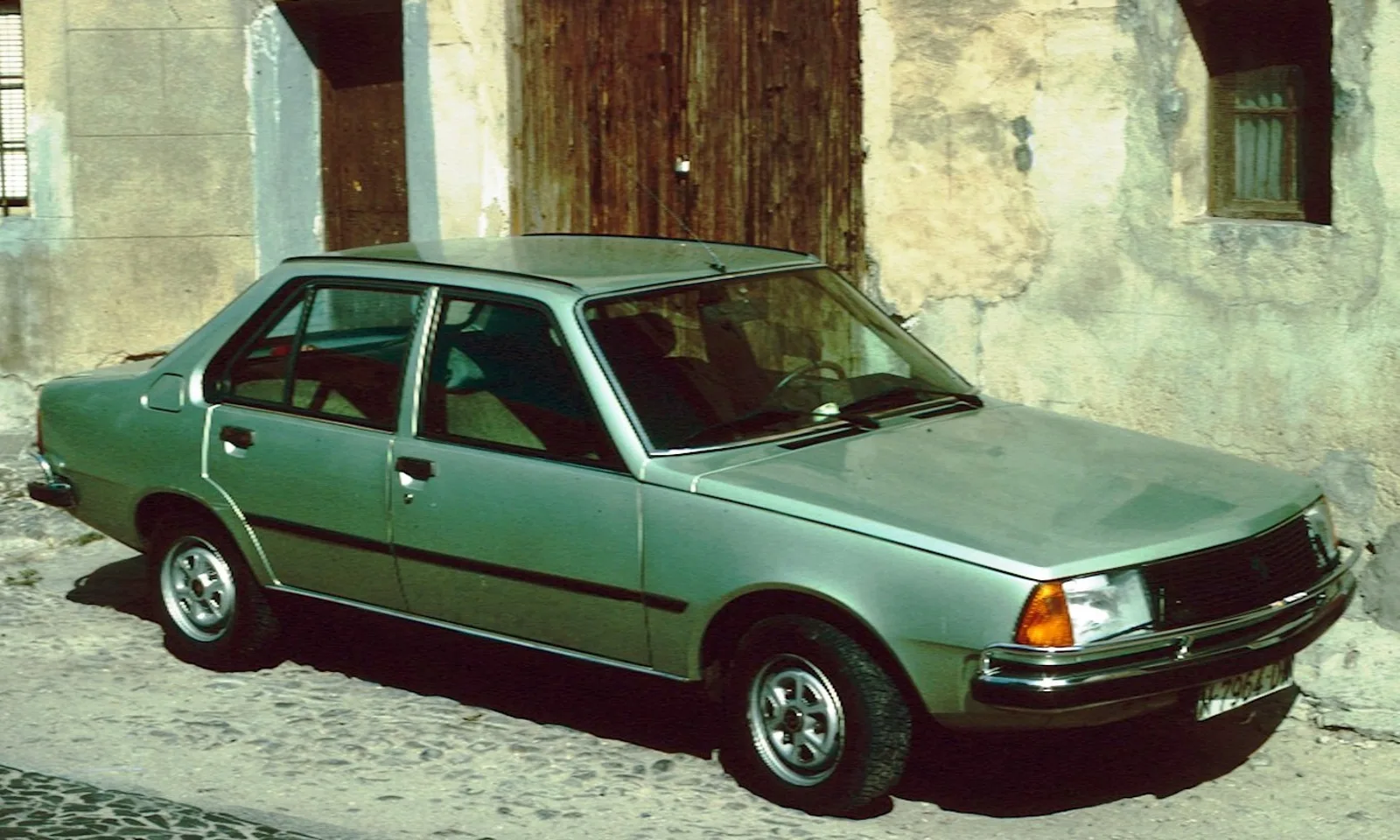
Built from 1978 to 1989 and later in South America until 1994, the 18 was Renault's first car sold as a true world car, from Britain to the United States.
The Renault 18 was a large family car that Renault built from 1978 to 1989, with South American production running until 1994. It replaced the Renault 12 and was the company's first true world car, selling in Britain, the United States and South America.
Renault's 18 was a large family car built in France between 1978 and 1989, and South American plants kept it going until 1994. It was conceived to replace the Renault 12 and was based on that car's underpinnings, which allowed a fast development schedule. The company treated it as its first true world car.
Where did the Renault 18 come from?
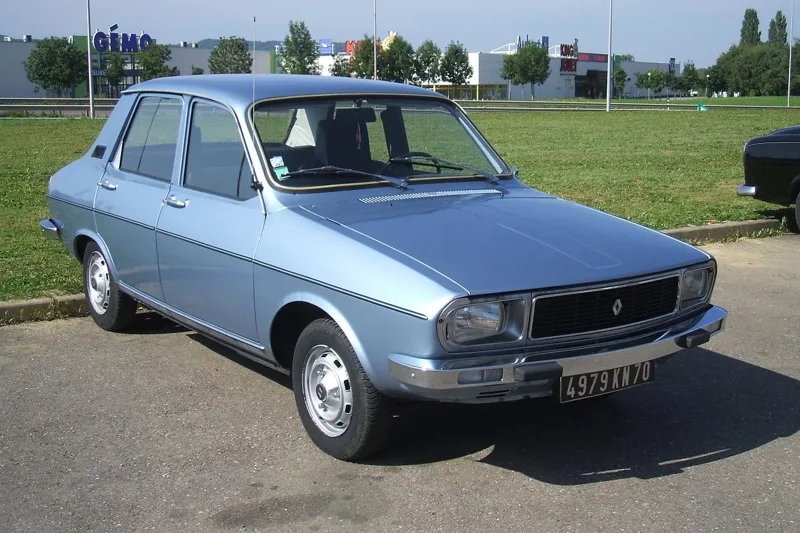
The 18 was meant to replace the Renault 12, a car in production since 1969 that was starting to look dated by the late 1970s. The 12 stayed in production alongside the 18 until 1980, which meant the two cars overlapped for several years.
Development moved fast. From the first sketches to the showroom took eighteen months, largely because the car reused the 12's underpinnings. Production started at the Flins factory in France in December 1977, and the car was presented at the Geneva Salon in March 1978.
Deliveries began in April 1978, and 1979 was the car's biggest production year. Sales declined gradually after that, although the car continued to sell in several markets for another decade.
The first changes arrived with the 1979 models, which switched from an automatic choke to a manual one. From 1980 every production model carried an alternator with a built-in electronic regulator, and the 1979 range also gained a station wagon and a separate automatic model.
Renault's international ambitions were central to the 18. Earlier Renault cars had made forays into overseas markets, but the 18 was the first model that Renault treated as a genuine world car, with production later spreading to many other countries.
Eighteen months from concept to launch, and Renault's first car built as a world car.
Which engines did the 18 use?
The first cars were powered by the 1397 cc Cleon engine, which produced 64 PS (47 kW; 63 hp). The TS and GTS used the 1647 cc A-Type engine without fuel injection, rated at 79 PS (58 kW; 78 hp), and the GTS came with a five-speed manual gearbox.
Diesel models arrived in July 1980 with a 2068 cc unit making 66 PS (49 kW). Later the diesel line grew to a 2.1-litre turbodiesel with 88 PS (65 kW), which at the time was the fastest car in its class.
The diesel versions also reached a modest share of the range. Diesel 18s came in TD and GTD trim levels, but diesel models never reached thirty percent of annual output in any year.
The GTD was exclusively a saloon, with a five-speed gearbox, and power-assisted steering was optional on it. Diesel buyers therefore had a choice of trims that mirrored the petrol range.
The engine range widened further in South America, where the 18 was built with 2.0-litre and 2.1-litre diesel options. Argentine models of the period showed how the engine range could grow outside Europe.
How fast was the 18 Turbo?
The 18 Turbo arrived in September 1980 with a 1565 cc unit making 110 PS (81 kW). Renault claimed a top speed of 115 mph (185 km/h), and period tests recorded 0-60 mph times between 10.1 and 10.8 seconds.
The Turbo borrowed its dashboard and interior fittings from the Renault Fuego, which gave the car a sportier cabin than the standard 18. Its four-stud alloy wheels and negative offset front suspension also set it apart from the early models.
The Turbo faced newer Vauxhall Cavalier and Ford Sierra performance versions, and sales of the 18 fell as those rivals arrived. The Turbo was also a short-lived performance model. Its production was cut back in 1985, and the car was no longer offered in France once that year's stock had run out.
What changed through the 1980s?
Model-year changes arrived almost every year. The 1982 update made the negative offset front suspension a feature of the range, switched the front indicator lenses from orange to clear and moved the bumpers and door handles from chrome to black polyester. The seats were restyled to give rear passengers more space.
The 1984 Type 2 went further. The grille changed and every model gained a front air dam, with saloons adding a rear spoiler as standard. Four-stud rims took over from the three-stud design, and the dashboard was swapped for the one from the Fuego, which gave the whole range a more modern cabin.
Special editions helped keep the car in the showroom. The 1983 American limited edition came with black over silver two-tone paint and alloy wheels, and the American 2 of 1984 followed with central locking and a choice of four colour schemes. A 1986 Gala range was then offered in France before production there ended in July 1986.
How did the US car differ?
American Motors had established several agreements with Renault since the 1960s, and by 1979 Renault held a controlling 46 percent stake in the smaller American company. That partnership shaped how the 18 was adapted for the US and Canadian markets.
The US version needed more stringent emissions controls, larger bumpers designed to withstand 5 mph (8 km/h) impacts, two-tone paint and sealed-beam headlights. Critics said the American car had lost its Frenchness, a complaint that reflected how far the car had been changed.
US cars were sold as the Renault 18i beginning with the 1981 model year, with the four-door and the station wagon sold through American Motors dealers. The 18i used Bosch L-Jetronic fuel injection and produced 82 hp (61 kW) at 5500 rpm in federalised trim.
The 1982 fuel figures were 25 mpg-US (9.4 L/100 km; 30 mpg-imp) in town and 38 mpg-US (6.2 L/100 km; 46 mpg-imp) on the open road. The American models were also longer than European cars, with the sedan at 178.7 in (4540 mm) and the wagon at 181.5 in (4610 mm).
The US station wagon was called the Sportwagon, with the middle "s" later dropped. It used the 2.2-litre engine from the Fuego from 1983, which produced up to 91 hp (68 kW) at 5000 rpm.
Estates and special editions
The estate, called the Break in French-speaking markets, was introduced on 1 March 1979. It offered up to 65.5 cubic feet (1.85 m3) of cargo space, with a folding rear bench and a flat load floor that suited large loads.
The estate was known by different names across Europe. In Germany it was the Variable, later the Combi, while the Netherlands called it the Stationcar and Spain the Familiar. In 1983 a 4x4 version joined the range, which could be fitted with the 1.6 or 2.0-litre petrol engine or the 2.1 diesel.
Special editions followed as the 18 matured. The 1983 American limited edition totalled 5,200 examples, and it sold well despite its modest equipment list. The American 2 of 1984 reached 14,000 units, and a 1986 Gala range was offered in France.
How well did the 18 sell?
The UK was an important market for the car, and early demand was strong. Renault had also first used the 1.4 Cleon engine in the medium car sector with the 18. Sales began just before Christmas 1978, and British sales peaked in 1980 when the 18 was the tenth best-selling car in the country, with over 30,000 sales. That year it was also the most popular foreign model in Britain.
Across the whole production run the French total reached 2,028,964 cars. Spanish factories added 268,484 examples at the FASA plants in Palencia and Valladolid, and Argentina built 132,956 units.
Australia took a smaller share, with GTS saloons and estates assembled in Heidelberg from 1980. The 18 was discontinued in the UK in July 1986, after 131,241 examples had been officially imported. Renault 21 took over the saloon and Nevada or Savana estate roles from 1986, and the 18 was withdrawn from most remaining European markets by 1989.
Why was the 18 never built in India?
In 1981 the Renault 18 was selected by India's Maruti Udyog project to be built there at 100,000 cars a year, including a pickup version. After closer review, the economics did not make sense, and the project was redirected toward a smaller car.
The decision was taken at the direction of Rajiv Gandhi, who favoured a smaller and cheaper car. Maruti instead linked up with Suzuki to build the subcompact Alto under licence, and the 18 never reached Indian production.
How did South American production differ?
The car was built in Argentina, Colombia, Uruguay and Venezuela, and each country added its own differences. Argentina's TX of 1981 used a 2.0-litre engine with 99 hp (73 kW), and the GTX of 1982 added a fifth gear and air conditioning. The GTX also gained an upgraded engine producing 103 hp (76 kW).
Colombia's SOFASA assembled the car until 1987, while Uruguayan production ran from 1982 to 1994 with Argentinian bodies and engines imported from France. Venezuela built the car at a new factory in Mariara from 1980 until late 1987, and the Renault 18 was also rallied in South America by Renault Argentina.
What was the Renault Eve?
The Eve research car was built on the 18's platform. It was an experimental fuel-efficient concept with a state-of-the-art microprocessor, an array of specialised sensors and an electronically controlled carburettor.
The Eve achieved a 0.239 Cd drag coefficient, which made it one of the slipperiest designs of its era. The project was sponsored by the French government, and its lightweight materials and continuously variable automatic transmission were part of the same research agenda.
Renault 18 specification by version
| Version | Engine | Output | Notes |
|---|---|---|---|
| TL and GTL (1978) | 1397 cc Cleon petrol | 64 PS (47 kW; 63 hp) | Four-speed manual |
| TS and GTS | 1647 cc A-Type petrol | 79 PS (58 kW; 78 hp) | GTS had a five-speed manual |
| Turbo (1980) | 1565 cc petrol | 110 PS (81 kW) | Fuego dashboard and fittings |
| Diesel (1980) | 2068 cc diesel | 66 PS (49 kW) | TD and GTD trim levels |
| Turbodiesel | 2.1-litre diesel | 88 PS (65 kW) | Fastest in its class at the time |
| US 18i (1981) | 1647 cc, Bosch L-Jetronic | 82 hp (61 kW) at 5500 rpm | Deluxe trim only from 1983 |
| US Sportwagon (1983) | 2.2-litre Fuego engine | 91 hp (68 kW) at 5000 rpm | Deluxe or Touring trim |
_en_Espagne.jpg)