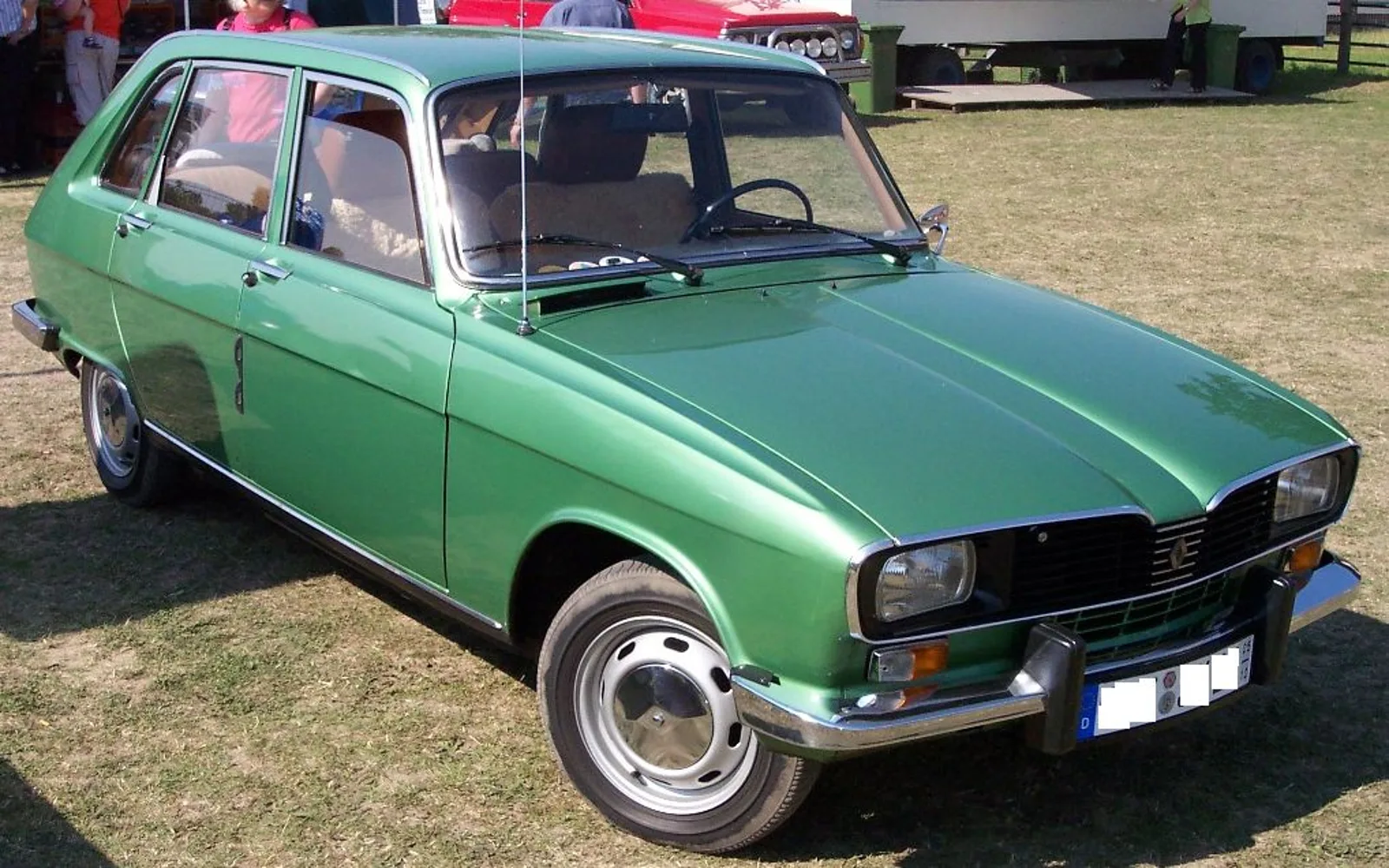
Renault's 1965 five-door hatchback opened a new body style for mid-size families and sold 1,845,959 units before production ended in 1980.
Renault built the 16 as a five-door family hatchback from 1965 to 1980, with a longitudinal front engine and front-wheel drive. The car won European Car of the Year in 1965, its hatchback body was new to the mid-size family market, and 1,845,959 units were produced.
The Renault 16, known as the R16, was a large five-door hatchback that the French maker built from 1965 to 1980. It was the first French car to win European Car of the Year, and 1,845,959 examples were manufactured over its 15-year run. Its hatchback layout brought a new level of practicality to the mid-size family car.
Why did Renault build the 16?
In the early 1960s Renault was building a range of small cars, including the Renault 4 and the rear-engined Dauphine. The company also needed a larger family car to succeed the Fregate, which had managed a modest 163,383 units between 1951 and 1960. The 16 was designed to fill that space with a more modern concept.
The result broke with the conventional saloon and estate formula. Renault wanted a family vehicle with the room and comfort of a large car, but with the rear access and load flexibility of a hatchback. That combination became the car's main selling point across Europe.
A large family car with a hatchback, a column gearshift and an unequal wheelbase, built for 15 years.
How did the 16 reach the market?
The first complete R16 left the factory on December 2, 1964. Renault had built a purpose-made plant at Sandouville, close to Le Havre, and series production started there in March 1965. The car was shown to the press on January 5, 1965, at a presentation on the Cote d'Azur.
Public sales began in April 1965 with two specifications, Grand Luxe and Super, both fitted with a 1470 cc engine. The formal debut came at the Geneva Motor Show in March 1965, and most left-hand drive markets received cars that June. The right-hand drive version arrived in the UK in the autumn of 1965.
Anticipation ran high before the launch. Leaks to the media and carefully timed scoop photographs filled the magazines, and the car was first described only as the forthcoming Renault 1500. The French homologation authorities approved the 16 name only two months before the public debut.
In October 1964, timed to coincide with the Paris Motor Show, Renault sent out photographs for publication as scoops, still describing the car as the forthcoming Renault 1500 rather than the 16.
Why was the hatchback body important?
The 16 brought the hatchback bodystyle to the mid-size family segment. Its interior could be arranged in seven different ways, which gave families and owners with heavy loads a flexible space to work with.
Journalists found the shape hard to label before the word hatchback had caught on. One English review from 1965 treated the car as a large family vehicle that was neither a traditional saloon nor a true estate, and that difference was exactly what attracted buyers.
The hatchback idea spread well beyond the first owners. By the time the 16 ended production, most European manufacturers had at least one hatchback on sale, and the 16 had helped prove the format in the family market.
The car also mattered in Britain. It was one of the first imported models to sell in large numbers there, and it was part of a wave of foreign makes that lifted their share of the UK market through the 1970s.
How was the 16 engineered?
The 16 was front-wheel drive, with its engine mounted longitudinally at the front, behind the gearbox and transaxle. That placement helped the handling balance by keeping weight closer to the centre of the car. Torsion bar suspension and a column-mounted gear lever completed the basic layout.
The layout came at a price, because reaching the engine for service was difficult. Renault acknowledged the problem when it designed the successor. The Renault 20 used the same north-south arrangement, but it moved the engine ahead of the gearbox so that mechanics could reach it more easily.
The car had an aluminium engine and an electric cooling fan. A column-mounted gear change freed up room in the front cabin. The front seats were soft, and together with the suspension they gave the car a smooth ride even over large bumps.
Why were the rear wheels not in line?
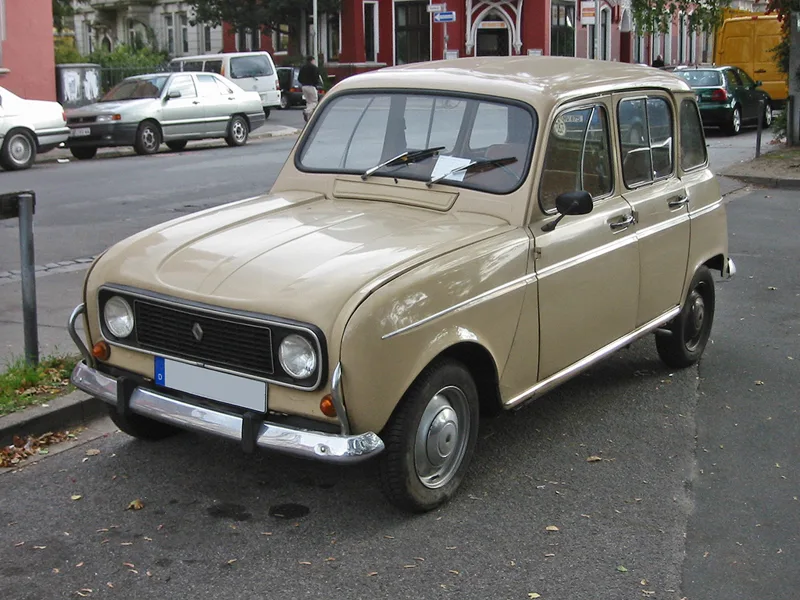
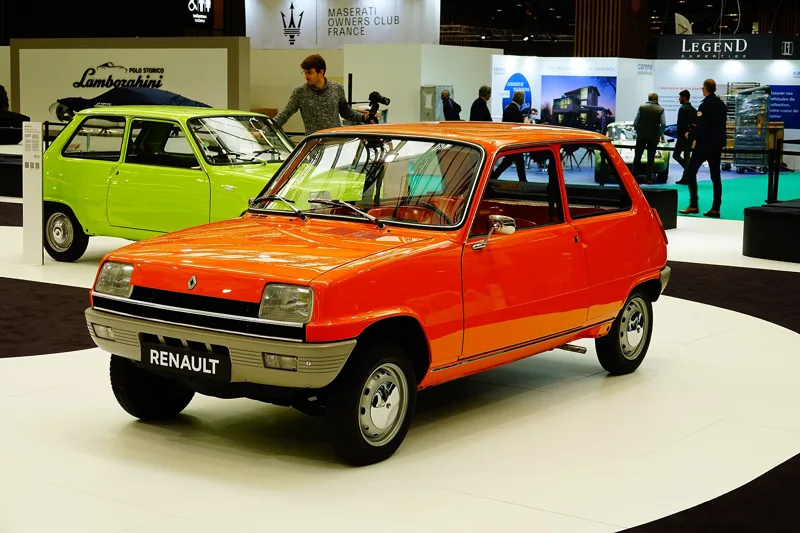
The R16 had an unequal wheelbase, with the left side 70 mm (2.76 in) longer than the right. The offset was needed to fit the transverse torsion bar suspension at the rear. Renault had used a similar idea on the Renault 4 and later applied it to the Renault 5.
This small quirk contributed to the car's smooth ride, and it reflected how carefully Renault's engineers balanced packaging against comfort. Few drivers would have noticed it, but it was one of the subtle engineering details that gave the car its character.
Which engines did the 16 use?
Renault first offered the 16 with a 1470 cc petrol engine in GL specification, rated at 55 PS (40 kW; 54 hp). In March 1968 the Geneva Motor Show introduced the 1565 cc TS, which produced 84 PS (62 kW; 83 hp) and could top 100 mph (160 km/h).
An automatic version, initially called the Renault 16 TA, arrived at the Geneva show in early 1969. The top-line TX followed at the Paris Motor Show in October 1973, with a 1647 cc engine, a five-speed manual gearbox and power front windows. It was one of the first family cars in Europe to include those features as standard.
How did the trim levels change?
The 1973 oil crisis hit sales of the TX and the rest of the range. The TX automatic was delayed so that its fuel consumption could be brought down to the manual's level. In 1975 the automatics were withdrawn, and the ordinary car received a 66 PS (49 kW) version of the 1647 cc unit used in the TX.
The 16 L's output dropped to 55 PS (40 kW) in 1975, and the car could run on the lowest octane petrol. In 1976 the L gave way to a version of the TL with the same 55 PS engine, and the TS was discontinued that year. A TL Automatic appeared briefly before it too was dropped.
Cosmetic changes marked the later years. In October 1974 the chrome grille gave way to a black plastic one, except on the TX, and reversing lights became standard in 1978. Rear three-point seatbelts followed in 1979.
How did the 16 sell in North America and Canada?
The version for America came out in late 1968 as a 1969 model, sold under the name Renault 16 Sedan-Wagon. It had twin sealed beam headlights and a 851-02 engine that combined a 1470 cc head with a 1565 cc block, with output rated at 70 PS SAE at 5200 rpm, or 62 PS (46 kW; 61 hp) DIN.
Sales in the United States stayed small and continued only into 1972. Canada was more receptive, and SOMA-Renault assembled the car from knock-down kits at its plant in Saint-Bruno-de-Montarville until 1974. The American car measured 4,270 mm (168 in) in length after its bumpers were revised.
Why did the 16 win European Car of the Year?
A board of European motoring journalists voted the Renault 16 the continent's car of the year at the close of 1965. The award was then only three years old, and the 16 became the first French car to take the title, after two British winners.
The award came early in the car's life and helped build its reputation across the continent. Its hatchback layout, roomy interior and smooth ride were the main reasons journalists praised it, and those strengths carried the model through its long production run.
How was the 16 received by critics?
The 16 sold well in most of Europe, and critics praised its spacious and comfortable interior. Its practicality, which came from the hatchback bodystyle, gave it a clear advantage over conventional saloons of the same size.
Racing driver Stirling Moss was among the admirers. In 1970 he judged the car the most intelligently engineered automobile he had come across, and he suggested that British makers should buy one to see how it was put together.
The 16 faced little direct competition for several years. Only with the arrival of the Austin Maxi in 1969 did a rival appear, although the Maxi was never a strong seller outside the United Kingdom.
What concept cars came from the 16 project?
In 1965 Philippe Charbonneaux proposed a more traditional saloon body for the car, but the project never progressed beyond the prototype stage. One surviving prototype is on display at the Musee Automobile Reims Champagne in France.
A coupe cabriolet version was also in development. Most of its body parts were unique to the saloon, so production would have been too expensive and the project was shelved. The 16 therefore remained a hatchback and saloon family car without a sporting derivative.
How did production of the 16 end?
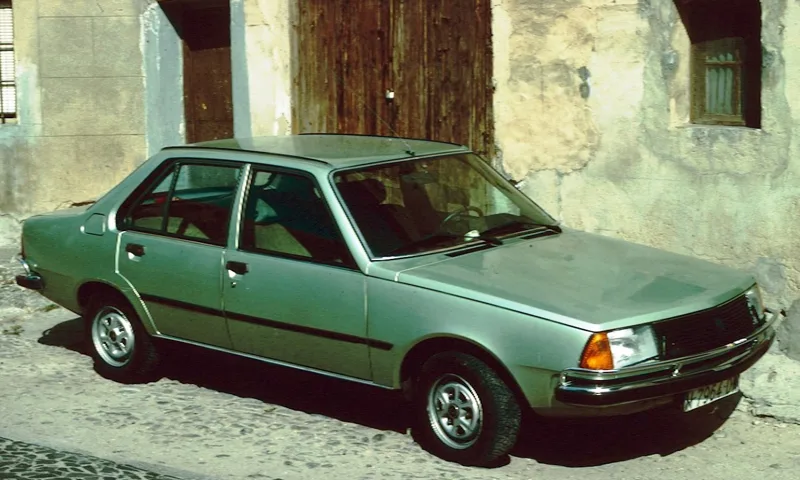
In 1975 Renault launched the R20 and R30 models, which were expected to replace the 16 but sold alongside it for a time. The R18 saloon followed in 1977, and it was seen as another car that would appeal to 16 owners.
Production of the 16 continued until January 1980, after 15 years. The larger Renault 20 was its official successor, and the Renault 18 saloon and estate remained the company's only offering of that size in Europe until later models arrived.
What are the Renault 16 specifications?
| Specification | Detail |
|---|---|
| Built | 1965 to 1980, 1,845,959 cars |
| Body | Five-door hatchback, front-wheel drive |
| Launch engine | 1470 cc, 55 PS (40 kW; 54 hp), GL |
| TS engine | 1565 cc, 84 PS (62 kW; 83 hp), top speed 100 mph (160 km/h) |
| TX engine | 1647 cc, five-speed manual, power front windows |
| US engine | 851-02, rated 70 PS SAE at 5200 rpm (62 PS DIN) |
| US length | 4,270 mm (168 in) |
| Wheelbase offset | Left side 70 mm (2.76 in) longer than right |
| European Car of the Year | 1965, first French winner |
,_front_right.jpg)