Two near-identical flagship Renaults built from 1975 to 1983, with a PRV V6 in the 30, a 1978 Car of the Year award for the 20 and a steep fall in value.
The Renault 20 and Renault 30 were executive hatchbacks that Renault built from 1975 to 1983 at Sandouville. The 30 carried a 2664 cc PRV V6 and the 20 used a smaller four-cylinder engine, but the two cars were otherwise almost identical. Over 622,000 R20s and 145,000 R30s were produced.
Renault's R20 and R30 were executive hatchbacks built from 1975 to 1983 at Sandouville, near Le Havre. They were the most upmarket and expensive Renaults of their time, and they shared almost all of their sheet metal and mechanicals. The R30 was the larger-engined and better-equipped of the pair.
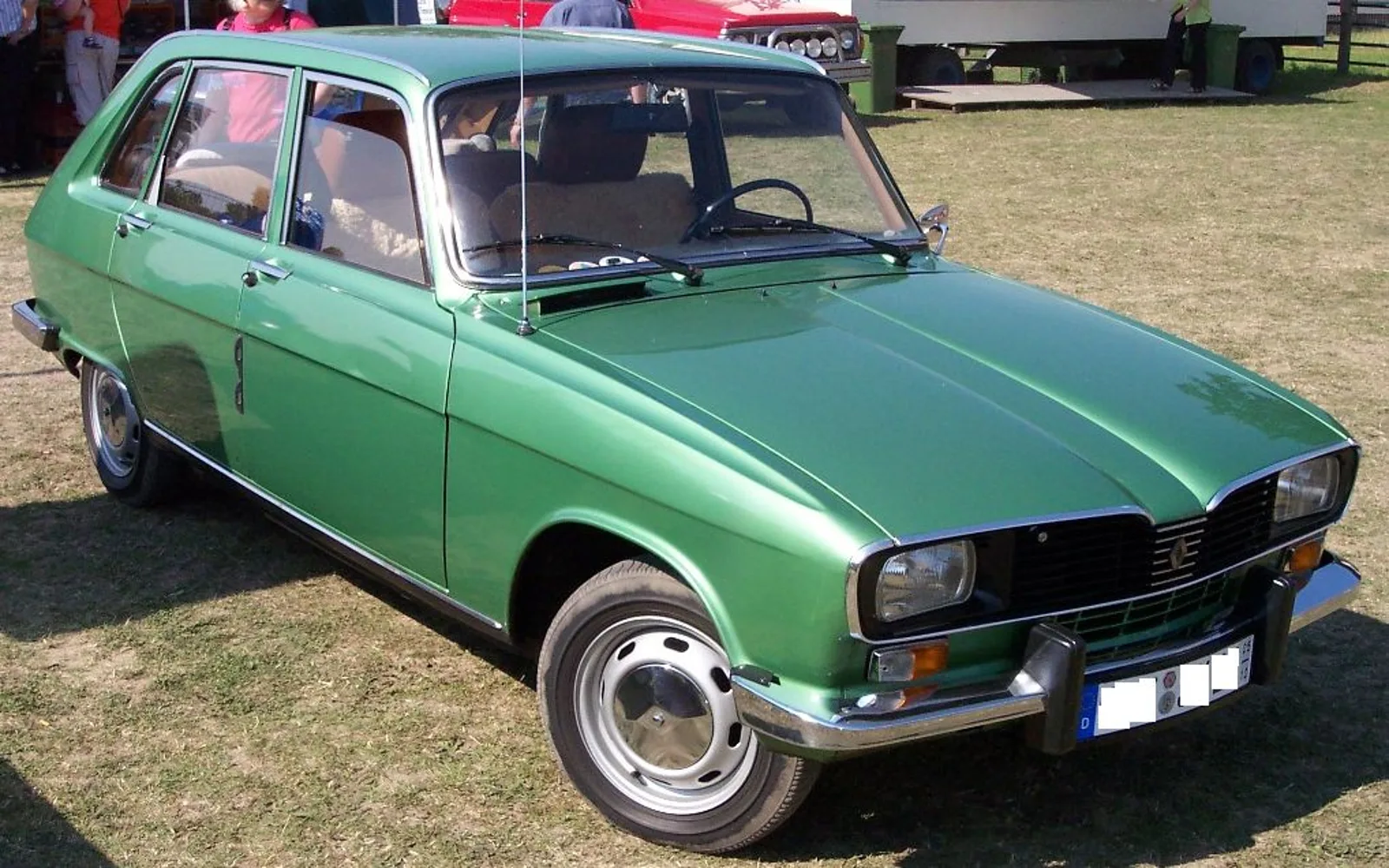
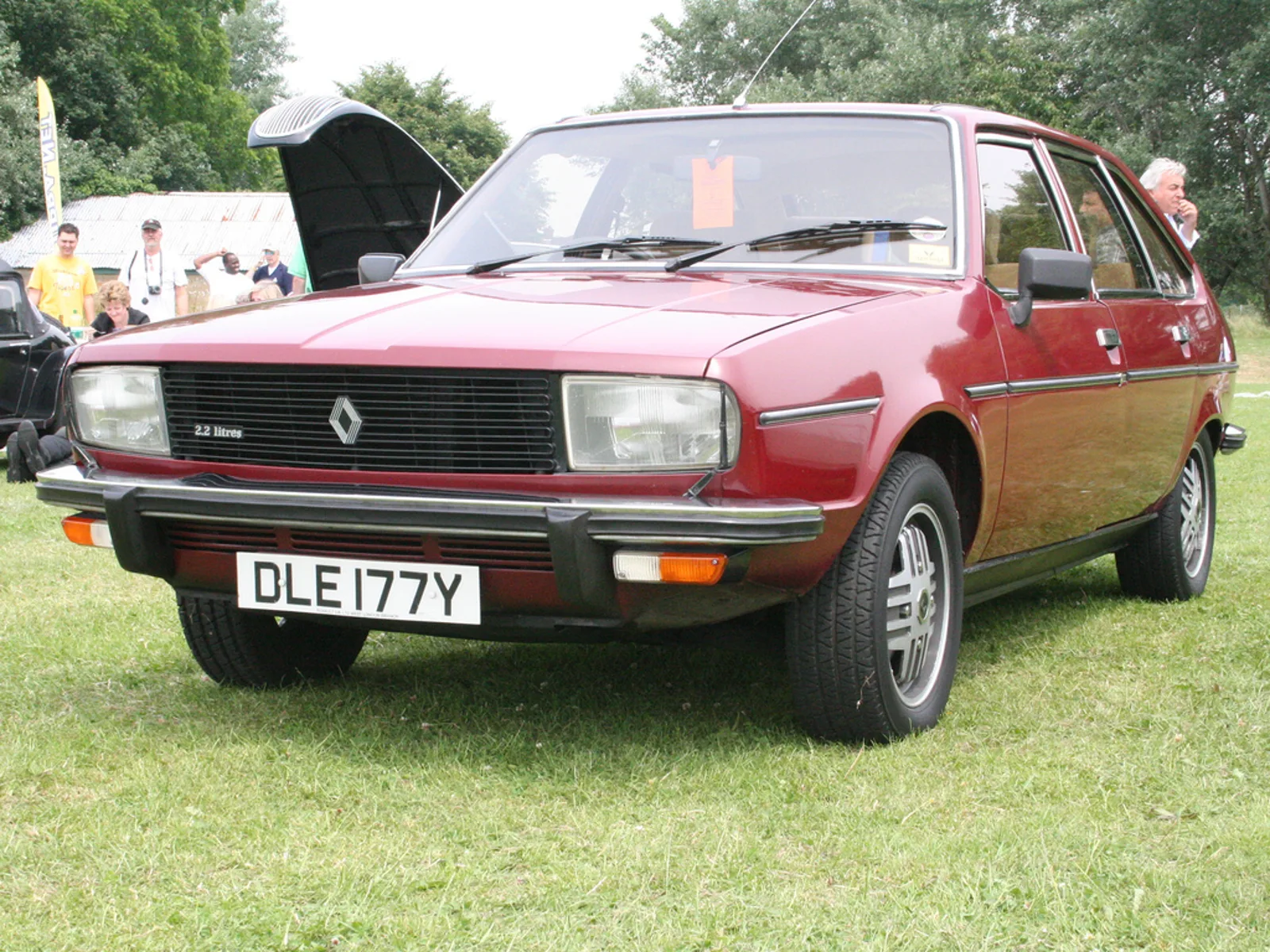
Both cars were sold in France and in several export markets, including Canada, Argentina and Venezuela. The two cars were easy to tell apart at the front. The R20 had two single rectangular headlights, while the R30 had four round ones. Inside, the R30 carried a higher specification in every model, which was a real difference for buyers choosing between the two.
Where did the R20 and R30 come from?
The R30 TS launched in March 1975 at the Geneva Motor Show as Renault's flagship. The R20 followed in November 1975 at the Paris Salon, eight months later. Both used the same hatchback body, which derived its styling from the Renault 16 that had been so successful.
The R30 was the first Renault with more than four cylinders since the pre-war Vivastella. The R20 was essentially a successor to the Renault 16, although it sat in a considerably larger body shell. Renault marketed the two as a pair, with the 30 at the top of the range.
Both cars carried front and rear crumple zones along with side impact protection. For the first two model years they also had unusual downward-folding door handles, which were replaced by regular units from August 1976, in time for the 1977 model year.
Two near-identical flagships that shared their sheet metal, with the 30 carrying the PRV V6 and the price premium.
What engines did the cars use?
The R30 used the 2664 cc PRV V6, producing 130 PS (96 kW). The R20 used a smaller 1647 cc four-cylinder rated at 90 PS (66 kW), taken from the Renault 16 TX. Later the R20 gained a 1995 cc overhead camshaft engine with more power. That unit was not unique to Renault, because Citroen fitted it to the CX and Peugeot later used it in the 505.
The PRV was developed jointly by Peugeot, Renault and Volvo. It was one of the first engines of its kind used in cars, alongside the Peugeot 604 and the Volvo 264, and it could push the R30 to a top speed of 185 km/h (115 mph).
Shortly after launch it became clear that the R20 was underpowered for the size and weight of the car, while the R30 was seen as too expensive for what was effectively the same vehicle. The answer was the R20 TS, with a 1995 cc engine rated at 109 PS (80 kW). Motoring writers universally regarded that engine as a big improvement.
The R20 Diesel reached showrooms in November 1979, powered by a 2068 cc unit rated at 63.5 PS (47 kW). The R30 Turbo Diesel followed in July 1981 with an 85 PS (63 kW) version of the naturally aspirated diesel, fitted with a turbocharger.
| Model | Engine | Power | Introduced |
|---|---|---|---|
| R30 TS | 2664 cc PRV V6 | 130 PS (96 kW) | March 1975 |
| R20 base | 1647 cc four | 90 PS (66 kW) | October 1975 |
| R20 TS | 1995 cc four | 109 PS (80 kW) | July 1977 |
| R30 TX | 2664 cc PRV V6 with Bosch K-Jetronic | 144 PS (106 kW) | October 1978 |
| R20 Diesel | 2068 cc diesel | 63.5 PS (47 kW) | November 1979 |
| R20 TX | 2165 cc four | 115 PS (85 kW) | July 1980 |
| R30 Turbo Diesel | Turbocharged diesel | 85 PS (63 kW) | July 1981 |
How did the cars change through production?
The 20 and 30 changed steadily through their run. The 1979 revisions added a driver's side rear fog light and rear seat belts, and the 1980 update brought a completely restyled interior using a dashboard and instrument panel borrowed from the Renault Fuego. By late 1981 all 1.6-litre R20s had been discontinued.
In 1980 the five-speed gearbox was switched to the longer-geared 395 unit, which shifted more smoothly. The R20 gained a dual-circuit braking system and negative offset front suspension in 1981, and the R30 TX received new bumpers and computer-controlled cruise control in the same year.
The 20 and 30 went out of production on 16 October 1983, replaced by the Renault 25. By then the two cars had been built in sizeable numbers, and the R20 in particular had passed through a long list of trim levels.
Why did the cars depreciate so quickly?
Reliability problems and expensive faults plagued both cars throughout their lives, and those issues drove heavy depreciation on the used market. The R30 became the clearest example of steep value loss, and rust added to the concern for owners who kept their cars for longer.
Motorists Guide reported that a brand new 30 TX Automatic cost 11,950 pounds in May 1984. By June 1986 the trade valued a good example at roughly 3,450 pounds, a fall that shows how quickly the model lost value.
In a Belgian owner referendum, 70% of owners named rust as the car's biggest problem. Renault then strengthened its anti-rust measures, and from 1 January 1982 it gave a five-year rust guarantee.
Which markets built or imported the cars?
Most of the production stayed at home, and over 63 percent of the total 20 and 30 output was sold in France. The cars were also assembled from kits in several countries, and the R30 reached Canada in small numbers, with 426 cars recorded there.
Venezuela assembled the R30 TS from 1979 to 1984, building 748 examples. Australia assembled the R20 TS between 1979 and 1981, and Thailand followed in 1979 and 1980. Renault Argentina also imported the R30 in 1979 and again in 1982 as a luxury car.
In Romania, the state-owned manufacturer Dacia built a small run of R20s as the Dacia 2000 from 1979 to 1985. Those cars were reserved for the dignitaries and secret police of the government of Nicolae Ceausescu, and they used the 109 PS two-litre engine of the R20 TS.
Who used the Renault 30 as a state car?
President Francois Mitterrand used a Renault 30 as an official state car during his election campaigns from 1979, and in the first years of his office, including his 1981 election win. He switched to the Renault 25, the successor, in 1984.
Its presence on official duty gave the model a public profile in France, where most of its sales were made.
That choice of car made the R30 a familiar sight in official use during those years, even though Renault itself sold relatively few cars abroad.
Did the R20 compete in rallying?
Bernard Marreau took a Renault 20 Turbo 4x4, prepared specially for the event, to victory in the 1982 Paris-Alger-Dakar Rally. The rally car used a turbocharged 1.6-litre engine taken from the Renault 18 Turbo, and it had four-wheel drive.
That result stands apart from the road cars, which were never sold with four-wheel drive. The rally car was a purpose-built competitor, and its success showed what the platform could do when it was reworked for the desert.
What trims did the cars launch with?
The R30 TS launched as a single specification, with a choice of four-speed manual or three-speed automatic gearboxes. Power steering, four round quartz-iodide headlamps, electric front windows and central locking came as standard.
The R20 launched in L, TL and GTL trims, all with two rectangular headlights. The L had very basic trim and no hubcaps, while the GTL offered much the same equipment as the R30 TS.
How did the cars change in their first years?
Changes came quickly in the early years. The R20 gained power in 1976, rising to 96 PS (71 kW) from its 1647 cc engine, while the R30 TS was revised in August 1976, when its V6 dropped from 131 to 125 PS (96 to 92 kW). The August update also brought grey headlight surrounds and a new fuel lid.
The regular door handles that replaced the upside-down originals arrived with that update too. Late in 1977 or early in 1978 the R20 L was dropped because of slow sales, and every model received a restyled instrument panel visor at the same time.
The R30 TX of October 1978 brought a more powerful version of the V6 with Bosch K-Jetronic fuel injection, rated at 144 PS (106 kW). It also added alloy wheels, electric windows all round, an electric sunroof and velour upholstery.
How many of each model were built?
The production records show the R20 and R30 split into several distinct variants, with the R20 TS and the R20 L, TL and GTL together accounting for the largest numbers. The main production totals are listed below.
- R20 L, TL and GTL: 187,001 units.
- R20 TS: 201,401 units.
- R20 LS and TS: 100,401 units.
- R20 TD and GTD: 84,801 units.
- R20 TX: 33,801 units.
- R20 Turbo-D: 8,706 units.
- Early R30 TS: 32,497 units.
- R30 TS: 68,401 units.
- R30 TX: 40,401 units.
- R30 Turbo-D: 18,895 units.
Why were exports so limited?
Export sales were always low. Over 63 percent of total 20 and 30 production was sold in the French home market, and the brand was never strong in the upper segments outside France. The hatchback bodywork also made the cars harder to sell abroad.
Engines were kept modest to suit the French tax structure, which made them anaemic by comparison with rivals. Quality concerns added to the problem, and the R30 was never sold in the United States, although 426 cars reached Canada in small numbers.
What awards did the Renault 20 win?
The Renault 20 won the 1978 What Car? Car of the Year award. The R30 did not share that honour, and its higher price and richer specification put it in a different position in the market.
The R30 also suffered from heavy depreciation, which limited its appeal on the used market even though it had the better equipment. The Peugeot 604 and Rover SD1 also lost value quickly, so the problem was not unique to Renault. Buyers who wanted the Renault flagship therefore faced a difficult choice between cost and value.