From a wartime aircraft site to the Logan, the Sandero and an electric Spring, the story of Renault's budget partner.
Dacia is a Romanian carmaker founded in 1966 near Pitesti and bought by Renault in 1999. It built the long-running 1300 and 1310, then the Logan and Sandero, and now sells budget cars and the Spring Electric across 44 countries.
Dacia is the Romanian carmaker that began as a state venture and grew into one of Europe's most successful budget brands after Renault took it over. The company was founded in 1966 near Pitesti, and its cars became the most familiar sight on Romanian roads for decades. Today the brand sells value-focused cars and electric models in 44 countries.
Where did Dacia come from?
Dacia's industrial roots lie in wartime aircraft work, when a plant was added to the IAR works between 1942 and 1945. The car company itself was founded in 1966 as Uzina de Autoturisme Pitesti, and its main factory opened at Colibasi, now Mioveni, near Pitesti, in 1968.
Planned output was up to 600 aircraft engines a month, under Marshal Ion Antonescu, who ruled Romania during the war. After 1945 it passed to the Romanian Railways before the car plants took over the site.
The company took over Renault 12 tooling and basic designs, but the first cars were the Renault 8 built under licence and sold as the Dacia 1100. Some 37,546 of that model were built between 1968 and 1972.
A budget carmaker that began building licensed Renaults in Romania and now sells electric cars across Europe.
How did the first Dacias reach the road?
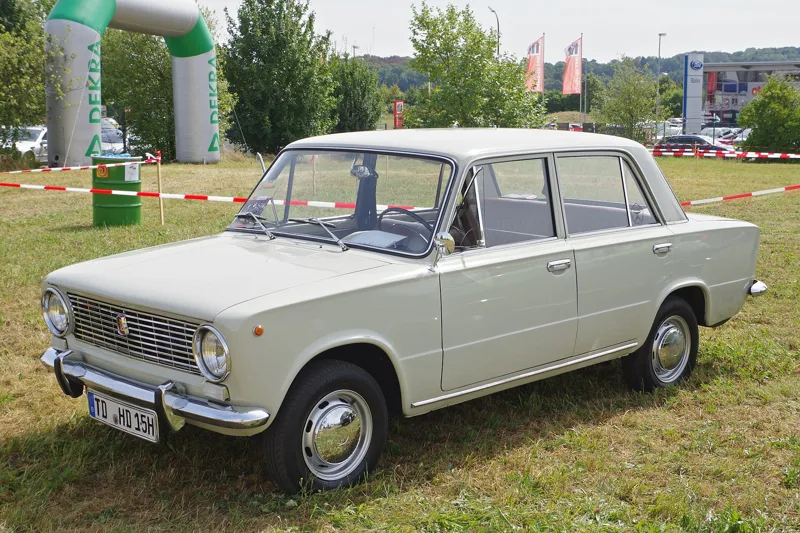
The first Dacias were licensed Renault designs. The 1100 was a Renault 8 built under licence until the Renault 12 tooling was ready, and the 1300 arrived in time for a national parade in 1969. Romanians welcomed its modernity and reliability, and waiting lists were long from the start.
By 1970 the range had the standard 1300 and the 1300L, while the 1301 Lux Super of 1974 added a heated rear screen, a radio and wing mirrors on both sides. That top version was reserved for the Communist Party elite, so most buyers never saw one new.
Export opened the range further. The 1300 Break estate appeared in 1973, and the 1302 pick-up followed in 1975, with about 2,000 built until 1982.
Which Dacia was Romania's most common car?
The 1300 and 1310 family ended up as the commonest sight on Romanian roads. Production ran for more than 34 years and passed 2.5 million units, and many owners learned to repair their cars themselves. For a generation it was simply the car that most families drove.
Romania's entry to the European Union made continued production of the old designs impractical, so the old models ended.
Owners often grafted newer front ends onto old bodies, and tuning remained a popular pastime. Early 1300s are now rare, and the best-preserved examples have steadily risen in price.
The 1310 and its long life
The 1310 received restyled front lamps and a new interior when it was presented at the 1979 Bucharest show. The changes followed Renault's own restyling of its 12, and the 1310 reached Romanian showrooms in late 1981.
The 1980s also brought the 1320 CN1, a hatchback that was the most expensive Dacia when it appeared in 1988. The 1325 Liberta replaced the 1320 in 1991, and the CN2 facelift of 1994 and the CN3 of 1995 kept the range updated.
In 1998 the 2,000,000th vehicle left the plant, the same year as the CN4 restyle. The 1310 sold strongly despite its age, starting at roughly 4,200 euros, and in 1999 the Dedicatie special edition appeared with alloy wheels and power steering.
The Nova, a compact three-box saloon developed from 1983, arrived in late 1994. Reliability and rustproofing complaints dogged it, but improvements in 1996 made it a more common sight on Romanian roads.
Production of the saloon finally ended on 21 July 2004, and the pick-up followed on 8 December 2006, after more than thirty years of continuous output.
How did Renault change Dacia?
Renault took control in September 1999 and made Dacia its third brand, with Romania as a hub for development in Central and Eastern Europe. Dacia sold 53,000 vehicles in 2002, nearly half the Romanian market, and investment was increased from that point.
The first sign of the new investment was the SupeRNova of 2000, an improved Nova with a Renault engine and transmission. In 2003 the Solenza arrived as a stopgap saloon until a new car could be ready, and it was built until 2005.
Western Europe had been the target for years. Exports had started in the late 1970s, reaching Belgium and the Netherlands in 1978, and the Renault link gave the brand a far wider reach.
Why did the Logan succeed?
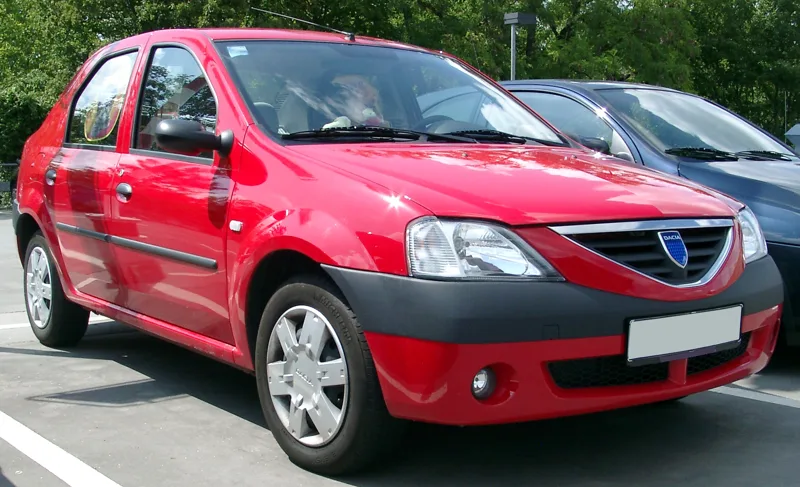
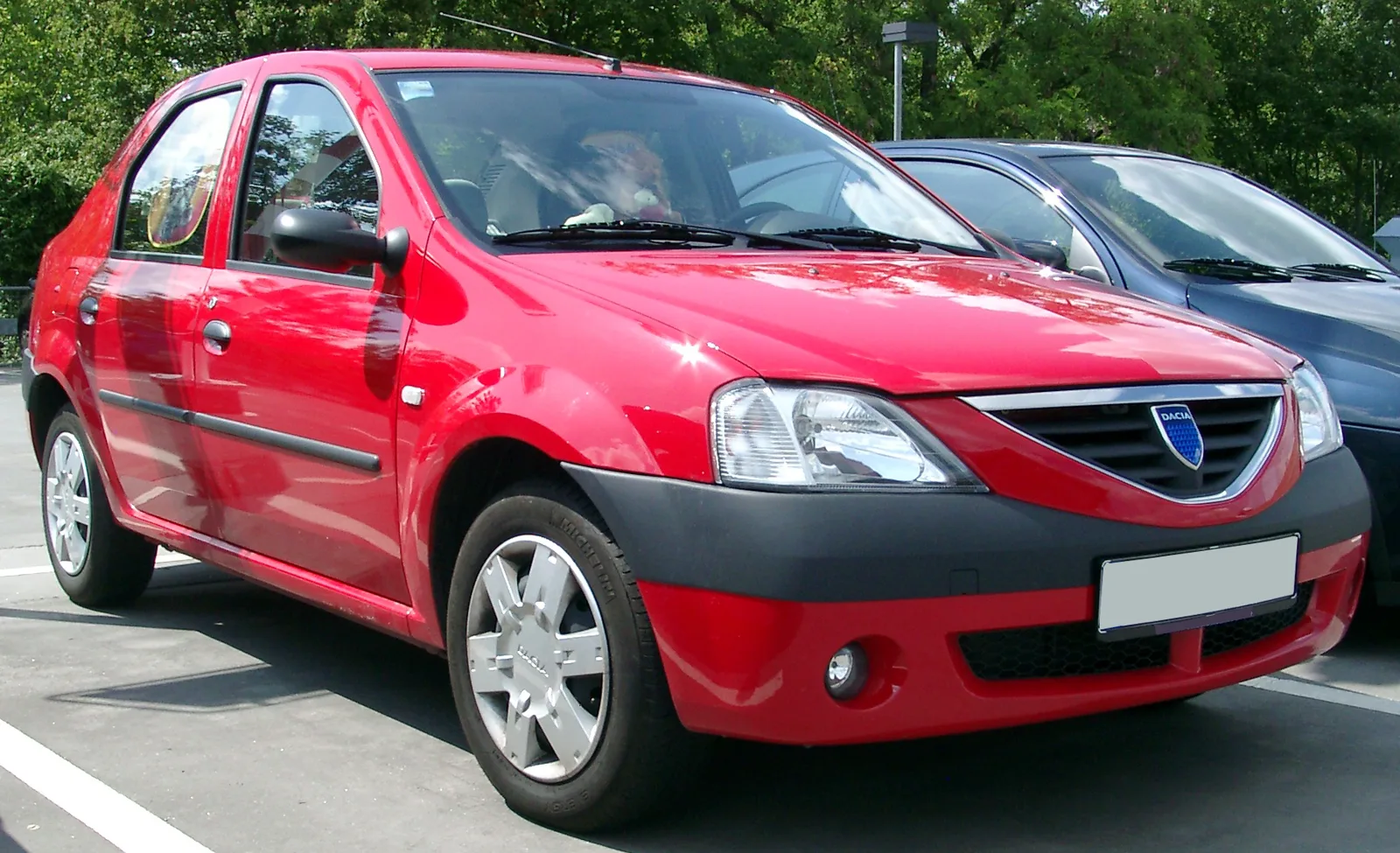
The Logan launched in August 2004 after heavy media interest and quickly became one of the top sellers in Central and Eastern Europe and Russia. It had been nicknamed the 5000-Euro car before launch, and it remains the best-selling car in Romania.
Design criticism did not stop it. The Logan earned three of five possible stars in NCAP crash testing, and a diesel arrived in 2005. Its share of Dacia's Romanian sales reached 43 percent in 2015.
The name then spread into a family: an estate in late 2006, a van in 2007, and a second generation in September 2012 that shared a common front end with the Sandero. A third generation followed in 2020.
Which Dacia models are on sale now?
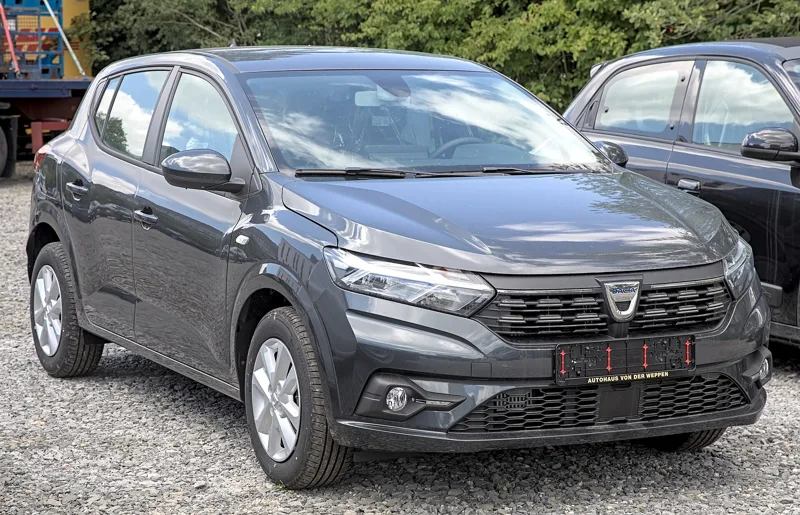
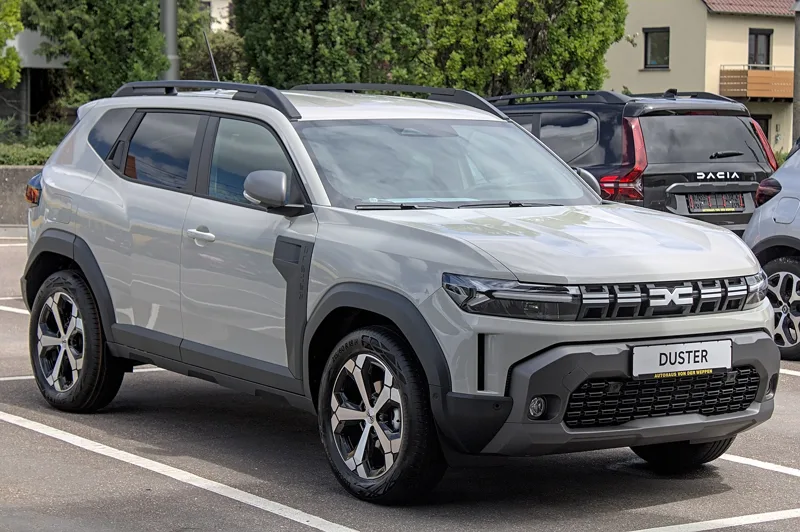
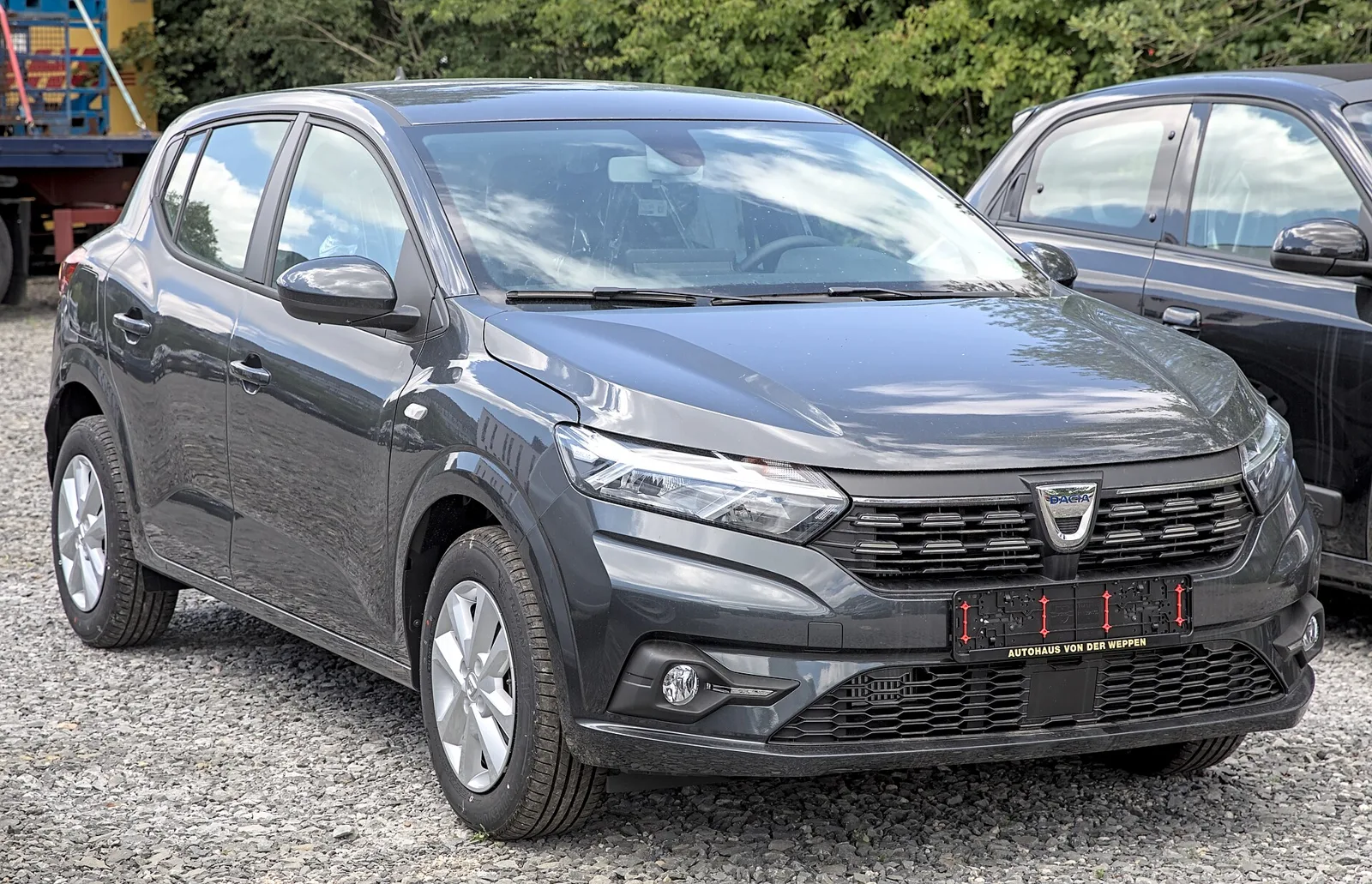
The current range includes the Logan III, the Sandero III and Sandero Stepway, the Jogger and the Sandrider, plus the Duster III and the Bigster. The Spring Electric and Spring Cargo add electric options, and a Duster Pick-Up is also listed.
The Sandero is the flagship of the brand's success in Europe. It was launched as a hatchback in 2008 at the Geneva Motor Show, and it has been Europe's best-selling car in several successive years.
What is the Dacia Spring?
The Dacia Spring Electric is an electric city car based on the Renault City K-ZE. It was first shown as a concept in March 2020, and the production version appeared in March 2021 for left-hand drive areas of Europe, with a car-sharing variant planned as well.
Early estimates put the Spring at roughly 15,000 to 20,000 euros, which would make it one of the cheapest electric cars in Europe. Those figures were estimates, not confirmed prices.
Where does Dacia build its cars?
Dacia's single plant is at Mioveni in Romania, alongside its headquarters, with capacity of 350,000 vehicles a year. Engineering is handled by Renault Technologie Roumanie in Bucharest, which employs about 2,500 engineers and was set up in 2006. The plant is split into bodywork, painting, assembly, mechanical and chassis, and foundry sections.
The International Logistic Network near the plant, set up in March 2005, sends complete knock-down kits to Renault sites across the world. In 2012 the kits dispatched from the centre were equal to 920,646 vehicles. The Lodgy and Dokker vans come from the Renault plant at Tangier in Morocco, where the Logan and Sandero are also built.
A testing centre at Titu opened in September 2010. It has nine track types covering 32 kilometres and about 100 test benches to check parts against cold, heat and rain.
How many cars does Dacia sell?
Dacia sold 359,822 vehicles in 2012, about 230,000 of them in Western Europe. Sales reached 511,465 in 2014, 550,920 in 2015 and more than 700,000 in 2018. The brand sold 676,340 vehicles in 2024, and sales in 2018 ran 7 percent ahead of 2017.
The five millionth car left the Mioveni plant on 6 May 2014. Buyers in Britain took the 3.5 million Dacia built since the brand's revival in November 2015, a decade after that revival began.
Dacia at a glance
The figures below summarise the brand as it stands today, from its founding year to its current leadership.
| Item | Figure |
|---|---|
| Founded | 1966, as Uzina de Autoturisme Pitesti |
| Renault ownership | From September 1999 |
| Mioveni plant capacity | 350,000 vehicles a year |
| Sales in 2024 | 676,340 vehicles |
| Markets | 44 countries, as of September 2023 |
| Five millionth car | 6 May 2014 |
| Chief executive | Katrin Adt, since September 2025 |
What is the Easy-R gearbox?
Easy-R is an automatic gearbox developed by Renault for Dacia, replacing hydraulic controls with electromechanical parts. Renault designed it for buyers in Europe and in markets such as Russia, South America and India. From 2015 Dacia sold it in Europe for 600 euros, at least half of what rivals charged.
The number of parts fell by a quarter, which should mean better reliability and simpler maintenance. Four modes are shown on the dashboard, D, N, R and M, and fuel use matches that of the manual gearbox.
Who has run Dacia?
Recent chief executives include Nicolas Maure, who led from 2014 to 2016, and Yves Caracatzanis, from 2016 to 2018. Mihai Bordeanu ran the company from 2018 to 2021, and Denis Le Vot held the post until 2025. Katrin Adt has led the company since September 2025.
Denis Le Vot became chief executive of the Dacia-Lada business unit in January 2021, when Renault brought the two brands together and unveiled a new Dacia logo.
Has Dacia been involved in motorsport?
Dacia's competition record is modest, but its 1310 Sport coupe, launched in 1983, was popular in rallies and racing. Drivers such as Nicu Grigoras tuned the cars for extra power. Sponsorship has since become the brand's main link to sport.
Dacia backed Italian Serie A side Udinese and its Friuli stadium for the 2008-09 to 2022-23 campaigns. It became the official car partner of Rugby League Super League in February 2016, and in June 2017 it became the main sponsor of the England men's, women's and wheelchair teams.
Since 2023 Dacia has been a major sponsor of the UTMB World Series of trail running. Critics called the deal sportswashing, and UTMB dropped the Dacia name from its Chamonix flagship race in 2024.
Where is Dacia sold?
As of September 2023 Dacia operated in 44 countries across four continents. Its strongest presence is in Europe, with a smaller footprint in North Africa and the Middle East, where Morocco, Algeria, Tunisia and Israel are among the markets. Its models have also been built by Renault on other continents.
Concept cars and prototypes
Dacia has shown many prototypes, and some never reached production. The Brasovia coupe was shown at the 1980 Bucharest fair, and a 500cc Mini-Dacia prototype came from the 1980s, built by cutting down 1310 panels.
Some 1990s prototypes grafted the front ends of newer cars onto the 1310 in an attempt to modernise it. Styling hangovers from 1983 lingered until 1994, and the Dacia Star of 1991 had curved side windows.
Modern concepts include the Duster concept of 2009, the Bigster concept of 2021, the Manifesto of 2022 and the Hipster prototype of 2025. A future Striker model is due in 2027.