A 5,000-euro brief, borrowed Renault hardware and a long afterlife as the Nissan Aprio, Mahindra Verito and Renault Tondar.
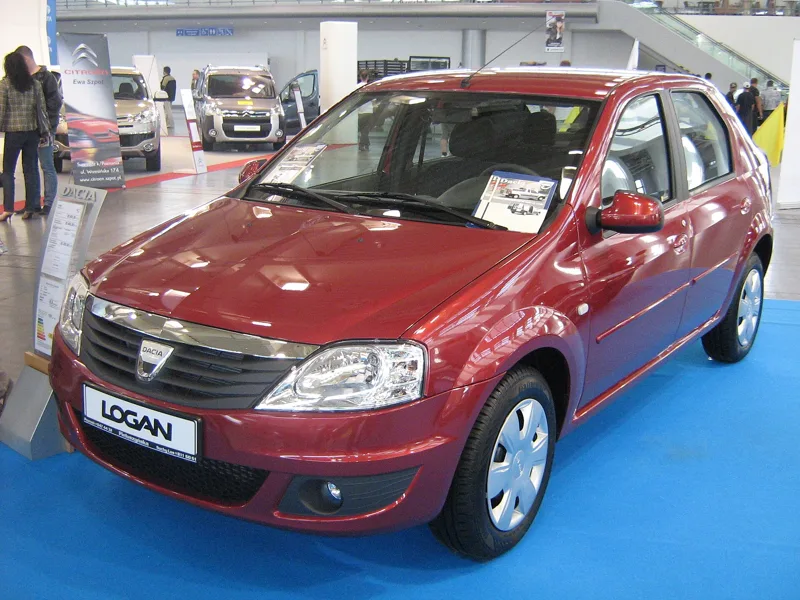
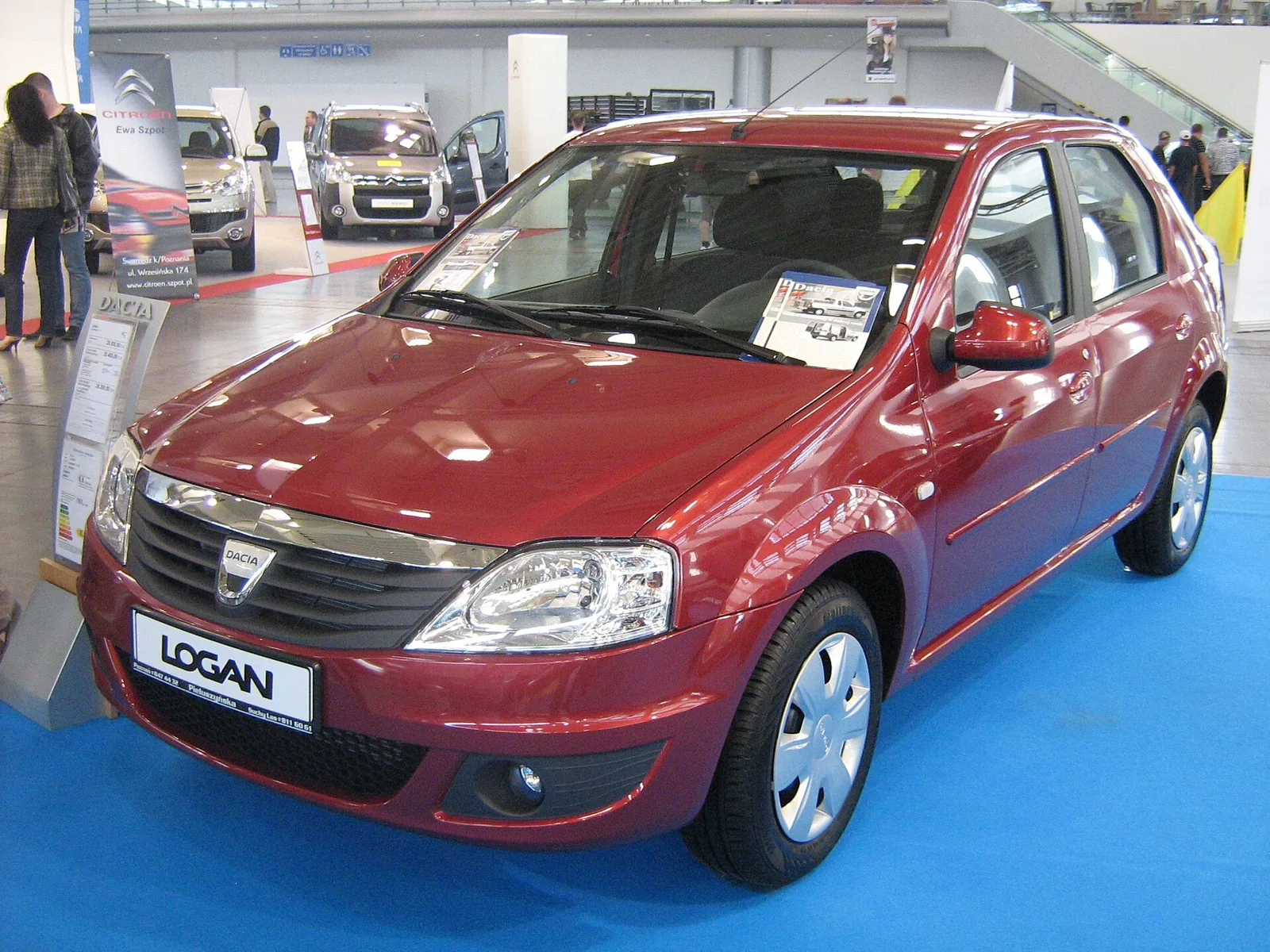
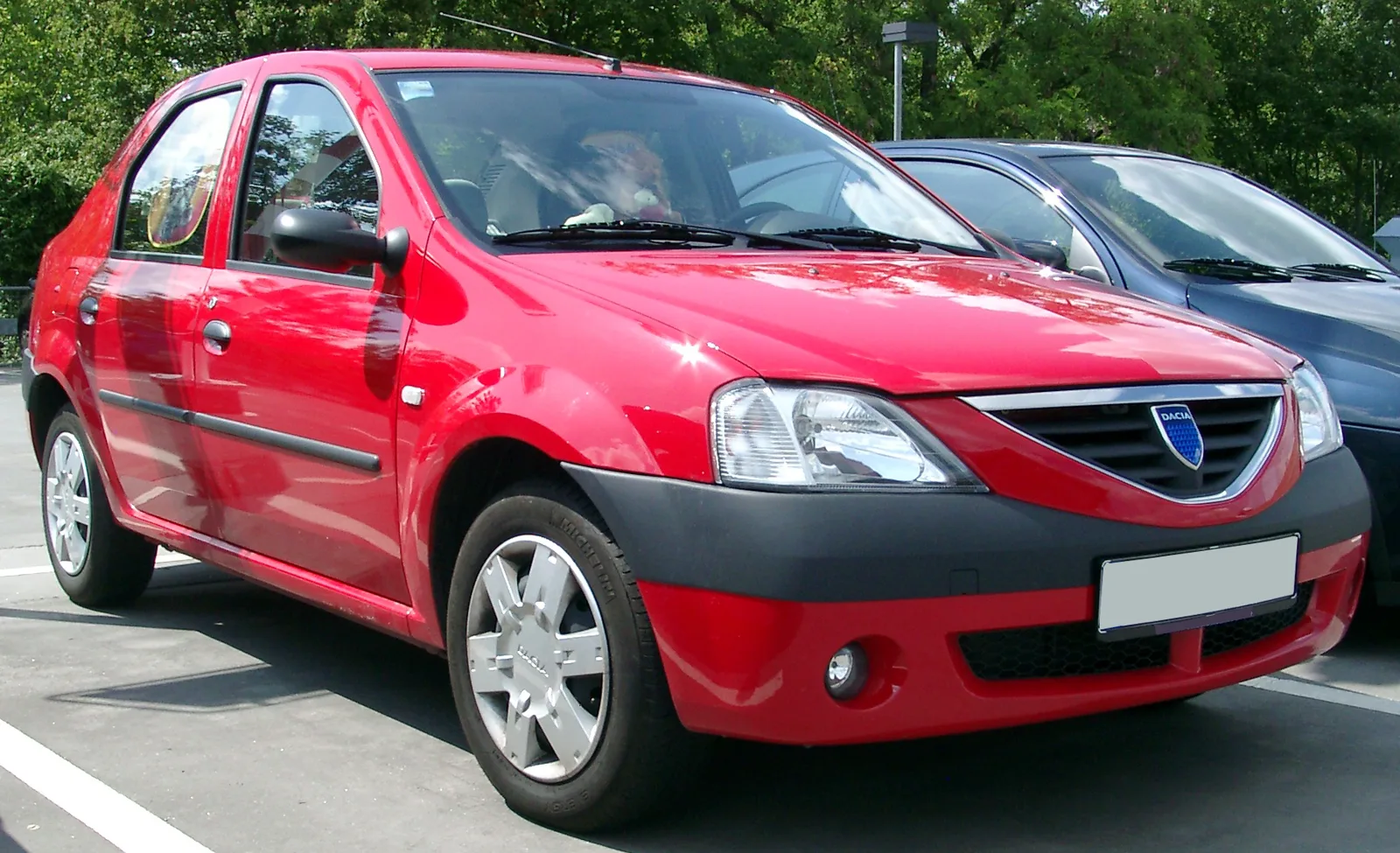
The Dacia Logan I was a budget saloon built by Dacia from 2004 on Renault hardware and a long-wheelbase Renault-Nissan platform. It was sold as the Nissan Aprio, Mahindra Verito and Renault Tondar in several markets, and it spawned an estate, a van and a pick-up.
The Dacia Logan I was meant to be a modern car for 5,000 euros, and it reached Romanian showrooms in autumn 2004 wearing a Dacia badge. Built on a long-wheelbase version of a Renault-Nissan platform, it started life as a plain three-box saloon and went on to spawn an estate, a van, a pick-up and rebadged twins sold from Mexico to India.
Why did Renault build the Logan?
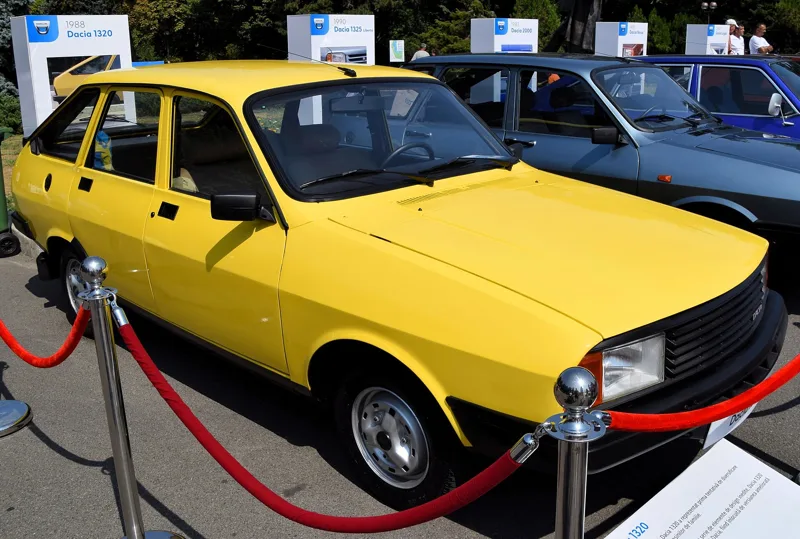
Renault wanted a modern car for about 5,000 euros that would still earn a profit, a price no rival offered at the time. The car replaced the Dacia 1310, the Romanian version of the Renault 12, built by Dacia, which Renault had bought in 1998. Project X90 began in 1999.
The brief was blunt. The car had to be small, spacious and rugged, with cost as the main concern. Its designers did not chase style. Their method, known as design to cost, was closer to an economic puzzle than a styling exercise.
Reliability mattered as much as price. The Logan had to cope with everything from Romanian cobblestones to the corrugated surfaces of Saharan roads, run on poor-quality petrol and go long periods between services, since garages were scarce in the least industrialised markets. It also had to meet the Euro III and Euro IV emission standards and be 95% recyclable.
The brief was a modern car at 5,000 euros that still made money, and Renault built it from parts it already had.
Which parts did the Logan borrow from Renault?
The Logan reused a lot of existing Renault hardware. Its front axle came from the Clio II and its rear axle from the Modus, while the Clio II also supplied the door handles, steering wheel and rev counter. The engine came from the Kangoo.
- Clio II: rear brakes, rev counter, steering, steering wheel and door handles
- Dacia Solenza: air vents
- Megane II: stalk switches, brake fluid reservoir, expansion tank and ABS system
- Megane II and Laguna II: gearbox
- Espace IV: ashtray and some air vents
- Espace III: gear lever knob
- Kangoo: engine
Small savings were everywhere. The antenna sat at the front so that a cheaper passive unit could be fitted with less wiring. Left and right side parts were identical, the dashboard was moulded as a single piece instead of five, and the front and rear glass had only a slight curve.
What engines and specifications did the Logan offer?
At launch the Logan offered a 1.4 L (85.4 cu in) petrol engine plus a 1.6 L (97.6 cu in) unit, both paired with the JH gearbox. Diesels of 70 PS (51 kW; 69 hp) and 85 PS (63 kW; 84 hp) followed in 2006 and 2007.
| Item | Detail |
|---|---|
| Launch market | Romania, autumn 2004, Dacia brand |
| Launch petrols | 1.4 L (85.4 cu in), 1.6 L (97.6 cu in) |
| Later petrol | 105 PS (77 kW; 104 hp) 1.6 16v unit, from late 2006 |
| Diesels | 70 PS (51 kW; 69 hp) from 2006; 85 PS (63 kW; 84 hp) from 2007 |
| Gearbox | JH |
| Emission standards | Euro III and Euro IV |
| Recyclability | 95% |
| Price, Romania | 6,280 euros with VAT, July 2006 |
| Price, France | 7,600 euros, petrol version (January 2010) |
| Van payload | 800 kg (1,764 lb) |
| Van loading volume | 2.5 m3 |
| Pick-up loading length | 1.80 metres (5.9 ft) |
Where was the Logan built?
The Logan was built in Romania first, from 2004, and then in Russia, Morocco, Colombia, India, Brazil, Iran and South Africa. Each plant had its own local story, from the Pitesti works with almost no robots to the Nissan pick-up built in South Africa.
The Pitesti plant in Romania stood apart from the rest of the Renault group. Its robotisation was almost non-existent, because labour costs were low enough at the start of production to make robots unnecessary. Production of the first generation there ended in 2012.
Production followed in other places. The saloon was built in Moscow from April 2005, SOMACA made it in Casablanca from 2005 for the local market and for export, and the Envigado plant in Colombia built it from September 2005 to 2015. Brazil became the seventh country to assemble the Logan in mid-2007, and Nissan built the pick-up at its South African plant from 2008.
How well did the Logan sell in Central Europe?
Sales fell well short of Dacia's hopes. Central Europe and the Balkans were the main target, but demand was far below forecast, and the Romanian new-car market fell to a third of its size between 2007 and 2010. Renault had underestimated regional differences and the old-fashioned image Dacia carried.
Market shares varied widely. The Logan was average or poor in Poland, the Czech Republic, Slovakia and Slovenia, but very good in the poorest markets of the area, namely Romania, Bulgaria, and Serbia and Montenegro. The biggest obstacle was used cars from Western Europe, whose flood of imports after European integration choked the new-car market.
Why did the Logan fail as the Nissan Aprio in Mexico?
Between July 2007 and August 2010 the Logan saloon was sold in Mexico as the Nissan Aprio. It had been imported from Brazil and rebadged for a country where Nissan was one of the most popular makers, yet it still failed commercially, notably because of competition from the Nissan Tiida.
How did the Logan become the Verito in India?
In India the Logan was built in a joint venture with Mahindra from April 2007 and sold as the Mahindra Renault Logan, with right-hand drive. Renault later sold its stake, and Mahindra took the car on alone as the Verito from 2011, with no link to Renault.
Renault's own verdict in 2010 was that the model had not reached the volumes it had hoped for. Only 44,000 vehicles had been sold locally after three years, plus 2,600 exported to Nepal and South Africa, against a planned capacity of 50,000 a year. Mahindra acquired Renault's holding in the venture, which operated as MRPL, and Renault handed over a licence to build and market the car in India, along with styling freedom.
Mahindra Verito Vibe and the electric E Verito
The Verito was facelifted in July 2012, and in June 2013 Mahindra added the Verito Vibe, a two-box notchback under 4 metres long. That length brought tax advantages in India, but sales ran at only a few thousand a year, below those of the three-box car.
In 2016 Mahindra also offered an electric Verito, the E Verito, a version offered only with the three-box body. Its range stopped at roughly a hundred kilometres. The Logan's Indian story ended when the Verito and Verito Vibe were discontinued in 2020.
What was the Logan's story in Iran?
In Iran, In May 2004 Renault joined AID Co, a body made up of the Industrial Development and Renovation Organization, Iran Khodro and Saipa, to create a joint company called Renault Pars. The Logan went on sale in 2007 as the Renault Tondar 90, and 100,000 orders had been signed in barely a month.
Iran Khodro and Saipa were meant to assemble around 300,000 units a year, a figure they never reached despite strong demand. Louis Schweitzer spoke bluntly about the Iranian partners' technical incompetence and the disorganised state of the Iranian economy. The local car had its own design, with boomerang-shaped rear lights, and a CNG version followed in 2008.
Western sanctions led Renault to withdraw, and sales were halted in 2019. Saipa kept the model going, bringing 85% of the parts needed to build it into the country, and output restarted in 2020 with no Renault involvement. Prototypes of a heavily facelifted car, the Pars Khodro Cadila, were presented in April 2023, with a launch announced for December of that year.
What body styles did the Logan come in?
The Logan came as a four-door three-box saloon, an MCV estate seating five or seven, a Van with no rear seats, and a pick-up. A Verito Vibe two-box saloon was added for India only. The MCV name was short for Multi Convivial Van.
The MCV estate
The Logan MCV, which Spain knew as the Logan Break, was first previewed at Geneva in 2006, in a show car named the Dacia Logan Steppe. The production car followed at the Paris show that year, and sales began in Romania and Bulgaria in October 2006.
The family version was a strong seller in France, where its sales quickly outstripped those of the saloon it came from. Like the other versions, it received the late-2008 facelift, and in 2009 an E85 fuel version reached Sweden, Poland and France.
The Van
The Logan Van, known as the Logan Furgovan in Italy and the Logan Express in Germany, was a panel-bodied MCV with no rear seats, aimed at trade buyers as a light commercial vehicle. Its debut came in January 2007, and it could carry 800 kg (1,764 lb) with 2.5 m3 of loading volume.
Output stopped in August 2012 once 53,000 Logan Vans had come off the Mioveni lines.
The pick-up
A pick-up joined the range in September 2007, with its world debut at the Bucharest show that October. Its load bed gave 1.80 metres (5.9 ft) of length. Dacia's Mioveni production of it ended in July 2012 with no direct replacement.
In South Africa the pick-up was built locally as the Nissan NP200, succeeding the Nissan 1400 bakkie, a model that had been marketed there for 37 years. The NP200 began in October 2008, was facelifted in mid-2009 and was exported across southern Africa. Its production was permanently halted in March 2024. Of all the Logan I versions, it was the only one still sold under Renault's own control, because the Lada and Iranian cars are built without the French maker's consent.
Lada Largus, a rebadged estate
From April 2012 the Russian maker AvtoVAZ, which Renault then owned, built a rebadged Logan MCV and Van, named Lada Largus. It was sold in Russia and certain CIS countries. A Cross-look version appeared in 2015, then came a big 2020 update and an electric variant in 2023.
Did the Logan win any awards?
Autobest named the Logan its Car of the Year for 2005, with jurors from 15 countries across eastern and central Europe, the Balkans, Malta and Cyprus. Each juror scored it against 13 measures, from economy and flexibility to roominess and styling.
What trim levels and special editions did the Logan get?
The range ran from a base trim with ABS, airbags and five headrests up to Prestige, which added body-coloured bumpers, handles and mirrors, and a leather gear knob and steering wheel. In between sat Ambiance, which brought central locking and chrome on the grille, and Laureate, which added electric windows and mirrors, a trip computer and fog lights.
Three-quarters of customers chose Laureate, which is why Dacia introduced Prestige in late 2006 as a more refined top grade. Special editions included Kiss FM versions in Romania in 2007 and 2009, and a BlackLine edition in France in 2010 with a height-adjustable leather steering wheel and a fuel-consumption reduction kit.
What concept cars were built on the Logan?
The Dacia Logan Steppe show car announced the estate body at the 2006 Geneva show, while Heuliez, the French coachbuilder, built the Dacia Logan Edelweiss concept in 2007. The Edelweiss was painted entirely white, had a fabric roof and used a tailgate in place of hinged doors.
A Logan badged Renault eco2 also took part in the Michelin Challenge Bibendum in Shanghai from 14 to 17 November 2007. Aerodynamic work on a 1.5 dCi saloon, including a drag coefficient of 0.29, tyre and driveline changes, and a low-viscosity 5W20 oil, brought it to 97 g of CO2 per km on the NEDC test cycle and 71 g per km during the event.