From the Paykan to the Samand, a Tehran group built on foreign partnerships, its own platforms and engines, and a long export push.
Iran Khodro, branded IKCO, is a Tehran-based automaker founded on 29 August 1962 as Iran National. It built the Paykan for more than three decades, then developed the Samand and its own X7 and IKP1 platforms. The company produced 556,442 passenger cars and commercial vehicles in 2023.
Iran Khodro, known abroad as IKCO, is the region's leading vehicle maker and the largest in Iran, based in Tehran. It grew from a company founded in 1962 as Iran National and built the Paykan for decades before turning to partner models and its own engines. Today it makes cars, trucks, minibuses and buses.
Where did Iran Khodro come from?
Iran Khodro was founded on 29 August 1962 under the name Iran National. Khodro is the Persian word for automobile, so the company's name means Iran Automobile. It is now a public joint stock company set up to create and run factories that make vehicles and parts, and to sell and export them.
The Iran Khodro Industrial Group, branded IKCO, works through subsidiaries spanning spare parts, engineering services, rail equipment and diesel trucks. Its own platforms and engines were developed alongside its foreign partnerships, beginning with the X7 platform in 1995.
As of 2009 the company produced 688,000 passenger cars a year. Its average share of Iran's domestic vehicle production is 65 percent, which makes it the largest manufacturing company of its kind in the country.
A company that began as Iran National now builds its own engines and platforms, and runs factories in several countries.
What was the Paykan?
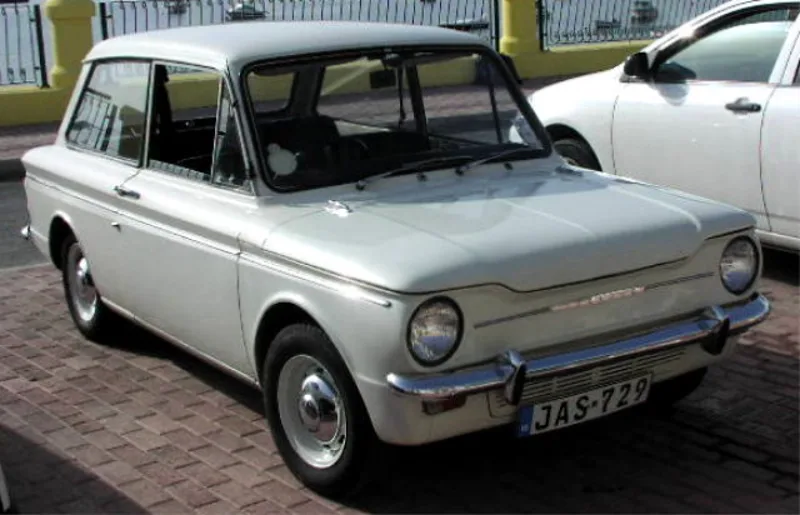
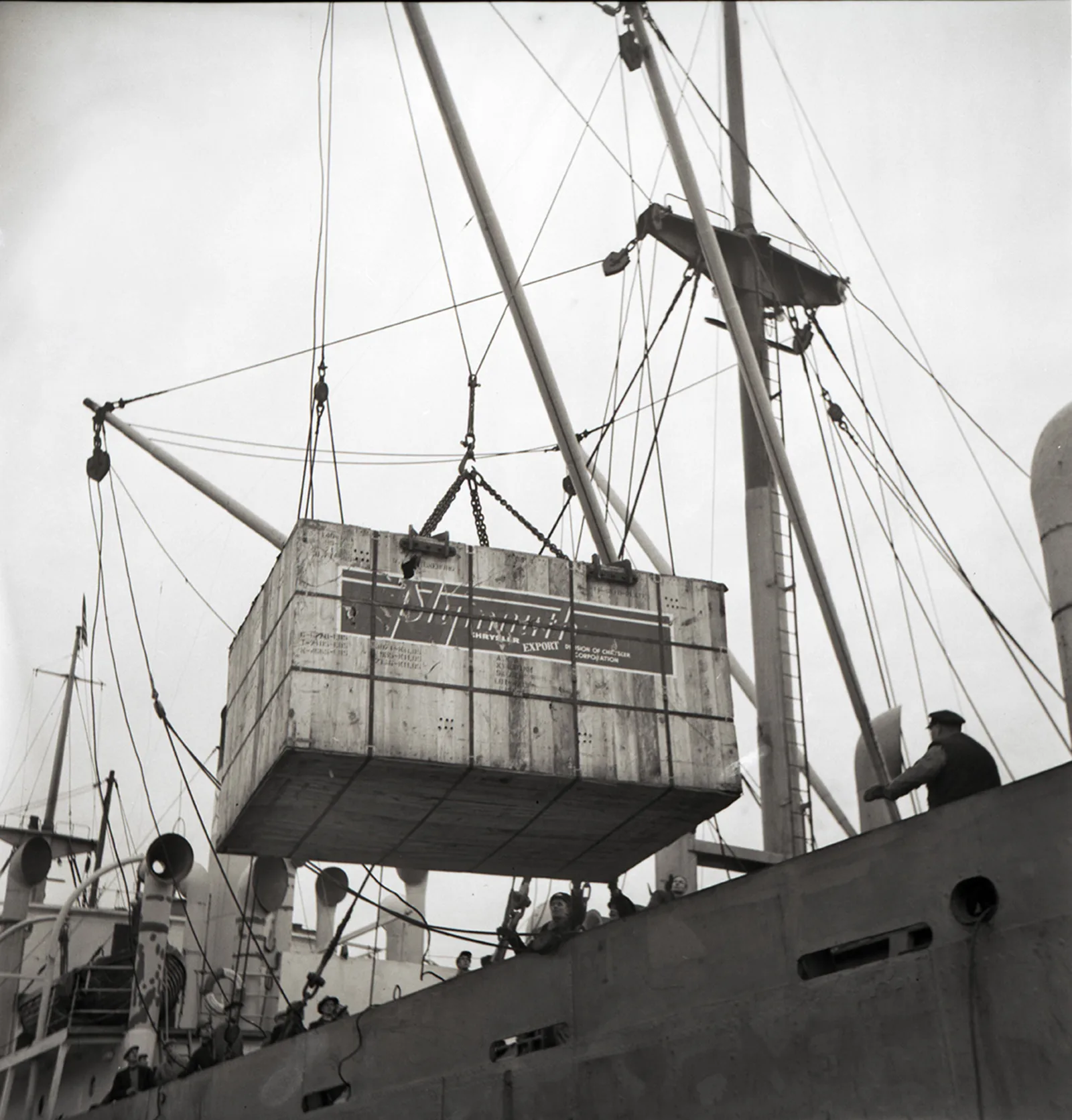
The Paykan was based on the Rootes Arrow range from the Rootes Group, whose British version was the Hillman Hunter. Iran Khodro built it for more than three decades. Saloon production ended in 2005, long after Arrow production had finished in Britain.
A pick-up version of the Paykan stayed in production until 2015. The Bardo Pick-up was due to be replaced by the Arisun, a new pick-up related to the Samand.
How did the Samand become Iran's national car?
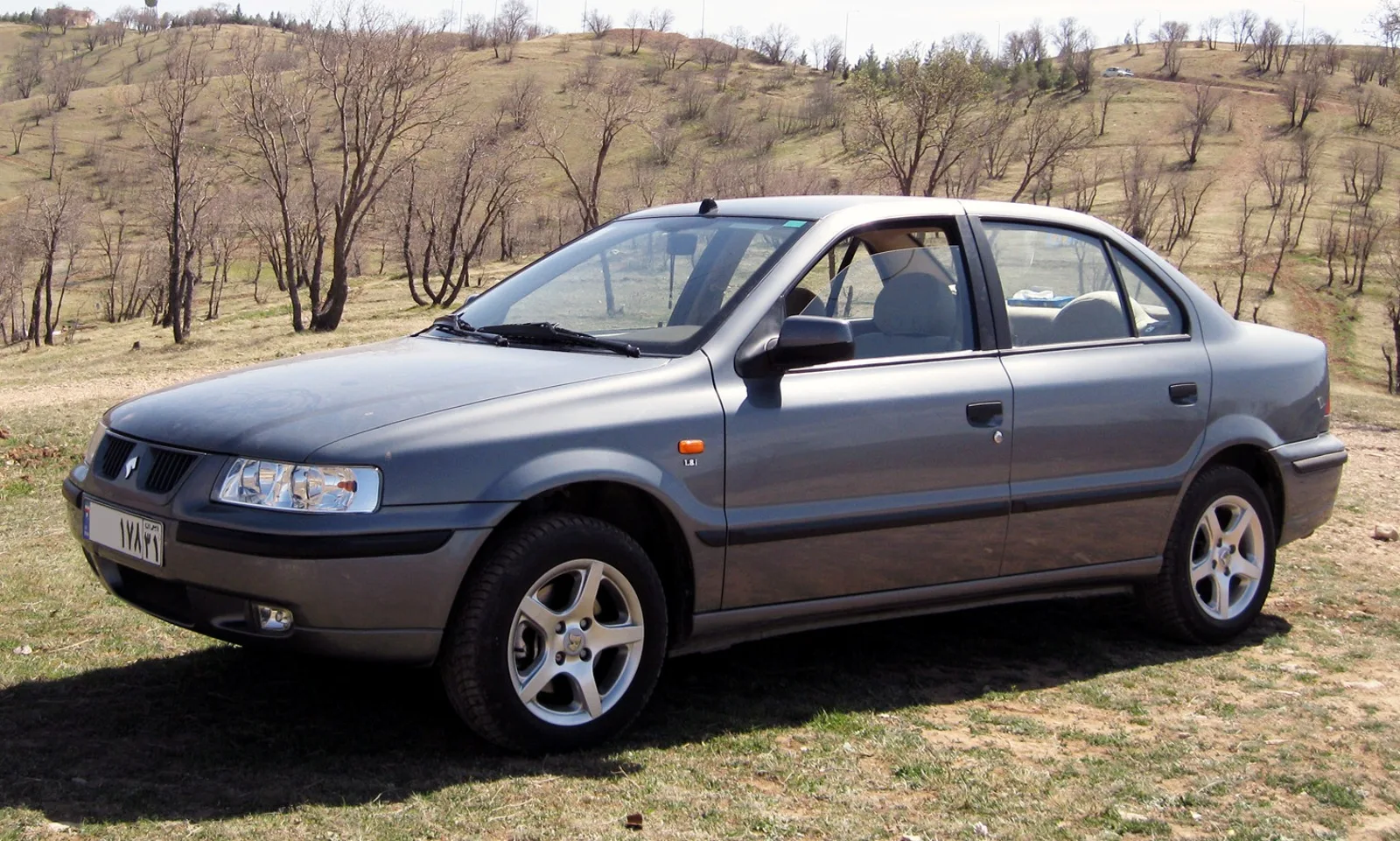
The Samand, an Iranian-designed IKCO model, took over from the dated Paykan as the national car. Its Soren variant used a CNG and petrol dual-fuel engine that was partly designed in Iran. The Samand was also the first car built on the X7 platform, with production starting in 2001.
The EF7 engine, first shown to the public in 2008, went on to power the Samand LX in Iran. That link between a model and a new engine family shows how the company tied its newer designs together rather than building each car in isolation.
Which foreign partners shaped IKCO?
IKCO's partners have included PSA Peugeot Citroen, Renault, Mercedes-Benz, Daimler and Suzuki. It has built models under licence from several of them, has joint ventures with foreign partners on four continents, and in 2017 signed a development contract with the Italian design firm Pininfarina.
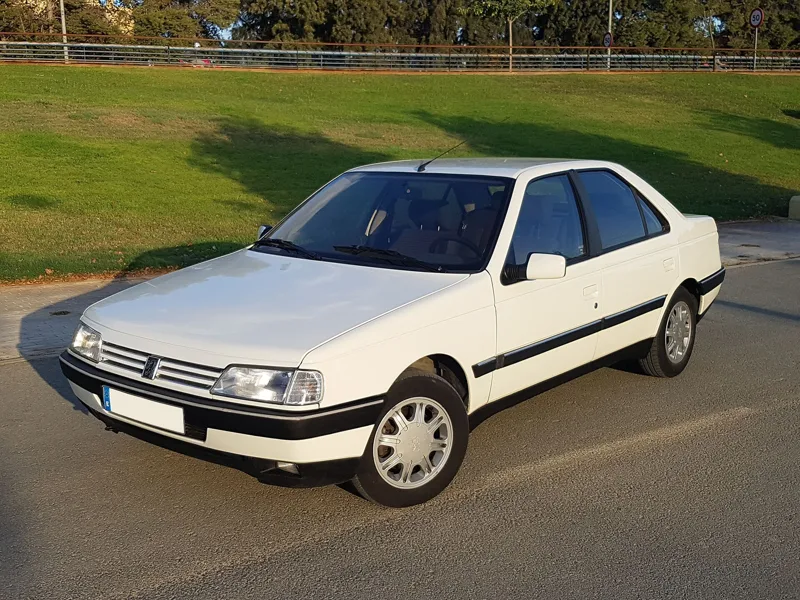
IKCO has worked with European and Asian carmakers for years, assembling several models under licence. In 2009 its export-bound cars included the Peugeot 206, Peugeot Pars, Peugeot 405, Peugeot Roa and Samand sedans, which went to markets such as Azerbaijan, Iraq and Armenia.
Parts supply was a large part of the Peugeot relationship. IKCO's parts imports from Peugeot were worth 700-800 million euros ($572-654 million) per year, and as of 2012 about 5-10 percent of its components came from France. Iran had reached 98 percent self-sufficiency in Peugeot 405 parts and 75 percent for the Peugeot 206.
Renault Pars is a joint venture, with Renault of France holding 51 percent. The remaining forty-nine percent sits with Iran's Industrial Development and Renovation Organization, IKCO and Saipa. Its remit covers engineering, quality control, parts supply and logistics, plus marketing and customer service for Renault products in Iran. The agreement was signed in March 2004.
IKCO also built the Mercedes-Benz E-Class under licence. Top Khodro, a subsidiary, was putting together the W211 E-Class body by 2006 using the Semi-Knocked Down method. Around 1,740 parts for the car came from Mercedes-Benz Germany, and the assembly plant is now deserted.
In a joint venture with Daimler AG, the company planned to produce 900-class Mercedes-Benz engines, and Daimler said Iranian-made engines would be exported to Germany. The group also manufactures trucks and buses under licence from the same German partner.
Among Asian manufacturers, IKCO works with Suzuki. It produces the Suzuki Grand Vitara at its site in Khorasan and was set to build the Suzuki Kizashi as well.
How did sanctions affect the partnerships?
By the end of 2012, Peugeot had cut its relations with Iran Khodro because of international sanctions against Iran. In 2016, once the Joint Comprehensive Plan of Action had been reached, the two companies formed IKAP, a 50-50 joint venture, to restart the relationship.
The IKAP line-up was listed as the Peugeot 508, Peugeot 2008 and Peugeot 301. Before the break, the Peugeot 207i had reached about 15,000-20,000 units by 2011, and its production stopped in 2012 during the cut in relations.
On 1 October 2026 the US Treasury added Iran Khodro to its sanctions list. The designation covered the company along with several other Iranian companies and entities.
How many cars does IKCO produce?
In 2023 the company built 556,442 passenger cars and commercial vehicles, against a 2024 plan of 600,000 units. Earlier, as of 2009, it produced 688,000 passenger cars a year. The company runs 12 production sites worldwide, six inside Iran and six in its main export markets.
Within Iran the company holds an average 65 percent share of domestic vehicle production. Abroad, its plants include a factory in Senegal, which makes the Samand under the name SenIran, and a site in Azerbaijan that builds the Azsamand and the Dena.
What engines does IKCO build?
Work on a new engine range began in 2007 with the German engineering firm F.E.V. The EF7 was the first member of the EF family displayed publicly, in 2008, and it powers the Samand LX in Iran. The family later extended to turbocharged and diesel versions.
EF7 turbocharged engines were first shown in mid-2009 and were to be installed in the Soren ELX. The EF4 and EFD diesel engines were in testing for mass production, and the EFD was designed by the company itself.
In November 2009 the company unveiled its national diesel engine, a 1.5-litre turbodiesel with fuel consumption of 5 litres per 100 km in the combined cycle. It delivers 300Nm of torque and meets Euro 5 emissions through a diesel particulate filter and exhaust gas recirculation.
The 3FX is a straight-three engine family in development for class A to class C vehicles.
What platforms underpin IKCO cars?
IKCO's first proprietary platform, the X7, was laid out in 1995 by upgrading the Peugeot 405 design. Its second, the IKP1, was developed by upgrading the Peugeot PF1 platform, and the first car on it, the Tara, has been produced since 2021.
The X7 carried the Samand into production from 2001 onward. Production of the Tara on the IKP1 platform has run since 2021.
Which subsidiaries support IKCO?
The group's subsidiaries span parts supply, after-sales service, power train engineering, rail equipment and diesel trucks. Key names include SAPCO, ISACO, IPCO, IRICO and Iran Khodro Diesel, which together extend the group well beyond car assembly.
SAPCO was set up in 1993 to manage the supply chain for automotive parts. ISACO, founded in 1977, provides after-sales services and spare parts across the country and to international markets through ISACO Kish.
In 2011, 37 percent of the spare parts needed were outsourced globally, and ISACO aimed to cut that figure to 23 percent. Its main target markets include Iraq, Belarus, Russia, Ukraine, Venezuela, Senegal, Algeria and Tunisia.
IPCO was established in 1998 as an engineering services company for power trains. Its work covers design, development, testing, product engineering and quality assurance for mass production.
IRICO was set up in 2003 to build railway rolling stock, including metro wagons, rail buses, light rail vehicles and monorails. In March 2011 it was acquired by Tose-e-Tarabar Raili Iranian Co.
Iran Khodro Diesel began as the Khawar Industrial Group in early 1966. In 1999 the bus and midi-bus lines were combined with Khawar's truck lines, creating a public company for commercial vehicles.
How did exports develop?
Exports were modest for many years. The company sold $60 million worth of cars abroad in 2007 and about 35,000 cars in 2009, then exported 40,000 units in 2010. It aimed to export 16 percent of its output by 2014.
The group's key export targets were Russia, Syria, Turkey, Iraq, Azerbaijan, Ukraine, Egypt, Algeria and Bulgaria. In 2008 the company ranked 24th among the 100 top companies in the Islamic world.
The 2010 export total included 30 percent of the company's Samand output. For 2011 the company planned to export 9 percent of its output, which meant 75,000 vehicles, with the share then rising to 16 percent by 2014.
What share of sales goes to research and development?
IKCO announced in 2012 that at least 3 percent of its sales would be allocated to research and development. Its seven-year plans for product development span bodywork, tooling, suspension, powertrain, trim and electronics.
The 2017 Pininfarina contract, worth 70 million euros over 36 months, was part of the same push. It covered four new models and a modular platform, covering a modular platform for those vehicles.
Which quality certificates does IKCO hold?
Iran Khodro holds ISO 9001 certification from RW-TUV in Germany. It also holds health, safety and environmental certificates, including ISO 14001 and OHSAS 18001.
Which models and variants came from the group?
The product range includes Samand, Peugeot and Renault cars, along with trucks, minibuses and buses. Dacia Logan cars are built as the Tondar 90 by IKCO and Saipa, and the product list also names Haima models such as the S7, S5, 8S and 7X.
Among the Peugeots, the 405 was offered as a saloon in GLi and GLX trim and as an estate in GLX trim. The Pars was initially called the Peugeot Persia and received a redesigned front and a modernised rear. Peugeot 407 cars were imported as completely built-up units, with about 2000 brought in.
The Peugeot RD used a chassis and drivetrain similar to the Paykan, but its outer body shell resembled the 405. The RD was later replaced by the ROA, which was modified from the RD.
What are the Iran Khodro specifications?
| Specification | Detail |
|---|---|
| Brand | IKCO |
| Headquarters | Tehran, Iran |
| Founded | 29 August 1962, as Iran National |
| Output, 2009 | 688,000 passenger cars a year |
| Output, 2023 | 556,442 passenger cars and commercial vehicles |
| Planned output, 2024 | 600,000 units |
| Production sites | 12 (6 in Iran, 6 in main export markets) |
| Average domestic share | 65 percent |
| Exports, 2009 | About 35,000 cars |
| Exports, 2010 | 40,000 units, including 30 percent of Samand output |
| Diesel engine, 2009 | 1.5-litre turbodiesel, 300Nm, Euro 5 |
| Diesel fuel use | 5 litres per 100 km, combined cycle |
| Certifications | ISO 9001, ISO 14001, OHSAS 18001 |
| Joint ventures | Foreign partners on four continents |