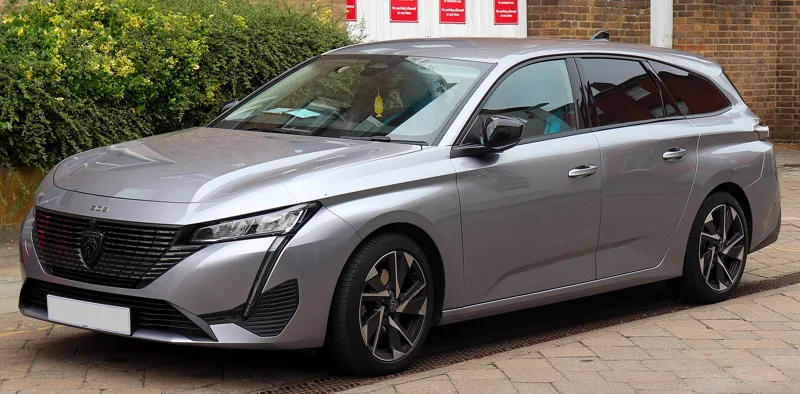
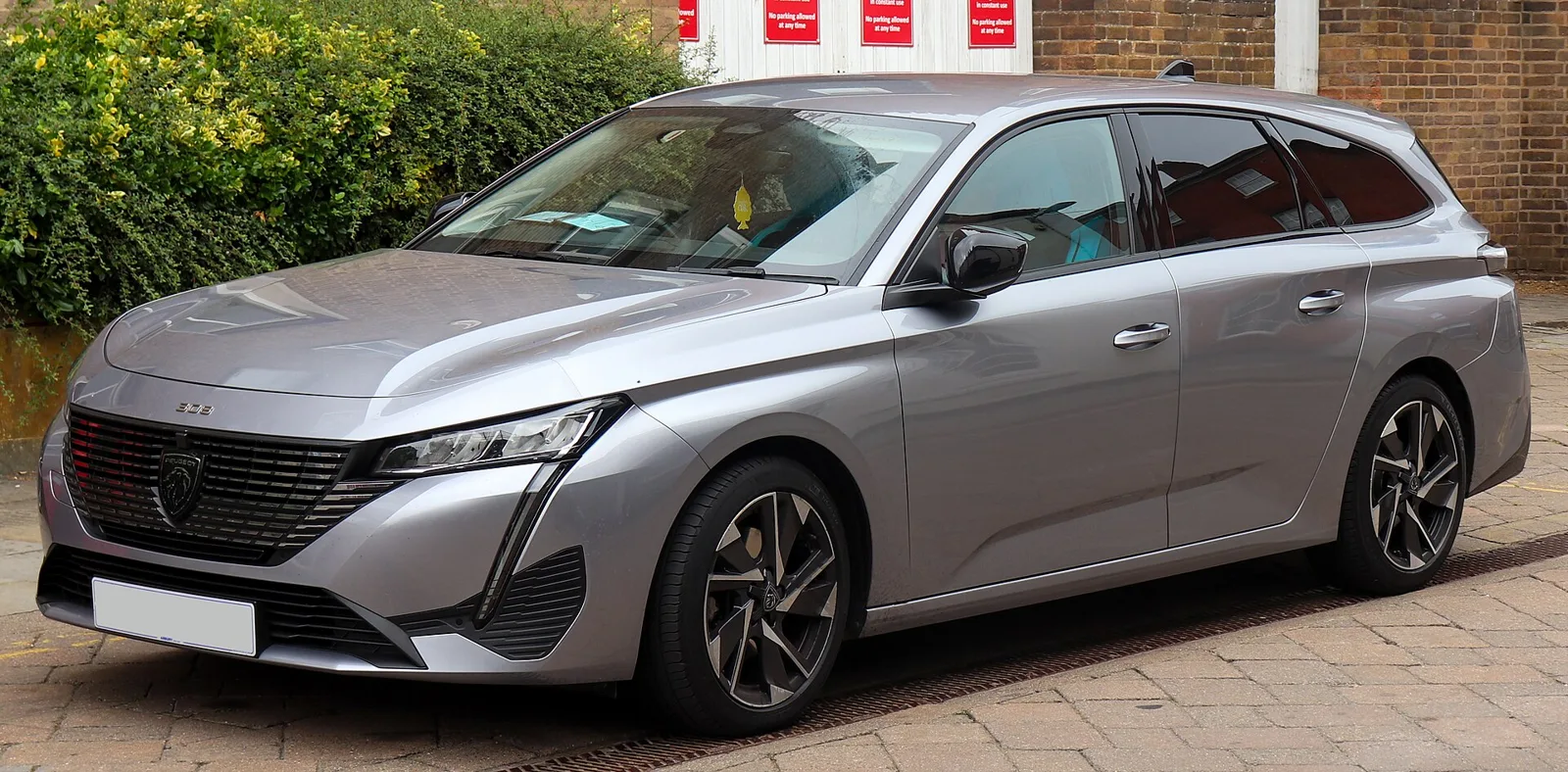
A large Peugeot that replaced the 407 and 607, shared its platform with the Citroen C5 and later grew a hybrid crossover and a sporty PSE.
The Peugeot 508 is a large family car produced since 2010 that replaced the 407 and 607. It shares its platform with the Citroen C5 and was the French maker's flagship from 2012. Later versions added the RXH hybrid, a second generation in 2018 and the sporty PSE.
The Peugeot 508 is a large family car that Peugeot has built since 2010, and it has been the French maker's flagship since 2012. It replaced both the 407 and the 607 under one nameplate. The car was launched at the 2010 Paris Motor Show and has since grown into a family of saloons, estates, a hybrid crossover and a sporty PSE model.
The 508 is best understood as a car that sits above the rest of the range. Later generations kept that position while adding hybrid power and new safety equipment.
Where did the Peugeot 508 come from?
The 508 succeeded the 407 and 607, so it carried the job of both into a single model. It shares its platform and most of its engines with the second-generation Citroen C5, and the two cars were built side by side at Peugeot's Rennes plant. A separate production line in Wuhan, China, served the Chinese market.
Leaked images and details appeared on 12 July 2010, and Peugeot released more information on 6 September 2010. The official launch followed at the Paris show in the same autumn. Production for China began in partnership with Dongfeng Motor, and the Chinese launch took place on 10 August 2011.
Peugeot expected China to become the largest market for the car. The forecast was almost twice the sales volume for France, which would have been the first time the company sold more of a model abroad than at home for a car sold in Europe.
A concept called the Peugeot SR1 previewed the coupe style of a future 508 at the Geneva Motor Show in March 2010, and reports suggested it would go on sale in 2012. That idea never reached showrooms in that form, but it shows how early the company was thinking about the car's shape.
A large family flagship that grew from a 2010 saloon into a hybrid crossover and a sporty PSE, with five Euro NCAP stars along the way.
How big is the Peugeot 508?
The saloon measures 4.79 m (189 in) in length, while the 508 SW estate is 4.81 m (189 in) long. Against the 407 it has a shorter nose overhang and a roomier rear cabin, which gives passengers more space.
The 508 is a five-door liftback in its European guise, and the estate adds a larger load area behind the rear seats. In China the car was built as a longer sedan, which is covered later in the story.
Interior space was a consistent theme across the range. The longer rear cabin and the estate's larger load area gave the 508 a practical edge, and that practicality is what most family buyers were looking for in a car of this size.
The Chinese version is a different shape of car. Its wheelbase is 55 mm (2.2 in) longer than the European model, and it is 100 mm (3.9 in) longer overall, which turns the liftback into a traditional four-door sedan.
The size made the 508 the flagship of Peugeot's range from 2012. It sat above the 208 and 308 in size and was positioned for buyers who wanted more space than a hatchback could provide.
What engines did the Peugeot 508 offer?
In Europe the car was fitted with HDi common rail diesel engines. The 1.6-litre HDi 112 could be specified with the e-HDi micro hybrid system, which uses an electronically controlled automatic gearbox to reduce fuel use to 4.20 L/100 km. CO2 emissions are rated at 109 g/km, and the car carries a range of 1,637 km (1,017 miles) on a full tank.
The HYbrid4 diesel-electric powertrain cut consumption further, to 3.80 L/100 km, with CO2 emissions of 99 g/km. This system was part of the 508 range from the start.
The first e-HDi engines emitted 114 g/km of CO2. A modified air intake was the main reason the later version fell to 109 g/km, and the change shows how much detail work went into the economy figures.
At the top of the range sat a 2.2-litre turbodiesel producing 201 bhp (150 kW; 204 PS) and 458 Nm (338 lbf ft) of torque. It came paired only with a six-speed torque converter automatic that offered manual shifts through paddles or a central selector.
In China the 508 used a 1.8 THP petrol engine, which was sold nowhere else. It produced 150 kW (201 hp) at 5,500 rpm and 280 Nm of torque across a wide band of engine speeds.
What made the 508 RXH different?
The RXH was a hybrid-electric crossover estate revealed at the 2011 Frankfurt Motor Show. Flared wheel arches set it apart, along with a colour-coded grille that carries three columns of LED running lights on each side. It reached showrooms in early 2012.
Its Hybrid4 powertrain pairs a 120 kW 2.0-litre HDi diesel with a 27 kW electric motor, lowering consumption to 4.2 L/100 km. The system offers four working modes, from an economy-focused AUTO setting to a SPORT mode that raises combined output to 150 kW (200 hp).
The high-voltage battery is made from 42 packs of four D-size SANYO batteries. The control unit keeps the cells between 30 percent and 90 percent of their capacity to extend pack life. Its ground clearance is 30 mm more than the standard 508 SW.
The RXH competed with the Audi A4 Allroad, the Volvo XC70 and the Passat Alltrack. Its launch came as one top-specification limited edition, with the broader range arriving later.
In zero-emission mode the car moves only on the rear electric motor, and performance is limited. That mode is available only when the battery holds enough charge, and the diesel engine restarts when more acceleration is needed.
How did the second-generation 508 change?
Peugeot announced the second generation in February 2018 and unveiled it at the Geneva Motor Show in March 2018. The estate followed in June and was revealed at the 2018 Paris Motor Show. The design drew on the Instinct shooting brake concept shown at Geneva in 2017.
The new car is the first passenger vehicle sold under the Peugeot brand to use a stretched version of the EMP2 platform. Petrol options were two 1.6-litre PureTech turbocharged engines with different outputs, alongside three turbodiesels. The automatic transmission moved to an eight-speed Aisin EAT8 unit, replacing the older six-speed.
A plug-in hybrid version was revealed in September 2019, and the Middle East received the car in May 2019 with the older 1.6-litre engine and the previous six-speed automatic.
A facelift was unveiled on 24 February 2023, with a revised front end that adopted the brand's new logo and a new infotainment system.
What was the 508 PSE?
The 508 PSE, short for Peugeot Sport Engineered, was unveiled in February 2020 in both liftback and estate forms. It was based on the sporty plug-in hybrid concept shown at the 2019 Geneva Motor Show, which combined a petrol engine, a front electric motor and a rear electric motor for a combined output of 400 PS (294 kW; 395 hp).
The concept reached 100 km/h (62 mph) in 4.3 seconds and was capped at 250 km/h (155 mph) electronically. Its 11.8 kWh battery allowed up to 50 km (31 mi) of electric driving, and its CO2 rating was 49 g/km on the WLTP cycle. The production car used the concept as its base, with a sportier bodykit.
Sales of the PSE fell well below Peugeot's target. The company had aimed for 5 to 6 percent of 508 sales, but only 2,000 units had been built by April 2022. The pre-facelift PSE was discontinued in February 2023.
How safe is the Peugeot 508?
The first-generation 508 received a five-star rating from Euro NCAP in 2011. The second generation earned another five-star rating from Euro NCAP in 2018.
The rating comes from the Euro NCAP scheme, which gives a maximum of five stars and rewards both crash protection and driver assistance. Earning five stars twice, in 2011 and again in 2018, shows the car kept pace with the programme as its tests tightened.
The safety kit includes automatic emergency braking, adaptive cruise control, active blind spot detection with some steering correction, and speed and road sign recognition. A windscreen camera supports Active Lane Keeping Assistance, Road Edge Detection and Lane Positioning Assist, which can keep the car in the centre of its lane.
The 508's Safety Plus Pack adds sensors that watch areas outside the driver's field of vision and warn by LED. Parking aids range from front and rear sensors to fully automated assistance for both parallel and car park spaces.
Parking aids are another part of the package. Sensors sit at the front and rear, and fully automated assistance can handle both parallel parking and car park spaces, which removes much of the manual work from tight manoeuvres.
What awards did the Peugeot 508 win?
The first generation won Car of the Year 2011 in Spain, an award presented in 2012, along with Next Green Car and Best Large Family Car 2011. Judges praised its spacious and well-equipped interior and its excellent build quality, as well as its fuel economy in its class.
Auto Zeitung named it Best Imported Family Car 2011 in a readers' vote, and the second generation won Most Beautiful Car of The Year 2018 at the International Automobile Festival. The Peugeot e-Legend concept also took the award for the most beautiful concept car that year.
What are the Peugeot 508 specifications?
The table brings together the key figures for the saloon, the hybrid, the top diesel and the PSE. It shows how far the range has been pushed, from economy-focused engines to a performance hybrid.
| Specification | Detail |
|---|---|
| Saloon length | 4.79 m (189 in) |
| SW estate length | 4.81 m (189 in) |
| 1.6 HDi e-HDi | 4.20 L/100 km, 109 g/km CO2 |
| HYbrid4 | 3.80 L/100 km, 99 g/km CO2 |
| Top diesel | 2.2-litre turbodiesel, 201 bhp (150 kW; 204 PS), 458 Nm (338 lbf ft) |
| RXH Hybrid4 output | 120 kW diesel plus 27 kW electric |
| Second-generation gearbox | Eight-speed Aisin EAT8 |
| PSE concept output | 400 PS (294 kW; 395 hp) |
| PSE concept 0-100 km/h | 4.3 seconds |
| China 508L length | 4,870 mm (192 in) |
Frequently asked questions
What replaced the Peugeot 407 and 607?
The 508 replaced both the 407 and the 607 under a single nameplate. No direct replacement was scheduled for either model, so the 508 took on the role of a large family car across two former lines.
Is the Peugeot 508 related to the Citroen C5?
Yes, the two are close relatives. The Citroen C5 uses the same underpinnings, and both cars were built at the Rennes plant.
Did the Peugeot 508 get a station wagon?
Yes. The 508 SW estate followed in 2011, and it was slightly longer than the saloon at 4.81 m (189 in). The estate shares its engines and platform with the saloon.
What does the 508L sold in China look like?
The 508L has a longer wheelbase, a conventional trunk and framed doors, making it a traditional four-door sedan. It premiered at the 2018 Guangzhou Auto Show and received a facelift in mid-2023.