Why manufacturers export unassembled parts for local assembly, from wartime Jeeps and Ramblers to Paykan sedans, Sprinter vans and A320 airliners.
Manufacturers ship unassembled parts across borders and finish them locally. The approach can dodge import duties, win local tax breaks and keep assembly costs down. It has been applied to cars, trucks, buses, trains, aircraft and furniture.
A knock-down kit is a set of parts needed to assemble a product, usually made in one country and assembled in another. The approach runs through the car industry, bus and rail building, aircraft and even flat-pack furniture. It contrasts with completely built up, or CBU, imports, in which a finished product crosses the border whole.
What is a knock-down kit?
A knock-down kit, sometimes written knockdown kit or knocked-down kit, is a collection of parts for final assembly. In its most complete form, a complete knock-down, or CKD, kit consists of entirely unassembled parts. A semi-knocked-down, or SKD, kit contains partially assembled parts, and it has never been built up. In the automotive industry both types are called knocked-down export, or KDX, while cars assembled in their country of origin and exported whole are described as built-up export, or BUX.
The terms are partly misleading. The kits were never built up in the first place, and shipments often arrive as bulk-packed parts sorted by type, not as neat kits. The degree of knock-down depends on what the receiving organisation can do and on the import rules of its government. Customers and governments set the level of disassembly, so one product can arrive as a tidy kit in one market and as a crate of loose components in another.
A kit is never really built in one place: it is shipped in pieces and finished close to the buyer, sometimes for a century.
Why do manufacturers ship parts rather than finished goods?
Companies sell kits to foreign affiliates or licensees for several reasons. A kit can avoid import taxes, earn tax preferences for providing local manufacturing jobs, or qualify a supplier as a bidder at all where public transport projects carry buy-national rules. Local assembly can be the only route into a market that would otherwise be closed.
Assembly plants are also cheaper to set up and run than plants that make their own parts. Robotic equipment is not required, and labour can come at a lower cost than in the kit's country of origin. Such plants can be economical for low-volume output too. For developing markets, the arrangement offers a way to build expertise in a particular industry, while the exporter gains new customers that would otherwise be out of reach.
How are knock-down cars put together?
In the automotive industry the most basic kit lacks the wheels, the engine, the transmission and the battery, although the interior is usually installed at the originating factory. A semi-knocked-down car kit arrives with a complete, welded body that is often already painted. Governments that offer tax preferences expect the maker to localise further, which means raising the share of parts supplied by local manufacturers.
Localisation typically begins with tyres, wheels, seats, headlights, windscreens and glass, batteries and interior plastics, and it can eventually extend to the engine and transmission. Once the steel body is pressed, welded and painted locally, a knock-down operation is only a few steps from full-scale production. Many of the factories that began this way went on to become complete manufacturers.
Which programmes used kits in the car industry?
| Industry | Example | Why kits were used |
|---|---|---|
| Cars | Lotus Seven in the 1950s and 1960s | To avoid the UK purchase tax on fully assembled vehicles |
| Cars | Rootes Hillman Hunter as the Paykan from 1967 | To build a market in Iran |
| Cars | AMC kits for Renault from 1962 to 1967 | To sell in Europe without large foreign investment |
| Trucks | Willys MB, Ford GPW and GMC CCKW in World War II | To supply Allied armies overseas quickly |
| Buses | Motor Coach Industries at Pembina from 1963 | To meet the Buy America Act for public agencies |
| Rail | St Louis Car Company PCC bodies, 1938 to 1951 | To assemble cars in Canada for transit fleets |
| Aircraft | Airbus A320 lines in Tianjin and Mobile | To build close to the customer while sourcing locally |
How did kits begin in the car industry?
The practice goes back a long way. Henry Ford's 1922 memoir, My Life and Work, recorded that his company had long sent parts from its Michigan works to be assembled close to the point of sale. The principle was simple: moving parts often cost less than moving finished vehicles, and the final stage could happen close to the buyer.
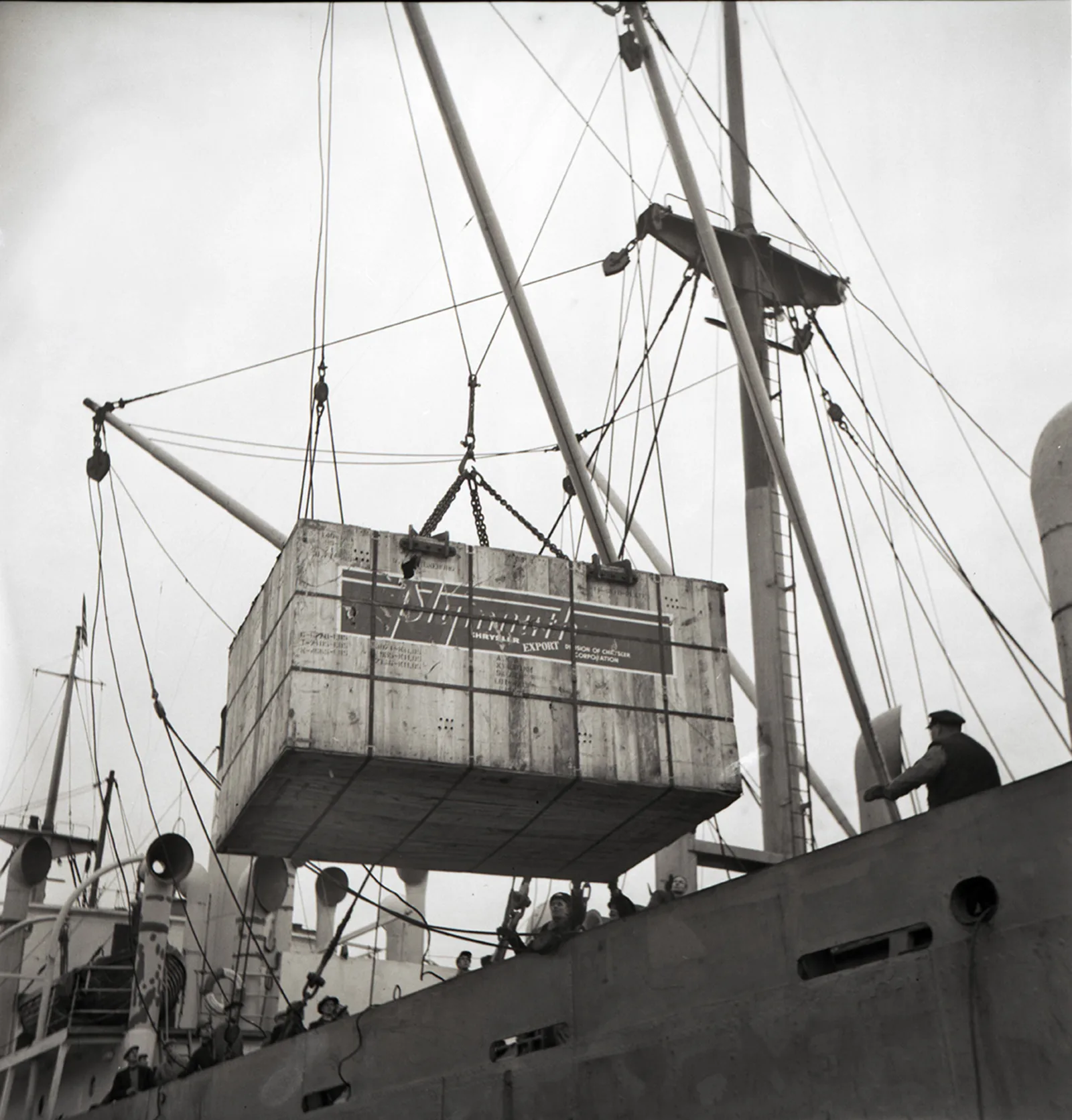
During the Second World War, a large number of US and Canadian trucks were crated and shipped overseas in knock-down form to sustain the Allied war effort. Among them were the Willys MB, the Ford GPW and GPA, and GMC-353 and CCKW trucks. Assembly lines were set up in local factories where possible, but in the field crews sometimes worked in open-air camps managed by the military. A female workforce was employed on some lines owing to male mobilisation.
Crates were packed in one of two ways. Some held a single vehicle, known as a single unit pack, while others held two or three vehicles split between two or more crates. Some destinations received vehicles without certain items, such as cabs, beds or tyres, which were supplied locally.
Which carmakers built kits in Asia, Africa and Latin America?
Mahindra & Mahindra in India began in 1947 by assembling CKD Jeeps. It later built Jeeps domestically with a high level of local content under licence from Kaiser Jeep and then American Motors. In Britain, Lotus Cars sold its Lotus Seven in CKD form to escape the purchase tax on complete vehicles. By 1959, when the Mini appeared, British Motor Corporation products were still imported or assembled from kits in several overseas markets.
Renault and American Motors agreed a partnership in 1961, and from 1962 to 1967 AMC sold CKD kits of its passenger cars to Renault. Renault assembled them at its Haren plant in Belgium and sold them through dealers in several European countries. The deal let AMC enter new markets without large foreign direct investment, while Renault gained an executive model its range lacked.
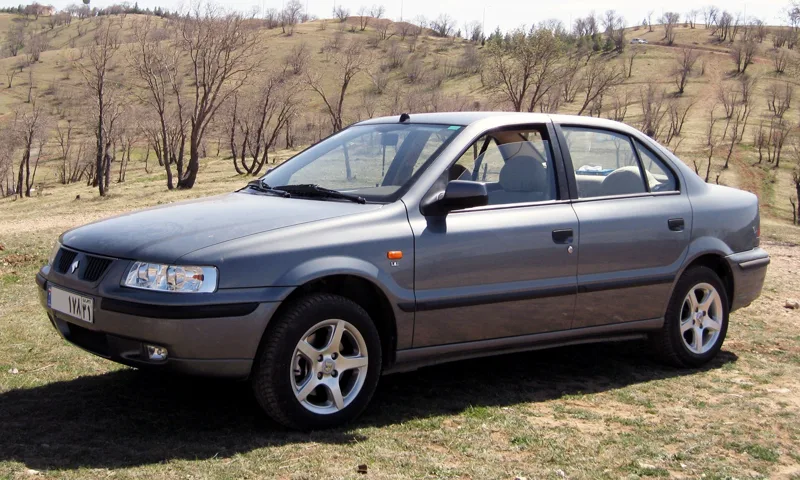
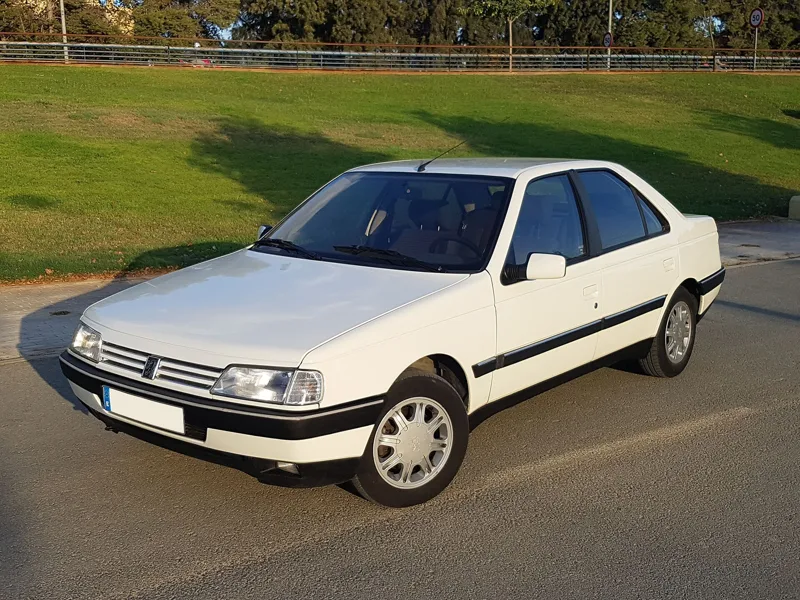
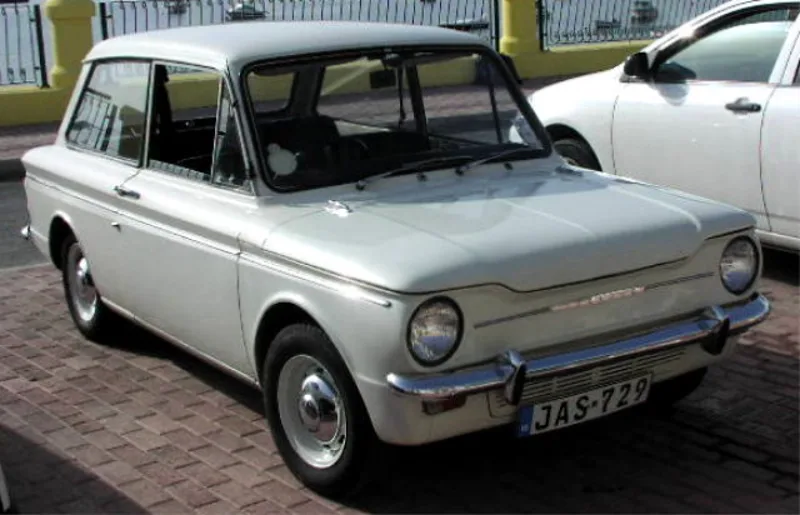
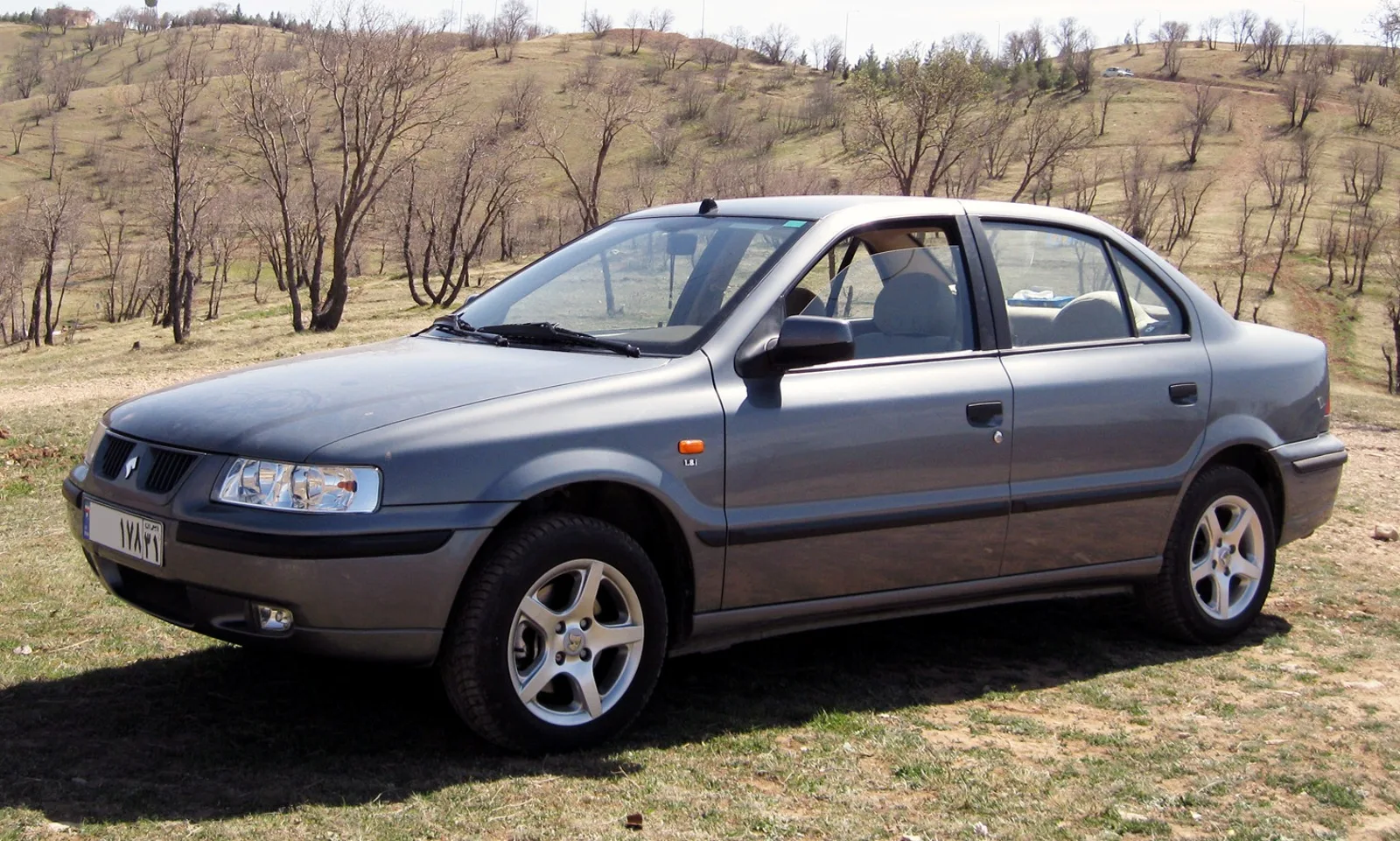
Rootes Group started shipping CKD Hillman Hunters to Iran in 1967, and the cars were sold there as the Paykan, a name that means arrow in Persian. Chrysler bought the business in 1967, and the PSA group later took over Chrysler's European operations. The Iranian base then became the foundation of a large Peugeot business there, built on engine and CKD deliveries. Peugeot's partner Iran Khodro built Peugeot cars on a huge scale in 2004, securing a 36% market share.
Peugeot also began CKD production of a light pick-up in 1967 at its Berazategui factory near Buenos Aires, under the name 4TB. It was replaced by the 404 pick-up in 1973 and by the 504 pick-up in 1990. The 404 was assembled in a long list of countries, while the 504 was built mainly in Argentina, Egypt, Nigeria, Kenya, South Africa, Australia and China, where Guangzhou Peugeot added a crew cab version.
How did kits work in Oceania?
In 1968 the independent German firm Karmann began assembling CKD kits of the AMC Javelin for European distribution. American Motors also supplied right-hand drive versions of its cars to Australia, New Zealand and South Africa. Components travelled in containers from AMC plants in Kenosha, Wisconsin, or Brampton, Ontario. In Australia, Australian Motor Industries assembled Rambler and AMC models at Port Melbourne, meeting local content rules with Australian interiors and lighting.
New Zealand built a car assembly industry as a means of import substitution, despite the small market. Campbell Motors in Thames assembled Ramblers for a period, alongside Toyota, Datsun, Hino, Renault and Peugeot models. Economic reform in the 1980s lowered import tariffs, and Australian-built vehicles could be imported duty-free under the closer economic ties agreement. Many assemblers stopped, and cheaper used imports outsold locally assembled cars. The last kit builders, Toyota, Nissan, Mitsubishi and Honda, shut their plants in 1998, just as the government signalled it would scrap tariffs on cars.
Australia also assembled kits for a wide range of brands, among them Citroen, Renault, Peugeot, Volkswagen, Mercedes-Benz, Studebaker, Rambler, Singer, Triumph, Datsun, Hillman, Mini Cooper and Volvo. Those programmes were a feature of a protected market in which local assembly was rewarded.
How did kits shape car making in Eastern Europe and Russia?
Ukraine has had almost prohibitive import taxes on finished cars, which encouraged kit assembly. AutoZAZ assembled CKD kits of Lada, Opel, Mercedes-Benz and Daewoo models, and it went further by adapting a version of the Daewoo Lanos for full-scale production with a domestic engine. Volkswagen Group also produced SKD cars in Ukraine at its Solomonovo plant, under the Skoda and Volkswagen marques.
In Russia, Avtotor's Kaliningrad facilities built the Hummer H2 and the BMW 3 and 5 Series, and its Moscow site built the Renault Logan on premises that once belonged to AZLK. Volkswagen Group also had a plant in Kaluga, which was expected to produce 150,000 units a year at full output.
Why did the Chicken Tax shape North American kits?
A 25% levy on imported light trucks, nicknamed the Chicken Tax, pushed several makers toward assembly in the United States. Daimler AG ran a CKD plant in South Carolina that re-assembled Mercedes-Benz Sprinter vans for sale in the US and Canada through Mercedes-Benz and Freightliner dealers, and through Dodge dealers before Fiat's takeover of Chrysler. The Sprinter was later replaced in the Dodge and Ram lineup by the similar Ram ProMaster, which is a rebadged Fiat Ducato imported from a Chrysler plant in Mexico under NAFTA.
In 2009 Mahindra & Mahindra announced that it would export diesel pickups from India to the United States as CKD kits, again to avoid the tariff. The plan was to assemble the vehicles from crated parts in the US. The plans never materialised and became the subject of several lawsuits.
Tesla's approach has been different. In 2013 it began operating an assembly plant in Tilburg, in the Netherlands, for the Model S sedan and Model X SUV sold in the European Union. Cars imported into the EU avoid a 10% import duty this way, while cars for Norway are shipped directly from the United States. Most of the car is still made at the Tesla Factory in Fremont, California, and the Dutch plant adds components such as the rear subframe with its drive train and the battery pack.
How are buses and trains built from kits?
Motor Coach Industries opened an assembly plant at Pembina, North Dakota, in 1963 as part of its push into the US market. Unfinished coach bodies travelled by flatbed trailer from Winnipeg, Manitoba, and were completed and fitted out at Pembina. That arrangement simplified customs handling and met the Buy America Act provisions for public agencies buying equipment with federal funds. North American Bus Industries opened in Anniston, Alabama, in 1993, receiving incomplete buses from Budapest, and it reached full domestic production in 2008.
Railcars were sold in pieces long before the 20th century. An advertisement by the JG Brill Company in the Street Railway Journal in 1898 offered knocked-down railcars. From 1938 to 1951 the St Louis Car Company sent PCC body shells and trucks northward to Canadian Car & Foundry for assembly, a method that supplied the Toronto Transit Commission's fleet. Nippon Sharyo sent commuter train bodies from Japan to the US from its first order in 1982, until its Rochelle, Illinois, plant opened about thirty years later.
Other rail examples follow the same pattern. Kawasaki Heavy Industries and CSR Qingdao Sifang built the first 10 sets of the CRH2 high-speed trains in a Qingdao joint venture, using parts shipped from Kobe. Hyundai Rotem's South Philadelphia facility finishes car shells for transit systems, and London Underground's 1995 and 1996 stock has aluminium bodies built in Barcelona. British Rail Class 385 bodies came from Hitachi in Japan, with assembly completed in England.
How do aircraft and furniture use knock-down kits?
Unserviceable military aircraft are sometimes sold as knock-downs after their service life, packed with serviceable aircraft so that the parts can be used for spares. Airbus takes a different approach for the A320 family, assembling aircraft outside Europe from European-made fuselages, wings and tail sections. Its Tianjin line uses avionics and engines from the EU or the US, and its Mobile, Alabama, line opened in September 2015 with more locally sourced interiors and avionics.
Furniture has a similar history. Knock-down furniture dates back to at least the mid-19th century, and the 1859 Thonet No. 14 bentwood chair was designed to come apart for transport. Between 1908 and 1940 the Sears, Roebuck mail-order catalogue offered more than 400 house styles, with all the materials and instructions needed to build one. IKEA began selling flat-pack furniture in 1956, bringing the same logic to ordinary households.