A budget sedan and estate that outlived its own replacement, grew a sporty Dacia Sport and a hatchback, and still sold to the very end.
The Dacia 1310 was a Romanian family car built from 1979 to 2006, first by Dacia alone and then jointly with Renault. It came as a sedan, estate and pick-up, with a hatchback called the 1320. It was succeeded by the Dacia Logan in 2004.
The Dacia 1310 was a family of cars that Dacia built alone from 1979 until early 1999, and then with Renault until 2006. It came as a sedan, an estate, a pick-up and, in the late 1980s, a hatchback called the 1320. Together with its 1300 predecessor it produced 2,278,691 units.
What was the Dacia 1310?
The 1310 was a budget car from Romania that grew out of the Renault 12 engineering that Dacia had built under licence. When the licence expired in 1978, Dacia had to carry on with its own revised version. The result was a car that stayed in production far longer than anyone planned, and it became a common sight on Romanian roads.
Its main appeal was low price, value for money and cheap, easy maintenance. Those qualities kept sales steady right up to the final day of production. The sedan and estate were the core models, while the pick-up ran for many more years.
A budget family car from Romania that outlived its own replacement and kept selling to the last day.
Where did the Dacia 1310 come from?
After the cooperation with Renault ended in 1978, Dacia presented a revised version of the 1300 at the 1979 Bucharest Auto Show. The car was shown at the National Exhibition of Economic Achievements in the autumn of 1979 as the 1980 model. In 1982 the name was changed to Dacia 1310, and later came the 1210, the 1410 and a few other variants.
The 1300 and the 1310 together produced 2,278,691 units. The last sedan left the line on 21 July 2004, and the last pick-up was built in December 2006. Its successor, the Dacia Logan, was launched in 2004 and replaced the 1300 and 1310 models.
What changed in the 1979 facelift?
The first major restyling gave the car a completely redesigned front with four round headlights and higher bumpers that carried the turn signals. At the rear, a single block combined the taillights, indicators, brake and reverse lights, and the boot was restyled as well.
Inside, the cars gained a radio, a rear-view mirror, an electric windscreen washer, dual-circuit brakes and seats with headrests. The space for rear passengers grew by 8 cm. Under the bonnet, an electric fan with a thermal relay, an economiser and a hot air filter outlet were added.
The compression ratio rose from 8.5:1 to 9:1, so the 1,289 cc engine made 56 hp, up from 55.2, with 94 Nm of torque at 3,500 rpm. Dacia counted more than 56 improvements, and the car was seen as a transition model to a city car of Romanian design that was due three years later.
What was the Dacia 1410 Sport?
The 1410 Sport was a two-door coupe with a lowered roof, put on sale in the first half of 1983 and built from 1981. It used a 1,397 cc engine with a 76 mm bore, 9.8:1 compression and a new carburettor, producing 65 hp (48 kW) at 5,250 rpm. The lower roof and a shorter wheelbase gave it a sporty stance.
Its wheelbase and length were about 200 mm shorter than the sedan's, and its height was about 135 mm lower, while the boot volume stayed the same. Lowering the rear suspension dropped the centre of gravity, although some considered that it hurt stability on the move.
How fast was the Dacia Sport?
The Sport's measured figures were a 0 to 100 km/h time of 16.2 seconds, a top speed of about 152 to 154 km/h and fuel use of 7.0 litres per 100 km at 80 km/h.
The Dacia Sport entered production in 1983, after its Sport-Brasovia prototype was shown in 1979. At first there were two models, the Sport 1310 with a 1,289 cc engine and 54 hp, and the Sport 1410 with 1,397 cc and 65 hp. From 1983 only the 65 hp engine was offered, and a five-speed gearbox arrived in 1985.
Why did the Dacia Sport sell in small numbers?
The Sport was popular with young drivers and with competitors in Romanian car events. Its share of the national rally championship reached almost 20 percent. Even so, only 5,500 copies were built over just over a decade.
Sales were low because of the high price, common manufacturing defects and design problems such as limited interior space and an unusable boot. Production ended when second-hand sports cars entered the Romanian market in the 1990s, which left the Sport uncompetitive.
What did the 1984 facelift bring?
The model 1984 car was shown at the Bucharest International Fair in October 1983. It used a 1,397 cc engine taken from the Dacia Sport, with 64 hp at 5,000 rpm and 103 Nm of torque at 3,000 rpm. A 57 hp variant was also offered, and fuel use was 6.1 to 6.4 litres per 100 km at a steady 90 km/h.
The body received a boot spoiler, a new grille, restyled headlight trim and more. There were two trim levels, TL and TLE, with the TLE mainly aimed at export. The TL had a radio, while the TLE had a radio and cassette and an instrument display for water temperature and oil pressure. A five-speed gearbox was introduced in 1985.
Since 1985 the estate could be bought by private buyers. The range offered seven trim names, from the basic MS and MLS up through the S, TL, TX and TLX to the top TLE. Each step added small changes such as heated rear windows, power brakes, carpeted boot and front door storage boxes.
Several engines were tried but never reached production. A 1.6 litre diesel prototype made 54 hp (40 kW) and 101 Nm, and it could reach 140 km/h (87 mph). A 1,575 cc overhead-camshaft engine with 80 hp (59 kW) and 133 Nm was also shown for 1985 but was not built.
What was the Dacia 1320 hatchback?
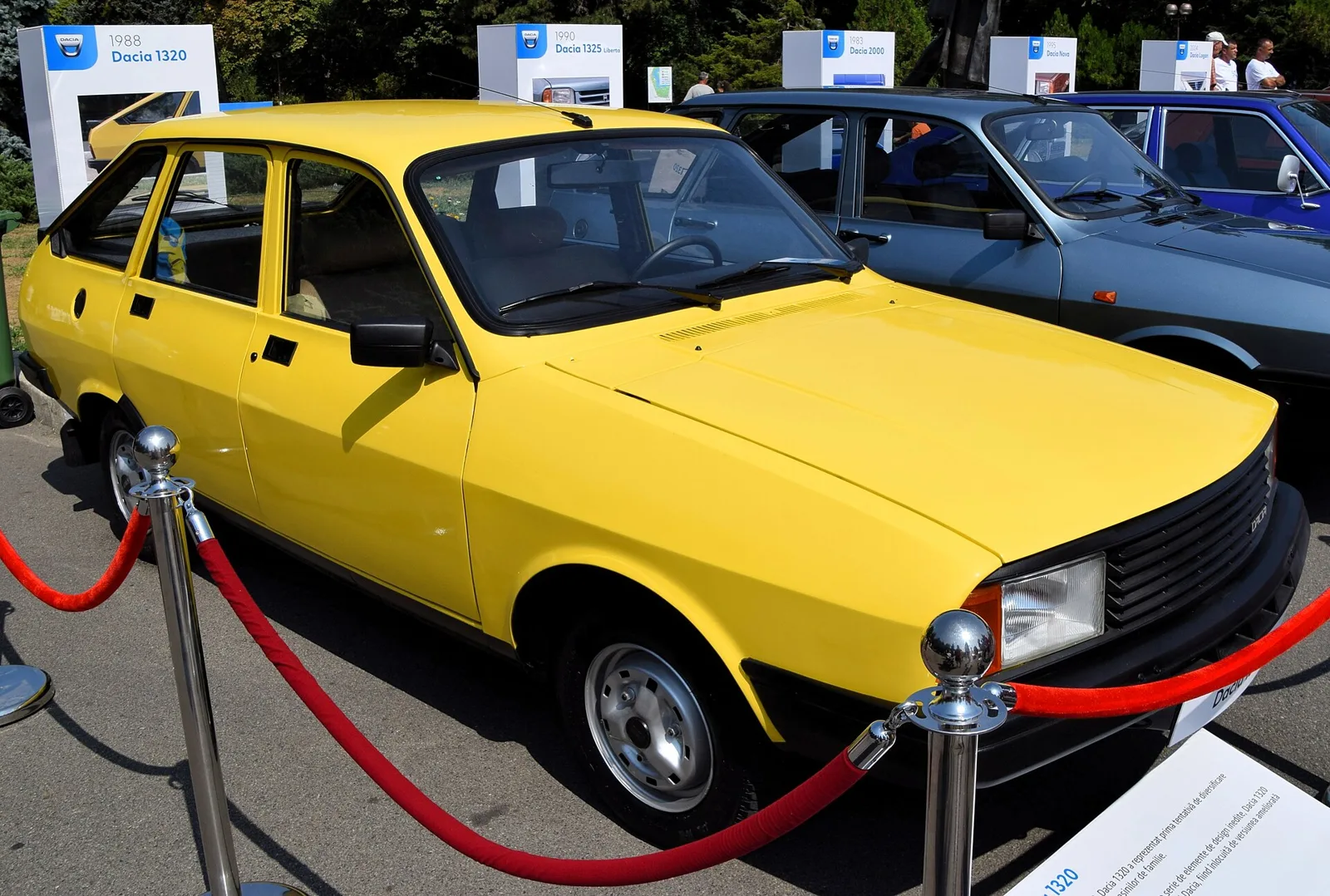
The Dacia 1320 arrived in 1987 as a hatchback, inspired by the locally assembled Dacia 2000 and derived from the 1310. It used a 1,300 cc or 1,400 cc engine with a four- or five-speed manual gearbox. The grille was redesigned and the double round headlights were replaced by single rectangular units.
The 1320 also received a much improved dashboard, which was later used in the third-generation 1310. Its door handles were flush fitted, and the doors opened by pulling the handle inwards, as in most modern cars. Each door could be locked from the inside. The 1320 kept the 1310's taillights, and unlike the later 1325 it had no rear wiper.
Only 2,567 of the 1320 were sold, and most ended up as taxis, as Dacia tried to make the line profitable.
What changed in the 1991 CN1 facelift?
The third generation of the 1310 debuted in 1991 with a small restyling. The front grille took two rectangular headlights from the 1320, and a boot-lid spoiler was added, designed by engineer Ion Romica Sandu in 1990. The dashboard turned dark grey, plastic bumpers were fitted and metallic colours were introduced.
In 1992 the 1,289 cc 54 PS engine and the four-speed gearbox were dropped. At the end of 1994 a 1,557 cc engine producing 73 PS (54 kW) was introduced. The Break, hatchback and pick-up variants took the same changes, except the boot spoiler. The Canadian market was lost when sales there ended.
The Dacia 1325 Liberta arrived in this period as a restyled liftback that replaced the 1320. It had a new rear end but was never a big seller, and production ceased in 1996 because sales were poor.
What did the 1994 and 1999 facelifts change?
The CN2 arrived in the summer of 1994 with a redesigned bonnet, new headlights, a new grille and plastic bumpers, with or without fog lights. The top trim added metallic paint, tinted windows, a sunroof and alloy wheels. The CN2 was built until June 1995, when the lightly altered CN3 took over alongside the launch of the Dacia Nova.
Late in 1998 a fuel-injected 1,557 cc engine with 71 hp (52 kW), taken from the Nova, went into the car. In 1999 a 1.4 litre version with 60 hp (44 kW) and fuel injection was introduced. The 1999 CN4 was the last restyle, with differently shaped headlights and door handles borrowed from the Nova.
In 1999 Dacia also launched the Dedicatie, a limited edition marking 40 years since the 1300. It came as a sedan and estate in two shades of grey with aluminium wheels and special side graphics.
Why was the Dacia Nova so late?
By the 1980s the model looked dated, and its chassis could no longer meet the safety standards of the era. Dacia began work on a replacement, but financial and political setbacks delayed the Nova until 1994. By then it was already outdated.
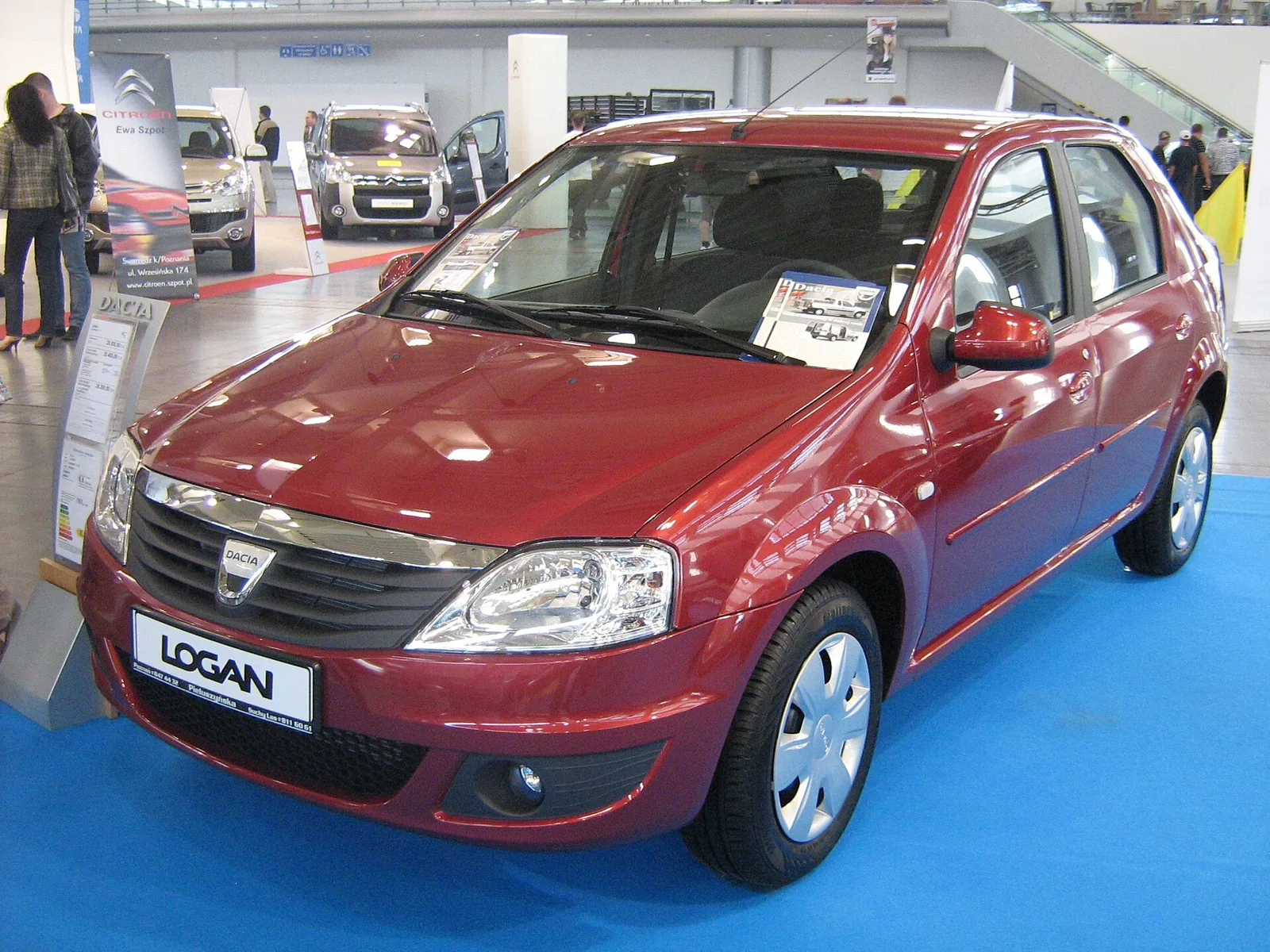
The Nova range later evolved into the SupeRNova and the Solenza and sold well, with better road manners. It never replaced the 1310, though, because of its higher price, its smaller interior and the fact that it was offered only as a liftback.
How did the Dacia 1310 sell in Romania?
The model scored solid sales right up to its final day, largely because of its low price, its value and its inexpensive upkeep. In 2004 the sedan was priced at EUR 4,100 and the estate at EUR 4,250. The Liberta had been dropped in 1996, and the sedan and estate ended in 2004.
In 2002 the badges changed, and the car became the Dacia Berlina and Dacia Break, with the 1310 name abandoned. The SuperNova Europa trim cost about the same as the old sedan, and the Rabla scheme, which Dacia helped start in 2000 to renew the fleet, made the new car attractive. Sedan sales fell from 2001 onward, but taxi firms and driving schools kept buying them.
The estate had good sales until it was discontinued in 2004. The last car, number 1,959,730, left the Colibasi factory on 21 July. Only the pick-up remained after that, and production of the pick-up ended on 8 December 2006.
Did the Dacia 1310 race?
The Sport version was the nearest the 1310 family came to motorsport. Romanian drivers in competition events favoured it, and it reached almost 20 percent of the national rally championship field at its peak.
Whatever its rally success, the Sport was never a commercial hit. Its high price and defects kept sales low, and the car became outdated as second-hand imports of sports cars arrived in the 1990s.
How did the Dacia 1310 sell abroad?
In Israel, Dacia cars were sold between 1978 and 1989 under the Delta brand. The import was irregular, and four different importers handled the car. The first attempt ended within a year because of quality problems that were even raised on a television programme.
The car returned in 1988 with a successful advertising campaign, and the importer Kaiser Illin, through its subsidiary Capris, sold about 6,000 vehicles. The company went bankrupt in August 1988, and buyers who had paid deposits did not receive their cars.
In the United Kingdom the 1310 was sold as the Dacia Denem from 1982. It came as a four-door saloon and five-door estate, aimed at budget buyers. At a price of GBP 3190 when new, and with an ageing Renault platform, it struggled to sell and was soon discontinued around 1984.
What are the Dacia 1310 specifications?
| Specification | Detail |
|---|---|
| Production span | 1979 to 2006 |
| Units with the 1300 | 2,278,691 |
| 1979 engine | 1,289 cc, 56 hp, 94 Nm at 3,500 rpm |
| 1410 Sport engine | 1,397 cc, 65 hp (48 kW) at 5,250 rpm |
| 1410 Sport 0 to 100 km/h | 16.2 seconds |
| 1984 model engine | 1,397 cc, 64 hp at 5,000 rpm, 103 Nm |
| 1210 engine | 1,185 cc, 48 hp (35 kW) at 5,300 rpm |
| 1991 engine | 1,557 cc, 73 PS (54 kW), from late 1994 |
| 1998 injected engine | 1,557 cc, 71 hp (52 kW) |
| 1999 injected engine | 1.4 litre, 60 hp (44 kW) |
| Dacia 1320 units | 2,567 |
| Dacia Sport units | 5,500 |
| Last car built | Number 1,959,730, 21 July 2004 |