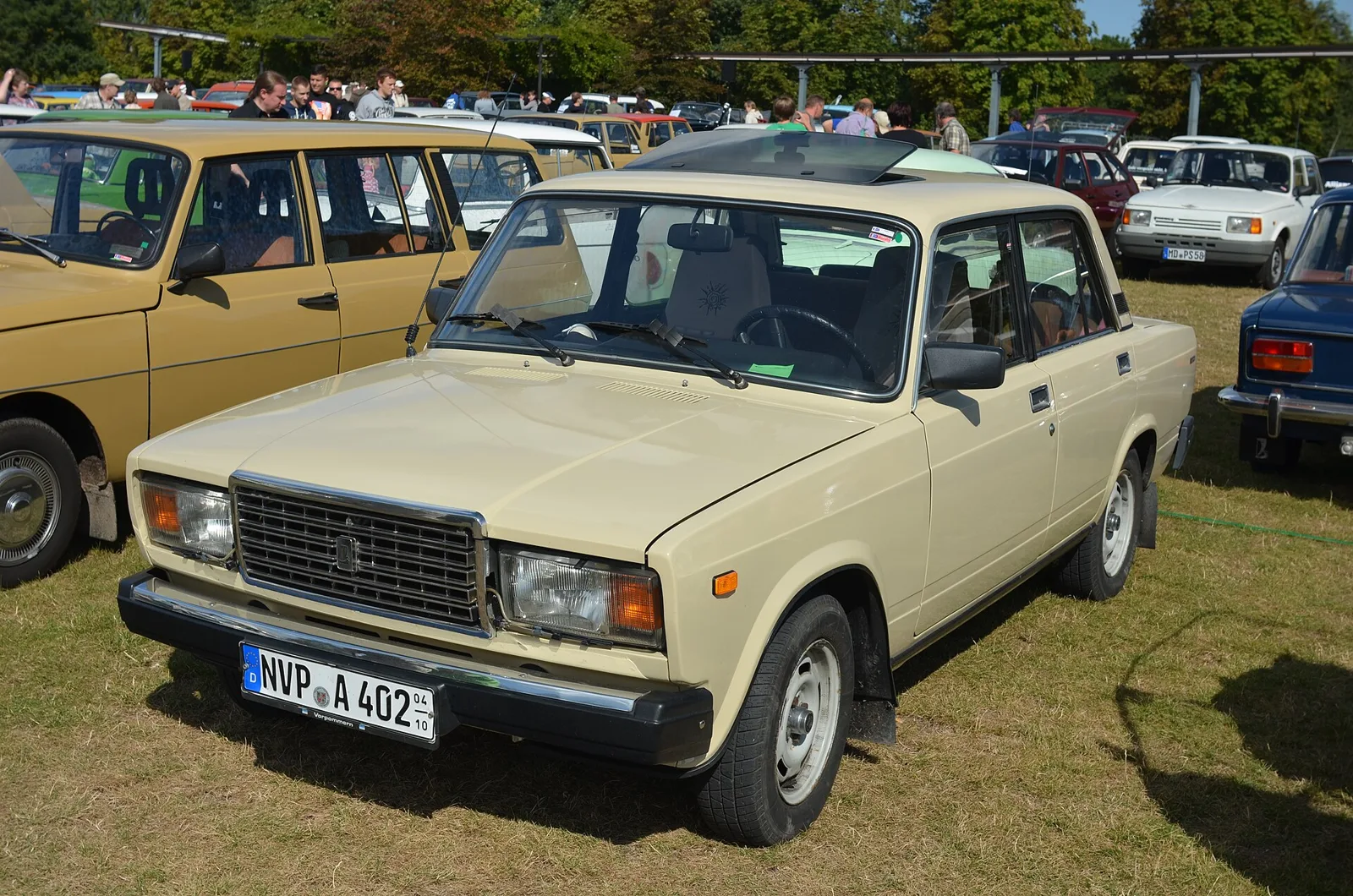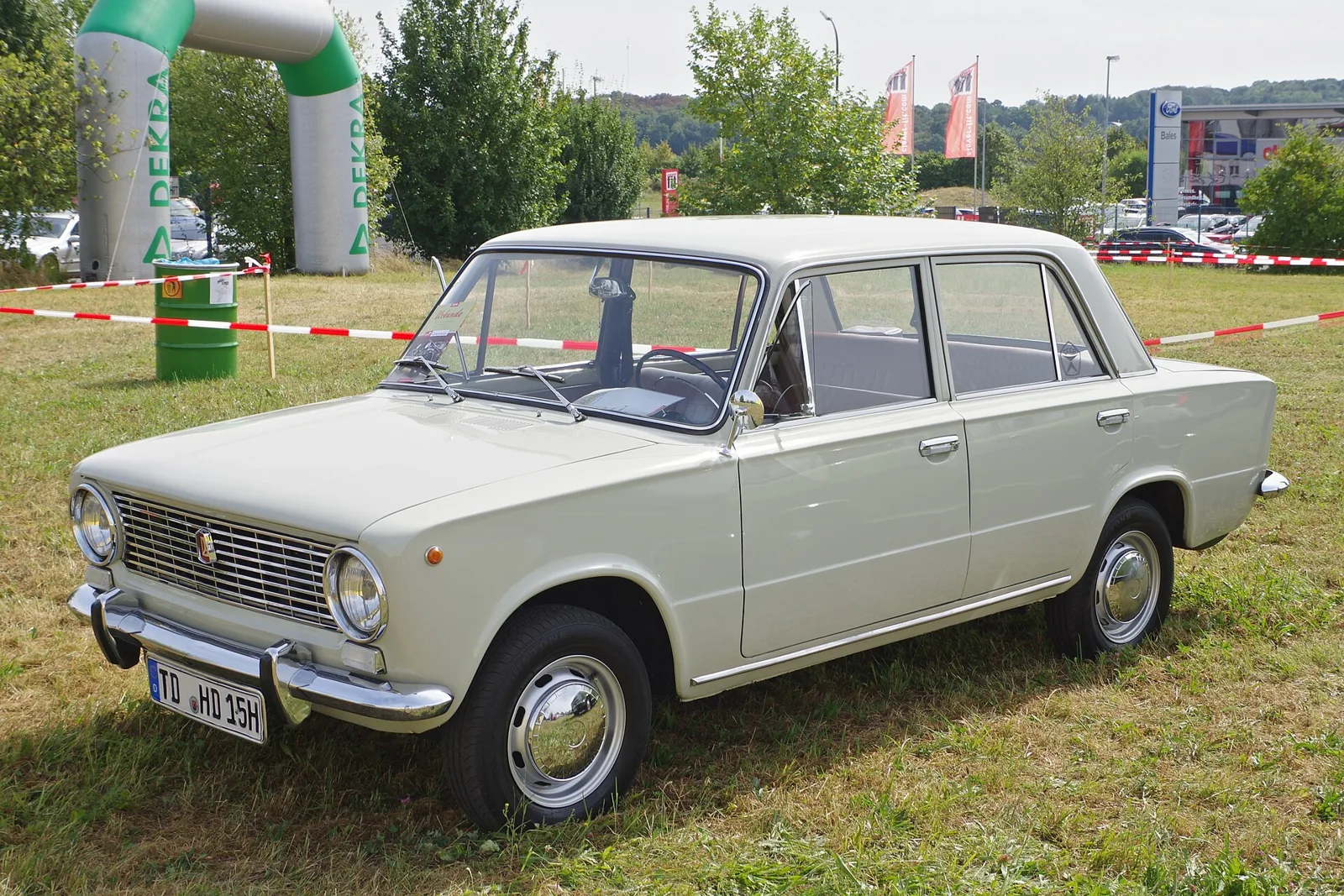
How a Fiat-assisted Soviet factory in Tolyatti built rugged cheap cars, exported them as Ladas, then passed through Renault, sanctions and a state buy-back.
Lada is a brand of small cars made by AvtoVAZ, a state-owned Russian company in Tolyatti. Its cars began with Fiat technical help in the 1970s, were sold as budget cars for export, and passed through Renault's control before a 2022 state buy-back.
Lada is a Russian brand of small cars, built by the state-owned company AvtoVAZ, which was originally known as VAZ. Its story runs from a Fiat-assisted factory in the Soviet Union, through a long period as the country's favourite budget car, to Renault's ownership and a state buy-back in 2022.
What is Lada, and who makes it?
Lada is a brand of small cars manufactured by AvtoVAZ, originally called VAZ, a state-owned company based in Tolyatti on the Volga River. From January 2021 until May 2022 the brand sat inside Renault's Lada-Dacia business unit alongside its sister brand Dacia.
Outside the Eastern Bloc, Ladas competed for the cheapest buyers, and they could sell for as little as half the price of comparable Western cars of the period. The brand still presents its cars as affordable and good value for money, and Lada remains by far the best-selling car in the Russian market.
The Lada name itself appeared in 1973, at first with overseas buyers in mind. It later became AvtoVAZ's main brand for every market during the 1990s.
Built to be maintained by their owners, Ladas sold on price and toughness across much of the world.
How did the Fiat partnership begin?
AvtoVAZ grew out of a collaboration between Fiat and the Soviet Department of Foreign Trade, known as Vneshtorg. Preliminary terms were signed on 1 July 1965, and a general agreement followed in Moscow on 15 August 1966. Fiat's subsidiary Comau supplied many of the plant's automation systems.
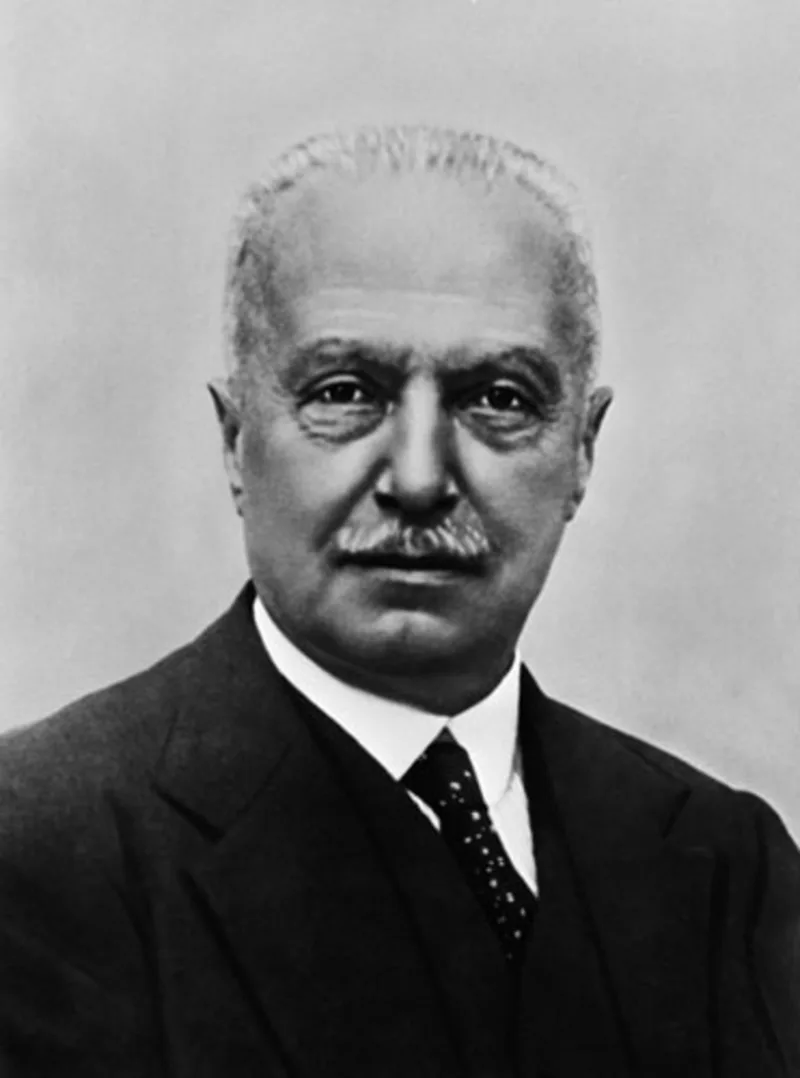
Talks took place in Moscow, where Gianni Agnelli, the company's owner and a nephew of Fiat's founder, and Vittorio Valletta, the president, arrived from Italy. A protocol on scientific and technical cooperation followed on 4 May 1966, signed by the Soviet minister of the automotive industry, Alexander Tarasov, and by Valletta.
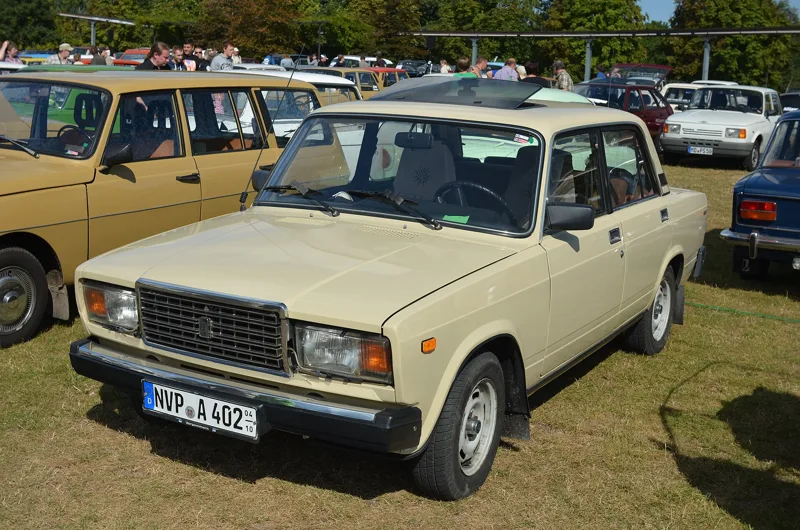
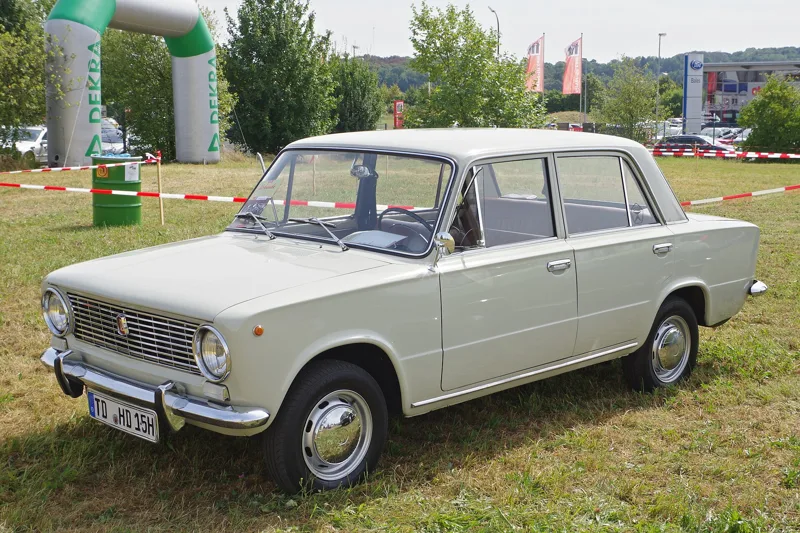
The first product of the partnership was the VAZ-2101, which began production in 1970. It was a more rugged version of the Fiat 124 sedan, with heavier steel body panels and strengthened components to cope with bumpy roads and the harsh Soviet winters. The early cars were sold under the Zhiguli designation.
Why did the cars become Ladas?
The Zhiguli name was found to be a problem once exports began. Foreign buyers struggled to say it, and it carried an unfortunate resemblance to a common word for a kept man. Lada was therefore adopted as the export name, and it later took over the whole range.
Lada's approach was practical. Because the Soviet Union had few auto-repair shops, the cars were designed so that their owners could maintain them. The rugged design found buyers in Europe, Canada and South America, and it reached as far as New Zealand, where budget motorists wanted an alternative to local brands.
Western critics often described the construction as cheap, and the cars became a source of jokes. Even so, the brand earned a reputation for sturdy, plain and dependable cars aimed at people on tight budgets. That reputation carried the brand through its export years.
How did AvtoVAZ develop its own engineering?
AvtoVAZ replaced the original Fiat engine, which had no room for upgrades, with a new overhead camshaft unit. Joint teams from NAMI and Fiat worked in Turin and Tolyatti, and by the spring of 1970 AvtoVAZ had its own designers and engineers working independently.
Rugged rear drum brakes were kept because they proved more dependable on poor roads. The front and rear suspension were upgraded, ground clearance was increased, the transmission was modernised and the door handles were recessed into the body.
After building several prototypes and experimental vehicles, the company launched the VAZ-2121 Niva in 1977. It was the first car designed entirely by AvtoVAZ.
What is the Niva, and why does it matter?
The Niva is the model that gave AvtoVAZ its first fully home-grown design. Launched as the VAZ-2121 in 1977, it later spawned a five-door version, the VAZ-2131, in 1995, and a minivan, the VAZ-2120 Nadezhda, in 1998. The name carries on today.
The five-door VAZ-2131 arrived in 1995, the same year the 110-series sedan went on sale. The Nadezhda showed how far the Niva platform could be stretched into a different body type.
Today the Niva family includes the Travel, a former GM Niva variant, and the Legend, which is the original Lada Niva. Both sit in the range alongside the newer models.
What did the 1990s bring for Lada?
The 110-series sedan arrived in 1995, two years after its original 1993 deadline, with development costs estimated at US$2 billion. Lada then pulled out of most Western European markets by 1997, as emission and safety rules tightened across the region.
The 110-series was followed by the 2111 station wagon in 1998 and the 2112 hatchback in 2001. A five-door Niva, the VAZ-2131, appeared in 1995, and the VAZ-2120 Nadezhda minivan, based on the Niva, followed in 1998.
Competition in the budget sector changed too. Pacific Rim brands such as Hyundai, Kia and Proton took over the cheap end of the market, where Lada had survived since the 1970s. That shift contributed to the brand's decline in the West. Quality control slipped as well, and in 1999 nearly 50,000 cars were assembled with missing parts.
How did the Kalina and Priora fare?
The Kalina B-segment range arrived in 2005 with a new plant built to sell some 200,000 cars a year. The model had been designed in the early 1990s, and its launch was repeatedly delayed, which showed how slowly the company brought products to market.
The new factory was built to support that target, which depended on the Kalina arriving on time. The model's delays were a sign of how hard it was for the company to bring products to market.
In March 2007 the Priora arrived as a restyled and modernised version of the 110-series, giving the older platform a fresh face. The second-generation Kalina, basically a facelifted first generation, was revealed at the 2012 Moscow International Motor Show, and a more powerful Kalina Sport was also produced.
How did Renault come to control Lada?
Renault bought a minority 25% stake in AvtoVAZ in March 2008 for US$1 billion, with Rostec keeping the remaining 75%. The French group later took control of Lada in 2016, when it became the parent company of AvtoVAZ after various acquisitions.
Sales of the Granta, a subcompact developed with Renault, began in December 2011. The Largus, which also used Renault technology, was launched in Russia by mid-July 2012. In August 2012 the XRAY concept was shown at the Moscow International Automobile Salon, and the car was designed by Steve Mattin, formerly of Volvo and Mercedes-Benz.
The Vesta, built on a new B\C platform developed with the Renault-Nissan Alliance, started production on 25 September 2015 at the Lada Izhevsk site. It was the first time in Lada's history that only a year separated the concept car from the start of production. The XRAY, based on a Dacia platform, became the first compact city crossover in the company's history, with sales from 14 February 2016.
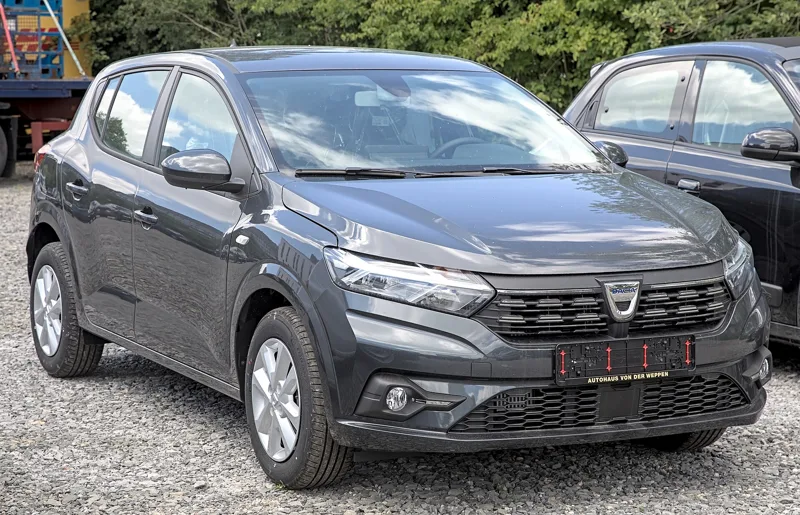
In January 2021 Renault announced that Lada and its sister brand Dacia would be integrated into a Lada-Dacia business unit, a structure that lasted until the 2022 sale.
What is the Largus?
The Largus is a Renault-technology vehicle that reached the Russian market by mid-July 2012, after the Granta had gone on sale in December 2011. In the current range it appears as Universal, Cross and Wagon models, with compressed natural gas (CNG) versions of each.
The current listing includes the Largus Universal CNG, the Largus Cross CNG and the Largus Wagon CNG, so the gas-powered option is spread across the whole family rather than confined to one body style.
What is the Granta?
The Granta is a subcompact developed in collaboration with Renault, with sales beginning in December 2011. It is offered as a sedan, a liftback, and Cross and Sport versions, and after 2022 a simplified Granta was among the first models to return to production.
The Granta range in the current listing includes the sedan, liftback, Cross and Sport variants. Some Granta models were later built without airbags because of the sanctions that followed the 2022 invasion of Ukraine.
What happened to Lada after 2022?
In May 2022 Renault sold its controlling stake to the state-owned entity NAMI for one symbolic ruble. Production of the more modern models, which used many overseas components, then stopped. The older Niva and a simplified Granta returned after about three months without car production, because the more advanced designs could not be built.
The deal included a six-year window in which Renault could buy back its assets, but strict sanctions meant that more advanced models could not be built. In April 2023 Lada announced that a locally modified Vesta, called the Vesta NG, was ready for mass assembly.
Some Granta models were built without airbags after the sanctions, a change that was compared with budget cars in Latin America, where airbags and anti-lock brakes are not always compulsory.
How has the Lada badge changed?
The first official AvtoVAZ logo, introduced in 1970, was an upright shield with a stylised Viking boat, and it appeared on every product whatever name it was sold under. A horizontal, ellipse-like layout that kept the boat replaced it in the mid-1990s.
The design was updated again in 2002 and 2015. In 2004 the company ended the use of several designations on the Russian market and put all of its products under the Lada brand. It also adopted the Latin script for Lada names and model nameplates on cars, in marketing and in documents.
What models make up the Lada range?
Lada's current line-up is organised into families. The list runs from sedans and estates to Cross variants and the Niva, and some versions run on compressed natural gas. The table shows each family with the versions currently listed.
| Family | Listed versions |
|---|---|
| Granta | Sedan, liftback, Cross and Sport |
| Vesta | Sedan, SW estate, Cross, Sportline, SW Cross Black Limited Edition and NG |
| Largus | Universal, Cross and Wagon, with CNG versions of each |
| Niva | Travel, a former GM Niva variant, and Legend, the original Lada Niva |
| Iskra | Sedan, SW and SW Cross |
| Azimut | Listed as a separate model in the range |