Giovanni founded it, Gianni built it into a multinational and Umberto spent his last year pulling it back to cars.
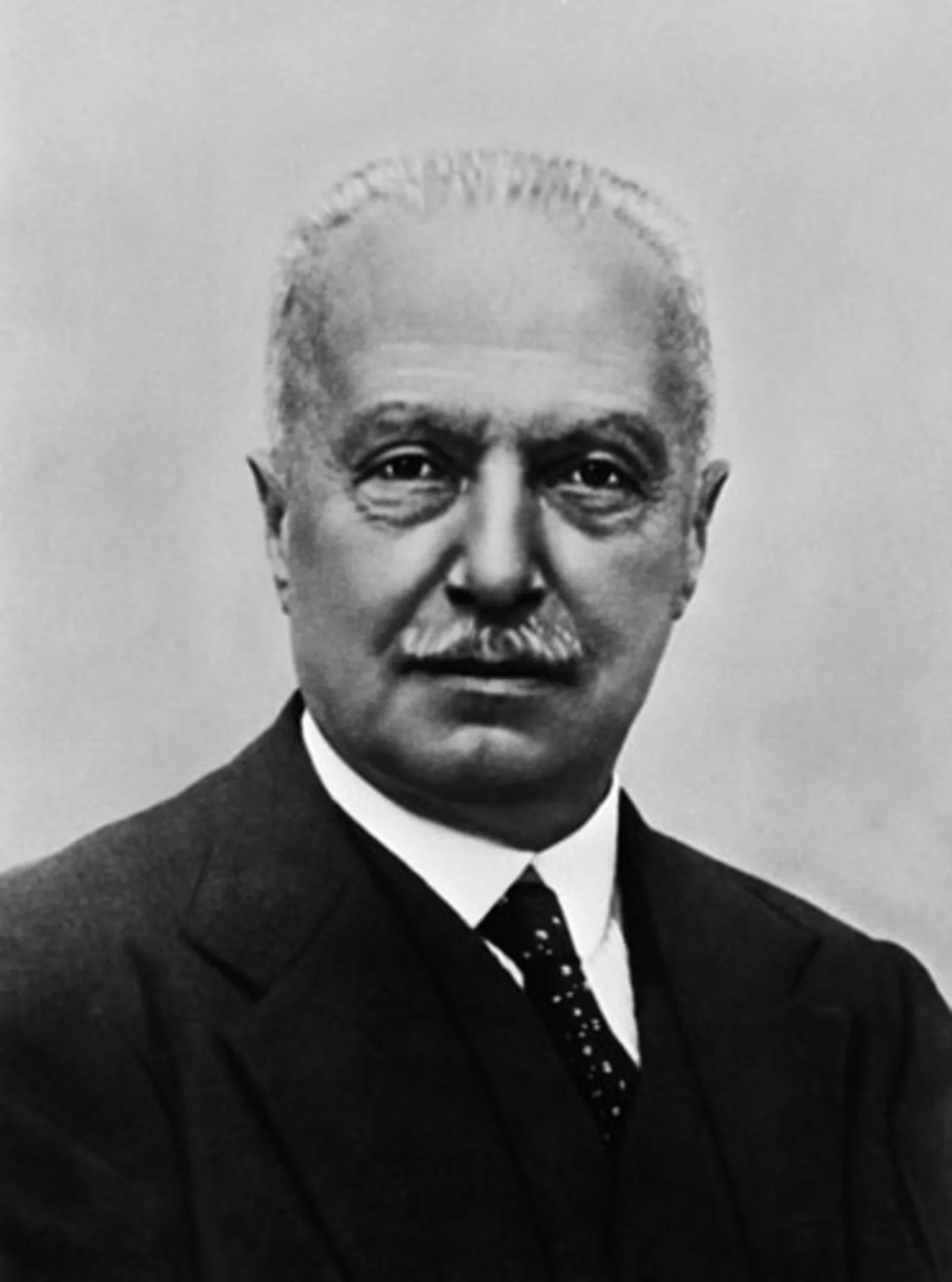
Giovanni Agnelli co-founded Fiat in 1899 and led it until 1945. His grandson Gianni chaired it from 1966 to 1996, expanding into Eastern Europe and adding Ferrari, Lancia and Alfa Romeo. Gianni's younger brother Umberto chaired the group from 2003 until his death in 2004.
Gianni Agnelli's Fiat accounted for 4.4% of Italy's GDP, and for 3.1% of its industrial jobs plus 16.5% of what its industry spent on research. One man sat at the top of that machine, and he was the second of three Agnellis who led the company between its founding in 1899 and 2004.
The Agnelli family and Fiat grew up together, from a Turin factory turning out 24 cars to a group that gathered Ferrari, Lancia, Alfa Romeo and Maserati under one roof, built a car plant on the Volga and merged with Chrysler in 2014. The founder, his grandson and that grandson's younger brother each left a different mark on what an Italian carmaker could be.
Who was Giovanni Agnelli, the Fiat founder?
Giovanni Agnelli was born on 13 August 1866 in Villar Perosa, near Pinerolo in Piedmont, which stayed the family seat and burial ground. His father, the local mayor, died at 40, when Giovanni was five. After school in Turin he chose the army. In 1893 he returned home, became mayor in 1895 and held the office until he died in 1945.
The horseless carriage redirected him. A meeting in 1898 with Count Emanuele Cacherano di Bricherasio, who needed investors for a motor-car project, showed Agnelli where his engineering and business instincts could go. On 11 July 1899 he stood among the founders of Fabbrica Italiana di Automobili Torino. His own share cost $400. The initials gave the firm its name, and in 1906 the capitals relaxed into the lower-case Fiat.
The early figures are small and exact. The first plant opened in 1900 with 35 staff and built 24 cars. The very first model also ran to only 24 copies, each bodied by Alessio of Turin, and it looked a good deal like the Benz cars of the day, powered by a boxer twin of 697 cc (42.5 cu in). Agnelli became managing director a year after the founding. By 1903 the company made a small profit on 135 cars, and output reached 1,149 in 1906, when it floated on the Milan stock exchange. Agnelli started buying every share he could.
Position came quickly. By 1910 Fiat led the Italian industry, a lead it has never lost, and an American FIAT Automobile Company opened a plant at Poughkeepsie, NY. A Fiat there cost $4,000 at the start and $6,400 in 1918, while a Ford Model T sold for $825 in 1908 and $525 in 1918. Ownership was a mark of distinction.
Three generations of one family tied their name to a single Turin carmaker for more than a century.
How did the Agnelli family make Fiat Italy's dominant carmaker?
The First World War handed Fiat a different job. Every factory was put at the Allies' disposal, making aircraft, engines, machine guns, trucks and ambulances. By the time peace returned, the company had gone from 30th on the Italian industrial league table to third, and it launched its first tractor, the 702. Its home market share stood at 80% in the early 1920s.
Agnelli also placed side bets. In 1917 he and the financier Riccardo Gualino moved American aid to Europe, and the two invested in a coal exporter and a builder of motorised vessels in the United States. Both failed once peacetime arrived. Agnelli was vice-president of Gualino's SNIA, which moved into artificial textile fibres, from 1917 to 1926. A share arrangement between them left him, by 1927, as Fiat's major shareholder.
Labour trouble was the sharper test. In 1921, during the Biennio Rosso, workers seized Fiat's plants and flew the red flag. Agnelli asked Giovanni Giolitti to send in troops; Giolitti declined. Once the occupation ran out of road and a workers' delegation, its experiment in self-management over, returned the keys, Agnelli sought no revenge. He proposed a new contract that tied wages to productivity during a period of economic stagnation.
Then came the building that made the family's name in industry. Work on the Lingotto factory began in 1922. When it opened in 1923 it was the largest in Europe and the first Fiat plant to use assembly lines. Agnelli had been chairman since 1920. By 1925 Fiat had 87% of the Italian car market, and in 1928 the 509 went on sale with insurance included in the price.
How did Fiat fare under Mussolini and after the war?
Agnelli had known Benito Mussolini since 1914, and in 1923 Mussolini appointed him a senator. Yet the relationship was never simple. His newspaper, La Stampa, kept its distance from the regime, and he put Curzio Malaparte, whom Mussolini disliked, in charge of it. He hired anti-fascist tutors for his grandson, among them Franco Antonicelli, and sought out Vittorio Valletta, known for social democratic views, as his accountant. Mussolini reportedly called him too old to be fascist, and during the 1930s the regime suspected him of backing Giustizia e Liberta, an anti-fascist movement. From 1932, though, Mussolini made him carry the party card.
Historians read him differently. Valerio Castronovo says Agnelli was no anti-fascist: the regime guaranteed labour discipline, and coexisting with it served his industry. Castronovo adds that Fiat's guarded independence, together with the opposition of its workers, stopped fascism from taking firm root in Turin.
The war ended with a reckoning. A commission of the National Liberation Committee accused Agnelli, Valletta and Giancarlo Camerana of collaboration, and Agnelli was temporarily stripped of ownership of his companies. Fiat's own history says the committee removed the family from leadership until 1963. Sergio Favretto argues the opposite case in his work on the resistance: that Fiat supplied vehicles and petrol, put up large sums and helped sabotage war production inside its own plants. Agnelli was acquitted and died on 16 December 1945, aged 79.
How did Gianni Agnelli take charge of Fiat?
Gianni Agnelli was born in Turin on 12 March 1921 and was known as Gianni to tell him apart from his grandfather, who shared his first name. His father, Edoardo, died in a plane crash when Gianni was 14, and his grandfather raised him. His mother, Virginia, died in a car crash in 1945, fifteen days before the old man. He studied law in Turin but never practised, and the nickname L'Avvocato, The Lawyer, stuck anyway.
The war came first. In June 1940 he went into a tank regiment, and two wounds on the Eastern Front followed. He later served with a Fiat-built armoured-car division in North Africa, and received the War Cross of Military Valor for it. Once the armistice came, fluent English made him a liaison with American troops. Valletta ran Fiat in the meantime. The date of Gianni's takeover is given two ways: one version has him inheriting command in 1966, while Fiat's own history has him as general manager from 1963 and chairman from 1966 to 1996.
He found a company run from the centre, with little delegation, and rebuilt it around products: one group for passenger cars, another for trucks and tractors, and a ring of semi-independent divisions. That freed top management to think about the long term. In 1967 Fiat made its first acquisition, Autobianchi, and sales of $1.7 billion put it ahead of Volkswagen. In 1968 it built some 1,750,000 vehicles on sales of $2.1 billion. Newsweek that year called it the most dynamic automaker in Europe and suggested it might come closest to challenging Detroit's worldwide supremacy.
The acquisitions kept coming. Fiat's own history dates the Lancia purchase to 1968 and Ferrari's arrival as a shareholder to 1969, while another version has both firms joining in 1969 and 1970. Either way, the group by then also owned Alitalia, toll highways, a typewriter maker, electronics firms, a paint company and a construction business. In 1970 it employed more than 100,000 people in Italy, where output peaked at 1.4 million cars.
How far did Gianni Agnelli take Fiat beyond Italy?
Following a deal Valletta had struck with Soviet officials in 1966, Gianni built the AvtoVAZ factory in a purpose-built city on the Volga, Togliattigrad. Production started in 1970 with a Russian-built Fiat 124 sold as the Lada. Plants went up in Yugoslavia, Poland, Bulgaria, Romania, Spain and Brazil. In 1973 Fiat formed Comau, an automation business assembled from the suppliers that had equipped the Soviet plant. Comau pioneered robots in car assembly, and Fiat became linked with the Robogate system for bodyshells in the 1970s and, in the 1980s, with the FIRE engines assembled by robots.
The 1973 oil shock hit Fiat as it hit everyone. Towards the end of 1976 the Libyan government agreed to take a 9.6% holding in return for fresh capital worth 250 million pounds, a sum to be read against the 310 million pound IMF loan Italy was trying to arrange. Agnelli described the deal as petro-money recycling, and even after the dilution the family kept 30%. By 1986 Libya still held 15%, and the Reagan administration cancelled a Pentagon earth-mover contract with Fiat, pressing the company to arrange a buyout.
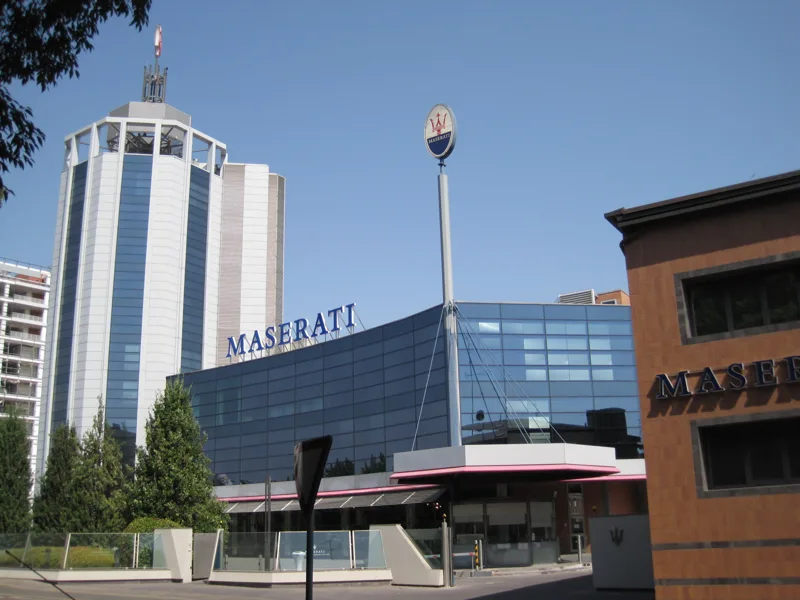
The 1980s brought a new structure and new hits. In 1979 Fiat became a holding company and Vittorio Ghidella took over as CEO of Fiat Auto; his tenure produced the Uno, the Croma and the Lancia Thema. Fiat and Lancia quit the American market in 1984, and Fiat left Australia in 1989. In 1986, after talks with Ford collapsed, Agnelli took Alfa Romeo off the Italian state's hands. Maserati followed in 1993.
The 1990s exposed a weakness: Fiat could not make headway outside Europe. Agnelli turned to General Motors. Under the deal, GM would give up 5% of its own shares in return for a 20% stake in the Fiat Group, and it gained an option, open after two years and for the eight that followed, to buy the remaining 80%. In the early 2000s he made new overtures to GM, which became progressively more involved in the company.
What else did Gianni Agnelli run?
Gianni was a senator for life from 1991 and briefly held de facto control of Telecom Italia in 1997. He attended Bilderberg conferences from 1958 and counted Henry Kissinger among his friends. He also ran Juventus as president from 1947 to 1954 and stayed on as honorary president until 1994; under him the club won 23 official trophies in 48 years.
He stepped down as chairman in 1996 and remained honorary chairman until his death from prostate cancer on 24 January 2003, aged 81. Fiat was worth 3.3 billion euros at that point, and Scuderia Ferrari named its 2003 Formula One car, the F2003-GA, in tribute. The succession was already in pieces. His only son, Edoardo, was more drawn to mysticism than to cars and died in 2000. His nephew Giovanni Alberto, Umberto's son and the heir he had been grooming, died of a rare cancer in 1997 at 33.
What did Umberto Agnelli do at Fiat?
Umberto Agnelli was born in Lausanne on 1 November 1934, the youngest of seven children. His father died in an air crash when Umberto was a year old, and his mother in a road accident when he was 11, so Gianni brought him up. He took a law degree at Catania. His Fiat career ran alongside his brother's but under a long shadow: he chaired Fiat France between 1965 and 1980, was chief executive from 1970 until 1976, served as vice president until 1993 and led Fiat Auto from 1980 to 1990. He sat in the Senate for Christian Democracy from 1976 to 1979.
He was often left on the bench while Gianni made the large decisions. When the company struggled from the 1980s into the 1990s, Umberto was the architect of its diversification into Italian newspapers and publishers. At Juventus he became, after his election in 1955, the youngest president in the club's history, signing John Charles and Omar Sivori. From 1970 he was honorary chairman, and in 1994 he took over the duties his brother had carried.
The chairmanship came late. From 2003 to 2004 Umberto led the Fiat Group and changed course, putting every resource behind cars and handing day-to-day command to an outside manager, Giuseppe Morchio. The family's way of running the business has been described as progressive and paternalistic. His time in charge lasted 18 months. Lung cancer killed him on 27 May 2004, at 69; the illness had become known only a month earlier, following a report in the Financial Times. Fiat's own history gives 28 May, and Morchio was replaced by Sergio Marchionne on 1 June 2004. Umberto's son Andrea became chairman of Juventus in 2010.
The three Agnellis at a glance
| Agnelli | Lived | Role at Fiat | Defining moves |
|---|---|---|---|
| Giovanni | 1866-1945 | Founder; managing director, then chairman from 1920 | Bought a $400 share in 1899; built Lingotto; held 87% of the Italian market by 1925 |
| Gianni | 1921-2003 | Chairman 1966-1996; honorary chairman until 2003 | Product-line reorganisation; Ferrari and Lancia; the Soviet plant; Alfa Romeo in 1986; Maserati in 1993 |
| Umberto | 1934-2004 | CEO 1970-1976; Group chairman 2003-2004 | Diversification in the 1980s and 1990s; refocus on cars in 2003; brought in Morchio |
What did the Agnelli era mean for the cars?
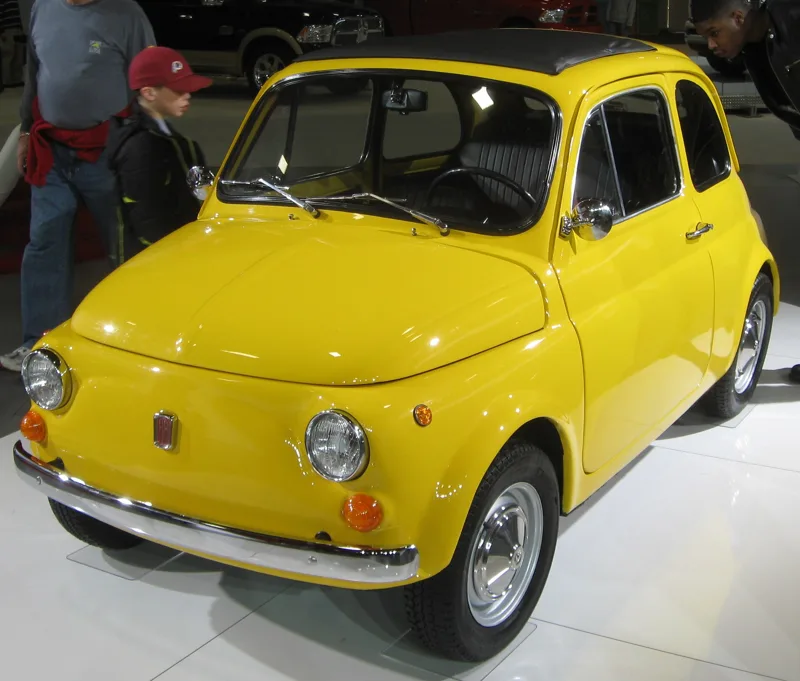
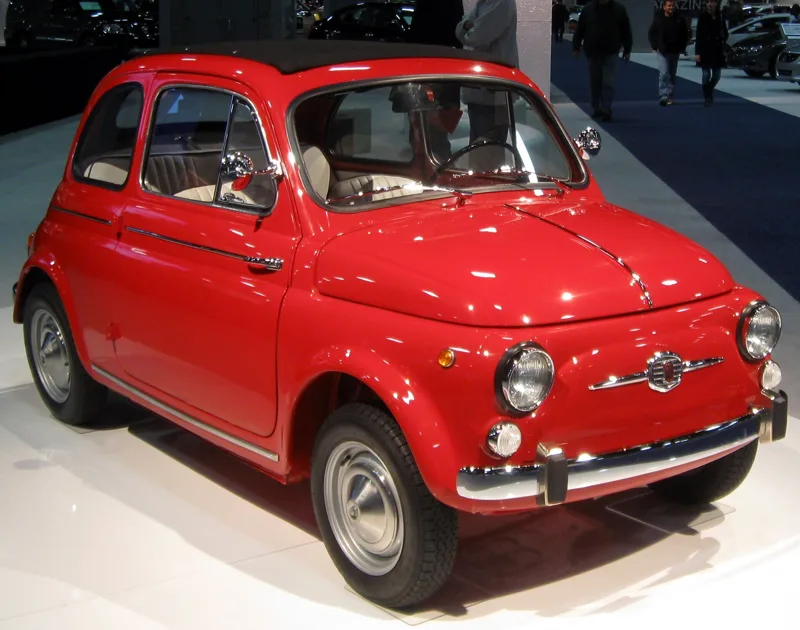
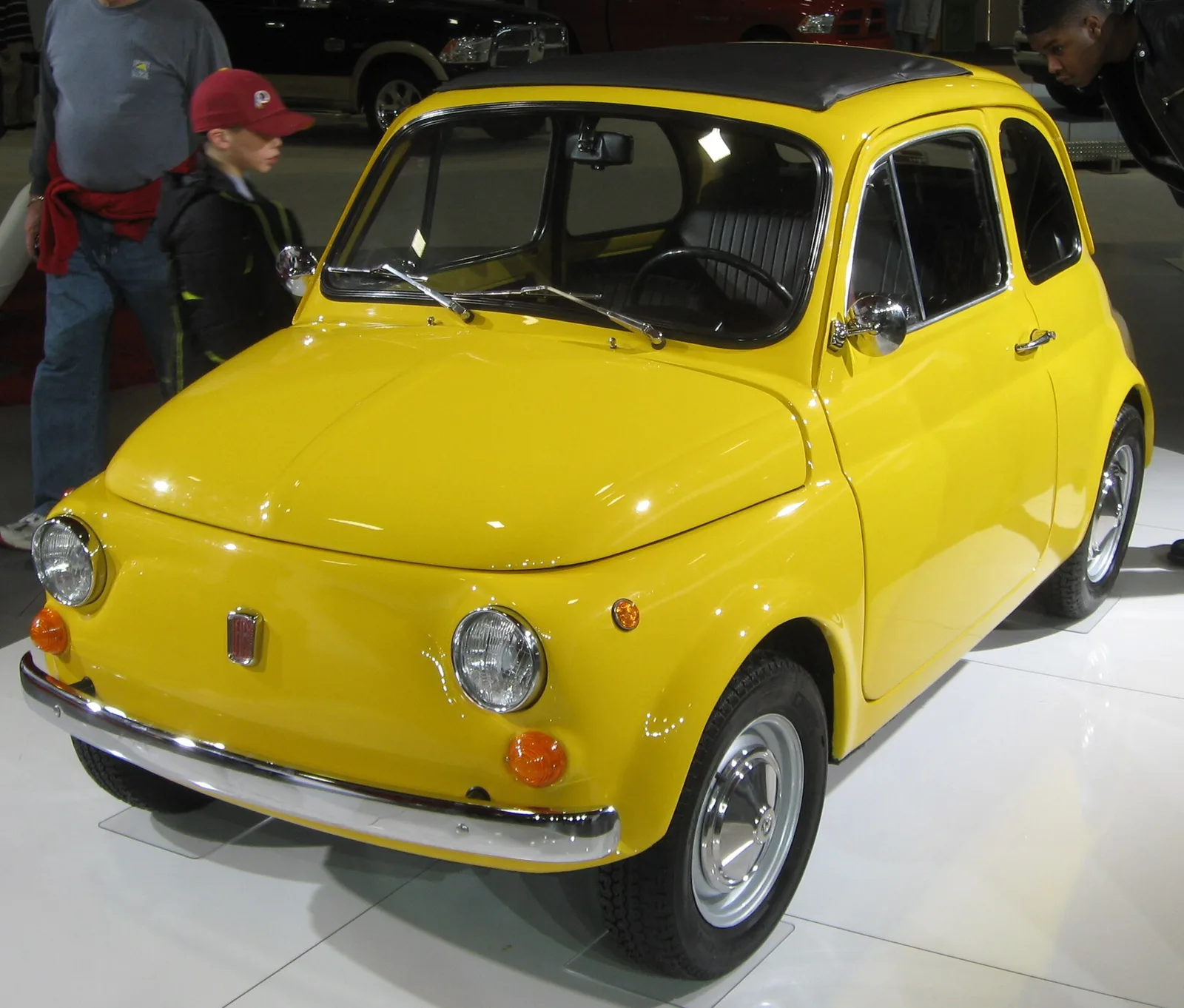
For anyone who drives, the decisions show up in the metal. Before the war the Topolino was Italy's first inexpensive mass-produced car, and in the mid-fifties the Fiat 600 became a bestseller. The Lada that rolled out of Togliattigrad in 1970 was a local Fiat 124. The 1980s gave buyers the Uno and the Croma, and the Grande Punto and then the 500 drove the revival under Marchionne.
The group's reach also widened the badge list. At its widest it built vehicles under twelve brands, from Abarth and Alfa Romeo to Jeep and Ram Trucks. In 2013 Fiat and Chrysler together were the second largest European automaker by volume and seventh worldwide, ahead of Honda and Renault among others. Outside Italy the largest production country is Brazil, where the Fiat brand leads its market. As of 2002 Fiat built more than one million vehicles at six Italian plants, and Italy supplied over a third of the company's revenue.
The record is not all triumph. Paolo Fresco, who chaired Fiat before Umberto, hoped to bring a sharper eye for shareholder value to a company whose share of the Italian market had slipped to 41% from around 62% in 1984. He offered stock options as incentives, and unions pushed back, insisting that pay rises follow length of service. Marchionne, chief executive from 2004, then delivered the group's first profit in 17 quarters.
John Elkann and the Chrysler merger
After Gianni's death, control of the firm passed gradually to his chosen heir, John Elkann, a grandson through Gianni's daughter Margherita. When Luca Cordero di Montezemolo became chairman in 2004, Elkann joined him as vice chairman at 28, and he was central to bringing Marchionne in.
The next large step came on 29 January 2014, when Fiat announced a merger with Chrysler Group to form Fiat Chrysler Automobiles. Shareholders approved it on 1 August 2014, and the merger took effect on 12 October 2014, making FCA the new owner of the Fiat Group. Fiat also became full owner of Chrysler Group in 2014. Into the 2020s, the de Pahlens, Margherita's children from her second marriage, remain in dispute with the Elkanns over Gianni's inheritance. His grandson John Elkann and his nephew Andrea Agnelli have both followed him into Juventus.