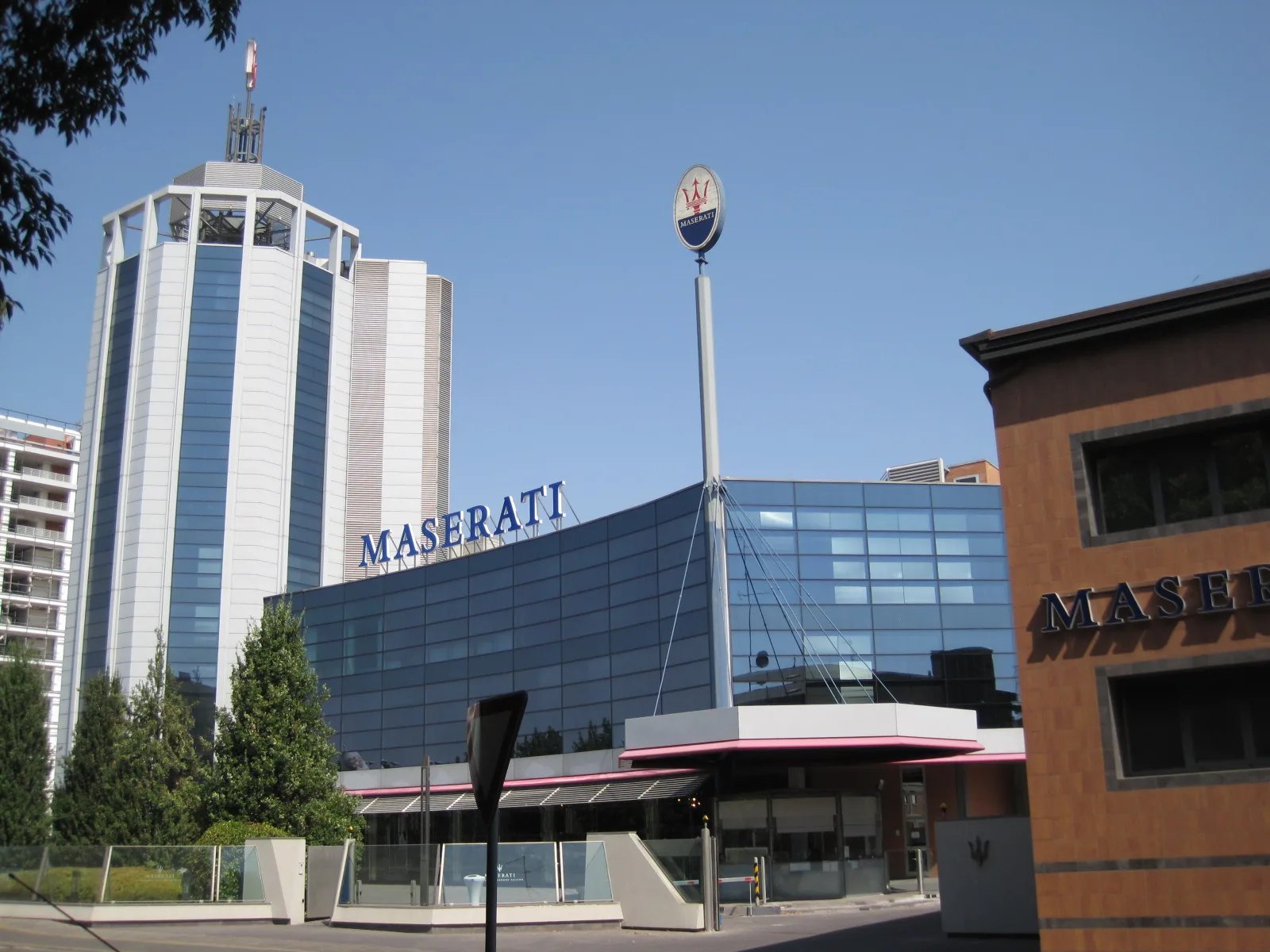
Fiat, Chrysler, Peugeot and Citroen became one group of fourteen brands in January 2021, with Maserati, Alfa Romeo, Lancia and DS among its premium names.
Stellantis is a group of fourteen car brands, including Jeep, Ram, Fiat, Alfa Romeo, Maserati, Peugeot, Citroen and Vauxhall. It was created on 16 January 2021 when France's PSA Group merged with Fiat Chrysler Automobiles. Antonio Filosa has led it since June 2025.
Fiat Chrysler Automobiles went looking for a merger partner in 2019, reached a provisional agreement with Renault, and watched it fall apart under pressure from the French government and from Renault's alliance partner, Nissan. Within months it had turned to Peugeot's parent instead. The company that resulted, Stellantis, now sells cars under fourteen badges, from Jeep and Ram to Peugeot, Vauxhall, Alfa Romeo and Maserati.
Which brands does Stellantis own?
Stellantis builds and sells vehicles under fourteen brands. From the American side come Jeep, Ram, Dodge and Chrysler. From Italy come Fiat, Abarth, Alfa Romeo, Lancia and Maserati. From the old PSA come Peugeot, Citroen, DS Automobiles, Opel and Vauxhall. When the deal closed the group employed about 300,000 people across 30 countries.
| Legacy group | Brands | How they arrived |
|---|---|---|
| FCA US | Chrysler, Dodge, Jeep, Ram | Chrysler left bankruptcy in June 2009 with Fiat as a part-owner; Fiat owned all of it by January 2014 |
| FCA Italy | Abarth, Alfa Romeo, Fiat, Lancia | Fiat Group brands, folded together with Chrysler in October 2014 |
| FCA, separate subsidiary | Maserati | Kept outside the main Fiat structure as its own subsidiary |
| PSA core | Peugeot, Citroen, DS Automobiles | Peugeot took control of Citroen in 1976; DS was created as a new brand in the Tavares era |
| PSA, bought from General Motors | Opel, Vauxhall | Purchase completed in August 2017 |
Those fourteen are the active names. Dormant marques inherited from its predecessors are not counted, and Ferrari, once part of Fiat's empire, left in 2016.
A bankrupt American maker, an Italian group and a French family firm now sit under one Dutch-headquartered roof.
How did Fiat and Chrysler become one company?
Chrysler filed for Chapter 11 bankruptcy protection on 30 April 2009 and emerged on 10 June 2009 with the autoworkers' union pension fund, Fiat and the American and Canadian governments as its main owners. Fiat began with 20 per cent, reached 58.5 per cent by January 2012 and bought the remaining 41.5 per cent on 21 January 2014.
The final purchase cost US$4.9 billion, with a further US$5.5 billion of pension liability coming along. Nine months later, on 12 October 2014, the two businesses were combined as Fiat Chrysler Automobiles. Shares began trading the next day in Milan and New York.
FCA was an odd creature on paper: domiciled in Amsterdam, with its financial headquarters in London, running an Italian arm in Turin and an American arm in Auburn Hills, Michigan. Exor, the investment vehicle of the Agnelli family that founded Fiat, held 29 per cent of the shares and 44 per cent of the control through a loyalty voting mechanism.
Ferrari went the other way. The group announced in October 2014 that it would separate the sports-car maker, floated 10 per cent on the New York Stock Exchange a year later and handed the other 80 per cent to its shareholders. The transaction completed on 3 January 2016. Maserati never went with it, and sat inside FCA as a separate subsidiary.
The plan, and the shock
In May 2014 the company set out a five-year plan promising sales of 7 million units, revenue of EUR 132 billion and net income of EUR 5 billion. Jeep was cast as the global growth engine. Chrysler would be the mainstream American brand, Dodge the performance one, Alfa Romeo a premium rival to BMW, Lexus and Audi, and Maserati the ultra-luxury flagship.
The plan's architect, chief executive Sergio Marchionne, was replaced on 21 July 2018 after what the company described as post-surgical complications. He died on 25 July 2018, aged 66. Alfredo Altavilla, the European chief, resigned the same month after being passed over for the top job.
How did a French family firm grow into PSA?
Peugeot bought 38.2 per cent of Citroen in December 1974 and lifted its stake to 89.95 per cent on 9 April 1976, creating PSA Peugeot Citroen. Citroen was bankrupt at the time, but it had two successful designs on sale, the GS and the CX, and the venture paid off between 1976 and 1979.
The next acquisition hurt. In late 1978 PSA bought the failing Chrysler Europe, the former Rootes and Simca businesses, for a nominal GBP 0.76 plus its debts. It sold the whole range as Talbot, reviving a name last seen on 1950s sports cars. Passenger-car Talbots ended in 1987 and commercial vehicles in 1992, and PSA lost money every year from 1980 to 1985.
Recovery came through the Peugeot 205, which helped PSA overtake Renault at home for the first time in 1983. Then the financial crisis arrived. A February 2012 alliance with General Motors gave GM 7 per cent of PSA, but GM sold that stake in December 2013. In 2014 the Chinese partner Dongfeng and the French state each took 13 per cent in a rescue, cutting the Peugeot family's holding from 25 per cent to 14 per cent.
Tavares, Opel and Vauxhall
Carlos Tavares took over as chief executive in 2014. Cost cutting and a broader model range put PSA back in profit from 2015, and the group created a new brand, DS Automobiles. In February 2017 it opened talks to buy Opel and Vauxhall from General Motors, which had lost money in Europe for sixteen years running. Some of Opel's own leadership were surprised. The purchase completed in August 2017.
Tavares met Angela Merkel and Theresa May, promising to safeguard jobs and to use Vauxhall's Ellesmere Port plant at least until 2021. He said Opel would keep its German identity and lean on German engineering. A bid for Proton, owner of Proton and Lotus, went to Geely instead. By 2018 PSA was selling 3.88 million vehicles, third among European makers behind Volkswagen with 10.8 million.
Why did the Renault deal fail when the PSA deal worked?
FCA reached a provisional agreement with Renault in early 2019, but the French government raised political concerns and Nissan, Renault's alliance partner, resisted. A fresh proposal in May 2019 was suspended in early June and never revived. PSA announced its intent to merge with FCA on 31 October 2019.
Binding terms followed on 18 December 2019, on a 50-50 all-share basis. PSA's own history values the deal at GBP 38 billion, while FCA's puts it at US$50 billion. The companies projected annual savings of EUR 3.7 billion, about US$4.22 billion. Their new name, from the Latin verb stello, meaning to brighten with stars, was announced in mid-July 2020.
Brussels cleared the deal on 21 December 2020 with few conditions attached. Shareholders of both sides voted yes on 4 January 2021, and the merger closed on 16 January. The new name took effect on 17 January, shares began trading in Milan and Paris on 18 January and in New York on 19 January, under the symbol STLA. For accounting purposes PSA counted as the buyer, so the group's financial statements carry PSA's history, although FCA was the surviving legal entity that changed its name.
Who owns and runs Stellantis?
After the merger, the largest shareholders were Exor with 14.2 per cent, Peugeot Invest, the family's investment arm, with 7 per cent, and the French state bank Bpifrance with 6 per cent. John Elkann of the Agnelli family is chairman and Robert Peugeot is vice chairman, both since January 2021.
Tavares became the first chief executive on a five-year term. Right after the merger he promised 29 electrified models by the end of 2021 and more than EUR 30 billion in electrification and software spending by the end of the decade. His tenure ended early. Cost cutting and tight control of product development drew fire from analysts, who blamed it for delays in new launches and weaker brands, above all in North America. American dealers complained about swelling inventories, and the United Auto Workers criticised job cuts and halted investment plans.
Net profit dropped 70 per cent in 2024, and Tavares resigned in December of that year, two years before his contract was due to expire. Directors then voted unanimously, on 28 May 2025, to name Antonio Filosa, who had led operations in North and South America, as chief executive from 23 June 2025. He is expected to put fresh emphasis on the North American market.
Where do Maserati, Alfa Romeo, Lancia and DS fit?
The four sit at the premium and heritage end of the portfolio, and their fortunes have been very uneven. Each has been repositioned at least once in the last decade, and the earlier FCA plans still explain much of what is on sale.
Maserati
Maserati was founded on 1 December 1914 in Bologna, moved to Modena under the Orsi family in 1940, and is now owned by Stellantis. No marque in the group has changed hands more often. The Orsis bought it in 1937. Citroen took over in 1968, then put it into liquidation on 22 May 1975, which prompted unions and local politicians to fight for its 800 jobs. Italian state holding company GEPI and the Argentinian industrialist Alejandro de Tomaso took over that August. Chrysler bought 5 per cent in 1984 and raised the stake to 15.6 per cent in 1986.
The twin-turbocharged Biturbo of the 1980s, the first production car with such an engine, sold 40,000 units. FCA's 2014 plan cast Maserati as the ultra-luxury brand, and the rivals it named were Rolls-Royce, Aston Martin, Bentley, Jaguar and Mercedes-Benz. The Levante SUV arrived in 2016, and in 2018 came a new GranTurismo, again with a V8 making 560 horsepower.
Alfa Romeo
FCA's plan made Alfa Romeo the premium marque to take on BMW, Lexus and Audi. The 4C coupe and Spider reached North America in 2014, the Giulia was announced in 2015 and the Stelvio SUV followed in 2016. The 4C was dropped in 2019, and FCA planned mid-life updates for both the Giulia and the Stelvio in the 2021 production year.
Lancia and DS
Lancia was missing from that 2014 announcement and was later said to be pulling out of every market apart from Italy. After the Chrysler-built 300 and Voyager were dropped from its European range in 2015, the Ypsilon became its only model, sold solely in Italy.
DS was born inside PSA during the Tavares years. It still keeps its own retail operations in some countries, though it does not develop or build vehicles separately from Peugeot and Citroen. Under Stellantis it competes in Formula E through DS Performance.
What has Stellantis built beyond the badges?
A good deal of the group's activity since 2021 has gone into electrification, chips and partnerships. The record is mixed: some ventures are running, others have already been wound up.
- Chips: in 2021 Stellantis signed a partnership with Foxconn after the global semiconductor shortage disrupted production, and in 2023 the two launched SiliconAuto, based in the Netherlands.
- Batteries: in 2022 it set up two ventures, NextStar Energy in Canada with LG Energy Solution and StarPlus Energy in the US with Samsung SDI. NextStar has since been dissolved, in February 2026.
- China: in October 2023 it bought 20 per cent of Leapmotor for EUR 1.5 billion and set up Leapmotor International to handle sales and production outside China.
- Mobility and software: Share Now, a car-sharing platform, was acquired in July 2022 and the autonomous-driving start-up aiMotive in November 2022.
- Cash returns: a EUR 3 billion share buyback was announced in 2024.
The group also faced legal trouble over diesel emissions. In May 2022 it admitted criminal charges in the United States and paid $300 million to close a Justice Department diesel investigation that covered more than 100,000 vehicles. In 2022 it halted its Russian operations because of sanctions, and in early 2024, when Russian partners started producing Citroen-badged vehicles at the Kaluga plant, it said it had lost control of its assets there.
Where this goes next
The 2021 Dare Forward strategy aims to invest EUR 50 billion before 2030 on electrification. Its targets for 2030 are that every passenger car sold in Europe is battery-electric and that half of American car and light-truck sales are too, spread over 75 electric models. Stellantis plans to mix nickel-based, cobalt-free and cheaper lithium iron phosphate packs, with driving ranges of 500 to 800 kilometres (300 to 500 miles). It also targets carbon net zero by 2038.
Recent moves point in several directions. In December 2024 it was reported that Stellantis had agreed a joint venture with CATL to put EUR 4.1 billion into a large battery plant at Zaragoza in Spain, built around lithium iron phosphate cells. In May 2026 the company announced it would build Peugeot and Jeep vehicles in China after a deal with Dongfeng Motor Corporation. In August 2026 it reported a return to operating profit for the first half of the year, though profit per car remains quite low.
Policy positions are less settled. On American policy, Stellantis has said it backs the Trump administration's move to scrap the 2009 Endangerment Finding, and in March 2025 it endorsed the Transportation Freedom Act. Tavares backed a 2035 phase-out of combustion-engine vehicles in February 2024, yet early in 2025 the company argued for flexibility in meeting the EU's CO2 targets.
What does it mean if you buy or drive a Stellantis car?
For most owners the badge still decides the experience. Peugeot, Citroen and DS keep separate sales and marketing structures while sharing technology, development and assembly. Opel and Vauxhall were promised their own identities when PSA bought them, and the American brands come with Mopar, the parts and service organisation that FCA inherited.
Parts are also a group concern. PSA acquired the B-Parts aftermarket platform in 2020, and the SUSTAINera hub launched in 2023 recycles and sources used parts, as part of the net-zero target.
The diesel cases remain unfinished business. A GBP 5 billion class action in the United Kingdom alleges emissions manipulation in selected models from Alfa Romeo, Fiat, Iveco and Jeep. In July 2026 British courts rejected accusations in a separate diesel case against five manufacturers, Peugeot-Citroen among them.
On track the group is active too. Peugeot Sport runs an entry in the FIA World Endurance Championship, DS Performance is a Formula E entrant, Citroen Racing offers the C3 Rally2 to customer teams, and Opel runs the electric Corsa-e Rally car and its own cup.