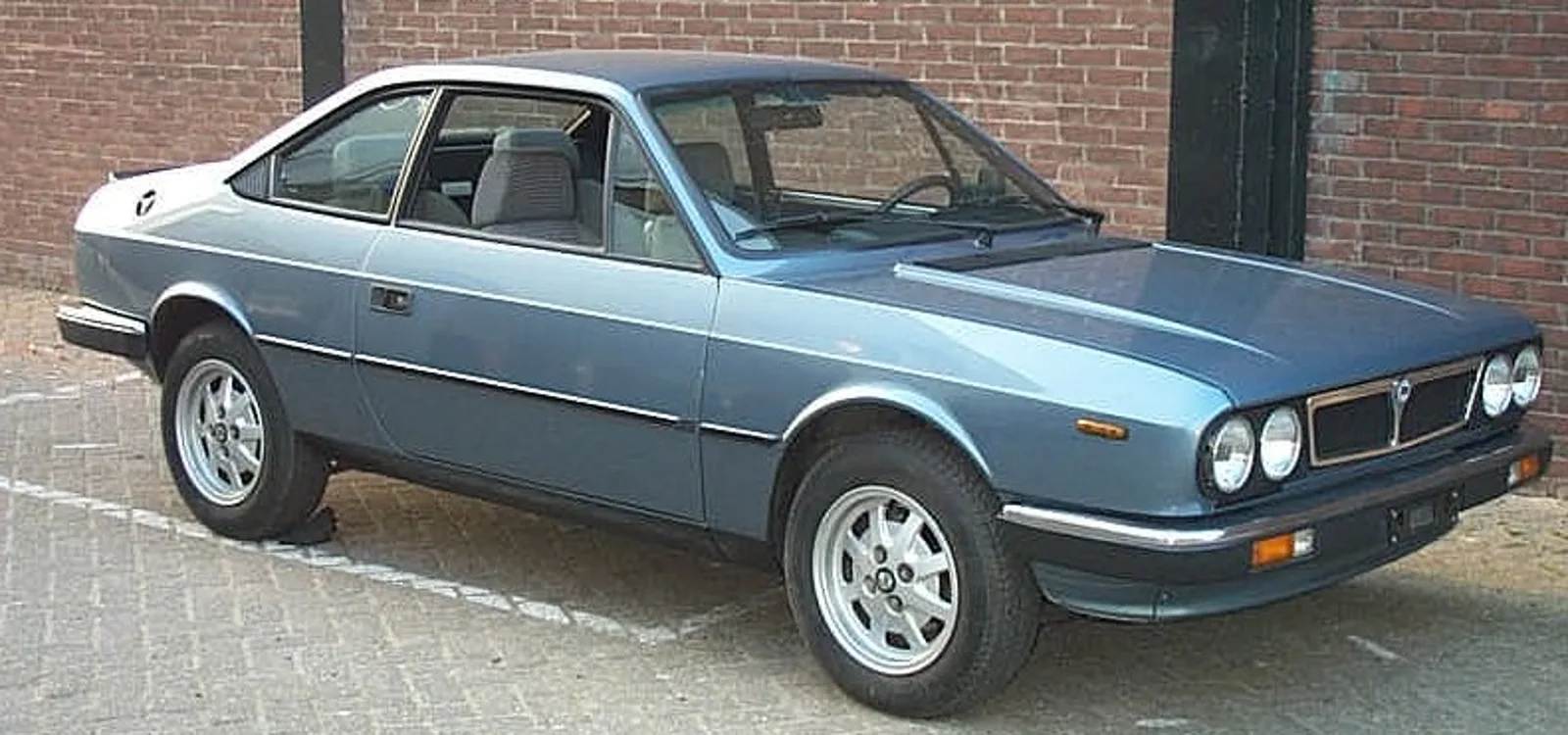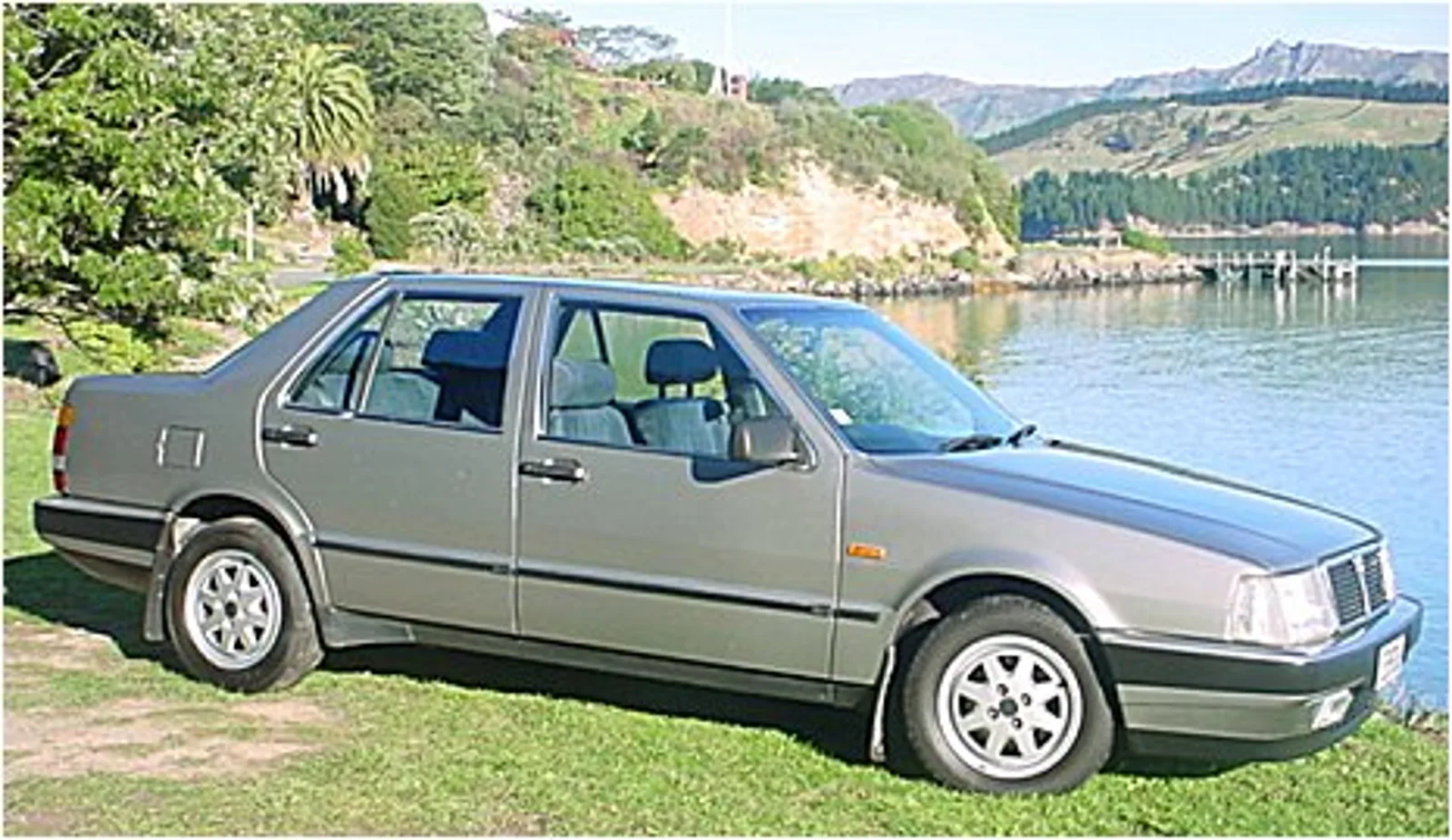
Built on the Type Four platform from 1984 to 1994, the Thema gave Lancia a Pininfarina estate, a Limousine and the 8-32 with a Ferrari engine.
The Lancia Thema was an executive car built by Lancia from 1984 to 1994 on the Type Four platform. It came as a saloon and a Pininfarina-built station wagon, and its 8-32 version used a 2,927 cc Ferrari V8. Over 336,000 saloons were produced.
Lancia's Thema was a sibling of the Alfa Romeo 164, Fiat Croma and Saab 9000, all built on the Type Four platform. It arrived in 1984 and ended in 1994, when Lancia withdrew from right-hand drive markets and the Kappa took its place. Its most famous version was the 8-32, which used an engine from Ferrari.
Where did the Thema come from?
The Thema was announced in May 1984 and was introduced to the press at an event in Vienna in October 1984. It reached the public at the Turin Motor Show in November 1984. It came as a saloon and as a station wagon, with the station wagon designed and produced by Pininfarina.
Because four different cars shared the Type Four platform, Lancia's executive car had a clear place in a wider family. The Thema's successor, the Kappa, arrived a decade after its launch, which shows how long the design stayed in production.
A Type Four saloon with a Ferrari V8 under the bonnet, and a Pininfarina estate that many enthusiasts still remember.
What did the first series offer?
The first series was built from 1984 to 1988 and started with four models. Two used a 2.0 litre four-cylinder petrol engine, naturally aspirated at 120 PS (88 kW; 118 hp) or turbocharged at 165 PS (121 kW; 163 hp). The most expensive model was the Thema 6V, whose 2,849 cc V6 produced 150 PS (110 kW; 148 hp).
Most European markets could also order a turbocharged diesel of 2,445 cc, rated at 100 PS (74 kW; 99 hp). In 1986 Pininfarina's station wagon arrived, offered only with the two turbocharged engines, and the Ferrari V8 version followed the same year.
What changed in the second series?
The second series was presented at the Paris Motor Show in September 1988 with new 16-valve 2.0 litre engines. The naturally aspirated 16v produced 147 PS (108 kW; 145 hp), and the turbo 16v made 185 PS (136 kW; 182 hp). The 8-valve 2 litre remained on sale in the base model at 117 PS (86 kW; 115 hp).
Visual updates freshened the look. The grille gained vertical bars, the turn indicators moved beneath the main headlamps, and the rear lenses were tinted red. Model badging was removed from the rear, and the 8-spoke alloy wheels were redesigned.
The turbo diesel grew to 2,499 cc and 118 PS (87 kW; 116 hp). The V6 was only mildly revised, and its 147 PS output stayed in place.
How did the third series differ?
The third and last series was a facelift, introduced at the Paris Motor Show in September 1992 and built until 1994. It offered four trim levels across the range: base, LE, LS and LX. The V6 gave way to a 3.0 litre Alfa Romeo unit making 175 PS (129 kW; 173 hp).
Production ended in 1994, when Lancia also withdrew from right-hand drive markets, including the UK, because of falling sales. The Kappa replaced the Thema. Over 336,000 Thema saloons were built across the three series.
What was the station wagon?
The station wagon was developed jointly by Lancia and Pininfarina and was produced in Grugliasco. Pininfarina built 21,074 units between 1986 and 1994 at its Borgo San Paolo plant. It was never offered in right-hand drive.
The estate was first shown as a prototype at the Frankfurt Motor Show in September 1985, and the definitive version appeared at the Geneva Motor Show in March 1986. Zagato had earlier shown its own estate proposal at the 1985 Geneva show, but that stayed a design study with a larger rear glass area and more discreet D-pillars than the Pininfarina car.
What made the Thema 8-32 special?
The 8-32 used a 2,927 cc Ferrari V8 from the Tipo F105L family, based on the engine of the Ferrari 308 GTB. Its cross-plane crankshaft and different firing order were chosen to suit a four-door luxury saloon. Non-catalysed output was 215 PS (158 kW) at 6,750 rpm.
Performance for the two versions differed. The non-catalysed car reached 0-100 km/h in 6.8 seconds and a top speed of 240 km/h (149 mph). The catalysed version made 205 PS (151 kW), took 7.2 seconds to 100 km/h and reached 235 km/h (146 mph). Only a five-speed manual gearbox was offered.
Engineering details added to the car's character. The 8-32 had Bosch KE3 Jetronic fuel injection, ABS and ZF's Servotronic power steering, which varied the effort with road speed. A retractable rear spoiler, controlled by a rotary switch, sat flush with the boot lid when closed.
How was the 8-32 finished inside and out?
The 8-32 came with a handmade wood-and-Alcantara interior, or optional Poltrona Frau leather. Stitched leather covered the dashboard, steering wheel, gear lever and door panels, while the headlining was Alcantara. The seats were beige or date brown Alcantara as standard.
Buyers could choose from five metallic paint colours: Blizzard Blue, Winner Red, Quartz Grey, Reflex Green and Black. A hand-painted double pinstripe ran along the sides and rear, and yellow 8-32 badges set the car apart from other Themas.
How did the 8-32 compare with its rivals?
The 8-32 competed with some of the quickest saloons of its day, among them the Audi 100 Quattro, BMW M535i, Ford Sierra RS Cosworth and Saab 9000 2.3 Turbo S. The Vauxhall Lotus Carlton and Opel Lotus Omega were also in that group. Road and Track called the car one of the weirder sleepers of the 1980s.
Enzo Ferrari owned an 8-32 as his personal transport towards the end of his life.
What was inside the 8-32?
The 8-32 had a bespoke dashboard that housed two main instruments and six small auxiliary gauges, with triple round air conditioning vents. Its dials were black with yellow hands and markings. The instrument layout included a water thermometer, an oil thermometer and a pressure gauge. Those details set the interior apart from the standard Thema.
Matte burr wood veneer finished the door cappings and the lids covering the radio and ashtray. Brown interiors also received colour-matched switchgear, carpets and trim.
Which options could buyers add to the 8-32?
Buyers could add automatic climate control, an electrically actuated sunroof, provision for a car phone in the front armrest and individual power seats for the rear. Black or brown leather was an optional extra on the seats, and Poltrona Frau leather was offered as another upgrade on the interior.
The 8-32 was not a bare-bones car. Its standard equipment already matched the LX trim of the Thema, so the options were aimed at buyers who wanted extra comfort on top.
Why did the 8-32 use a Ferrari engine?
The 8-32 used a Ferrari V8 whose characteristics were adapted for a four-door luxury saloon. Its cross-plane crankshaft, smaller valves and different firing order were meant to give it a character better suited to a luxury saloon.
The engine was assembled at Lancia's S. Paolo plant in Turin. Ducati produced some of its components from castings made at Maranello, so several Italian firms contributed to the unit.
How many 8-32s were built?
Lancia built 2,370 Series 1 cars from 1986 to 1988 and 1,601 Series 2 cars from 1989 to 1992. All were left-hand drive, although one was adapted to right-hand drive by TAK Motor Co. in South Africa in 1987. The 1988 series 2 updates brought new lights front and rear, a smaller grille badge and side rubbing strips that earlier 8-32s had lacked.
The 8-32 did not receive the third-series facelift.
Why were catalysed engines offered?
Catalysed versions of the four- and six-cylinder petrol engines were produced for markets where catalytic converters were mandatory. They gave slightly reduced output compared with the non-catalysed units. The 8-32 was made in both forms, which is why the performance figures differ between the two versions.
The catalysed 8-32 made 205 PS (151 kW), slightly less than the non-catalysed car. That small loss was enough to change its acceleration and top speed in a measurable way.
What was the Thema Limousine?
Buyers were wealthy customers and Fiat Group executives, and the car was made only on request. Only 24 were built. Its wheelbase was extended by 30 cm (1 ft) to 2,960 mm (116.5 in), giving an overall length of 4,890 mm (192.5 in).
The Limousine weighed 1,400 kg (3,090 lb), which was about a fifth more than a regular Thema. Its price was nearly sixty percent above a comparably equipped standard V6. Most had the 2.8 litre PRV V6, and the last examples used the 3.0 litre Alfa Romeo V6.
Which engines powered the Thema?
Apart from the Ferrari unit, Thema engines came from the Fiat series designed by Aurelio Lampredi, the engineer formerly of Ferrari and Alfa Romeo. The straight-four 2.0 litre petrol engine was offered in naturally aspirated and turbocharged forms, and it was refined over the years.
The 2.8 litre PRV V6 was developed with Peugeot, Renault and Volvo. In 1992 it was replaced by a 3.0 litre Alfa Romeo V6, which Fiat was able to use because it had bought Alfa Romeo in 1986.
How was the Thema sold as a 300C?
Chrysler marketed the 300C for model years 2011 to 2014 as the Lancia Thema across Europe's left-hand drive markets. The UK and Ireland, which drive on the left and use right-hand drive cars, kept the Chrysler 300C badge. Reports in February 2011 had signalled that change before launch.
What are the key Thema specifications?
| Variant | Engine | Output | Notable figure |
|---|---|---|---|
| First series 2.0 naturally aspirated | 2.0 litre four-cylinder | 120 PS (88 kW; 118 hp) | Turbo version 165 PS (121 kW; 163 hp) |
| Thema 6V | 2,849 cc V6 | 150 PS (110 kW; 148 hp) | Most expensive first-series model |
| Second series 16v | 2.0 litre 16-valve | 147 PS (108 kW; 145 hp) | Turbo 16v 185 PS (136 kW; 182 hp) |
| Third series | 3.0 litre Alfa Romeo V6 | 175 PS (129 kW; 173 hp) | Four trim levels |
| 8-32 non-catalysed | 2,927 cc Ferrari V8 | 215 PS (158 kW) at 6,750 rpm | 0-100 km/h in 6.8 seconds |
| 8-32 catalysed | 2,927 cc Ferrari V8 | 205 PS (151 kW) | 0-100 km/h in 7.2 seconds |
| Limousine | 2.8 litre PRV V6 or 3.0 litre Alfa Romeo V6 | Not given separately | Length 4,890 mm (192.5 in) |