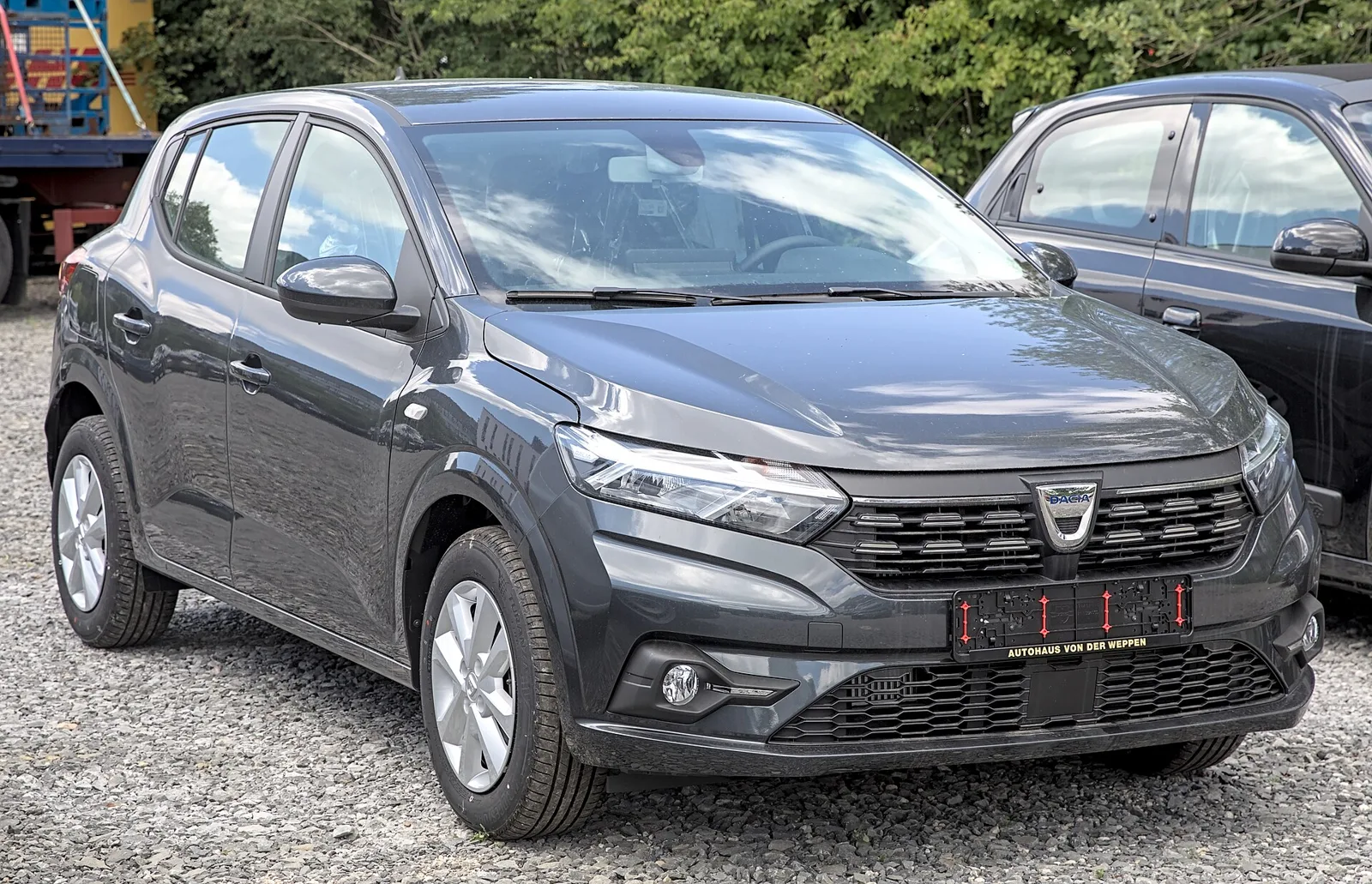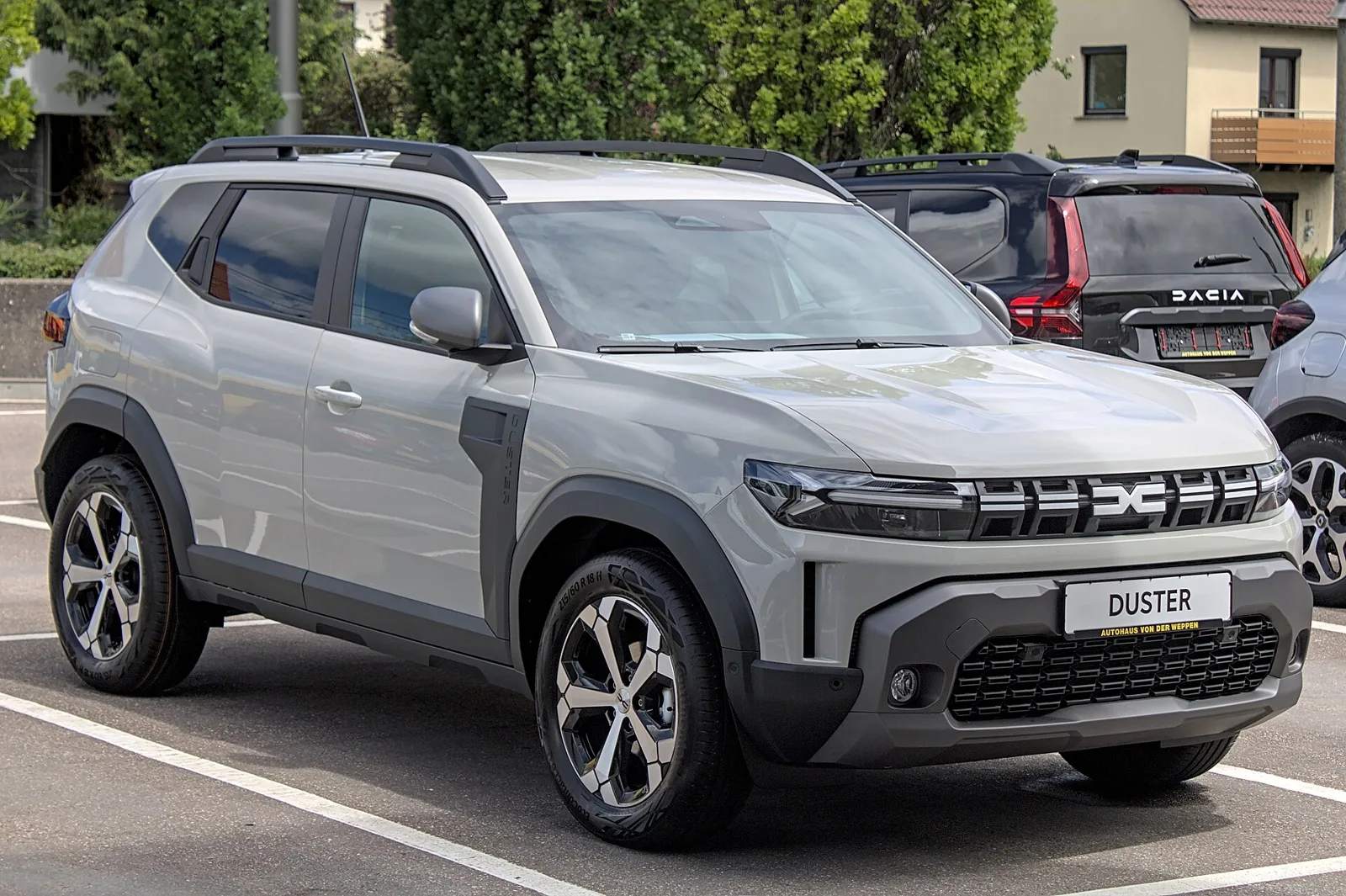
From its 2010 debut on the Logan platform to a hybrid-ready third generation, the Duster built a global following on value, practicality and off-road ability.
The Dacia Duster is a budget crossover built by Renault and Dacia since 2010 and now in its third generation. It has used the B0 and CMF-B platforms, offered four-wheel drive and hybrid options, and raced in off-road and endurance events.
The Dacia Duster is a subcompact crossover that Renault and its Romanian arm Dacia have built since 2010, and it is now in its third generation. It was introduced in March 2010 as the third Dacia model on the Logan platform, and Renault sells it under its own name in several markets. The Duster is best known for offering practical, off-road-capable motoring at a modest price.
Where did the Dacia Duster come from?
The Duster was first shown in ice racing form for the Andros Trophy, presented on 17 November 2009. The production version followed on 8 December 2009 and then made its public debut at the Geneva Motor Show in March 2010. Renault 4 had some influence on the first generation's design.
Dacia is the budget brand within the Renault group, and the Duster carried that brief into the crossover segment. The first car was based on the B0 platform, which also underpinned the Logan family, and it was the third Dacia model to use that architecture after the Sandero.
A budget crossover that carried off-road ability, practical space and a global following through three generations.
How big is the Duster?
The first-generation car measured 4.31 metres (169.7 in) long and 1.82 metres (71.7 in) wide, with 210 mm (8.3 in) of ground clearance. Its luggage space reached 475 litres (16.8 cu ft), and with the rear bench folded and tipped forward, its carrying capacity could exceed 1,600 litres (57 cu ft).
Size stayed similar for the next generation. The second Duster had nearly the same dimensions on the same B0 platform, though every body panel was new. Its boot held 445 litres in two-wheel drive and 376 litres in four-wheel drive, and the total dedicated storage space came to 28.6 litres.
How did the first-generation four-wheel drive work?
The first-generation Duster offered two-wheel drive or four-wheel drive. The four-wheel drive versions used Nissan's all-wheel drive system and gave the driver three modes: Auto, which engaged the rear wheels when the front ones lost grip, Lock, which spun both axles at the same speed, and 2WD, which kept the car in front-wheel drive for efficiency.
Safety equipment included Bosch 8.1 ABS, electronic brakeforce distribution and emergency brake assist as standard. Electronic stability control was optional on some versions, along with understeer control and traction control, which could move torque away from a spinning wheel in four-wheel drive mode.
What engines did the first Duster use?
The first generation was offered with a range of petrol and diesel engines, and an LPG version proved particularly popular in Poland. The bi-fuel version was supplied with an LPG system from Landi Renzo, and because the K4M petrol engine uses hydraulic lifters, the LPG version needed no regular valve adjustments.
The 2013 facelift brought the TCe 125, a 1.2 litre direct-injection turbo petrol engine. Dacia later added an ethanol-capable flexi-fuel version in several Western European countries from 2011, showing how the range was adapted to different fuel markets.
How did the first Duster sell?
The first generation went on sale in Europe, Turkey, Algeria and Morocco from March 2010, with the two-wheel drive version starting at 11,900 euros and the four-wheel drive model at 13,900 euros. In 2014, 40 percent of Duster units sold worldwide were badged as Dacia, while 60 percent carried the Renault badge.
Russia became a key market. The Duster was built at the Avtoframos plant in Moscow and reached 200,000 sales in 2.5 years. In the UK the car became Dacia's best-selling vehicle, with 20,000 sales by 2016, and it won several local awards along the way.
The car reached other markets quickly. Renault introduced the Duster in Russia in 2012, where buyers faced waiting times of up to 18 months at first, and the Dacia brand launched in the UK that same year. In India the car arrived on 4 July 2012 with a strengthened suspension and underbody for better off-road use, and an all-wheel drive version followed in 2014.
Colombia proved another strong market. The Duster was introduced there in 2012 and has been the best-selling SUV in the country since, with exports to Mexico, Ecuador and Bolivia.
What changed in the second generation?
The second-generation Duster was announced in September 2017 at the Frankfurt Motor Show and reached the Romanian market in November 2017. It kept the B0 platform, but the cabin was revamped and interior noise was reduced to half of the previous generation's level.
Technology improved too. The second car added electric power steering, a MultiView camera system built from four cameras, blind spot warning, keyless entry and hill-start assist. Its engine line-up kept the 1.5 litre diesel and the 1.6 and 1.2 litre petrol units, with the diesel optionally paired with an EDC dual-clutch automatic.
The 2021 facelift brought a new light signature, front and rear, similar to the third-generation Sandero. The engine range shrank to two petrol units of 130 and 150 hp, a 100 hp petrol and LPG version, and a 115 hp diesel in all-wheel drive. The most powerful petrol became standard with the six-speed automatic.
Smaller updates kept the car fresh between the bigger steps. In 2016 the Duster received a new steering wheel and a Blackshadow trim, and in October 2015 a special Romanian edition called Connected by Orange added a Wi-Fi hotspot with a two-year free contract from the mobile operator.
Did the Duster pass its safety tests?
The first generation earned three stars from Euro NCAP in 2011, and its safety assist score was limited by the lack of a speed limiter and by optional electronic stability control. In Latin America, a basic first-generation car scored four adult stars from Latin NCAP in 2015, which was a better result than its European test.
The second generation was rated at three stars by Euro NCAP in December 2017, while Latin NCAP gave a basic version four adult stars in 2019. A 2021 car tested under Latin NCAP 3.0 recorded zero stars after a fuel leak, which prompted the agency to call on Renault to address the problem.
What is the third-generation Duster like?
The third generation was unveiled on 29 November 2023 in Portugal, with a public launch at the Geneva International Motor Show in February 2024. It was designed under David Durand and has a boxier exterior, a Y-shaped light signature and a large plastic skid plate up front. Its boot grows to 472 litres, which is 6 percent more than the old model.
Inside, the Duster has a 10.1-inch central touchscreen and a 7-inch digital instrument cluster. It supports wireless Apple CarPlay and Android Auto, and it introduced a new accessory system called Youclip, built from square supports positioned throughout the car.
The platform is CMF-B, shared with the Logan, Sandero and Jogger, and it is offered with mild and full hybrid powertrains as well as bi-fuel. The 1.3 litre turbo petrol makes 163 hp and 280 Nm, while the 1.0 litre turbo makes 100 hp. In India the third generation arrives as a strong hybrid, combining a four-cylinder petrol unit with an electric motor for 160 hp in total.
How does the Duster compare with its siblings and derivatives?
The third-generation platform underpins several related models. The Dacia Bigster is a larger SUV, the Dacia Striker is a coupe SUV, and the Renault Niagara concept previewed a half-ton pickup. Those derivatives show how far the Duster's architecture has been stretched beyond its original role.
Earlier, the Nissan Terrano had already shown that the first Duster could wear another badge. The restyled version sold in CIS countries and India proved that the basic formula travelled well between brands.
How did the Duster win over critics?
The Duster collected a string of awards early in its life. The Autobest 2011 prize went to the car after a jury from fifteen countries scored it across thirteen criteria, and it was named Scottish Car of the Year and Top Gear's Bargain of the Year in 2012. The Indian Car of the Year award for 2013 followed for the India model.
It was also a finalist for the 2011 European Car of the Year. Its reputation rested on value and capability rather than on luxury, and that combination kept the car in demand as the brand expanded.
Is there a Duster pick-up?
Yes, and it has been built in more than one form. The Renault Duster Oroch was unveiled at the Buenos Aires Motor Show on 18 June 2015. It was a double cab pick-up that Renault badged as its first pick-up, with 1.6 or 2.0 litre petrol engines and five or six-speed gearboxes.
Dacia introduced a single-cab Duster Pick-Up in October 2020, based on the four-wheel drive model. Its cargo bed measures 1.65 metres (5.4 ft) and holds 1,000 litres, with a maximum payload of 500 kg (1,100 lb). The conversions were developed with the Romanian coachbuilder Romturingia.
Was the Duster ever raced?
The Duster raced in several off-road events. A competition version with a 350 hp V6 petrol engine, driven by Alain Prost, finished second in the 2009 to 2010 Andros Trophy ice racing championship. In 2010 a Duster was first in the crossover class of the Rallye Aicha des Gazelles.
The Dacia Duster No Limit tackled the Pikes Peak Unlimited class in 2011 with an 850 bhp version of the VR38DETT engine from the Nissan GT-R. Later Dakar prototypes used 3.5 litre V6 engines producing over 300 hp in 2013, and in 2015 and 2016 the Dakar cars switched to a Nissan VK50VE V8.
What are the Duster specifications?
The table below covers the core figures for the first and third generations and the main safety results. Where a figure belongs to one generation, the table names it, so the first-generation dimensions and the third-generation boot do not blur together.
| Specification | Detail |
|---|---|
| Introduced | March 2010, Geneva Motor Show |
| Platform | B0 for the first and second generations; CMF-B for the third |
| First-generation length | 4.31 metres (169.7 in) |
| First-generation ground clearance | 210 mm (8.3 in) |
| First-generation luggage | Up to 475 litres (16.8 cu ft) |
| Second-generation boot | 445 litres two-wheel drive; 376 litres four-wheel drive |
| Third-generation boot | 472 litres |
| Euro NCAP, first generation | Three stars, 2011 |
| Euro NCAP, second generation | Three stars, December 2017 |
| Third-generation unveiling | 29 November 2023, Portugal |
Frequently asked questions
Is the Duster sold under the Renault name?
Yes. Renault sells the Duster as its own model in certain markets, including Latin America, Russia, Asia and Australia. In Europe it sits under the Dacia badge.
Did the Duster have a Nissan version?
The first generation was restyled and sold as the Nissan Terrano in CIS countries and India. The nameplate was used before as an alternative name for the Nissan Pathfinder.
How many Dusters did Ukrainian forces buy?
Ukrainian law enforcement and other government bodies bought some 1500 Dusters in 2024 alone, making it a popular choice for official fleets.
Is the third generation a hybrid?
Mild and full hybrid versions are offered, along with bi-fuel options. The India model is a strong hybrid rated at 160 hp overall.
What was the Duster's Euro NCAP result?
The first generation earned three stars in 2011, and the second generation earned three stars in December 2017.