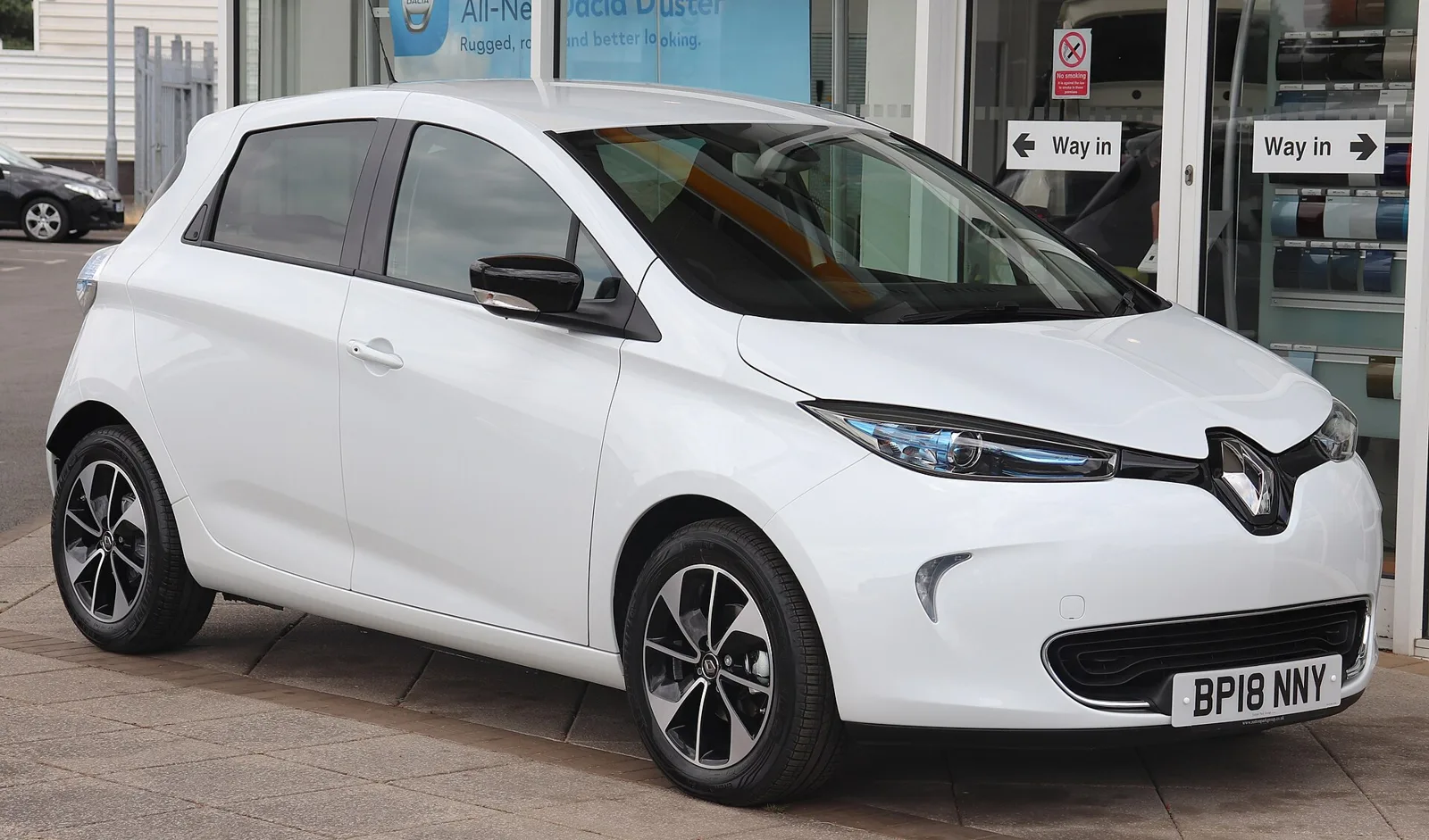
From the 2012 launch to the 2024 end of production, the Zoe's battery options, Chameleon charger and sales record in France and Europe.
Built at Flins from 2012 to March 2024 on the Clio platform, the Zoe was an electric supermini with five doors. Its battery options ran from 22 kWh to 55 kWh, and 426,706 units were built.
The Renault Zoe was a five-door electric supermini built on the platform of the Renault Clio. It was produced at Flins from 2012 until March 2024, and it offered battery options from 22 kWh to 55 kWh over its life. Its manufacturer built 426,706 units before the car was retired.
The Zoe led the French electric car market for years and was Europe's top-selling all-electric car in 2015 and 2016. By 2020 it ranked as Europe's all-time best-selling plug-in electric car.
What was the Renault Zoe?
The Renault Zoe was a battery electric hatchback that Renault sold under the Zoe name from 2012. It was later known as the Zoe E-Tech Electric, a name it took on in 2021, and it sat alongside Renault's petrol and diesel Clio range without sharing its drivetrain.
Its body was a five-door supermini measuring 4,080 mm, a little longer than the Clio. The design was credited to Jean Semeriva, and the car kept a compact footprint that suited European city centres.
A supermini that led the French electric market for years and ended production with 426,706 cars built.
How did the Zoe concept cars lead to production?
Renault first showed the Zoe name on a concept at the 2005 Geneva Motor Show. That Zoe City Car was a three-seat, open-top urban concept measuring 3.45 m, and it had no real connection with the later electric car.
The 2009 Zoe Concept appeared at the Frankfurt Motor Show as a Clio-sized electric car. It had a front-mounted 71 kW (95 hp) motor, a range estimate of 160 km (99 mi) and gull-wing doors. Its roof carried solar panels to run the air conditioning, and the design came from Raphael Linari.
The Zoe Preview of 2010 was a substantially revised version shown at the Paris Motor Show, and Renault called it 90% showroom ready. Its motor was cut to 66 kW (89 hp), and the gull-wing doors were dropped. The Zoe E-Sport hot hatch followed in 2017 with two electric motors and 340 kW (456 bhp).
When did the production Zoe go on sale?
The production Zoe was shown at the 2012 Geneva Motor Show, and retail customers in France took delivery in December 2012. Deliveries in the UK began in March 2013, while Germany, Italy and Spain followed in April 2013.
The first car went to Arnaud Montebourg, then French Minister of Industrial Recovery. The Zoe was built at Flins on the same line as the Clio and Nissan Micra, at about 170 cars per day.
How did the battery and motor change?
The original car had a 22 kWh lithium-ion pack weighing 275 kg, driving a 65 kW (87 bhp; 88 PS) synchronous motor called the Q210. Its NEDC range was 210 km (130 mi), and the car reached a top speed of 135 km/h (84 mph).
In June 2015 Renault introduced the smaller R240 motor, which had the same power and torque but a 240 km (150 mi) range on the NEDC cycle. In September 2016 a 41 kWh battery, the ZE 40, lifted the NEDC range to 400 km (250 mi). The battery was developed with LG Chem and assembled at Flins.
In 2018 the R110 motor delivered 80 kW (110 PS), and in 2019 the ZE 50 used a 55 kWh battery with 52 kWh usable. The R135 motor made 100 kW (130 hp), and the ZE 50 achieved 385 km (239 mi) under WLTP conditions.
How much did the Zoe cost?
In France the Zoe began at EUR 20,700 (US$27,250) before a EUR 6,300 (US$8,300) tax incentive. Buyers paid a monthly fee to lease the battery, starting at EUR 79 per month for 36 months.
Later pricing for the 41 kWh model began at EUR 23,600, with battery rental at EUR 69 per month for up to 7,500 km a year, or EUR 119 for unlimited mileage. In the UK, leasing the battery came with a free replacement if capacity fell below 80%.
How did the Chameleon charger work?
The Zoe used a Chameleon onboard charger that repurposed the motor's power electronics to charge the battery. The motor windings served as the power inductor for boost or buck conversion, which saved components but had drawbacks.
There was no galvanic isolation between the grid and the battery, so the car ran strict high-voltage fault and ground tests. It would not charge if ground-neutral resistance exceeded 100 ohm, and the test injected a 20mA pulse that could trip some RCDs.
The charger could take up to 43 kW of AC power. The 2015 R240 version dropped that capability in exchange for better efficiency on low-power home charging, and the 2017 facelift restored a rapid option at 43 kW.
How did the Zoe sell over time?
Retail sales in France began in limited numbers in December 2012, with 48 units registered that month. Cumulative sales reached 5,559 units through December 2013, and the Zoe became the top-selling all-electric car in France from January 2013.
Global sales reached 25,000 units in May 2015 and passed 50,000 units produced in April 2016. Sales of 21,735 units in 2016 made it Europe's best-selling all-electric car for a second year, with 21.2% of the segment.
Annual sales passed 100,000 units in 2020 for the first time. By 2021 the Tesla Model 3 had overtaken the Zoe as France's best-selling plug-in electric car, though the Zoe remained a major seller.
How did the Zoe fare in safety testing?
The European standard Zoe earned five stars from Euro NCAP in its 2013 test. In 2021 the updated car received a zero-star rating, which made it the third car in Euro NCAP's history to record that result.
A separate incident in Germany drew attention to the car's battery. Police in Neuss said a defect in a parked Zoe's battery started a fire, and escaping gas caused a garage explosion on 27 August 2023.
Why was the Zoe criticised over its battery?
Technology blog Techdirt suggested the battery pack could carry digital rights management software, because the original lease agreements let Renault stop the battery charging at the end of a lease. The Electronic Frontier Foundation used that idea to argue the car could become unusable if support ended.
Renault publicly denied using digital rights management through its official Twitter account. The company said the battery leasing terms did not work in the way the commentary suggested.
Did the name cause a legal dispute?
Yes, but briefly. In May 2010 a Parisian woman named Zoe Renault took legal action to stop Renault using the name, claiming it would lead to her being mocked. A French judge ruled in November 2010 that Renault could keep the name.
Why did Renault end Zoe production?
The Zoe was withdrawn from sale in the UK in December 2023, and production ended in March 2024. In total 426,706 units had been manufactured over the car's life.
The model was replaced by the Renault 5 E-Tech, a retro-styled electric car, after 12 model years in a single generation.
Renault Zoe specifications
The table covers the main figures across the battery generations. Where a figure belongs to one battery, motor or market, the table makes that explicit.
| Specification | Detail |
|---|---|
| Body | Five-door supermini, 4,080 mm long |
| Original battery | 22 kWh, 275 kg, Q210 motor |
| Original NEDC range | 210 km (130 mi) |
| ZE 40 battery | 41 kWh, 300 kg, 400 km (250 mi) NEDC |
| ZE 50 battery | 55 kWh (52 usable), 385 km (239 mi) WLTP |
| ZE 50 motor | R135, 100 kW (130 hp) |
| Top speed (original) | 135 km/h (84 mph) |
| Euro NCAP (2013) | Five stars |
| Total built | 426,706 units |
Where was the Zoe sold first?
Retail deliveries began in France in December 2012, and the UK followed in March 2013. Germany, Italy and Spain started selling the car in April 2013, and the Netherlands was another early market, with 547 units registered through December 2013.
Norway launched the Zoe in April 2014, with retail deliveries beginning in late March. Unlike other European countries, Norway sold the car with its battery pack included, and no battery leasing option was offered there.
How did Zoe sales spread across Europe?
France was the car's leading market for years, taking 5,511 of the 8,792 European sales made through December 2013, which made it the clear lead market. Germany was second that year, with 1,019 units delivered through December 2013.
Global sales totalled 11,323 in 2014, and France continued as the top market with cumulative sales of 11,529 units. The Zoe ranked as the world's 8th best-selling electric car in 2015 and again in 2016.
As of June 2016 France remained the Zoe's top country market, with 27,155 units registered since 2012, and French sales represented 53% of global sales. The Zoe also recorded 18,453 registrations in 2015 as Europe's top-selling pure electric car. That placed the Zoe eighth in the global electric car rankings for both years, a consistent position through the middle of the decade.
What did the Zoe cost in Norway and the UK?
In Norway the price started at 229,400 kroner, and the original 22 kWh variant cost 40,000 kroner less than the 41 kWh version. The small battery could be upgraded to the newer pack at a cost of around 3500 Euros for rented batteries.
Across the UK the car went on sale about three months after its French launch, and it was sold alongside the Renault range through the same dealer network.
Which updates came in 2018 and 2019?
In February 2018 Renault introduced the R110 motor, which raised output to 80 kW (110 PS) while keeping similar economy and torque of 225 Nm (166 lb ft). It was the first Renault motor certified under WLTP, and sales were planned to start by the end of the 2018 summer in Europe.
In 2019 the R135 motor made 100 kW (130 hp) and arrived in the ZE 50, which offered faster charging with an option of 50 kW DC capability through CCS2. The R90 remained available for sale alongside the new unit, and cars fitted with the R110 cost slightly more.
In mid-2022 the Zoe received some mild updates before production finished in March 2024.
Frequently asked questions
How big was the largest Zoe battery?
The largest battery was the 55 kWh pack in the ZE 50, of which 52 kWh was usable. It gave 385 km (239 mi) under WLTP conditions.
Was the Zoe ever sold with a zero safety rating?
Yes. The updated car received zero stars from Euro NCAP in 2021, the third such result in the agency's history.
Which motor did the 2015 Zoe use?
The R240 motor replaced the Q210 in June 2015. It made the same power and torque but gave a range of 240 km (150 mi) on the NEDC cycle.
What replaced the Zoe?
The retro-styled Renault 5 E-Tech took over from the Zoe after the Zoe had been built for 12 model years.