A 1970s state car project, a 1982 Suzuki partnership, the Alto, the Manesar dispute and a long safety debate.
Maruti Suzuki India is the Indian arm of Japanese carmaker Suzuki Motor Corporation and the largest automobile manufacturer in India. It began as Maruti Udyog in February 1981 as a state-backed project to build an affordable car, and it became a joint venture with Suzuki.
Maruti Suzuki began as a state project that stalled, then became India's largest carmaker by building small, affordable cars in partnership with Suzuki. It remains a Suzuki subsidiary, and its market value was estimated at US$50-55 billion as of 2025.
The group's story runs from a 1970s plan for a people's car, through a 1982 partnership that reshaped Indian motoring, to a modern range of hatchbacks, SUVs and an electric model. Along the way it has faced a bitter labour dispute, sharp criticism of crash test results and a large competition fine.
Where did the Maruti name come from?
The Maruti name traces back to an earlier company set up by Sanjay Gandhi, son of Indira Gandhi, in the early 1970s. Its aim was an affordable people's car. Maruti Motors Limited was established in August 1971, with Sanjay Gandhi as its first managing director.
Sanjay Gandhi had trained with Rolls-Royce in Crewe for three years. He returned to India in 1968 convinced that small car production had a place in the private sector, and the government along with the Planning Commission backed the idea. He began in a converted garage in Old Delhi, close to Roshanara Bagh, before moving to a 297-acre site in Gurgaon.
A letter of intent from the government in September 1970 envisaged up to 50,000 cars a year. The land cost about Rs 12,000 per acre. The planned price was around Rs 8,000, but the eventual figure rose to about Rs 16,500 ex-showroom, and the car still sold for Rs 5,000-10,000 less than its rivals.
A car project that stalled in the 1970s became India's largest carmaker through a Suzuki partnership and small cars.
What went wrong with the first Maruti car?
The first prototype was finished in 1972 and was promised for production by April 1973, but it failed a feasibility test and was judged unsuitable for road use. Output fell far short of the plan, and only 21 units had been built by 31 March 1976.
Sanjay Gandhi built the chassis himself and used a Triumph motorcycle engine to power the car. Despite the setbacks, a licence to produce 50,000 cars was granted in July 1974, so the project carried on.
Politics then complicated matters. Indira Gandhi lost the 1977 election, a court ordered Maruti dissolved in 1978, and the project's future looked uncertain until the government stepped in. That intervention came after Indira returned to office in 1980 and Sanjay died in a plane crash.
How did Suzuki become the partner?
After Sanjay Gandhi's death, Arun Nehru assessed whether the affordable car could be revived with an experienced manufacturer. Negotiations with Suzuki began in April 1982, and a licence and joint venture agreement was signed in October 1982. Suzuki took a 26 percent stake at first.
The government had hoped Suzuki would take a 40 percent share from the start. Suzuki accepted less because of its limited capital and the risks it perceived, with an agreed increase to 40 percent after five years. Each partner also agreed to nominate its own candidate for managing director, with five-year terms.
Suzuki's holding grew over time, reaching 50% in 1992 and 56.21% by 2013. Early imports were limited: Maruti could bring in two fully assembled Suzuki vehicles while the market stayed closed, with a first target of 33% local parts, a move that irritated nearby manufacturers.
| Year | Milestone |
|---|---|
| 1981 | Maruti Udyog Limited established as a joint venture |
| 1982 | Licence and joint venture agreement with Suzuki signed |
| 1983 | Local production of the Maruti 800 begins |
| 1992 | Suzuki stake raised to 50% |
| 2003 | Public issue, oversubscribed tenfold |
| 2007 | Government sells its remaining shares to Suzuki |
| 2015 | NEXA dealership network launched |
| 2019 | Diesel phase-out announced |
| 2024 | Six airbags and electronic stability control made standard |
What were the first Maruti models?
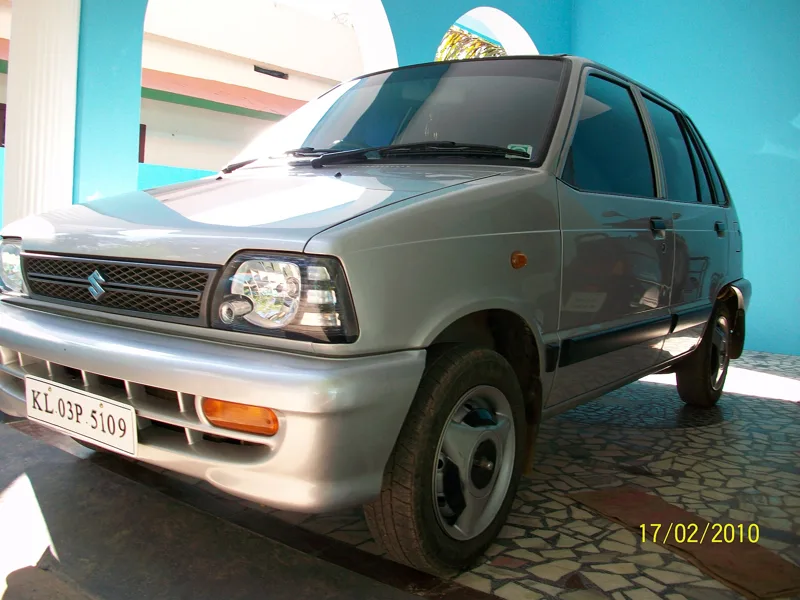
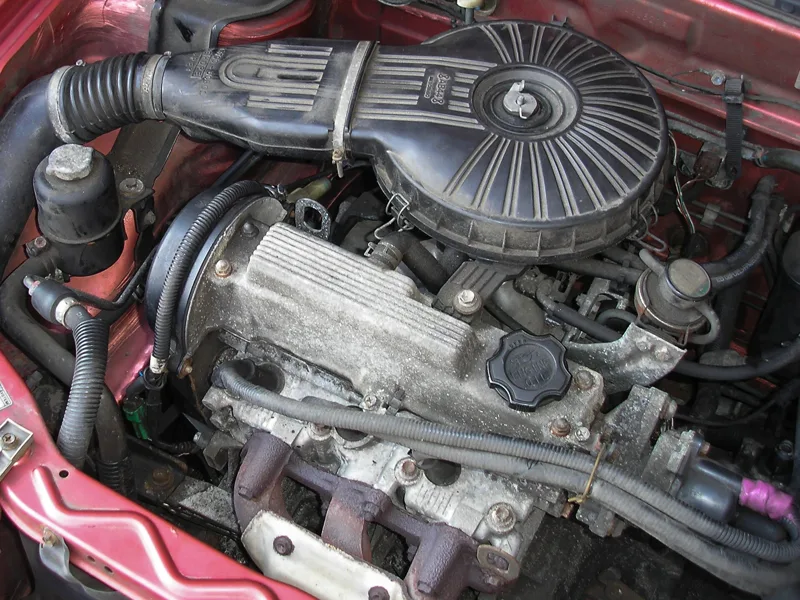
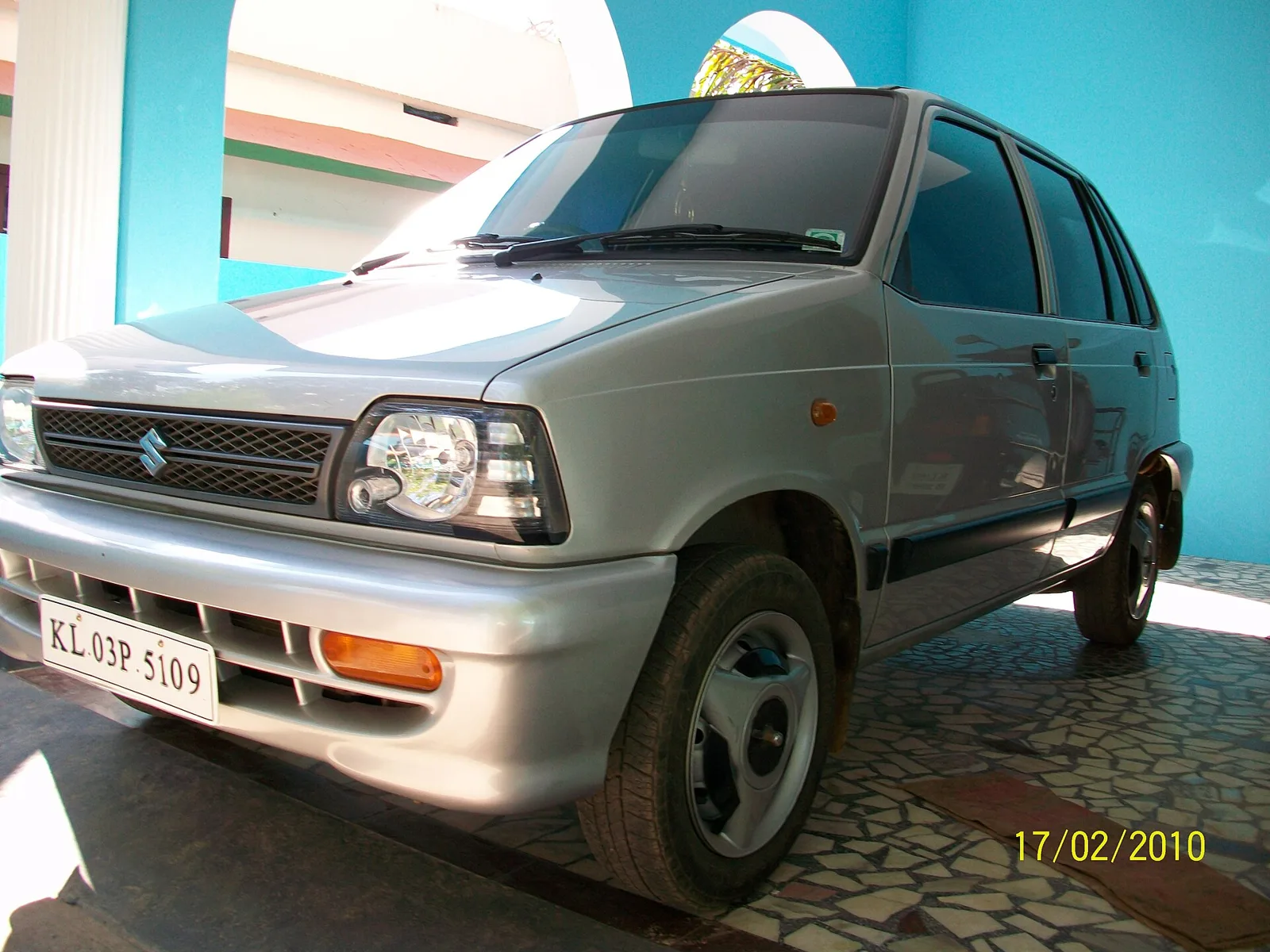
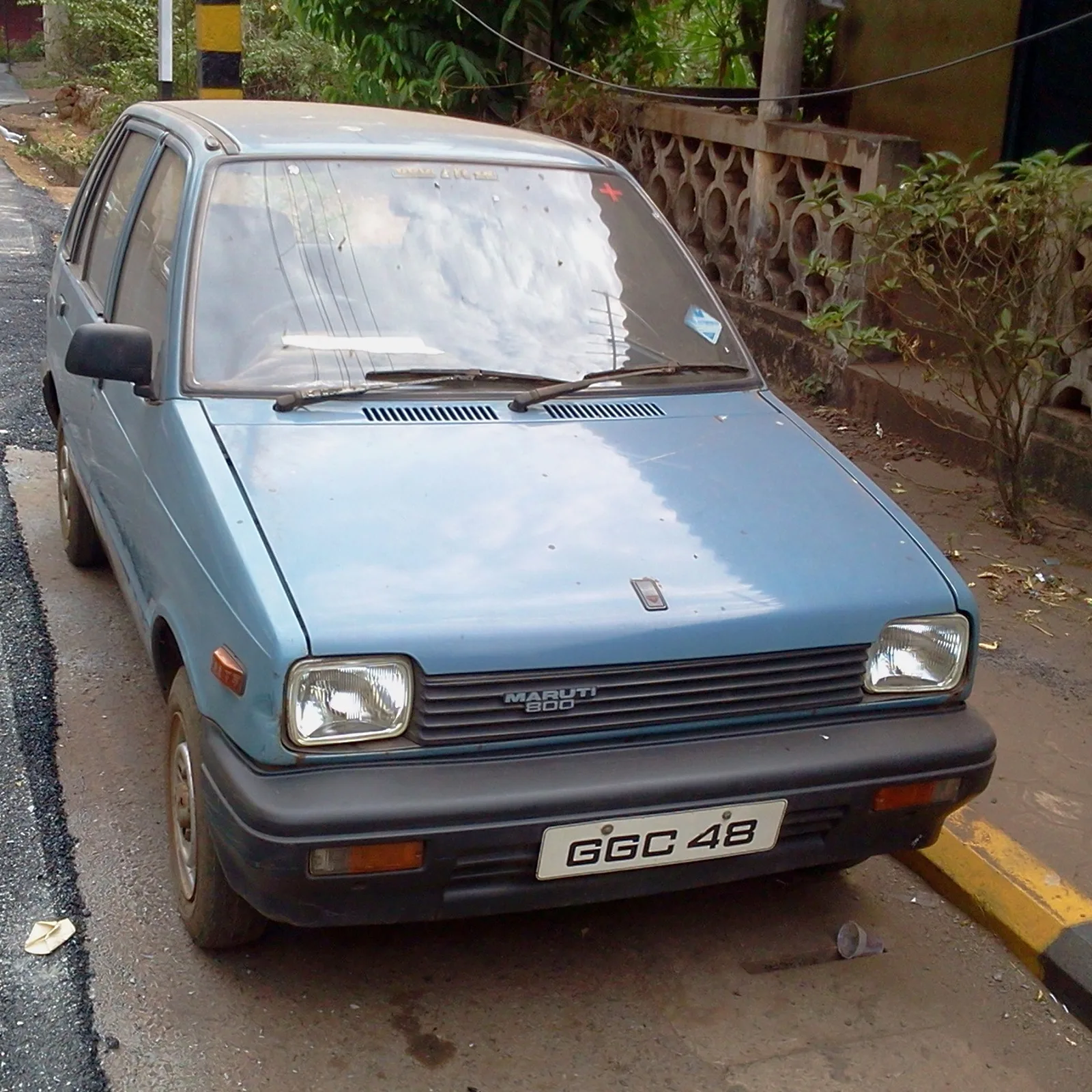
The first Maruti built in India was the 800, a version of the Suzuki Fronte and Alto, produced locally from December 1983. A van with the same three-cylinder engine followed in 1984. Demand was so strong that the company received 120,000 bookings in its first year.
Capacity could not keep up. Plans had called for 20,000 cars in year one and 40,000 in year two at Gurgaon, but orders outran supply, so the team changed the mix of 800s and vans.
A 970 cc off-road vehicle, the Gypsy, arrived in 1985 on the basis of the Suzuki SJ410. The 100,000th car built was a 796 cc Suzuki Alto (SS80), which replaced the original 800 in 1986. In 1987 about 500 cars were shipped to Hungary, the first step into western markets, and by 1988 the Gurgaon plant could build 100,000 units a year.
How did Maruti fund its growth in the nineties?
Capacity was limited into the early nineties by the need for foreign exchange, and the 1991 Indian economic crisis made funding difficult. Expansion was allowed only with foreign loans, and the company eventually secured one from a Japanese bank to cover the foreign exchange part of a new production line.
Liberalisation in 1991 changed the ownership picture. Suzuki raised its stake to 50 per cent, leaving the state as the other half of the partnership. By 1991 local content had reached 65% of components for all vehicles produced.
Which models defined the nineties?
The decade brought a run of new cars: the Maruti 1000 sedan in 1989, the Zen hatchback in 1993 and the Esteem sedan in 1994. The new 800 arrived in 1998, the first design change since 1986, and Zen D became the first Maruti diesel.
The Maruti 1000 was India's first contemporary sedan, a 970 cc three-box car. A second plant lifted annual capacity to 200,000 units, the Baleno three-box sedan and WagonR arrived in 1999, and a new Alto appeared in 2000.
The Versa arrived in October 2001 and the Esteem Diesel in 2002, by which time the range had broadened well beyond the original small car.
Which car became India's best seller?
In 2004 the Alto took the crown of India's top-selling car from the 800, which had held it for almost two decades. It joined a line that already included the Versa and the Grand Vitara XL-7, introduced in 2003, and it helped drive the company's wider growth.
The Alto's rise came during a run of steady milestones. Maruti built its fourth millionth vehicle in 2003, sold a record 472,122 units in the 2003-04 financial year, and rolled out its fifth million car in April 2005. The Zen and WagonR were redesigned in 2003, and the Suzuki Swift five-door arrived in 2005.
Ownership moved too. Suzuki's stake reached 54.2% in 2002, and the 2003 public issue was oversubscribed tenfold, turning the company into a listed business.
Where does Maruti build its cars?
Maruti Suzuki runs plants at Gurugram and Manesar in Haryana, along with a complex in Gujarat, and the combined capacity of all facilities is 2,250,000 vehicles a year. The Gujarat complex is owned by Suzuki Motor Corporation rather than by Maruti itself.
Gurugram covers 300 acres, has three fully integrated plants and builds the Alto 800, WagonR, Ertiga and several other models. It also assembles the Jimny from January 2021 for export only. Manesar opened in February 2007 on 600 acres, starting at 100,000 vehicles a year and rising to a total of 800,000 after expansion.
The Gujarat plant at Hansalpur, Ahmedabad, has annual capacity of 750,000 units and opened in 2017. Suzuki Powertrain India was folded into the company's operations in 2012.
What is the Kharkhoda plant?
The Kharkhoda plant is a planned facility in Sonipat district, Haryana, on 900 acres, announced in November 2021 with an investment of Rs 18,000 crore. Narendra Modi laid its foundation stone in August 2022, and the project is described as one of the largest car plants in the world.
Gurugram's operations are due to move to Kharkhoda, which would then have four plants producing a million cars a year. A further Rs 35,000 crore would go into a second plant close to the Gujarat site, also with capacity of a million cars a year. Combined capacity would reach 4.35 million units a year once these plants start in 2028-29.
Why did Maruti phase out diesel cars?
Maruti announced on 25 April 2019 that it would stop producing diesel cars by 1 April 2020, when Bharat Stage VI emission standards took effect. Upgrading its diesel engines to meet the tougher rules would have required significant investment, so the company turned towards CNG vehicles instead.
Chairman R. C. Bhargava linked the decision to corporate average fuel efficiency norms due in 2022, and he said a higher share of CNG vehicles would help the company comply. Diesel cars had accounted for about 23 percent of annual sales at the time.
Has Maruti tried making electric cars?
Yes, although the path has been slow. Maruti planned to launch its first electric car, the Wagon R Electric, in the second half of 2021, but cancelled the plan. The company now builds the eVitara, which was unveiled in Milan, based on the eVX concept shown in 2023, and it has been in production since 2025.
The eVitara marks the group's expansion into electric mobility.
What happened at the Manesar plant in 2012?
On 18 July 2012 violence broke out at the Manesar plant. Management said workers attacked supervisors and set a fire that killed the general manager for HR, Avineesh Dev, and injured a further 100 managers. The union disputed that account and claimed management had ordered security guards to attack the workforce.
The company said the unrest followed a union demand to reinstate a suspended worker, Jiya Lal, rather than wage talks. The union had pressed for a sharp rise in basic pay, larger allowances and housing help since April 2012. It also alleged that a supervisor had abused a low-caste worker, claims the company and the police denied.
Police arrested 91 people after filing their First Information Report. Maruti suspended all work at Manesar indefinitely and announced a lockout, which it said was driven by safety concerns. One estimate put the cost of the shutdown at Rs 75 crore a day, and the company later said staff would not be paid for the lockout period.
The plant reopened on 21 August with 150 vehicles planned for the first day, under 10% of capacity, after the company had dismissed 500 workers blamed for the violence.
How did the Manesar case end in court?
Police charged 148 workers with the murder of Avineesh Dev. Charges against 117 of them were later dropped, and and in March 2017 a court found 31 workers guilty of various offences. Thirteen were sentenced to life imprisonment for the murder, although prosecutors had asked for capital punishment.
Twelve of the thirteen life sentences went to people who held union office when the offences were alleged.
Both prosecution and defence said they would appeal. The defence argued that no evidence linked the 13 to the murder and described their prosecution as targeted framing of union leaders. The union continues to protest, and groups including the International Committee for the Fourth International have called for the workers' release.
Has Maruti faced safety criticism?
Yes. Automotive enthusiasts, journalists and Global NCAP have criticised Maruti for making its cars lighter to achieve higher fuel economy, at the expense of crash safety. The Safer Cars for India campaign tested several of its made-for-India models from January 2014, and most gave disappointing results.
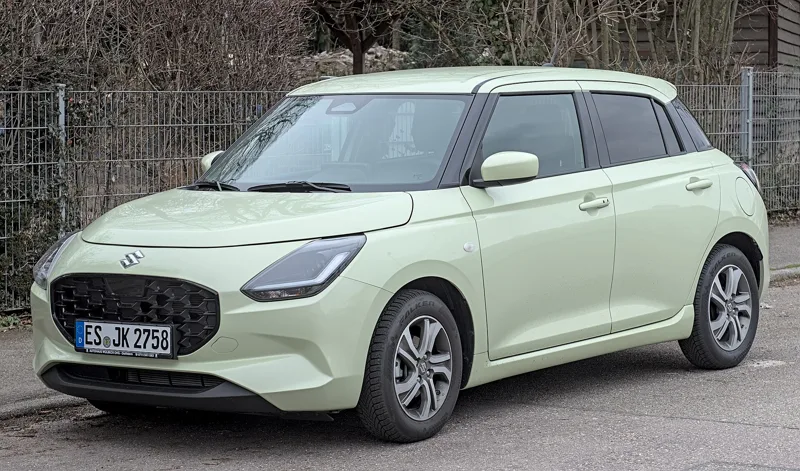
Several cars, including the Alto, Swift, Celerio, S-Presso and Eeco, were rated 0 stars, with some lacking airbags altogether. WagonR and the 2018 Swift, which had dual front airbags, reached 2 stars. Only the Vitara, the Brezza (4 stars) and the Ertiga (3 stars) earned decent ratings.
Maruti argued that its cars met the rules India's government sets for safety. In February 2020 the company decided not to send its cars to Global NCAP for testing. Back in November 2014, chairman R. C. Bhargava had argued that adding more features would push prices up and drive buyers towards two-wheelers.
Global NCAP's secretary general called the results disappointing for a carmaker that holds the biggest slice of India's market. Mahindra and Tata had both achieved five-star performance, and the Towards Zero Foundation argued that zero-rated cars had no future in India.
In the FY 2022 and 2023 round, the Swift, S-Presso, Ignis and WagonR each scored 1 star, while the Alto K10 reached 2 stars. Those cars had basic equipment such as ABS and dual front airbags, but their body structures were rated unstable, and the cars earned the nickname tin cans.
How did Maruti respond on safety?
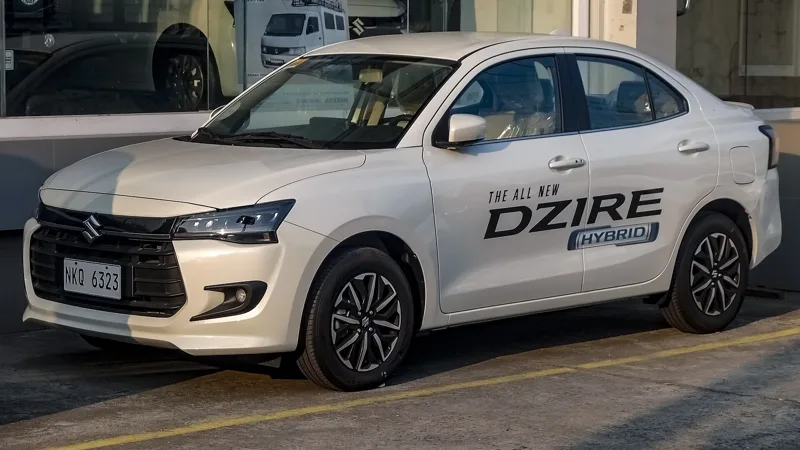
In 2024 the company made six airbags and electronic stability control standard across most of its range. The compact sedan Dzire then earned 5-star ratings from both Global NCAP and Bharat NCAP, a result described as a turning point in its safety record.
Why was Maruti fined by the CCI?
In August 2021 the Competition Commission of India fined Maruti Suzuki Rs 200 crore (US$28.57 million) over its Discount Control Policy. The policy restrained dealers from offering customer discounts beyond those the carmaker prescribed, and the case concerned how the company managed its dealer network rather than vehicle safety.
What models does Maruti sell today?
As of September 2026, Maruti Suzuki sells cars across hatchback, sedan, SUV, people carrier and electric segments, mainly for the Indian market. The Arena network carries the core range, from the Alto K10 and S-Presso through to the Swift, Dzire, Brezza, Ertiga and Victoris.
The 2026 Baleno facelift, launched in September, added a new engine, Level 2 ADAS and more comfort features, and it comes in seven colours. NEXA handles the more premium-leaning models, from the Baleno and Fronx to the Jimny, Invicto and e VITARA.
How does Maruti sell and service its cars?
Maruti Suzuki sells through two networks: Arena, with 2,987 outlets across 2,522 cities, and NEXA, with 495 outlets across 301 cities, both as of August 2024. Service is handled by 4964 touchpoints across 2,519 cities, with 409 mobile workshops and 781 Quick Response Vehicles.
Most service stations run on a franchise basis, and Maruti trains the local staff. Express service teams can also send a technician to a car that is away from a normal service centre.
NEXA was launched in 2015 as a dealership network for premium cars, standing for New Exclusive Automotive Experience. The S-Cross was the first car sold through it, and the network has passed 1.5 million cars sold from more than 350 dealerships, making it the third largest automobile retail channel in India.
What services sit around the car?
Maruti extended beyond cars into used vehicles, finance and insurance. Some of these services began as joint ventures and others as subsidiaries. True Value, a used-car service, launched in 2001, Maruti Finance followed in January 2002, and insurance arrived the same year through two subsidiaries.
The insurance service worked with partners such as National Insurance and Bajaj Allianz, and also with New India Assurance and Royal Sundaram. By December 2005 it had sold more than two million policies. Finance grew through a series of banking partnerships, and the SBI tie-up from March 2003 had sold over 12,000 vehicles across 166 cities.
TrueValue listed 1,190 outlets across 936 cities as of 10 August 2017. N2N, the fleet service, provides leasing, maintenance and remarketing to corporate clients. Maruti Genuine Accessories sells alloy wheels, body covers, fog lamps and other add-ons through dealers after third-party makers began competing for accessory sales.
As part of its corporate social responsibility, the company launched a driving school in Delhi and later extended it to other cities, with classroom, practical and simulator training. Jagdish Khattar, then leading the company, said the initiative was meant to help bring down deaths on Indian roads.
Who has led Maruti Suzuki?
Sanjay Gandhi was the first managing director, from 1971 to 1977. Since then the company has been led by R. C. Bhargava, S. S. L. N. Bhaskarudu, Jagdish Khattar, Shinzo Nakanishi and Kenichi Ayukawa, with Hisashi Takeuchi in charge from 2022.
Shinzo Nakanishi was managing director and chief executive during the 2012 Manesar violence. He apologised to affected workers on the company's behalf and asked the central and Haryana governments to help stop further violence. He also said Maruti would keep manufacturing at Manesar.
How has Maruti Suzuki been recognised?
Maruti Suzuki was ranked 37th in the Brand Trust Report's list of India's most trusted brands in 2013 and ninth in 2019, a clear rise in trust over those years. The Trust Research Advisory brand analytics firm compiled the rankings.
The company received a Gold Recognition at the LACP 2020/21 Vision Awards, and in 2023 it picked up several more honours, including the Best Innovative Company of the Year and the Best Use of AI in Customer Service.