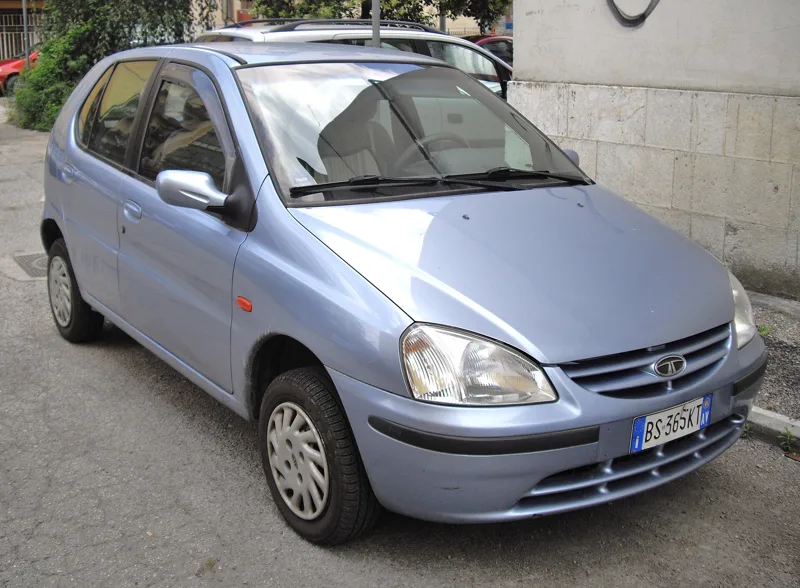
Fewer than one household in ten owns a car, yet its industry ranks third in the world by production. Maruti, Tata and Mahindra lead, and the rules shape what is on sale.
India has the world's third-largest automotive industry by annual production, worth US$250 billion in 2025, yet only 8 per cent of households own a car. Maruti Suzuki leads with 42 per cent of passenger cars, followed by Tata Motors and Mahindra, while a 125 per cent import tax favours local assembly.
Fewer than one Indian household in ten owns a car, yet India's car industry ranks third worldwide for output, valued at US$250 billion in 2025.
How big is India's car market?
India's automotive industry ranks third in the world by annual production, worth US$250 billion in 2025, behind the United States (US$880 billion) and China (US$530 billion). In 2022 it made up 8 per cent of the country's exports and 7.1 per cent of GDP. Growth is fuelled by economic expansion and rapid highway building.
Production is one measure; ownership is another. A 2021 National Family Health Survey found that only 8 per cent of Indian households own a car, while 54 per cent own a motorcycle or scooter. In 2025 India had 44 cars per 1,000 people, markedly fewer than other major economies.
That gap is the story. The country is a giant producer whose own population is still, for the most part, buying its first set of wheels on two of them.
India builds cars on a scale few countries match, yet fewer than one household in ten owns one.
Why did the market take so long to grow?
The first car ran on an Indian road in 1897, and through the 1930s every car was imported, in small numbers. A local industry stirred in the 1940s. Hindustan Motors was launched in 1942 building Morris products. Premier followed in 1944 with Chrysler products and, from the 1960s, Fiat. Mahindra & Mahindra was established in 1945 and began assembling Jeep CJ-3A utility vehicles, while J. R. D. Tata founded the company that became Tata Motors in Jamshedpur.
Then policy intervened. After independence in 1947 the government pushed for home-made components, and in 1953 it launched an import substitution programme and began restricting fully built-up cars. A Tariff Commission, appointed in 1952, recommended licensing manufacturers by capacity. The rules shut out firms that only imported parts to assemble, and in 1954 General Motors, Ford and the Rootes Group left their assembly-only plants in Mumbai.
The system became known as the Licence Raj, and its effect was severe: bureaucratic red tape let demand outstrip supply, with waits of months or even years for cars, scooters and motorcycles. After 1970 import restrictions helped industry grow, but mostly in tractors, commercial vehicles and scooters. Cars stayed a luxury. Price controls were lifted in the 1970s, yet by the 1980s Hindustan and Premier still dominated with ageing designs.
The numbers show how thin the market was. Of the 30,487 cars built in India in 1980, all but six came from those two firms. In 1981 about one citizen in a thousand owned a car, which is understandable when the annual road tax alone cost about half an average income. A newcomer called Sipani launched the Dolphin in 1982, but it had a plastic body and no rear doors, which Indian buyers regarded as essential. The government decided it had to let more manufacturers in.
Who leads India's car market?
Maruti Suzuki, the Indian subsidiary of Japan's Suzuki, is the largest automobile manufacturer in India and specialises in small cars. As of September 2022 it held 42 per cent of the passenger car market. In July 2014 its share had been above 45 per cent. In 2025 its market capitalisation was about US$50 billion to US$55 billion.
Its rivals in the wider industry include Tata Motors and Mahindra. But Maruti is the name to understand first, because its arrival changed what an Indian car was.
How did Maruti begin?
It began as a political project. Sanjay Gandhi, the son of Prime Minister Indira Gandhi, apprenticed with Rolls-Royce in Crewe for three years and returned in 1968 convinced that India needed a small people's car. A letter of intent in September 1970 allowed up to 50,000 cars a year, and Maruti Motors Limited was set up in August 1971 with Gandhi as managing director.
The results were poor. His prototype, completed in 1972 with a Triumph motorcycle engine, failed the road-use feasibility test. Only 21 cars had been made by 31 March 1976. After Indira Gandhi lost the 1977 election a court ordered the company dissolved in 1978, and when she returned in 1980 the government took control through legislation. Sanjay had died in a plane crash.
The government looked for a partner. Talks with Suzuki began in April 1982, and a licence and joint-venture agreement was signed that October. Suzuki took only 26 per cent at first, citing limited capital and perceived risk, although the government had wanted 40 per cent. Both sides agreed the stake would rise to 40 per cent after five years. It reached 50 per cent in 1992. By 2002 it was 54.2 per cent, and by 2013 it stood at 56.21 per cent.
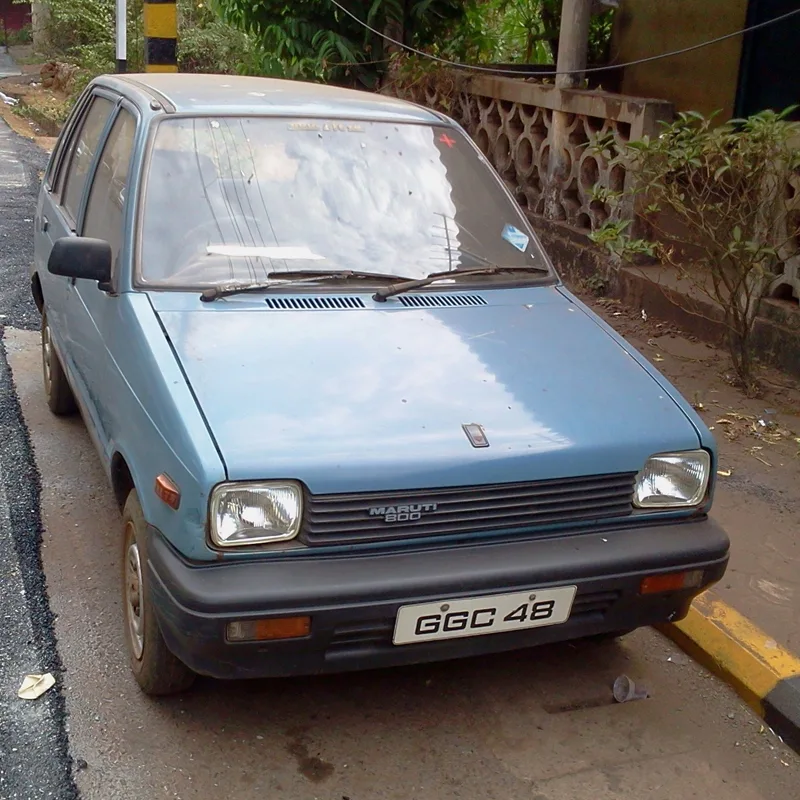
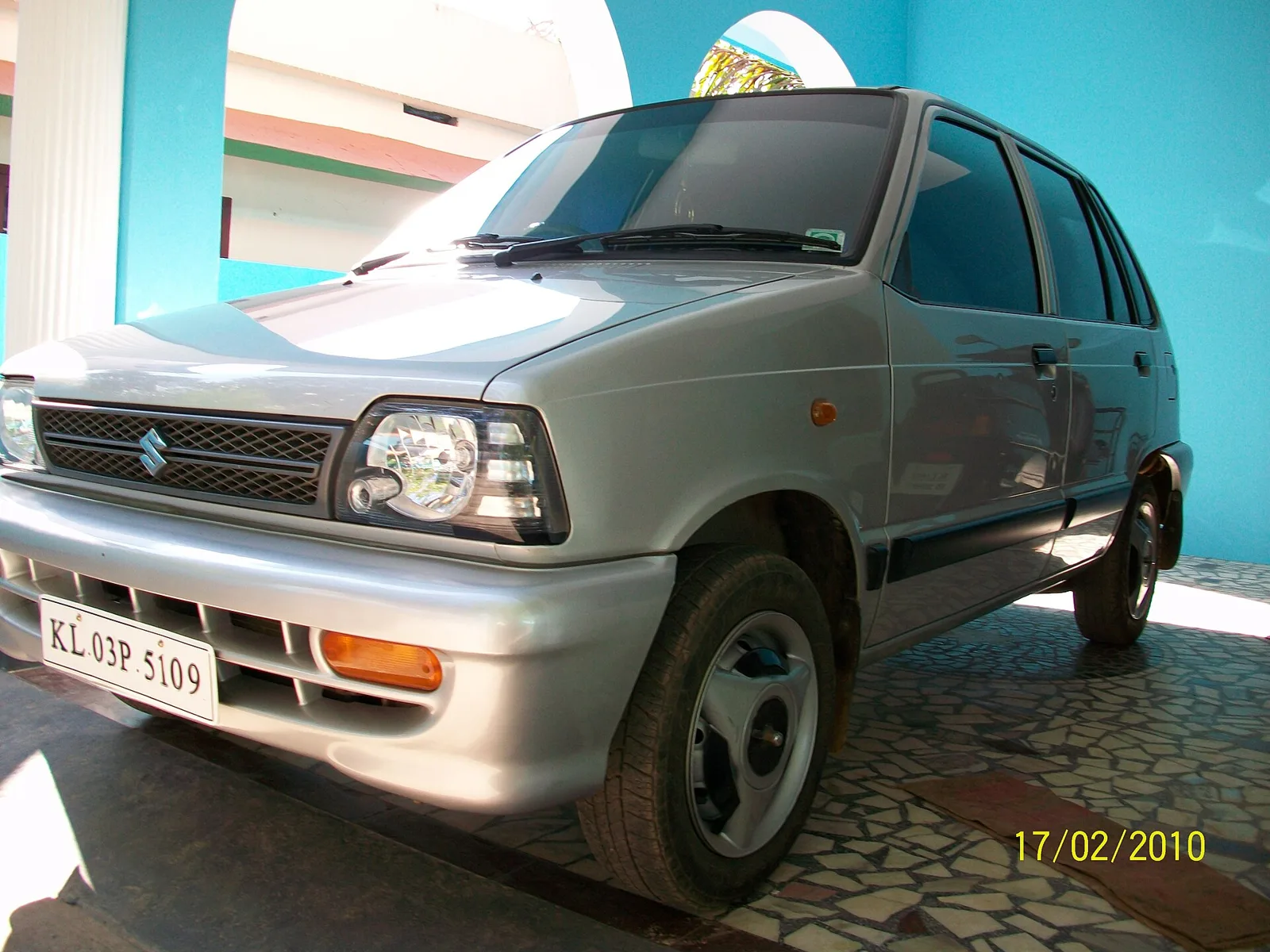
Production of the Maruti 800 began in December 1983. The company had aimed to build 20,000 cars in its first year, yet it took 120,000 bookings in that time, to Suzuki's surprise, and it could not keep up. The 796 cc Suzuki Alto hatchback became the firm's 100,000th car in 1986. Capacity at Gurgaon reached 100,000 units a year by 1988. The Maruti 1000, launched in 1989, was India's first contemporary sedan.
The 1990s brought the Zen in 1993, the Esteem sedan in 1994 and the firm's first diesel, the Zen D, in 1998. The government sold shares to the public in 2003 in an issue oversubscribed tenfold, and in 2007 it sold all its remaining shares to Suzuki Motor Corporation. In 2004 the Alto overtook the Maruti 800 as the country's best seller after nearly two decades. The ten millionth vehicle came in February 2012 and the fifteenth millionth, a Swift Dzire, in May 2015.
What does Maruti Suzuki build today?
All its plants together can make 2,250,000 vehicles a year. Two are in Haryana and one complex is in Gujarat. The Gurugram site covers 300 acres, makes 240,000 K-Series engines annually and builds the Alto 800, Wagon R, Ertiga, XL6, S-Cross, Vitara Brezza, Ignis and Eeco. Since January 2021 it has also assembled the Jimny solely for export; it was reported that the cars would go to Africa and the Middle East.
The Manesar plant opened in February 2007 on 600 acres and produces the Alto, Swift, Ciaz, Baleno and Celerio. The Gujarat plant at Hansalpur, opened in 2017, can make 750,000 units a year. Unusually, it is owned by Suzuki Motor Corporation rather than Maruti Suzuki, though it supplies vehicles to Maruti without additional cost.
Fuel is changing too. In April 2019 Maruti Suzuki said it would phase out diesel cars by 1 April 2020, when Bharat Stage VI took effect. Diesels then made up about 23 per cent of its annual sales. It had planned a Wagon R Electric for 2021 but cancelled it, and it has produced the eVitara since 2025.
India's three big names compared
| Company | Origin | Core business | Key figures |
|---|---|---|---|
| Maruti Suzuki | Government company founded February 1981, joint venture with Suzuki | Small cars; largest automobile maker in India | 42 per cent passenger car share, September 2022; capacity 2,250,000 vehicles a year |
| Tata Motors | Founded in the 1940s by J. R. D. Tata at Jamshedpur | Trucks, vans and buses since the October 2025 demerger | Tata 407 sold over 500,000 units; Tata Ace launched May 2005 |
| Mahindra | Founded 2 October 1945 in Ludhiana as Mahindra & Mohammed | SUVs, pickups, commercial vehicles and tractors | Over 20 car models; ranked 18th on Fortune India 500 in 2025 |
What are Tata and Mahindra doing?
Tata's structure changed in 2025. The original Tata Motors announced in March 2024 that it would split into two listed companies. The commercial vehicle business moved into TML Commercial Vehicles, incorporated on 23 June 2024, and the demerger took effect on 1 October 2025. That company is now called Tata Motors, and the original became Tata Motors Passenger Vehicles. The India passenger vehicle business, Jaguar Land Rover and the majority stake in Tata Technologies stayed with the passenger company.
The commercial side is large in its own right. The Tata Ace, launched in May 2005, was India's first indigenously developed sub-one-ton minitruck, and analysts said it created a new small commercial vehicle segment. By October 2005 the group's light commercial vehicle sales had grown by 36.6 per cent to 28,537 units. The older Tata 407, launched in 1986, had sold over 500,000 units by the time of the 2011-2012 annual report, close to 75 per cent of light commercial sales in that period. Buying Daewoo's truck business in South Korea in 2004 was meant to reduce Tata's reliance on the Indian market, which had accounted for around 94 per cent of its medium and heavy commercial sales.
Mahindra started as a steel trading company in Ludhiana on 2 October 1945. The founders changed the name from Mahindra & Mohammed to Mahindra & Mahindra after Malik Ghulam Muhammad moved to Pakistan in 1948. The company assembled Willys Jeeps under licence, and it began the Jeep CJ3 in 1954. It is one of the largest SUV makers in India by production, and its tractor arm is the largest in the world by volume. Anish Shah is chief executive.
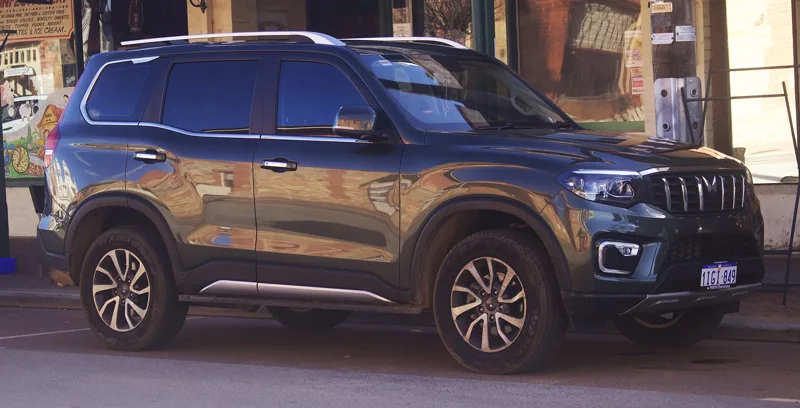
Its road cars run from the Scorpio and Bolero to a long list of newer SUVs. The Xylo, launched in January 2009, sold over 15,000 units in six months. The XUV500 followed in September 2011 as the first model on a global SUV platform, priced at Rs 1,140,000 to Rs 1,500,000 in India. In February 2019 the XUV300 earned a 5-star adult safety rating from GNCAP, an independent crash test body, and was found to be the safest vehicle made in India. The second-generation Thar arrived in October 2020, the XUV700 in 2021 and the Scorpio N on 27 June 2022, with the old model renamed Scorpio Classic.
Mahindra has also looked abroad. It bought a majority of South Korea's SsangYong in 2011; the Korean firm entered receivership in December 2020 after Mahindra stopped funding it. In December 2015 Mahindra and Tech Mahindra agreed to buy 76.06 per cent of the Italian design house Pininfarina for 168 million euros. Its Ford joint venture, which gave it a 51 per cent controlling stake from October 2019, ended in January 2021.
What rules shape the cars on sale?
Policy still steers the market. India charges an import tax of 125 per cent on foreign-built cars, while the tax on components such as gearboxes, airbags and drive axles is 10 per cent. The aim is to push carmakers to build or assemble in India rather than ship in complete cars.
Emissions rules have tightened in stages. The "India 2000" standards grew into the Bharat Stage series, which resembles European norms. Bharat Stage IV began in 13 cities in April 2010 and covered the nation in April 2017. Bharat Stage VI took effect on 1 April 2020, which is why Maruti Suzuki dropped its diesels.
Since the 1991 liberalisation, foreign makers have been allowed in. Suzuki and Toyota of Japan and Hyundai and Daewoo of South Korea were among those that invested, and by 2000 the market had 12 large companies, mostly offshoots of global groups. Exports were slow at first. Maruti Suzuki shipped 480 cars to Hungary in 1987. Today India makes low-priced cars for markets around the world. Not every foreign name has stayed: in 2013 Proton, PSA Group, Kia, Mazda, Chrysler, Dodge and Geely were shelving plans for India because of competition and the global economic crisis.
What does it mean for someone buying a car?
Choice has widened dramatically since the Licence Raj, when each price class often had a single option. Small cars are Maruti Suzuki's speciality, and it holds the largest share of passenger car sales. SUV buyers meet Mahindra, whose Scorpio, Thar and XUV models sit at the centre of its range.
Imported cars are costly because of the 125 per cent tax, which is why so many global names build or assemble locally. Maruti Suzuki announced it would stop making diesel cars by April 2020, and its chairman at the time pointed to a higher share of CNG vehicles as the way to meet fuel-efficiency norms.
Where this goes next
Plans are mostly about capacity and power. In November 2021 Maruti Suzuki announced a plant at Kharkhoda in Sonipat district on 900 acres, with an investment of Rs 18,000 crore. Its first electric car, the eVitara, has been in production since 2025. Tata Motors lists the proposed acquisition of Iveco among its notable subsidiaries.