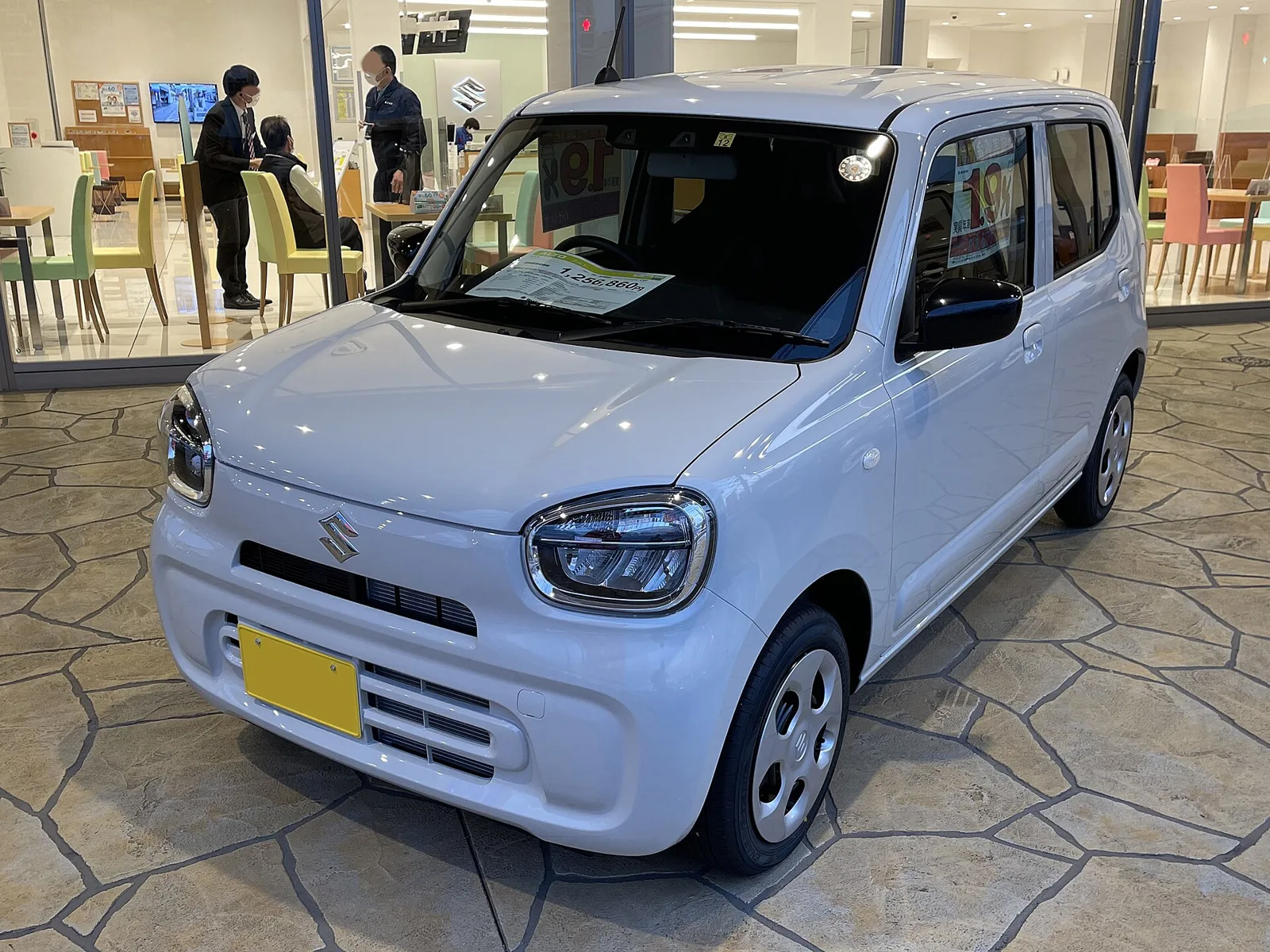
From a 1979 cargo van built to a bargain price to a nine-generation kei car with hybrid models, the Alto has been Suzuki's most enduring small car.
Built since 1979, the Suzuki Alto is now in its ninth generation. It was born as a commercial spin-off of the Fronte, and its export models and performance versions spread the name across many markets.
The Suzuki Alto is a kei car that Suzuki has produced since 1979, and the model is now in its ninth generation. It began as a commercial derivative of the Fronte, and over time the Alto nameplate became the company's main small car in Japan and many export markets.
What is the Suzuki Alto?
The Suzuki Alto is a kei car produced by Suzuki since 1979. The model was first introduced in 1979 and has since been built in many countries worldwide, which has made it one of the most widely produced small cars.
The badge has also been applied to other cars in Japan and overseas, and abroad the Alto is seen as a city car. In the Japanese market the name came to mean a small, practical vehicle that met the strict kei rules.
A 1979 cargo van built to a bargain price that grew into a nine-generation kei car with hybrid models.
Where did the Alto name come from?
The Alto originated as a commercial vehicle derivative of the Fronte, which was the passenger car in Suzuki's range. Over time the Alto nameplate gained in popularity, and by 1988 it had replaced the Fronte name completely.
Suzuki generally did not use the Fronte badge in export, so it called nearly every version Alto abroad. Most early export Altos were therefore rebadged Frontes, with changes such as enlarged engines and sometimes modified bodywork.
The Japanese SS40 Fronte became the SS80 Alto abroad. The Alto badge gradually took over in Japan too, as the gap between kei commercial vehicles and passenger cars narrowed, and the Fronte line was retired in March 1989.
How did the first-generation Alto start?
The first generation, coded SS30V and SS40V, was introduced in May 1979 as a three-door cargo version of the Fronte passenger car. It was fitted with a folding rear seat, which made it a practical load carrier.
The launch engine was the T5B two-stroke 539 cc three-cylinder, which produced 28 PS (21 kW) at 5500 rpm. It was a basic engine for a basic vehicle, and the car was built for work as much as for private use.
Suzuki later added a fully automatic two-speed option in May 1980. In January 1981 the F5A four-stroke 543 cc engine from the Fronte became available, which put out the same 28 PS but at 6,000 rpm.
Why was the first Alto so cheap?
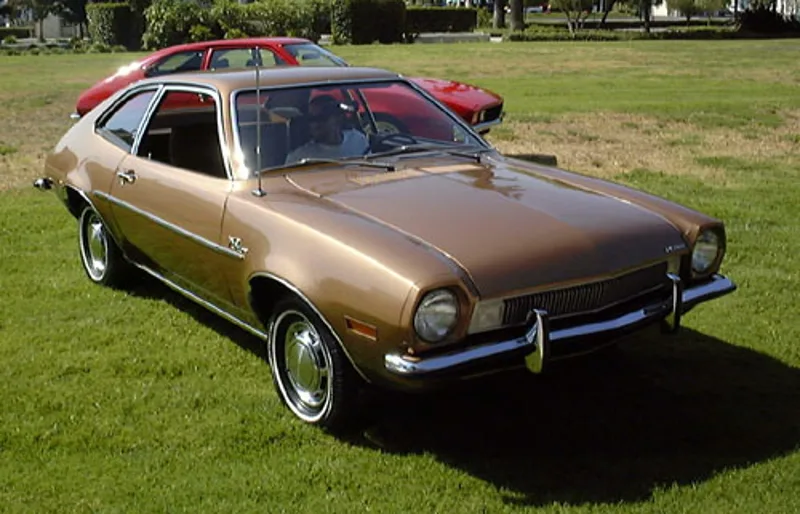
The Alto was a micro sensation when introduced, largely because of its rock bottom price of 470,000 yen. That was about $1,900 in 1979, at a time when the cheapest Ford Pinto cost $4,999 in the US.
The low price was made possible by Japanese concessions for commercial vehicles. The engine faced less stringent emissions rules and did not need expensive twin catalysts, and two fewer doors and an exemption from commodity tax provided further savings.
Only one model was offered at first, which kept development costs down and spared buyers the sense of having bought a lesser car. Even so, the company added standard safety features that were not typical in kei cars, such as three-point front belts and individually fused headlamps.
How successful was the Alto in Japan?
The Alto's success changed the kei car market, and Subaru quickly followed with cut-price commercial vehicles intended for private use. Suzuki struggled to keep up with demand in its first few years, particularly in the home market.
Thanks to the Alto, Suzuki climbed to seventh place in Japanese output of cars and trucks. In the last full year of production for the first generation it was still by far the best-selling kei car, outselling the passenger-oriented Fronte at about five to two.
Which markets took the Alto first?
In export markets the Alto name covered both the passenger versions and the commercial vans. In Australia the van was marketed as the Suzuki Hatch, a two-seat commercial vehicle that was taxed at 35 percent duty, against 57.5 percent for passenger cars.
The Hatch was the cheapest new car sold in Australia at the time, and its equipment was basic, with vinyl seats and cross-ply tyres. Export Altos used 12-inch wheels, while the domestic versions used 10-inch units until the 4WD version arrived in October 1983.
The Alto was also built in New Zealand from March 1980, by South Pacific Suzuki Assemblers at six units per day. Between 1983 and 1986 the first generation was built in India as the Maruti Suzuki 800.
How did the European Altos differ?
Between 1981 and 1984 the European Alto was the SS40 Fronte, with a 40 PS (29 kW) 796 cc three-cylinder engine. The export models were technically speaking Frontes, as that was the name for the passenger versions in Japan.
From 1984 the CA/CB91 Alto used a 41 hp (30 kW) F8B engine in Europe, and it could be ordered with a four-speed manual or a two-speed automatic. It remained a key export model until the early 1990s.
What changed with the second generation in 1984?
The second generation, CA71, was introduced in September 1984. Its design echoed the GM M-platform that underpinned the 1983 Suzuki Cultus, and it continued with the F5A engine before turbocharged and multi-valve versions followed.
A four-wheel-drive CC71 was added in December 1984. Performance versions arrived in September 1985 with a fuel-injected, turbocharged engine producing 44 PS (32 kW). The Alto Works followed in February 1987 with 64 PS (47 kW), the highest output a kei car had reached until then.
The Works output prompted a legal limit on kei car power, which is still in effect today. The Alto Works also attracted considerable popularity, and models of it are still made by Fujimi.
What were the five-door and facelift changes?
A five-door body arrived in October 1985. It looked like the Fronte's body, but its rear seat folded flat and it was technically a commercial vehicle. It was the first five-door commercial of its kind in Japan, and it was introduced to celebrate the one millionth Alto produced.
In July 1986 the CA and CC71 received a thorough facelift, with wraparound headlights and a new dash. The new ITL rear suspension, an Isolated Trailing Link set-up, was offered on higher models, and the personal coupe Cervo arrived in 1988 with a 547 cc engine.
How did the third generation change the Alto?
The third generation, CL/CM11, replaced the CA71 in September 1988. It had strikingly angular styling, with an unusual glazed C-pillar on the five-door, and it was the last generation to have an associated Fronte model.
A version with sliding doors on both sides was offered, known as the Slide Slim. The layout was later changed, and the idea was aimed at buyers who found it hard to enter and leave in tight spaces.
When the Fronte name was discontinued in October 1989, the passenger versions became Altos. The CL11 used a 12-valve 42 PS (31 kW) F5B engine, while the Works models came with an SOHC 58 PS (43 kW) engine or a 64 PS (47 kW) DOHC version.
The generation was very successful at home, and Suzuki's kei car sales tripled in 1989. It was not widely exported, and its export arrival came only by 1993, in New Zealand, Hong Kong and Singapore.
Using its 0.8-litre engine, a left-hand-drive version of the CL11 was assembled in South Korea, Poland, Romania and Uzbekistan under the Daewoo Tico name. That spread showed how far the basic design travelled beyond Japan.
What happened in the 660 cc era?
When the kei car standards changed in 1990, the engine was upgraded to 657 cc (F6A), and the Alto became the CL, CM, CN and CP21. The new standards allowed the car to be 100 mm (3.9 in) longer, which brought bigger bumpers and new headlights.
In September 1991 the Alto received side impact protection, and the vertical door handles on three-door versions were replaced by horizontal ones. The re-engineering was extensive enough to need new model codes, with the vans becoming CL/CM22 and the passenger versions CR/CS22.
A very limited competition car, the Alto Works R, arrived in 1992. It was a lightened, strict two-seater with four-wheel drive and a close-ratio five-speed gearbox, and fewer than 100 were built. Its official output stayed at 64 PS (47 kW), as the kei rules required.
How did the Alto build up in China?
Around 1990 the China Ordnance Industries Corporation bought the complete rights and machinery for the SB308 Alto from Suzuki. Four former military enterprises were charged with building it, and Chongqing Chang'an was the first to market the car, in 1992.
Changan Automobile took over production in 1993. Chang'an ended production of the old Alto on 28 July 2008, after citing lower sales and the cost of meeting new regulations, and a total of 504,861 cars had been built by Chang'an Suzuki between 1993 and 2008.
A version called JN Auto was built by Jiangnan Automobile, which Zotye had owned since 2007. As of December 2010 Zotye's Jiangnan Alto was priced at $2830, which made it one of the cheapest cars in the world.
What did the fourth and fifth generations bring?
The fourth-generation Alto, coded HA11, appeared in November 1994. Its design was marked by simplicity, and the new Wagon R took much of the market share of the more expensive Alto. The fourth generation was generally not exported.
The fifth-generation Alto, HA12 and HA22, was introduced in October 1998. Its styling was more rounded, and the HA22 designation marked cars fitted with the new K6A engine. A version without a turbocharger was available alongside the turbocharged models.
The December 2000 facelift discontinued the Works versions, and the Alto family was realigned strictly as an economy car. Mazda sold the standard Alto as the Carol, and the Maruti Suzuki Alto was produced in India from September 2000 until 2014.
What did the sixth and seventh generations look like?
The sixth-generation Alto, HA24, was introduced in September 2004. Its bonnet and headlamps curved down at the front, and the car was realigned as a less costly model. Only a 54 PS (53 hp; 40 kW) version was offered in the Alto range.
Production of the sixth generation ended in December 2009. The seventh generation was first shown at the 2009 Tokyo Motor Show alongside the Mazda Carol, with a 660 cc K6A engine and a choice of manual, automatic or CVT transmissions.
In 2011 Suzuki launched the Alto Eco, with the R06A engine and an idling stop function. It produced 52 PS (38 kW) and was rated at 30.2 km/L on the JC08 cycle. By December 2013 the Eco reached 35.0 km/L (99 mpg-imp), after updates to the engine and the ENE-CHARGE system.
How did the international A-Star and Pixo come about?
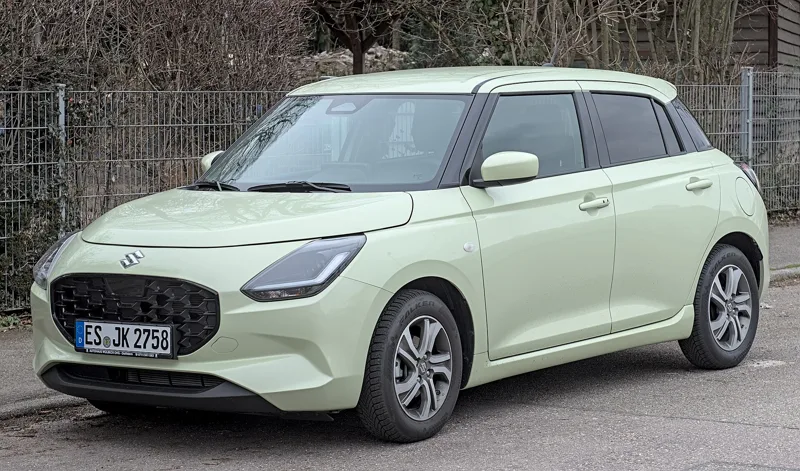
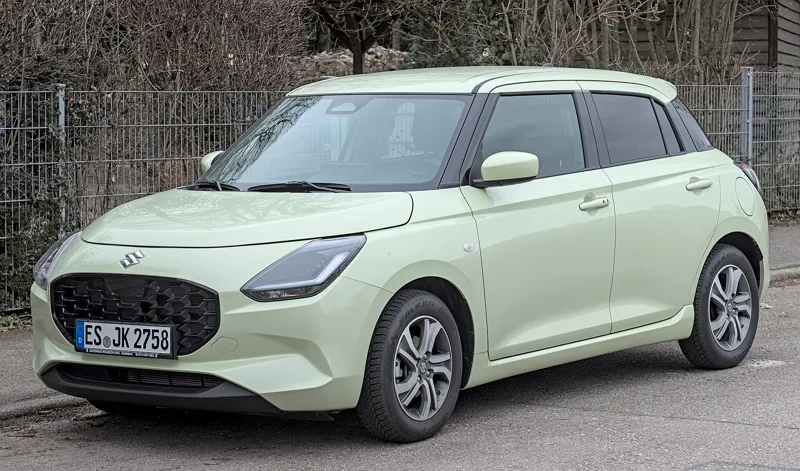
The international Alto was known in India as the Maruti Suzuki A-Star, short for Alto-Star, and in some other countries as the Suzuki Celerio. It was launched in December 2008 by Maruti Suzuki, and it was unveiled for Europe at the 2008 Paris Motor Show.
The European A-Star was priced from GBP 6,795 on the road. Its sister car, the Nissan Pixo, was launched at the same Paris show and was available in Europe from 2009 to 2013, when it was sold for just under GBP 7,000.
Top Gear tested the Pixo in series 17 and set a challenge in which the presenters bought cars on the second-hand market for the same money. Clarkson bought a 2002 Mercedes CL600 for GBP 6995, and Hammond bought a 1994 BMW 850ci for GBP 6,700, while James May defended the Pixo as more modern and economical.
What was the eighth generation?
The eighth-generation Alto was introduced in Japan in December 2014. It was the first Suzuki car designed on the lightweight HEARTECT platform, and it used a torsion beam rear suspension in place of the old three-link layout, except on all-wheel drive models.
The new platform made the car 60 kg (132 lb) lighter than the outgoing model. Suzuki claimed a fuel consumption of 37 km/L (100 mpg-imp), achieved through its Green Technology for the body and the engine.
The K06A 658 cc inline-three was rated at 49 PS (36 kW) and 58 N m in the F and VP trims with manual transmission. The rest of the range produced 52 PS (38 kW) and 62 N m, because those engines had variable valve timing.
The sporty Turbo RS arrived in March 2015. A more spartan performance-tuned Works version returned in December after 15 years of absence, with 64 PS (47 kW) from the turbocharged K06A.
Safety was upgraded with electronic stability control and a collision avoidance system, and the car achieved 4 of 5 stars in JNCAP crash tests. A special L Limited edition marked the 40-year anniversary of the Alto in June 2019.
What is the ninth-generation Alto?
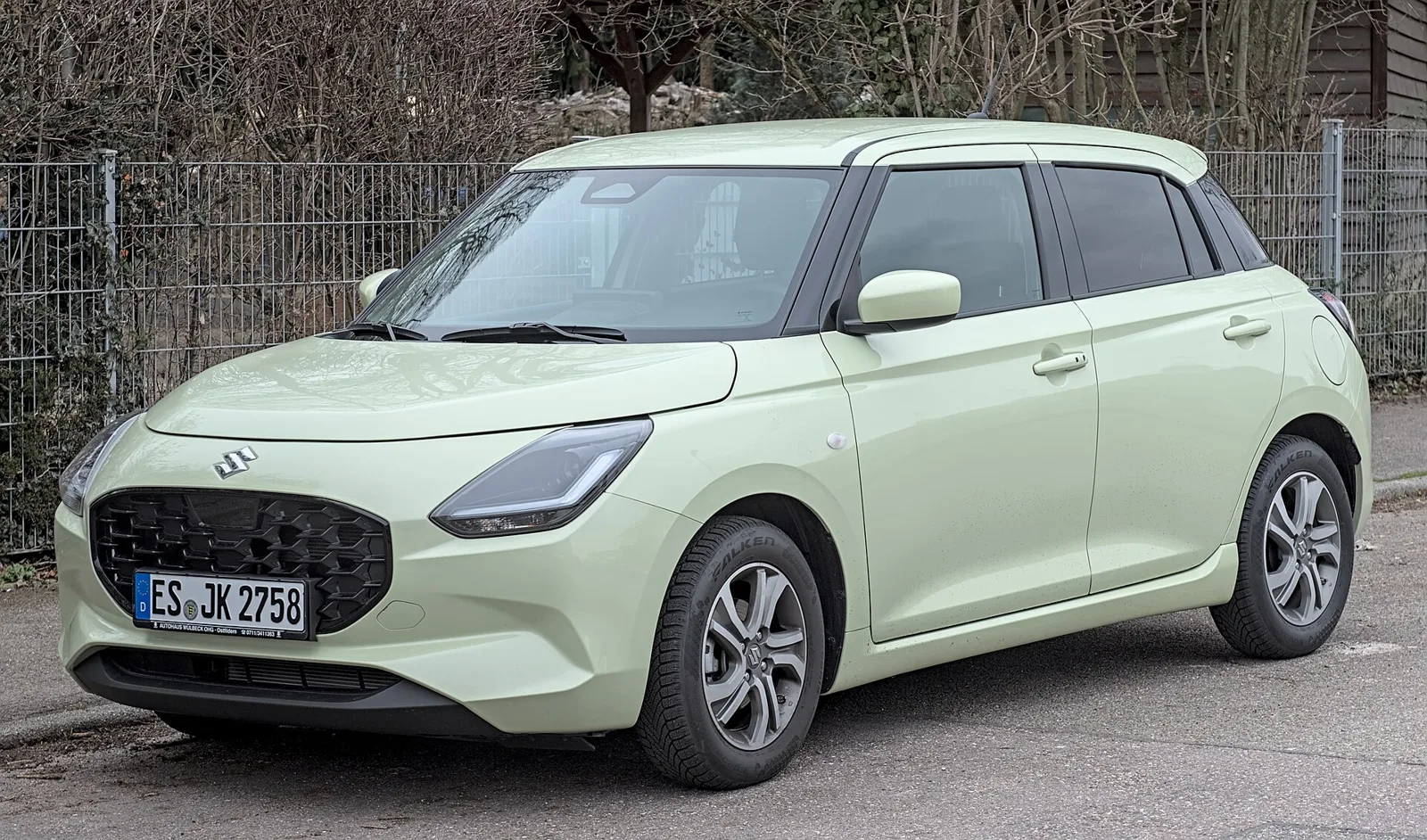
The ninth-generation Alto arrived in Japan in December 2021. It stayed on the lightweight HEARTECT platform, and CVT became its only gearbox.
A new R06D engine with a mild hybrid system joined the range, and the exterior was penned by Alessandro Di Gregorio at Suzuki's European design centre in Italy. The new lines were softer and less angular, with a more vertical windscreen.
Four trim levels are offered: A and L for conventional models, and S and X for the hybrid versions.
What are the key Alto figures?
| Specification | Detail |
|---|---|
| Launch engine (1979) | T5B two-stroke 539 cc three-cylinder, 28 PS (21 kW) at 5500 rpm |
| Launch price (1979) | 470,000 yen, about $1,900 |
| European SS40 Fronte | 40 PS (29 kW) 796 cc three-cylinder |
| European CA/CB91 Alto | 41 hp (30 kW) F8B |
| Alto Turbo (1985) | 44 PS (32 kW), fuel-injected |
| Alto Works (1987) | 64 PS (47 kW) |
| Works RS (1988 to 1990) | 64 PS (47 kW) DOHC |
| Chang'an production | 504,861 cars, 1993 to 2008 |
| Eighth generation K06A | 52 PS (38 kW), 62 N m with VVT |
| Eighth generation weight saving | 60 kg (132 lb) |
| Eighth generation claimed economy | 37 km/L (100 mpg-imp) |
| Ninth generation transmission | CVT only |
_front.jpg)